Finally See Tailwind Classes Without Scrolling

Finally See Tailwind Classes Without Scrolling
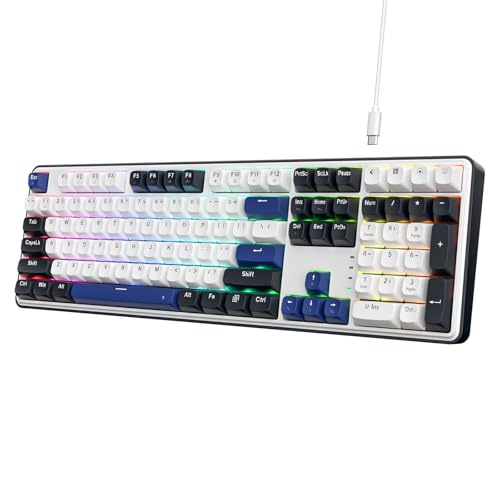
When your Tailwind className attribute becomes so absurdly long that you need an ultra-wide monitor just to see where it ends. Someone really went out and bought a curved super-ultrawide display just to avoid horizontal scrolling through their className="flex items-center justify-center bg-gradient-to-r from-blue-500 via-purple-500 to-pink-500 rounded-lg shadow-xl hover:shadow-2xl transition-all duration-300 ease-in-out transform hover:scale-105 px-4 py-2 md:px-6 md:py-3 lg:px-8 lg:py-4..." The irony? Tailwind was supposed to make styling faster and more maintainable. Instead, we've traded CSS files for className strings that look like they're trying to break the Guinness World Record for longest HTML attribute. But hey, at least you're not context-switching between files anymore—you're just context-switching between monitor edges. Real talk though: this is why Prettier's className sorting plugin exists. That and the @apply directive, but we all know you're not using those because "utility-first" means committing to the chaos.

Microsoft: Need More Copilot

Microsoft: Need More Copilot
Microsoft really said "you know what developers need? Copilot in literally everything" and just kept going. We've got Copilot in VS Code, Copilot in Windows, Copilot in Edge, Copilot in Office, Copilot in GitHub, and probably Copilot in your toaster by next quarter. The beautiful irony here is that both users AND Microsoft agree on one thing: they hate Copilot. Users hate the AI suggestions cluttering their workflow, the subscription fees, and the fact that it sometimes generates code that looks like it was written by a caffeinated intern at 4 AM. Meanwhile, Microsoft's solution to everyone hating Copilot? Obviously more Copilot. Because if one AI assistant annoying you doesn't work, surely seventeen will do the trick. It's the tech equivalent of "the beatings will continue until morale improves" but make it AI-powered and charge $10/month for it.

Programmers Know The Risks Involved

Programmers Know The Risks Involved
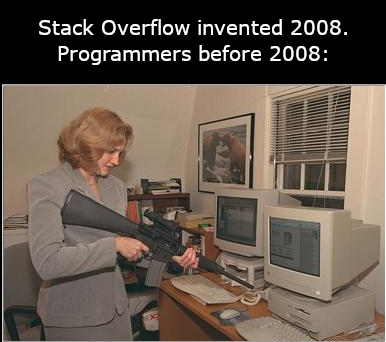
When you understand how technology actually works, you realize that "smart home" is just a fancy way of saying "200 attack vectors living rent-free in your house." Mechanical locks can't be phished, mechanical windows don't need security patches, and OpenWRT routers are basically the programmer's way of saying "I trust myself more than I trust Cisco." Meanwhile, tech enthusiasts are out here treating their homes like beta testing environments for every IoT device that promises convenience. Voice assistants? That's just always-on microphones with extra steps. Internet-connected thermostats? Because what could possibly go wrong with letting your HVAC join a botnet? The real power move is the 2004 printer with a loaded gun next to it. Because if two decades of dealing with printer drivers has taught us anything, it's that printers are inherently evil and must be dealt with using extreme prejudice. PC LOAD LETTER? More like PC LOAD LEAD.

It Prints Some Underscores And Dots

It Prints Some Underscores And Dots
HR interviewer asks what this code prints, and honestly? Same energy as asking "where do you see yourself in five years?" Nobody knows, nobody wants to figure it out, and the correct answer is probably "somewhere else." This is peak technical interview theater. The code is intentionally obfuscated garbage with single-letter variables, nested loops, random conditionals, and what appears to be an attempt to summon a daemon. It's the programming equivalent of asking someone to translate ancient Sumerian while standing on one leg. The real skill being tested here isn't "can you trace this code" but "can you maintain a professional smile while internally screaming." Spoiler: it probably prints underscores and dots in some pattern. Or segfaults. Either way, you're not getting hired based on this answer.

Do Not Name Your Assembly Files This

Do Not Name Your Assembly Files This
Someone really went ahead and named their assembly file org.asm and now it's sitting there with executable permissions like a loaded gun. The problem? On Unix systems, if you accidentally type ./org.asm instead of opening it in an editor, you're about to execute random assembly code. It's like naming your pet tiger "Fluffy" – technically you can do it, but it doesn't make it any less dangerous. The real kicker is that org.asm sounds innocent enough, probably short for "organization" or something equally boring. But those -rwxr-xr-x permissions are screaming "I'm executable!" Meanwhile, paste.asm is chilling right below it, probably containing clipboard management code, which is somehow less terrifying than whatever organizational chaos is about to unfold. Pro tip: If your file extension already screams "source code," maybe don't give it a name that makes it sound like a command you'd actually want to run. Save the cryptic three-letter names for your startup.

Finally We Are Safe

Finally We Are Safe
Jim Cramer just blessed us with his wisdom about software dying and hardware rising. For those who don't know, Jim Cramer is basically the inverse oracle of investing - whatever he predicts, bet on the exact opposite happening. His track record is so consistently wrong that he's become a contrarian indicator. So when he says software is collapsing and hardware is ascending, every developer just breathed a collective sigh of relief. Our jobs are safe, the cloud isn't going anywhere, and SaaS companies can keep printing money. Thanks Jim, you beautiful reverse prophet. The man could predict rain in a desert and somehow the Sahara would get drier. Software engineers everywhere are now updating their LinkedIn with "Jim Cramer said software is dead" as job security insurance.

When You Format The New SSD

When You Format The New SSD
You just unboxed your shiny new 1TB SSD, formatted it with btrfs like a proper Linux enthusiast, and suddenly you're staring at 0.73 TiB of usable space. The guy in the painting? That's you, pointing accusingly at the manufacturer like they personally robbed you of 270 GB. Here's the thing: manufacturers count in decimal (1 TB = 1,000,000,000,000 bytes) while your OS counts in binary (1 TiB = 1,099,511,627,776 bytes). Add in filesystem overhead, and boom—your "1 TB" drive is actually 0.91 TiB before formatting, then drops to 0.73 TiB after. It's technically not a scam, but it sure feels like one when you're trying to install yet another 200GB game. Marketing departments have been pulling this move since floppy disks, and we still fall for it every single time.

Forgive Me Father

Forgive Me Father
We've all been there—staring at a codebase that desperately needs refactoring, but the deadline is tomorrow and you just need it to work . So you copy-paste that function for the third time, slap an O(n³) algorithm where a hash map would do, and ship it with a guilty conscience. The confessional booth awaits, but deep down you know you'll do it again next sprint. At least you're not using nested ternary operators... yet.

Senior Devs...

Senior Devs...
Oh, the sheer GENIUS of it all! Senior devs out here creating AbstractFactoryFactoryProviderBuilderManagers just to avoid writing a simple if-statement. Why solve a problem in 5 lines when you can architect an entire galaxy of design patterns, interfaces, and dependency injection frameworks? They'll spend three weeks building "scalable infrastructure" for a feature that literally just needs to check if a number is greater than zero. The celebration? Chef's kiss. They've just turned a straightforward solution into something that requires a PhD to understand. Future maintainers will weep, but at least it's "enterprise-ready" and follows SOLID principles so hard it became LIQUID.

Infra As React

Infra As React
Someone really woke up and said "You know what DevOps needs? More JSX." Because apparently writing infrastructure as code in YAML or HCL wasn't hipster enough, so now we're defining VPCs, RDS instances, and Lambda functions with React components and className props. Nothing screams "production-ready" quite like treating your AWS infrastructure like it's a frontend component library. Next thing you know, someone's gonna useState() to manage their Kubernetes cluster state and useEffect() to provision EC2 instances. The fact that it generates actual Terraform files is both impressive and deeply concerning – like watching someone build a house with a spoon and somehow succeeding.

Graphics Inflation

Graphics Inflation
Remember when 720p was basically IMAX quality and you felt like you were living in the future? Now it's what you get when your streaming service decides you don't deserve bandwidth. Same resolution, different emotional response. Back then, upgrading from 480p to 720p was like seeing for the first time. Now 720p is what loads when you're on your phone's hotspot in a Walmart parking lot. Technology didn't change—our standards did. Welcome to the hedonic treadmill, display edition.

Do You Prefer Fluffy UI Over Liquid Glass?

Do You Prefer Fluffy UI Over Liquid Glass?
Someone went full arts-and-crafts mode and turned their phone into a tactile nightmare. Every UI element is literally covered in felt, fur, and what appears to be the remnants of a craft store explosion. The Gmail widget looks like it's been through a dryer cycle, the camera icon has achieved maximum fluffiness, and that Google search bar? It's basically a caterpillar now. The "fluffy UI" vs "liquid glass" debate just got physical. While Apple and Google spend millions on perfecting their glassmorphism, neumorphism, and material design languages, this person said "nah, I want my interface to feel like petting a sheep." The volume controls have individual fur coats, and the music widget looks like it's wearing a shag carpet. Props for the commitment though—every single element is meticulously crafted. This is what happens when a frontend developer discovers a hot glue gun and loses all sense of restraint. Your battery life might be fine, but your lint roller is definitely crying.