

Cloud Memes

Cloud computing: or as I like to call it, 'someone else's computer that costs more than your car payment.' These memes celebrate the modern miracle of having no idea where your code actually runs. We've all been there – the shock of your first AWS bill, the Kubernetes config that's longer than your actual application code, and the special horror of realizing your production environment has been running on free tier resources for two years. Cloud promises simplicity but delivers YAML files that look like someone fell asleep on the keyboard. If you've ever deployed to the wrong region or spent hours configuring IAM permissions just to upload a single file, these memes will have you nodding through the pain.

Server The Servers

Server The Servers
Content digital VAX 11/780 The Ticketmaster system is a hodge-podge of C and assembler and runs on ancient VMS hardware. The people who developed and maintained it are long since dead and/or retired. It has proven impossible to replace because nothing has been found that can handle thousands of simultaneous purchases as efficiently. The server room that houses the VMS machines has a room where a goat is left every two weeks. The next day, the goat is gone.

Self Documenting Open Source Code Be Like

Self Documenting Open Source Code Be Like
Nothing screams "self-documenting" quite like a variable named var.putin_khuylo in your Terraform AWS module. Because when future developers are debugging your infrastructure at 3 AM, what they really need is a geopolitical statement embedded in their boolean logic. The commit message "fix: Always pull a value from SSM data source since a computer" is chef's kiss—incomplete sentence and all. Really helps clarify what's happening in those 833 lines of code. And that overlay text trying to explain the variable? "It basically means value of Putin is d*ckhead variable is true." Thanks, I definitely couldn't have figured that out from the variable name itself. Documentation? Who needs it when you can just name your variables after your political opinions and call it a day. The code is self-documenting, just not in the way anyone expected.

Save Animals, Push To Prod

Save Animals, Push To Prod
The ethical choice is clear: skip all those pesky staging environments and test suites, and just YOLO your code straight to production. Why torture innocent lab animals with rigorous testing when you can torture your users instead? The bunny gets to live, the servers get to burn, and your on-call rotation gets to experience true character development at 2 AM on a Saturday. It's a win-win-win situation where everyone loses except the rabbit. The badge format perfectly mimics those "cruelty-free" product certifications, except instead of promising no harm to animals, it promises maximum harm to your infrastructure. The flames engulfing the server stack are a nice touch—really captures that warm, cozy feeling you get when your deployment takes down the entire platform and the Slack notifications start rolling in faster than you can silence them.

Shift Blame

Shift Blame
Someone built a tool that generates fake Cloudflare error pages so you can blame them when your code inevitably breaks. Because nothing says "professional developer" quite like gaslighting your users into thinking a billion-dollar CDN is responsible for your spaghetti code crashing. The tool literally mimics those iconic Cloudflare 5xx error pages—complete with the little cloud diagram showing where things went wrong. Now you can replace your default error pages with these beauties and watch users sympathetically nod while thinking "ah yes, Cloudflare strikes again" instead of "this website is garbage." It's the digital equivalent of pointing at someone else when you fart. Genius? Absolutely. Ethical? Well, let's just say your database queries timing out because you forgot to add indexes is now officially a "Cloudflare issue."

Gotta Fixem All

Gotta Fixem All
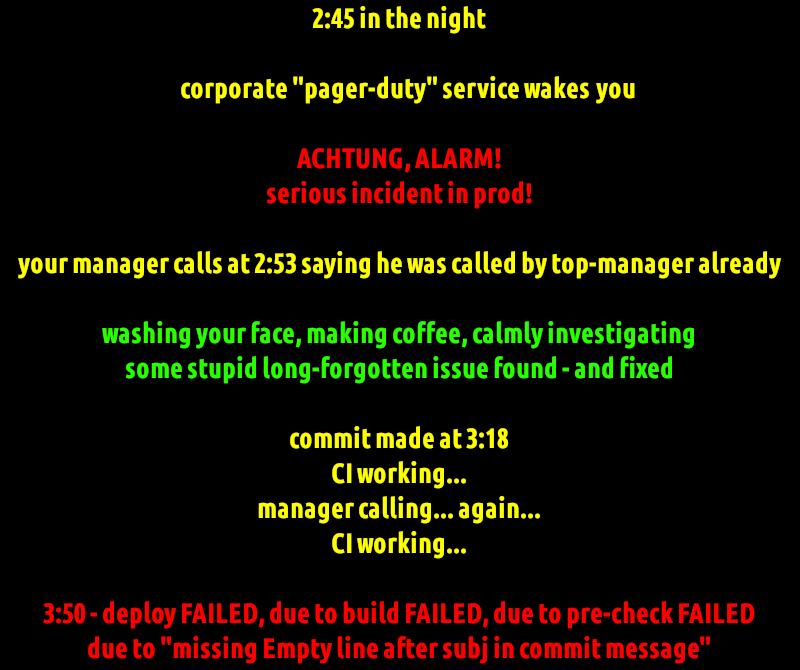
Welcome to your new kingdom, fresh DevOps hire. That beautiful sunset? That's the entire infrastructure you just inherited. Every server, every pipeline, every cursed bash script held together with duct tape and prayers—it's all yours now. The previous DevOps engineer? They're gone. Probably on a beach somewhere with their phone turned off. And you're standing here like Simba looking over Pride Rock, except instead of a thriving ecosystem, it's technical debt as far as the eye can see. That deployment that breaks every Tuesday at 3 AM? Your problem. The monitoring system that alerts for literally everything? Your problem. The Kubernetes cluster running version 1.14 because "if it ain't broke"? Oh, you better believe that's your problem. Best part? Everyone expects you to fix it all while keeping everything running. No pressure though.

I Feel Cheated On

I Feel Cheated On
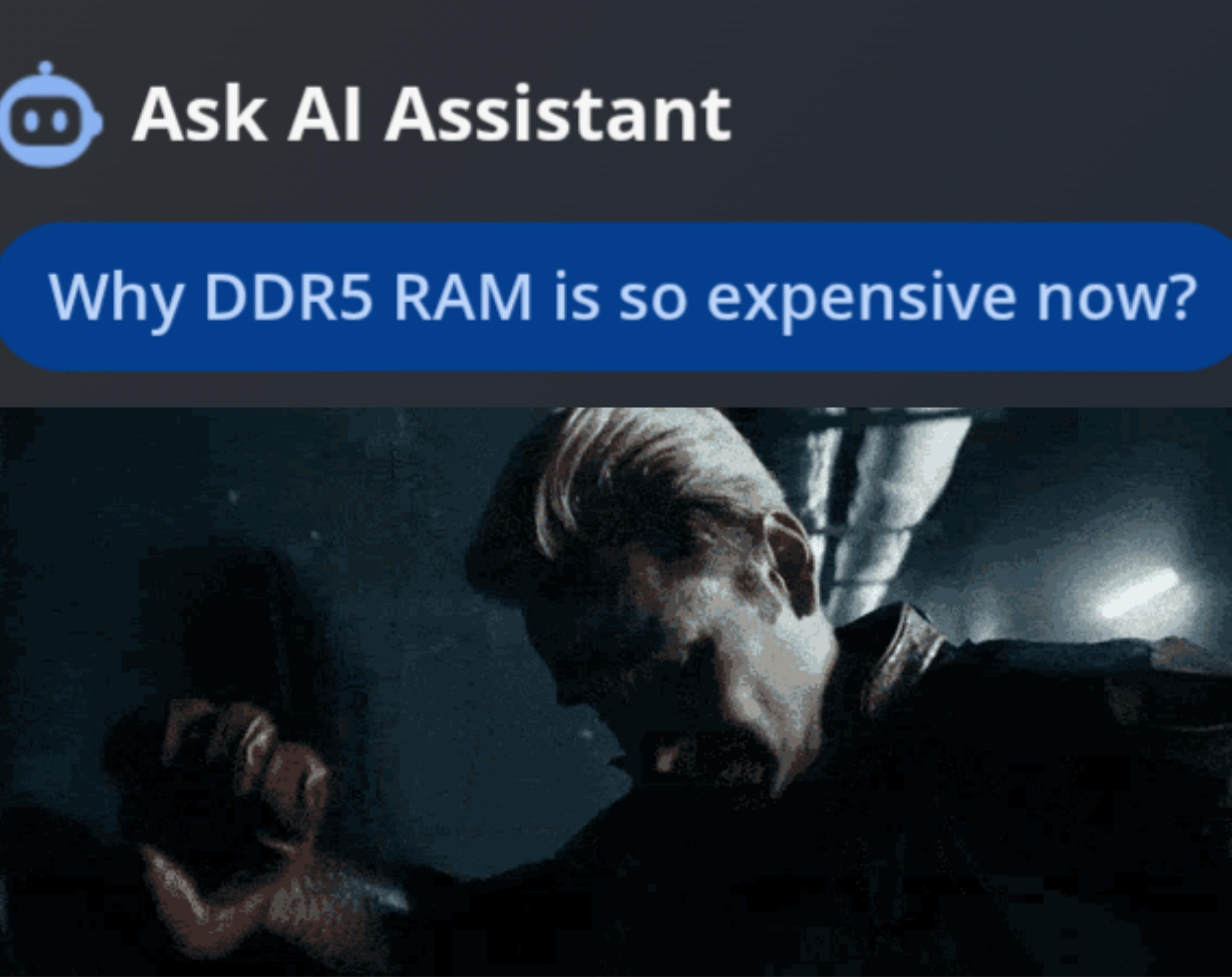
So RAM manufacturers are out here playing both sides like some kind of silicon cartel. They've been loyal to PC gamers for decades, but suddenly AI data centers show up with their billion-dollar budgets and infinite appetite for DDR5, and now gamers can't afford a decent 32GB kit without selling a kidney. The betrayal is real. One day you're building a gaming rig for a reasonable price, the next day Nvidia's buying up all the RAM for their H100 clusters and you're stuck with 16GB wondering why your Chrome tabs are swapping to disk. At least data centers pay enterprise prices—gamers just get the emotional damage and inflated MSRPs.

Out Of Budget

Out Of Budget
Every ML engineer's origin story right here. You've got grand visions of training neural networks that'll revolutionize the industry, but your wallet says "best I can do is a GTX 1050 from 2016." So you sit there, watching your model train at the speed of continental drift, contemplating whether you should sell a kidney or just rent GPU time on AWS for $3/hour and watch your budget evaporate faster than your hopes and dreams. The real kicker? Your model needs 24GB VRAM but you're running on 4GB like you're trying to fit an elephant into a Smart car. Time to get creative with batch sizes of 1 and pray to the optimization gods.

Follow Me For More Tips

Follow Me For More Tips
Oh honey, nothing says "I'm a catch" quite like bonding over shared trauma from a Cloudflare outage. While normal people use pickup lines about eyes and smiles, our brave developer here is out here weaponizing infrastructure failures as conversation starters. "Hey girl, did you also spend three hours refreshing your dashboard in existential dread?" Romance is DEAD and we killed it with status pages and incident reports. But honestly? If someone brought up that Cloudflare crash on a first date, I'd probably marry them on the spot because at least we'd have something real to talk about instead of pretending we enjoy hiking.

Suddenly People Care

Suddenly People Care
For decades, error handling was that thing everyone nodded about in code reviews but secretly wrapped in a try-catch that just logged "oops" to console. Nobody wrote proper error messages, nobody validated inputs, and stack traces were treated like ancient hieroglyphics. Then AI showed up and suddenly everyone's an error handling expert. Why? Because when your LLM hallucinates or your API call to GPT-4 fails, you can't just shrug and refresh the page. Now you need graceful degradation, retry logic, fallback strategies, and detailed error context. The massive book represents all the error handling knowledge we should've been using all along. The tiny pamphlet is what we actually did before AI forced us to care. Nothing motivates proper engineering practices quite like burning through your OpenAI API credits because you didn't handle rate limits correctly.

Upwards Mobility

Upwards Mobility
The corporate ladder speedrun: destroy a perfectly functioning system, make it objectively worse, get promoted, then bail before the dumpster fire you created becomes your problem. Peak software engineering right here. Dude took a Java service that ran flawlessly for 5 years and convinced management it needed a complete rewrite in Go with microservices because "modernization." The result? Slower performance, double the costs, and a memory leak that strikes at 2 AM like clockwork. But hey, that 20-page design doc had enough buzzwords to secure the L6 promotion. The best part? After getting the promo, they immediately transferred to a "chill Core Infra team" where they won't be on call for the disaster they created. Some poor new grad is now inheriting a $550k total comp nightmare. That's not upward mobility—that's a tactical extraction after carpet bombing production. Pro tip: If your promotion depends on creating "scope" and "complexity" instead of solving actual problems, you're not engineering—you're just resume-driven development with extra steps.

Brilliant Maneuver

Brilliant Maneuver
The corporate ladder climb speedrun any%. Dude took a perfectly functional Java service that ran flawlessly for 5 years and nuked it with an unnecessary microservices rewrite in Go—just to pad the resume with "scope" and "complexity" for that sweet L5 to L6 promotion at Amazon. The result? A system that's slower, costs 2x more, and has memory leaks that wake people up at 2 AM. But hey, the 20-page design doc was strategic enough to fool management. The real galaxy brain move though? Getting promoted, then immediately transferring to a "chill Core Infra team" before the whole thing implodes. Now some poor new grad inherits a ticking time bomb for $550k TC while our protagonist is sipping coffee, off-call, watching the chaos unfold from a safe distance. Truly a masterclass in corporate self-preservation and passing the buck. Fun fact: This is basically the tech industry version of "I'm not stuck in here with you, you're stuck in here with me"—except the villain escapes before the final act.

It Happened Again

It Happened Again
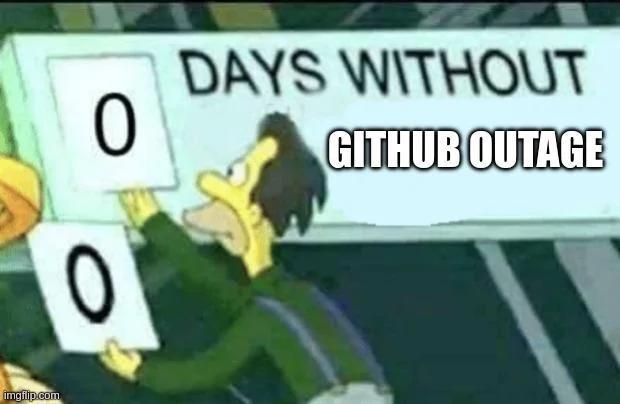
Ah yes, the classic "workplace safety sign" energy. You know that feeling when your entire infrastructure has been humming along smoothly for over two weeks? That's when you start getting nervous. Because Cloudflare going down isn't just an outage—it's a global event that takes half the internet with it. The counter resetting to zero is the chef's kiss here. It's like those factory signs that say "X days without an accident" except this one never gets past three weeks. And the best part? There's absolutely nothing you can do about it. Your monitoring alerts are screaming, your boss is asking questions, and you're just sitting there like "yeah, it's Cloudflare, not us." Then you watch the status page refresh every 30 seconds like it's going to magically fix itself. Pro tip: When Cloudflare goes down, just tweet "it's not DNS" and wait. That's literally all you can do.