

Kotlin Memes

Kotlin: where Java developers go to escape verbosity and discover that null safety is actually possible. These memes celebrate the JVM language that made Android development enjoyable again while proving that pragmatism and expressiveness can coexist. If you've ever marveled at extension functions, abused the "when" expression for everything, or explained to management why converting that Java codebase to Kotlin is worth the effort, you'll find your coroutine companions here. From the elegant simplicity of data classes to the mind-bending potential of DSLs, this collection honors the language that somehow manages to be both practical for business and enjoyable for developers.


Optionals Are Optional

Optionals Are Optional
Two developers living on opposite ends of the IQ bell curve arrive at the same terrible conclusion: just assume the list has at least one value and call it a day. Meanwhile, the middle 68% are frantically wrapping everything in Optional types, null checks, and defensive programming patterns like responsible adults. The galaxy brain move here is that both extremes are technically correct. The beginner doesn't know any better and ships code that works until it doesn't. The expert has seen enough production crashes to know that if your list is empty, you've got bigger problems than a NullPointerException. It's the folks in the middle who waste 3 hours writing elegant error handling for edge cases that'll never happen because Karen in QA already validated the input upstream. Sometimes the real optional is the error handling we added along the way.

The Call To Super

The Call To Super
Ah yes, the sacred ritual of object-oriented programming where you MUST acknowledge your ancestors before doing literally anything. You're trying to override a method and add your own cool functionality, but the compiler is like "EXCUSE ME, did you forget someone?" Every. Single. Time. You just want to customize your class, but nope—you gotta call super() first because your parent class has feelings too, apparently. It's like being forced to thank your parents at every awards ceremony even though you're 35 years old and just trying to live your life. Forget it once and watch your entire application crumble into a beautiful stack trace of despair. The parent constructor literally HAS to be invoked first—it's not a suggestion, it's the law of inheritance!

How Hard Can It Be

How Hard Can It Be
Famous last words before every mobile project: "We'll just use React Native/Flutter/whatever-is-trendy-this-week and boom, one codebase for everything!" Then reality hits. You've got iOS quirks, Android weirdness, different screen sizes, platform-specific APIs, native modules breaking on every update, and that one feature that absolutely requires dropping down to Swift/Kotlin. Your "cross-platform" framework becomes a leaky abstraction wrapped in duct tape and Stack Overflow prayers. The truth? Most apps claiming to be "cross-platform native" are just web views with extra steps, or they've got so much platform-specific code that you might as well have written two separate apps. The dream of write-once-run-anywhere died somewhere between Java applets and Xamarin. But hey, at least we keep trying. Next year's framework will definitely be the one that solves it all. Right? Right?

Gradlephants

Gradlephants
Three Gradle elephants standing in increasing size, each looking progressively more annoyed. Perfectly captures what happens when you add "just one more dependency" to your Android project. Started with a simple app? Baby elephant. Added some libraries? Medium elephant giving you side-eye. Included Firebase, Retrofit, Room, Dagger, Compose, and every other cool library you saw on Reddit? Congratulations, you now have a massive elephant that takes 47 minutes to build and crashes Android Studio twice a day. The Gradle elephant logo is iconic in the Java/Android world, and just like real elephants, your build files never forget... every single transitive dependency you've accumulated over the years.

Synology DS225+ Private Cloud Media Server - Stream, Back Up Photos & Share Files, Intel CPU for Hardware Transcoding (2-Bay Diskless NAS)

Synology DS225+ Private Cloud Media Server - Stream, Back Up Photos & Share Files, Intel CPU for Hardware Transcoding (2-Bay Diskless NAS)
Your Personal Streaming Server - Build your own Netflix-style media library and stream 4K movies, shows and photos to any device without monthly fees · Create Your Own Cloud - Store your entire photo…

Kotlin Allowing For New And Creative War Crimes

Kotlin Allowing For New And Creative War Crimes
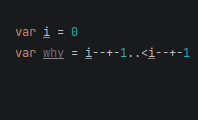
So someone just discovered that Kotlin lets you use emojis as variable names and immediately decided to commit crimes against humanity. The first line is innocent enough—just a regular variable i set to 0. But then they went full psychopath and created a variable named why that equals i--+-i..<i---i . Let's decode this monstrosity: we've got post-decrement, unary plus, pre-decrement, range operators, and more decrements all chained together like some cursed incantation. It's technically valid syntax, but so is eating cereal with water—doesn't mean you should do it. This is what happens when a language gives developers too much freedom and they use it to create code that would make even the compiler cry if it had feelings. The Geneva Convention needs a new clause specifically for this type of code.

It's Just A Little Helper Why Do You Treat It Like Satan Himself

It's Just A Little Helper Why Do You Treat It Like Satan Himself
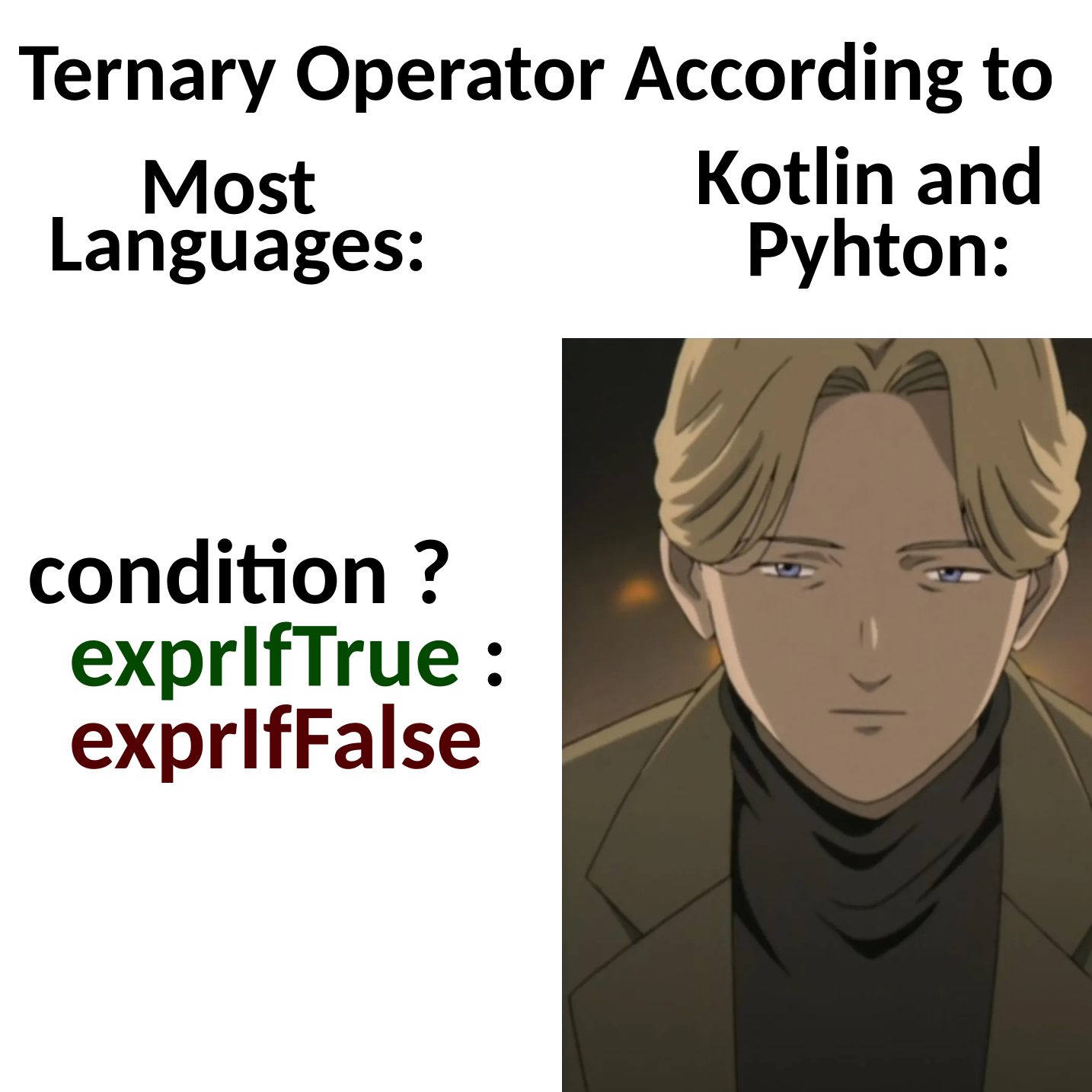
Most languages make you write out the full ternary operator like a responsible adult: condition ? exprIfTrue : exprIfFalse . But Kotlin and Python? They looked at that and said "nah, too verbose" and gave us the Elvis operator and inline if expressions that let you skip the false case entirely. Python's value if condition else default and Kotlin's value ?: default are genuinely useful for null-coalescing and default values. But the programming community treats them like they just committed a war crime against readability. Meanwhile, these same developers will nest 7 levels of callbacks and call it "clean code." The smug anime character face is exactly how Kotlin and Python devs feel when they write name ?: "Anonymous" while their Java colleagues are still typing out name != null ? name : "Anonymous" like it's 1995.

Potentially Might Be An Integer Or Not

Potentially Might Be An Integer Or Not
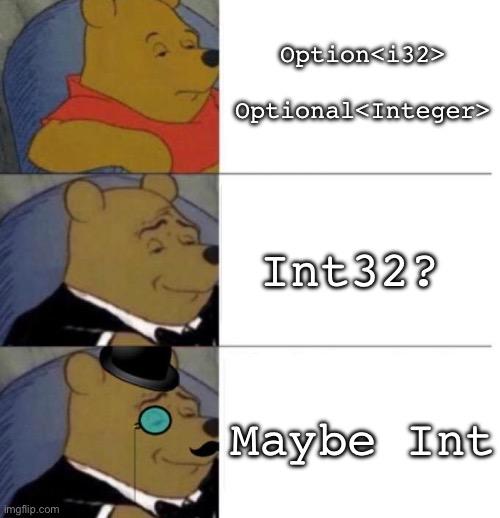
The evolution of nullable types in modern programming languages perfectly captured in three stages of increasing sophistication (or is it just confusion?). Started with Option<i32> looking basic, then Optional<Integer> trying to be fancy with its Java vibes, but the real boss move? Just slapping "Maybe" in front of "Int" and calling it a day. Languages can't even agree on what to call "this thing that might not exist." Rust says Option, Java says Optional, Haskell's over there with Maybe looking smug. They all solve the billion-dollar mistake (null references) but with increasingly vague naming conventions. By the time we get to "Maybe Int," we've achieved peak uncertainty – it's not just the value that's uncertain, the entire type system is shrugging at you.

They'll Understand One Day

They'll Understand One Day
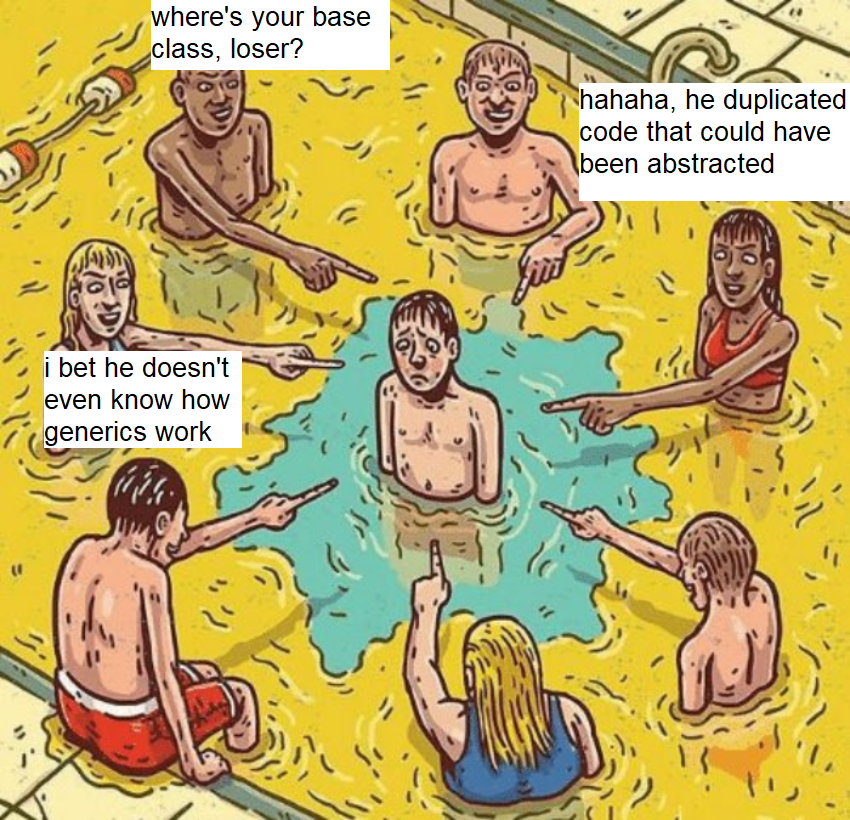
Senior devs roasting juniors with the holy trinity of code review sins. "Where's your base class?" "He duplicated code that could have been abstracted!" "I bet he doesn't even know how generics work!" Meanwhile the junior dev is just standing there taking it from all angles like some kind of OOP intervention. The beautiful irony? Give it 6 months and that same junior will be pointing fingers at the next newbie who dares to copy-paste a function instead of making it reusable. The circle of life in software development—everyone gets hazed by inheritance patterns and DRY principles until they become the hazer. Pro tip: If you're getting roasted for all three simultaneously, you've probably written a 500-line god method that does everything. We've all been there. Some of us still are.

OneOdio A71D Wired Over-Ear Headphones, Hi-Res DJ Studio Headphone

OneOdio A71D Wired Over-Ear Headphones, Hi-Res DJ Studio Headphone
Studio-Grade Sound – 40mm drivers deliver deep bass, clear mids, and crisp highs for DJing, studio recording, mixing, and monitoring. · Single-sided Monitoring – The 90° swiveling ear cups allow for …

Holy Shit

Holy Shit
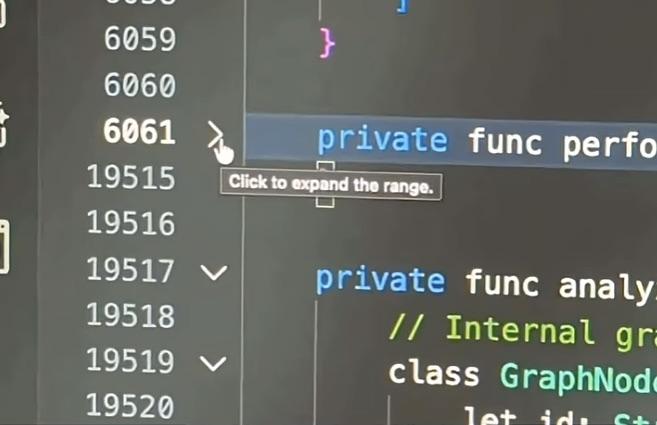
Someone just collapsed a code block and discovered they've been living in a 13,000+ line function. Line 6061 to 19515. That's not a function anymore, that's a novel. That's a cry for help written in code. Somewhere, a senior developer is having heart palpitations. The code review for this bad boy probably requires scheduling a separate meeting. Maybe a therapy session too. Fun fact: The entire Linux kernel 1.0 was about 176,000 lines of code. You're looking at roughly 7.6% of that... in ONE function. Congratulations, you've achieved what we call "job security through incomprehensibility."

What Is Wrong With My Code

What Is Wrong With My Code
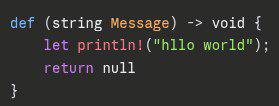
So you wrote a function that returns void, then proceeded to return null, and wrapped a println statement in a let binding that does absolutely nothing. This is what happens when you copy-paste code from three different languages and hope the compiler just figures it out. The function signature screams Rust or Kotlin, the println looks like Rust, but that return null? That's your brain on Java. Pick a lane, my friend. The compiler is not a therapist—it won't help you work through your identity crisis.

Android Development Be Like

Android Development Be Like
You know you're in for a rough day when your 8GB of RAM is sweating bullets just watching Android Studio wake up. The strongman format here is *chef's kiss* because it captures that moment when your entire system becomes a space heater the second you hit that innocent-looking "Run" button. The Task Manager just standing there like a disappointed parent, quietly judging your life choices while Android Studio casually consumes more memory than Chrome with 47 tabs open. Meanwhile, your RAM is out here doing Olympic-level heavy lifting just to spin up an emulator that'll take 5 minutes to boot and another 3 to install a "Hello World" app. Fun fact: Android Studio's minimum requirement is 8GB RAM, but that's like saying the minimum requirement for surviving a desert is "some water." Technically true, but you're gonna have a bad time. Most devs recommend 16GB minimum, and honestly? They're being generous.

Save Me From Gradle Please

Save Me From Gradle Please
You want to make a game? Cool! You're using Java? Great choice! Oh wait, you're using Gradle as your build tool? Say hello to your new full-time job: deciphering cryptic dependency resolution errors that read like ancient hieroglyphics written by a caffeinated elephant. The Gradle elephant starts off looking all cute and friendly, but then it transforms into this nightmare creature that throws walls of red text at you. "Failed to resolve all artifacts for configuration 'classpath'" – yeah, thanks buddy, super helpful. Nothing says "fun game development" quite like spending 6 hours debugging your build system instead of actually building your game. The best part? The error message is longer than your actual game code. Gradle's basically that friend who can't give you simple directions and instead explains the entire history of the road system.