

Boss We're Upgrading Now

Boss We're Upgrading Now
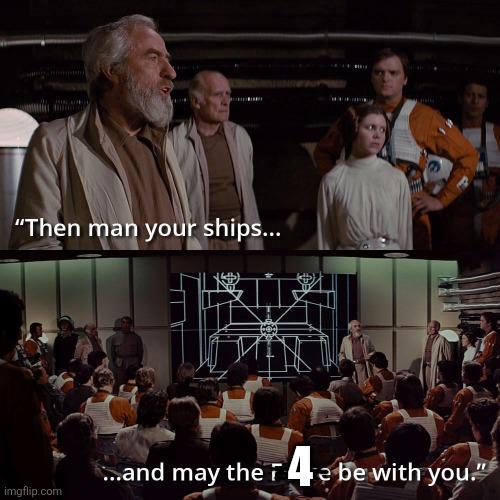
Nothing says "modern software development" quite like being held hostage by a codebase that's older than your career. The error message demanding version 14.0 or greater is the cherry on top—because apparently your company's legacy project is still running on a language version from when flip phones were cool. Meanwhile, management keeps asking why the new features are taking so long. Maybe because we're trying to build a rocket ship with stone tools? The best part is knowing that even if you DO upgrade, you'll spend the next three months fixing breaking changes and dealing with dependencies that haven't been maintained since the Obama administration.

Button Is Not Clickable

Button Is Not Clickable
You send a static image of your UI design to the client. They respond asking why the button doesn't work. You sit there questioning your career choices and wondering if you should've gone into carpentry instead. At least wood doesn't expect JPEGs to be interactive.

Know Thy Protocol

Know Thy Protocol
UDP vs TCP but make it wildly inappropriate. The left side shows UDP doing its thing—just yeeting that dick pic into the void with zero confirmation, no handshake, no nothing. Classic fire-and-forget protocol energy. Meanwhile TCP on the right is out here establishing a full three-way handshake before sending anything, complete with consent verification, acknowledgments for every message, and a proper connection termination with FIN packets. It's the networking equivalent of asking "may I?" before every single action. The best part? TCP even acknowledges the compliment AND the thank you. That's some next-level reliable delivery right there. UDP could never—it doesn't even know if its packet arrived, let alone whether anyone appreciated it. This is what they mean when they say "connection-oriented vs connectionless protocols" in your networking textbook, just with significantly more inappropriate metaphors than your professor used.

Extreme Exception Handling

Extreme Exception Handling
When your error handling is so robust it involves throwing babies across a canyon. The try block launches Baby(), the catch block is desperately reaching to handle it, and the finally block? Just sitting there at the bottom, guaranteed to execute whether the baby gets caught or not. The finally block doesn't care about your success or failure—it's just there to clean up resources and probably call CPS. The visual metaphor here is chef's kiss: the sheer distance between try and catch represents that one function in your codebase where the exception could come from literally anywhere in a 500-line method, and you're just hoping your generic catch block somehow handles it gracefully. Meanwhile, finally is down there like "I'm running regardless, hope you closed those database connections."

- ; -

- ; -
Oh honey, the AUDACITY of semicolons showing up in Python code! While every other language is out here spamming semicolons like it's going out of style, Python users are living their best life with clean, minimalist syntax. Then some cursed soul drops a semicolon in their Python file and everyone loses their minds. The sheer HORROR on that face says it all – it's like watching someone put pineapple on pizza, except somehow worse. Python's whole vibe is "we don't do that here" energy, and semicolons are basically the programming equivalent of showing up to a black-tie event in Crocs.

Clever Girl

Clever Girl
When you create virtual memory to abstract away physical memory fragmentation, but then realize that abstraction just made memory lookups slower, so you add a TLB (Translation Lookaside Buffer) to cache the address translations. It's basically putting a band-aid on your band-aid. The medieval peasant calling out the circular logic is *chef's kiss* because yeah, you created a problem and then "solved" it by adding more complexity. This is systems programming in a nutshell—every solution spawns a new problem that requires another clever workaround. Twenty years in and I'm still not sure if we're geniuses or just really good at justifying our own mess.

That Escalated Quickly...

That Escalated Quickly...
So you start with "STOP USING LINUX" (the gateway drug), then move to "STOP USING DISTROS" (because apparently the entire concept of distributions is now problematic), then "STOP USING HYPRLAND" (getting oddly specific here), and finally "STOP USING macOS" (because why stop at reasonable takes when you can speedrun becoming That Guy™). The progression from rejecting an entire OS family to nitpicking window managers to hating on Apple is the tech equivalent of "first they came for the penguins, and I said nothing." Each video gets progressively more unhinged, like watching someone's descent into madness but with more opinions about package managers. Next up: "STOP USING COMPUTERS" followed by "STOP USING ELECTRICITY" and finally "RETURN TO MONKE, CODE WITH STICKS."

When It Rains It Pours

When It Rains It Pours
You know that special day when the universe decides you're having it too easy? Production goes down at 9 AM, your PM suddenly remembers that "critical feature" that was supposed to ship yesterday, and your immune system picks that exact moment to tap out. There you are, trying to balance two full cups of disaster while maintaining that forced smile in the standup call. The best part? Everyone's asking if you're okay while you're literally keeping the entire infrastructure from collapsing with one hand and debugging a race condition with the other. And yes, you're still expected to make that deadline. Welcome to software engineering, where Murphy's Law isn't just a theory—it's your daily sprint planning.

I Ranked Every Byte On My Computer

I Ranked Every Byte On My Computer
Imagine having so much free time that you decide to create a tier list for EVERY. SINGLE. BYTE. on your computer. That's right—all 500 GB to 2 TB of them, individually ranked from Top tier to Trash/Bottom 5. The sheer absurdity of this concept is *chef's kiss*. The visual representation is basically one massive gray blob because, surprise surprise, when you're ranking billions of bytes, you can't actually see individual rankings. It's like trying to count grains of sand on a beach while insisting each one deserves its own performance review. This is peak procrastination energy—when you'd rather evaluate the worthiness of random bits of data than actually do productive work. "Sorry boss, can't finish that project, too busy determining if byte #47,382,910 deserves S-tier or just A-tier status." Truly the most important work of our generation.

Nothing Is More Permanent Than A Temporary Fix

Nothing Is More Permanent Than A Temporary Fix
The universal truth that haunts every codebase like a ghost that refuses to leave. You slap together a "quick workaround" at 3 AM promising yourself you'll come back to refactor it properly next sprint. Fast forward three years and that temporary hack is now load-bearing infrastructure that nobody dares touch because the original developer left, documentation was never written, and removing it would probably cause the entire system to collapse like a house of cards. The temporary fix has achieved immortality while your carefully architected "proper solutions" got deprecated last Tuesday. Poetry in motion, really.

Enron Architecture

Enron Architecture
When your codebase is so sketchy it's basically a federal crime. Building financial products with code so questionable you're not networking at meetups—you're collecting character witnesses for your inevitable trial. Two lawyers, three cops, a judge, and almost Maduro? That's not a professional network, that's a legal defense dream team in the making. Your architecture isn't just bad, it's "cooking the books" level fraudulent. At least Enron had the decency to collapse quickly—your technical debt is the gift that keeps on giving to law enforcement.

IPS Vs. OLED Explained For The Car Enthusiasts *After 5 Years Of Productivity Use

IPS Vs. OLED Explained For The Car Enthusiasts *After 5 Years Of Productivity Use
So you bought that fancy OLED monitor for the "infinite contrast" and "true blacks," thinking you'd be living your best life. Plot twist: after 5 years of staring at the same IDE layout, your OLED now has a permanent ghost of your text editor burned into the screen like a cursed tattoo. Meanwhile, your trusty IPS panel is sitting there looking fresh as day one, slightly washed out but ZERO burn-in drama. It's the monitor equivalent of choosing reliability over flashiness—like buying a Toyota instead of a Ferrari that needs repairs every month. Sure, the IPS doesn't have those chef's-kiss blacks, but at least it won't immortalize your VS Code sidebar into its very soul. The real tragedy? You paid premium price to essentially screen-print your taskbar onto a $1000+ display. Slow clap for that investment decision.