

Cross-platform Memes

Posts tagged with Cross-platform
Is He Wrong Though

Is He Wrong Though
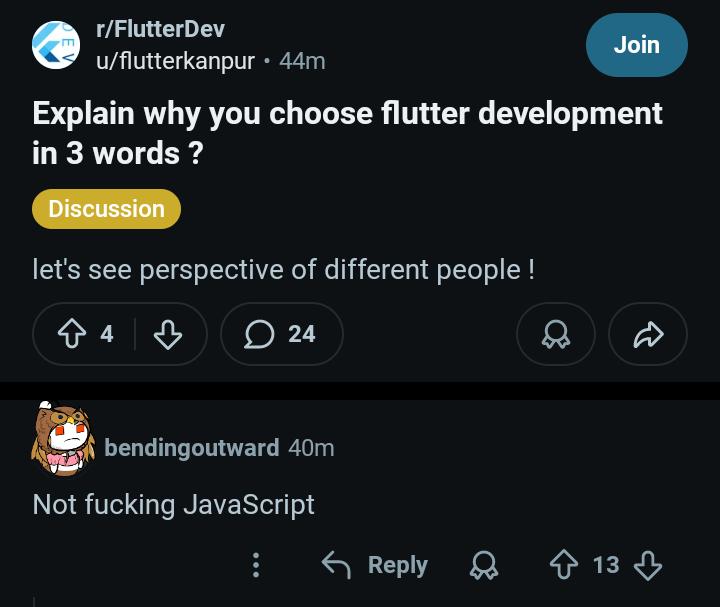
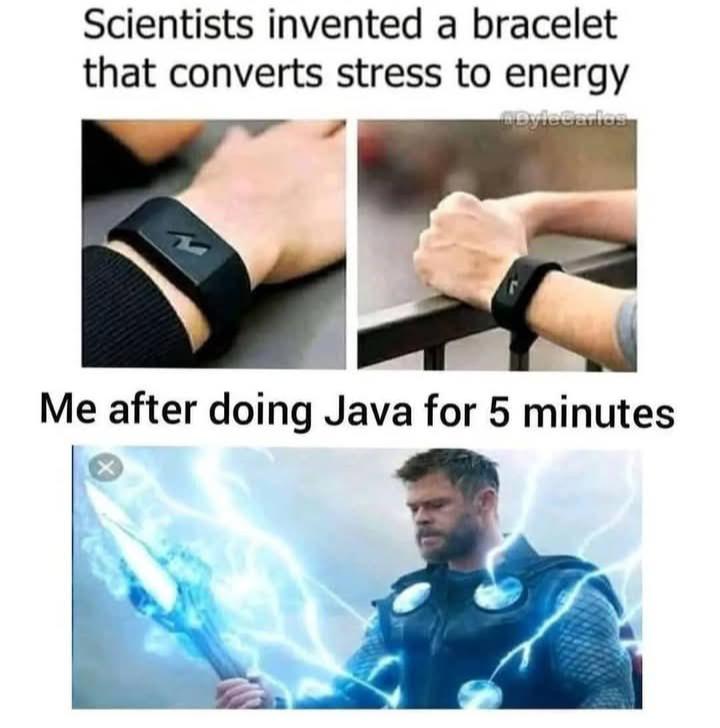
The "write once, run anywhere" crowd just got absolutely demolished. Sure, Java's cross-platform compatibility is technically impressive, but that's like being proud your code runs equally mediocre everywhere. The JVM being on Windows, Linux, and macOS doesn't make Java good —it just means everyone gets to suffer equally. Here's the thing: cross-platform compatibility is a feature, not a personality trait. JavaScript runs everywhere too, and we're not exactly throwing parades about it. The analogy here is brutally effective because it exposes the logical fallacy—universal compatibility doesn't equal quality. It just means you've achieved the bare minimum of not being platform-locked. Java developers will defend their language with religious fervor, but deep down they know they're just Stockholm syndrome victims of enterprise codebases written in 2003 that nobody dares to refactor.

Deserves A Plaque

Deserves A Plaque
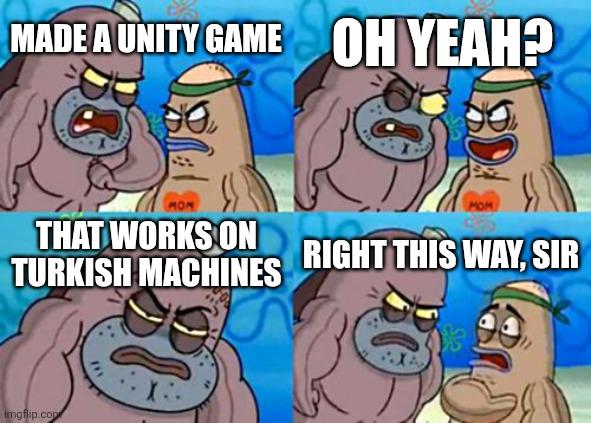
You know what? This person just absolutely demolished the entire Electron apologist community with a single sentence. The logic is flawless and devastating. Sure, Electron "works on all platforms" because you're literally shipping an entire Chromium browser with your 2KB todo app. That's like saying a sledgehammer is the best tool for everything because it technically works on all types of nails. Yeah, it works. Your RAM just cries itself to sleep every night. The comparison is chef's kiss level savage because it highlights how "technically correct" doesn't mean "good" or even "acceptable." Just because something functions universally doesn't make it the right choice. Native apps exist for a reason, folks. But hey, at least we can write JavaScript everywhere now, right? Right?

Develop Once Debug Everywhere

Develop Once Debug Everywhere
Cross-platform development promised us sleek futuristic vehicles gliding smoothly across Linux, macOS, and Windows. Instead, we got a post-apocalyptic convoy hauling PyInstaller, DLLs, .NET runtime, Chromium (because why NOT bundle an entire browser?), Unity runtime, inpackage, and Node.js like they're essential survival supplies in Mad Max. The expectation: Write once, run anywhere! The reality: Write once, spend three weeks figuring out why it works on your machine but explodes on literally every other platform. Bonus points for the 500MB "lightweight" app that's basically Electron wearing a trench coat pretending to be native. Nothing says "cross-platform efficiency" quite like shipping half the internet just to display a button. Beautiful.

Electron Apps

Electron Apps
Remember when building a cross-platform desktop app seemed like a good idea? Just wrap an entire Chromium browser around your glorified calculator app, they said. It'll be fine, they said. Now every todo list app on your machine is basically running its own copy of Chrome, each one hogging more RAM than your entire OS did in 2010. Your 32GB of RAM? Gone. Your fans spinning up for a chat app? Normal. Your CPU crying because you opened Slack, VS Code, Discord, and Spotify at the same time? Just another Tuesday. The real kicker? RAM prices are skyrocketing because everyone's buying GPUs for AI training, so now you get to pay premium prices to run five instances of Chromium just to check your messages. What a time to be alive.

Annoying For Parsing

Annoying For Parsing
Windows just can't help itself. While macOS and Linux civilized OSes use a simple \n for line endings, Windows insists on the verbose \r\n combo (carriage return + line feed, a relic from typewriter days). This makes cross-platform text parsing a nightmare—your regex breaks, your file diffs look like chaos, and Git constantly warns you about line ending conversions. It's like Windows showed up to a minimalist party wearing a full Victorian outfit. The extra \r serves literally no purpose in modern computing except to remind us that backwards compatibility is both a blessing and a curse.

Small And Fast (But Actually Enormous And Sluggish)

Small And Fast (But Actually Enormous And Sluggish)
The irony is absolutely chef's kiss! Electron.js claims to be "small and fast" while being notorious in the dev community for being exactly the opposite. It's basically the framework that lets you build desktop apps with web technologies, but at the cost of your users' RAM and CPU cycles. Your computer fans spinning up to takeoff velocity after opening a simple Slack or Discord app? Yep, that's Electron working its "small and fast" magic. The atomic symbol is just the perfect cherry on top of this glorious contradiction.

The Corporate Handshake Of Tech Features

The Corporate Handshake Of Tech Features
Google's Quick Share (the Android equivalent of AirDrop) is like that corporate guy showing up with a knockoff product, while Apple's AirDrop stands there with that "I've seen this movie before" face. The tech industry in a nutshell: Google announces cross-platform file sharing as if they've invented fire, while Apple silently pushes security updates that fix God-knows-what vulnerabilities they'll never actually explain. It's the classic tech relationship - one company loudly copies features, the other quietly patches holes without telling you what nightmare they just saved you from.

The Cross-Platform Trifecta Of Pain

The Cross-Platform Trifecta Of Pain
Ah, the universal law of cross-platform development. Linux and Windows builds passing with flying green checkmarks while macOS is just sitting there with its red error badge like "I woke up and chose violence today." The ticket says "Fix macOS build #3" which implies this is the developer's third attempt at appeasing the Apple gods. At this point, they're probably considering whether learning to herd actual cats might be easier than dealing with macOS build issues.

When Architecture Compatibility Is Your Side Hustle

When Architecture Compatibility Is Your Side Hustle
Ah, the miracle of emulation. Valve somehow convinced x86 apps to play nice with ARM architecture, which is basically like getting cats and dogs to not only coexist but form a barbershop quartet. The Steam Machine announcement feels like that moment when your coworker says they refactored the entire codebase over the weekend and "it just works." Sure, buddy. Next you'll tell me PHP is secure and printers never jam.

I Have Sympathy For Your Responsive Nightmares

I Have Sympathy For Your Responsive Nightmares
The top part shows futuristic foldable devices in various configurations - bent, flat, folded like origami masterpieces that Samsung's engineers dreamed up after a wild night of drinking. Meanwhile, web developers are depicted as crying children having existential breakdowns. Why? Because they now have to make websites look perfect on yet another bizarre screen dimension . Just when they mastered responsive design for phones, tablets, and desktops, the hardware folks decided "what if screens... but bendy ?" Pure sadism. Somewhere, a CSS developer is looking at these images while whispering "please... no more media queries... I have a family."

Every New Desktop App Dev Be Like

Every New Desktop App Dev Be Like
Nobody wants to touch those crusty desktop frameworks from the 90s anymore. Qt and WinForms? Hard pass. But wrap a glorified browser in a desktop shell and call it "cross-platform" and suddenly everyone's throwing confetti. "Look mom, I made a desktop app with 500MB of node_modules and it only takes 8 seconds to launch a hello world!" The absolute state of desktop development in 2023 - where your app is basically a website that somehow uses more RAM than Photoshop.

Life Is Good Until Gradle Error

Life Is Good Until Gradle Error
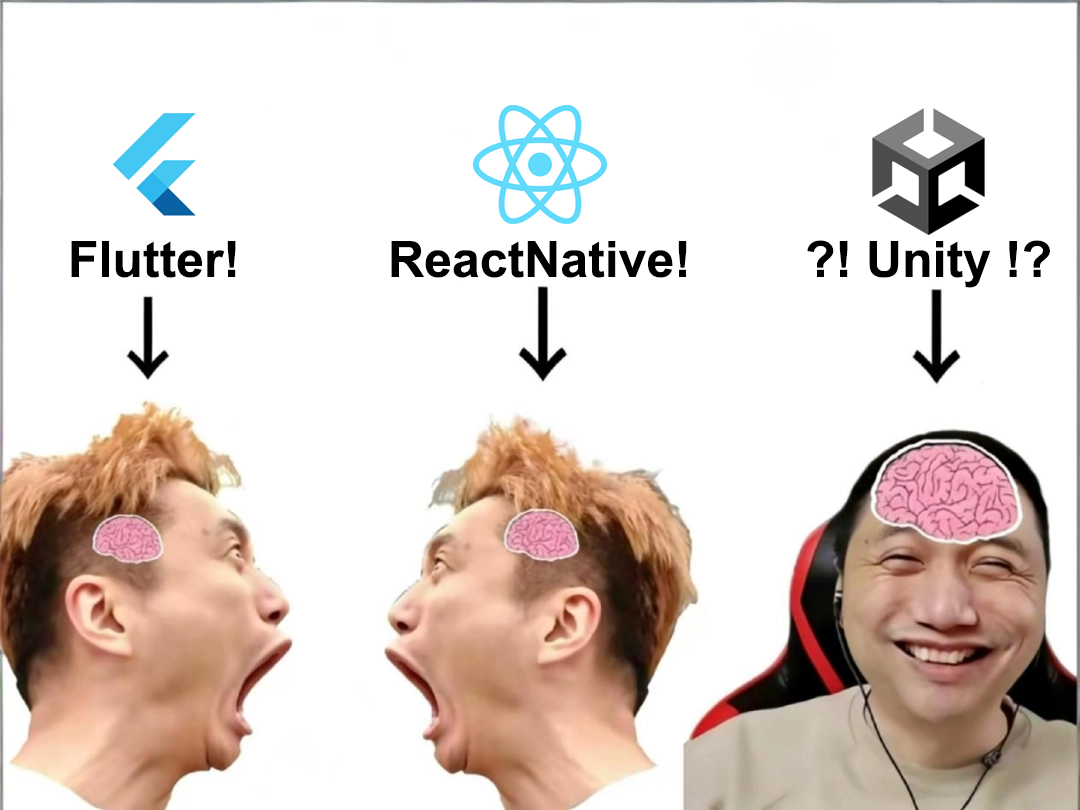
Flutter and React Native promise the dream of cross-platform mobile development—write once, deploy everywhere. The kid excitedly packs their bags for this magical journey, only to return moments later with the harsh reality: "shit breaks every 5 seconds." That's the special joy of Gradle build errors. Nothing quite compares to watching your terminal spew 500 lines of red text because you added a comma in the wrong place. The modern mobile developer experience: 10% coding, 90% staring blankly at build failures while questioning career choices.