
coding Memes

Job Title Roulette

Job Title Roulette
The tech industry has invented approximately 47 different ways to say "person who writes code" and they all mean the exact same thing. Developer, Software Developer, Programmer, Computer Programmer, Engineer, Software Engineer, Coder—pick your flavor, they're all doing the same job. It's like choosing between "sparkling water" and "carbonated H₂O." Companies will spend hours debating whether to hire a "Software Engineer II" versus a "Senior Developer I" while the person just wants to know if they can afford rent. The real answer? It depends on which title makes HR feel important that day and whether the company wants to sound fancy at cocktail parties. Spoiler alert: your actual responsibilities will be identical regardless of whether your business card says "Code Wizard" or "Digital Solutions Architect."

Sup Ladies

Sup Ladies
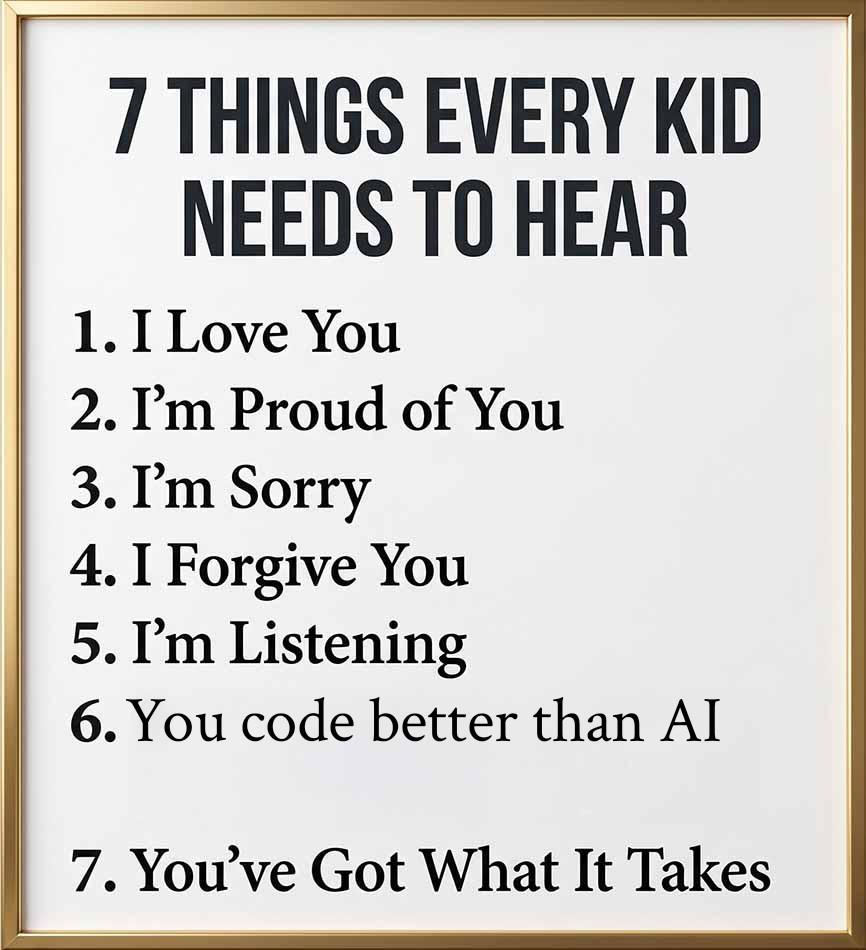
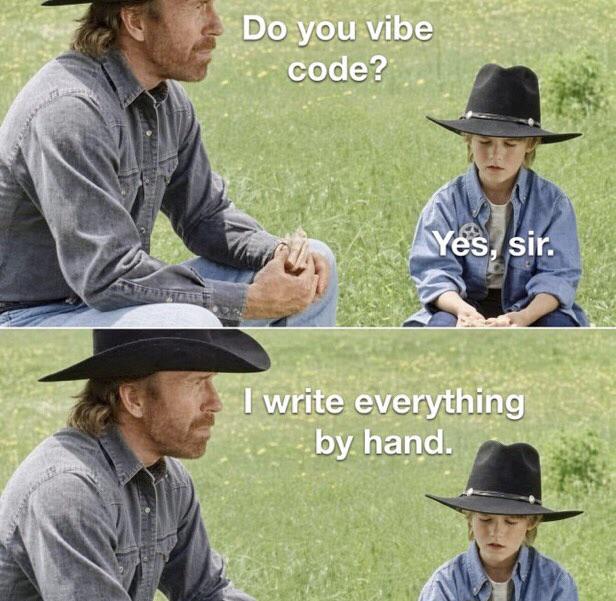
In 2024, being able to write code without AI assistance has somehow become the new flex. It's like bragging about doing mental math while everyone else has calculators. We've reached a point where writing your own for-loops without Copilot whispering sweet suggestions in your ear is apparently considered a superpower that makes you irresistible. What a time to be alive—where basic programming skills have been rebranded as legendary chad behavior.

Same Word Different Feeling

Same Word Different Feeling
Software engineers hearing "everyone on my floor is coding": *happy dinosaur noises* 🎉 Doctors hearing the same thing: *existential dread intensifies* 💀 Because when a doctor says someone is "coding," they mean cardiac arrest and a full-blown medical emergency. Meanwhile, we're over here excited that the whole team is actually writing code instead of being stuck in meetings. Same word, wildly different vibes. One means productivity, the other means someone's about to meet their maker. Fun fact: Medical "code" comes from "Code Blue," the hospital emergency alert system. So next time you tell your non-tech friends you're "coding all day," don't be surprised if they look concerned for your health.

Just Learn How To Write Code Yourself

Just Learn How To Write Code Yourself
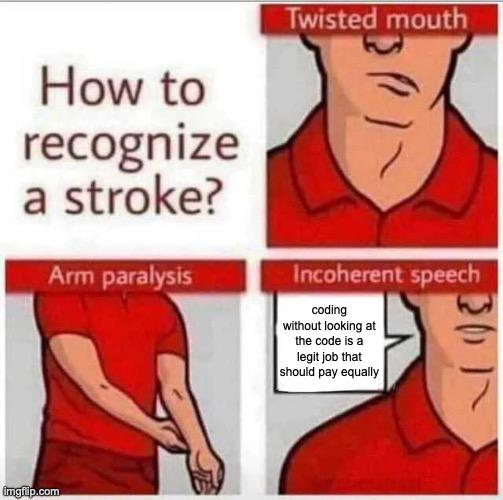
So we've reached the point where "coders" who can't function without AI assistance are being told they have no business shipping software. The brutal honesty here is refreshing. It's like watching someone realize their entire skillset is just being really good at prompting ChatGPT. The vibe shift is real. We went from "AI will replace all programmers" to "if you need AI to write every line, you're not actually a programmer" faster than you can say "stack overflow copy-paste." Sure, AI is a tool—but if you can't debug, architect, or understand what the AI just generated, you're basically a glorified middleman between a language model and production. Tony Stark energy: "Learn the fundamentals or get out of my codebase."

Bubbles Gonna Pop Sooner Than We Thought

Bubbles Gonna Pop Sooner Than We Thought
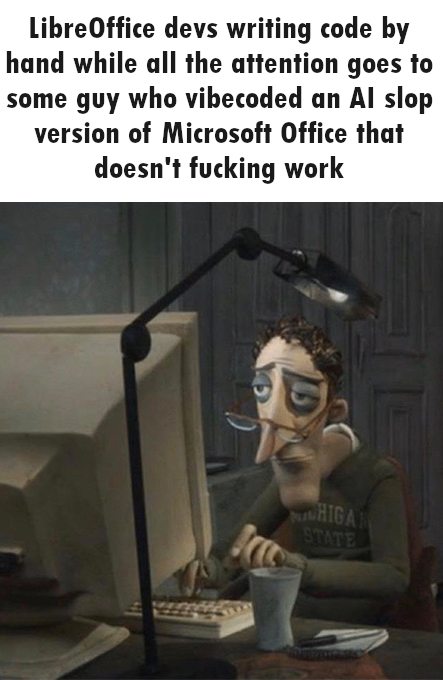
When AI tools and low-code platforms started promising that anyone could build software in minutes, the tech industry collectively nodded and said "sure, Jan." But someone finally said the quiet part out loud: if coding suddenly became 10x easier without any actual innovation in computer science, maybe—just maybe—the whole thing is smoke and mirrors. It's like watching someone claim they invented a revolutionary diet pill that lets you eat whatever you want, except the pill is just a rebranded multivitamin and aggressive marketing. The real kicker? The industry's been hyping these "revolutionary" tools while senior devs are still debugging the same CSS alignment issues they were fighting in 2015.

Creativity Not Found

Creativity Not Found
AI evangelists love to pitch that you can now build apps without knowing how to code. Just prompt your way to success, they say. Ship features with vibes alone. But here's the thing: AI can't fix the fact that your brain is a barren wasteland of unoriginal thoughts. You still need something worth building. Turns out the bottleneck was never the coding—it was having a single interesting idea in the first place. So congrats, you've automated the easy part and still can't ship because you're stuck staring at a blank canvas wondering what the 47th todo app should look like.

Teaching Python

Teaching Python
Guy's literally teaching Python to pythons. The students are attentive, coiled up on the floor, probably taking notes in their own way. Meanwhile the instructor is standing on a bucket because even he knows better than to get too close to his audience during office hours. The laptop's there for remote learning support, naturally. Props to whoever decided the best way to teach a programming language named after Monty Python was to use actual reptiles. The commitment to the bit is chef's kiss.

How Can We Actually Prevent This From Happening

How Can We Actually Prevent This From Happening
Learning a new language or framework is that satisfying climb up the stairs—steady progress, dopamine hits with each concept mastered, Stack Overflow bookmarks multiplying. Then you take a two-week vacation, switch projects, or just look at production fires for a month straight. Suddenly you're staring at your own code like it's written in ancient Sumerian. The forgetting curve is real and it's exponential. The only prevention? Build useless side projects you'll never finish. It's not procrastination, it's spaced repetition.

My Job Would Never Leave Me

My Job Would Never Leave Me
Welcome to 2024, where your office chair has become a spectator sport seat. You're literally paying for a hotel room to watch an AI assistant write your code, fix your bugs, and probably do it better than you ever did. The chair remains empty because why would you sit at a desk when Claude's already clocked in for the day? The real kicker? Your job security now depends on how well you can prompt engineer. You've gone from "10x developer" to "professional AI supervisor" faster than you can say "but I spent years learning this framework." At least the chair looks comfortable for when you need to contemplate your career choices.

It Be Like This

It Be Like This
Take a vacation, touch some grass, maybe read a book. Come back to your IDE and suddenly you're staring at your own code like it's written in ancient Sumerian. That function you wrote two weeks ago? No idea what it does. That design pattern you were so proud of? Completely foreign. Your muscle memory has been factory reset and you're back to Googling "how to reverse a string" like it's day one of bootcamp. The knowledge decay is real and it's exponential.

Do You Agree?

Do You Agree?
The hierarchy of developer street cred, accurately depicted. Instagram followers? Cool story bro. Twitter followers? Getting warmer. Reddit followers? Now we're talking actual technical respect. But that single GitHub follower? That's someone who looked at your code, didn't immediately run away screaming, and hit follow anyway. That's basically a marriage proposal in developer terms. Social media clout means nothing when your repos are empty. But one person who willingly subscribed to your commit history? That's validation that actually matters. They're basically saying "I trust your code enough to get notifications about it." Peak achievement unlocked.

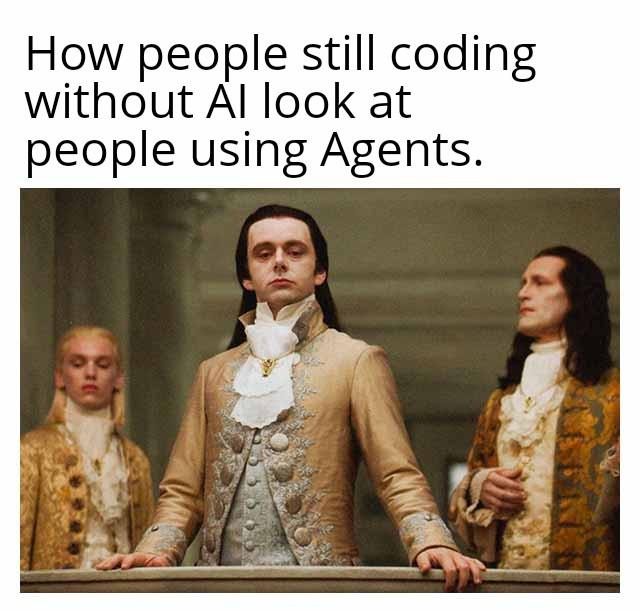
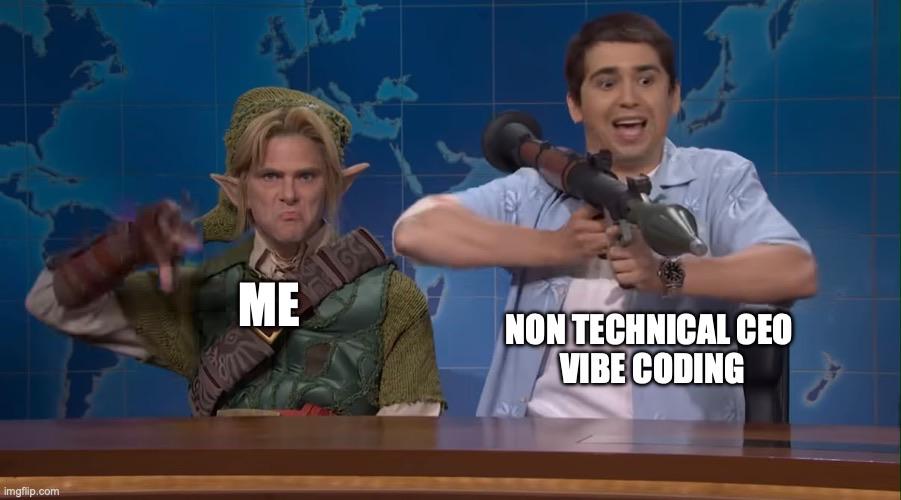
With All These Coding Agents, Everyone And Their Mother Is Doing It...

With All These Coding Agents, Everyone And Their Mother Is Doing It...