

Development hell Memes

Posts tagged with Development hell
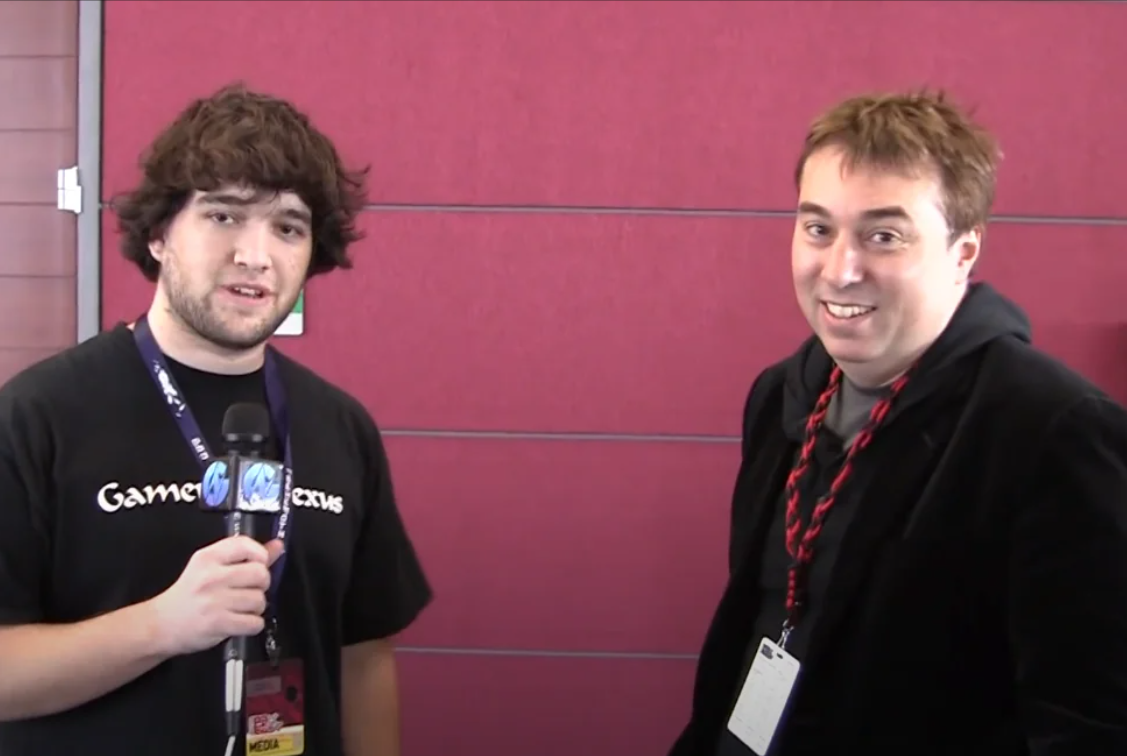
Reminder That Star Citizen Has Been In Development For This Long

Reminder That Star Citizen Has Been In Development For This Long
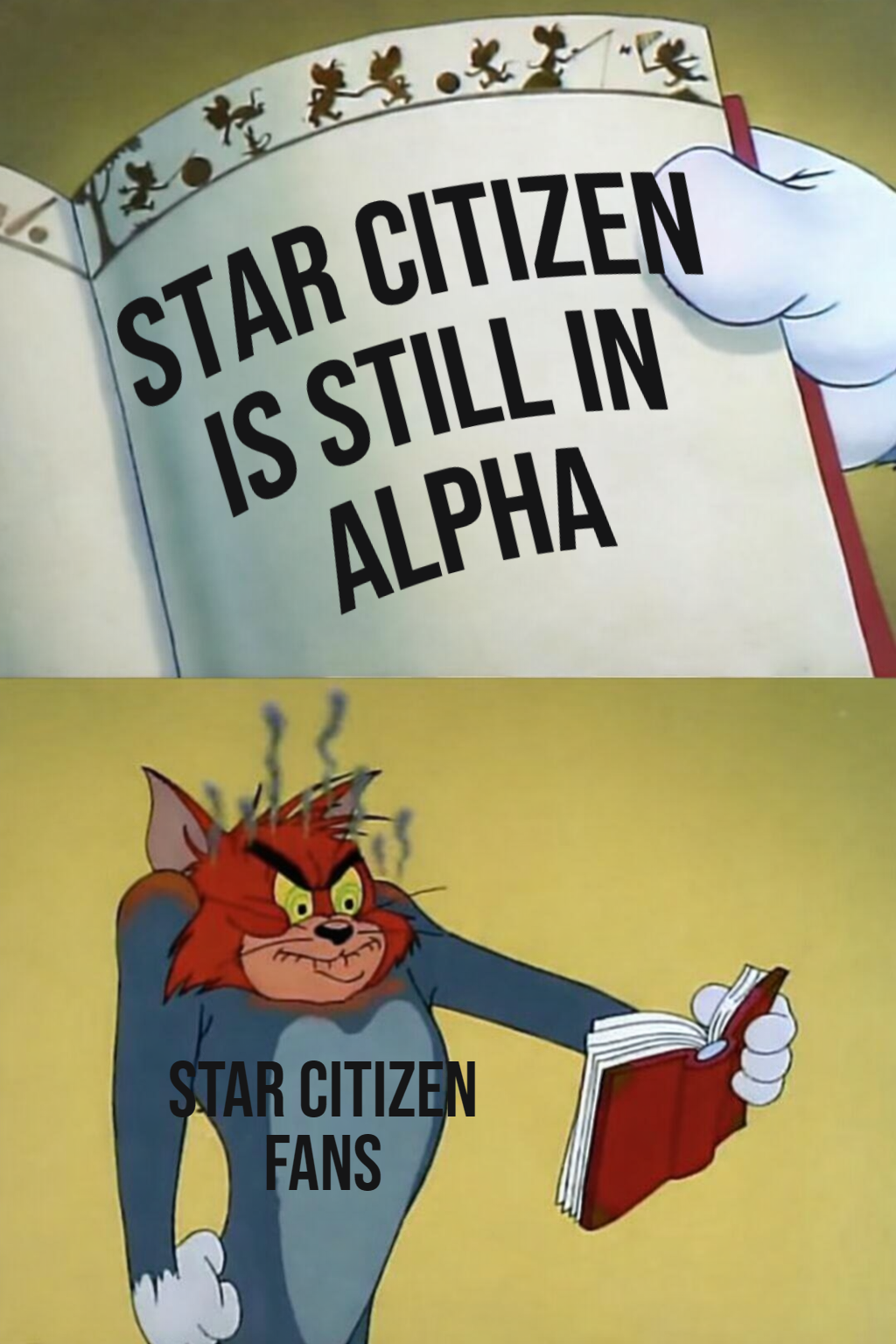
Star Citizen started development in 2011. The interviewer on the left has aged visibly. The developer on the right? Still smiling like the release date is "just around the corner." At this point, Star Citizen is less of a game and more of a generational project—like cathedrals in medieval times, except with more microtransactions for spaceship JPEGs. The game has been in development so long that entire programming languages have been born, peaked, and fallen out of favor. Developers who started on this project fresh out of college now have teenagers. The codebase probably has comments like "TODO: fix before launch" from 2013 that have achieved artifact status. It's the software equivalent of scope creep achieving sentience. Every sprint planning meeting probably ends with "just one more feature" while the backlog grows like technical debt in a startup that just raised Series B.

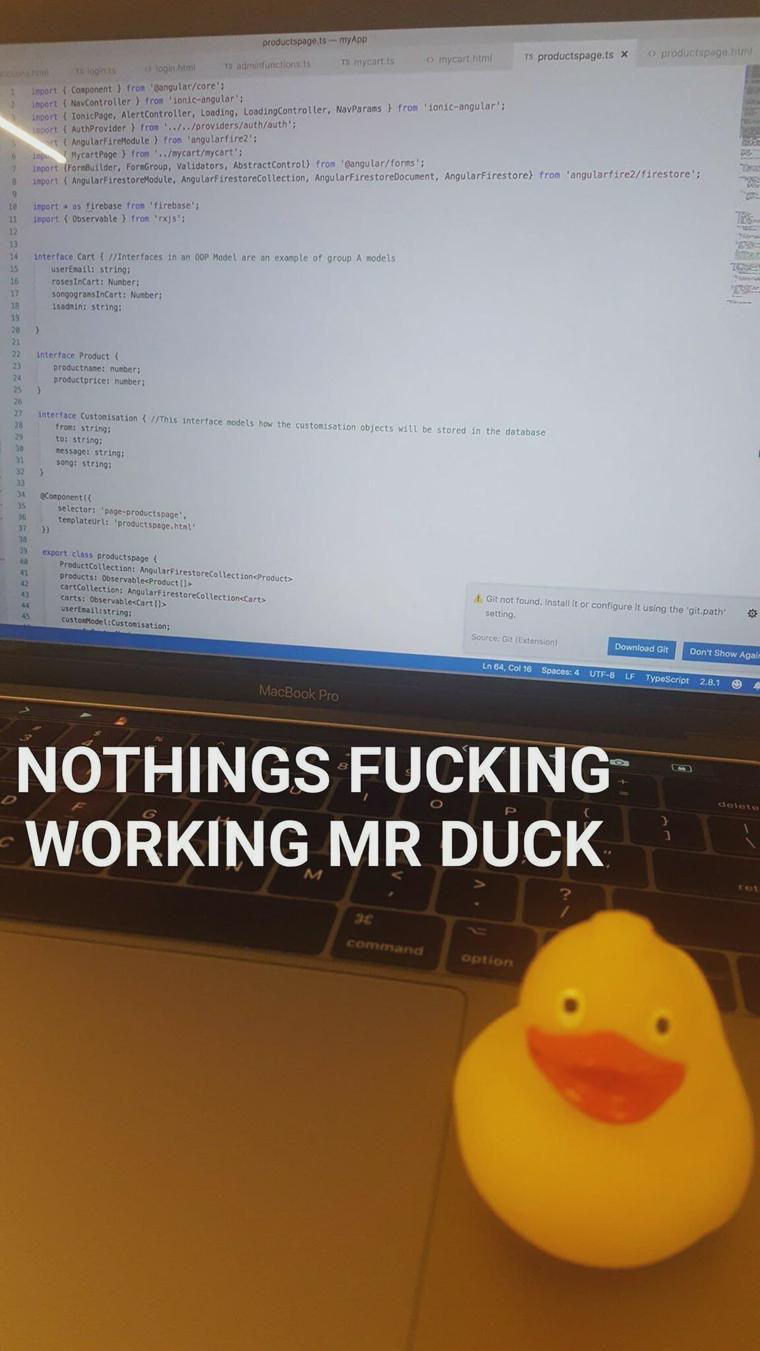
Nothings Fucking Working Mr Duck

Nothings Fucking Working Mr Duck
When rubber duck debugging reaches its absolute BREAKING POINT and even your emotionless yellow companion can't save you from the Angular/Firebase/TypeScript hellscape you've created. The code is screaming, Git isn't found, nothing is configured, and your only friend is a bath toy judging you silently from the keyboard. Rubber duck debugging is supposed to be therapeutic – you explain your code to an inanimate object and magically find the bug. But sometimes the duck just sits there while your entire development environment implodes and you're left questioning every life choice that led you to this moment. The duck has seen things. Terrible, terrible things.

Late Backend Development Horror Story

Late Backend Development Horror Story
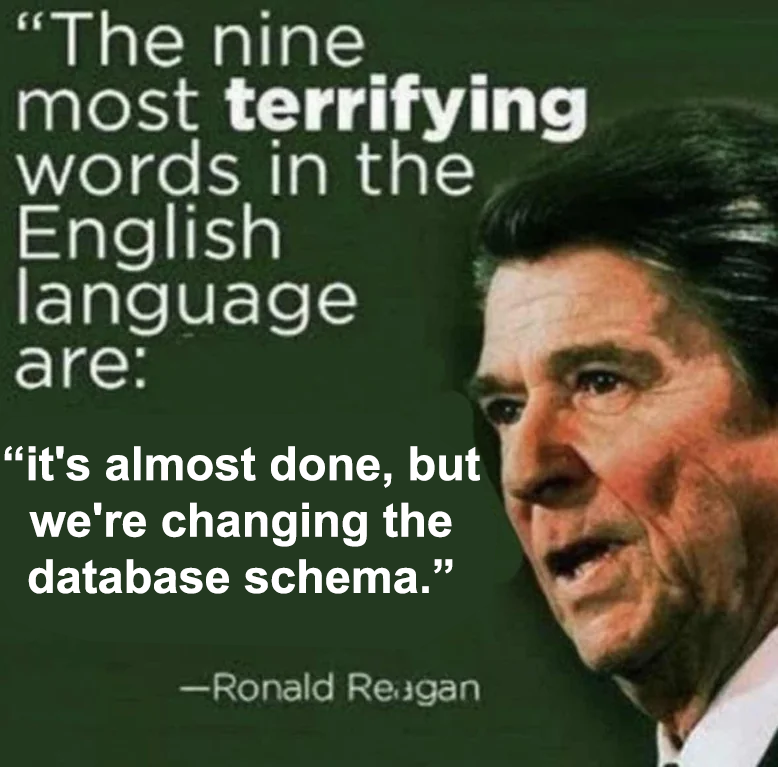
Oh, you thought you were DONE? You sweet summer child. Nothing—and I mean NOTHING—strikes more fear into a developer's heart than hearing "we're changing the database schema" when the project is supposedly "almost done." Because guess what? That innocent little sentence means your entire backend is about to get demolished and rebuilt from scratch. All those carefully crafted migrations? GONE. Your perfectly optimized queries? TRASH. That API you spent weeks building? Time to rewrite half of it, bestie. It's like being told your house is finished except they're just gonna swap out the foundation real quick. No biggie! Just a casual architectural apocalypse at the eleventh hour. Totally normal. Totally fine. Everything is fine. 🔥

The Developer's Eternal Dilemma

The Developer's Eternal Dilemma
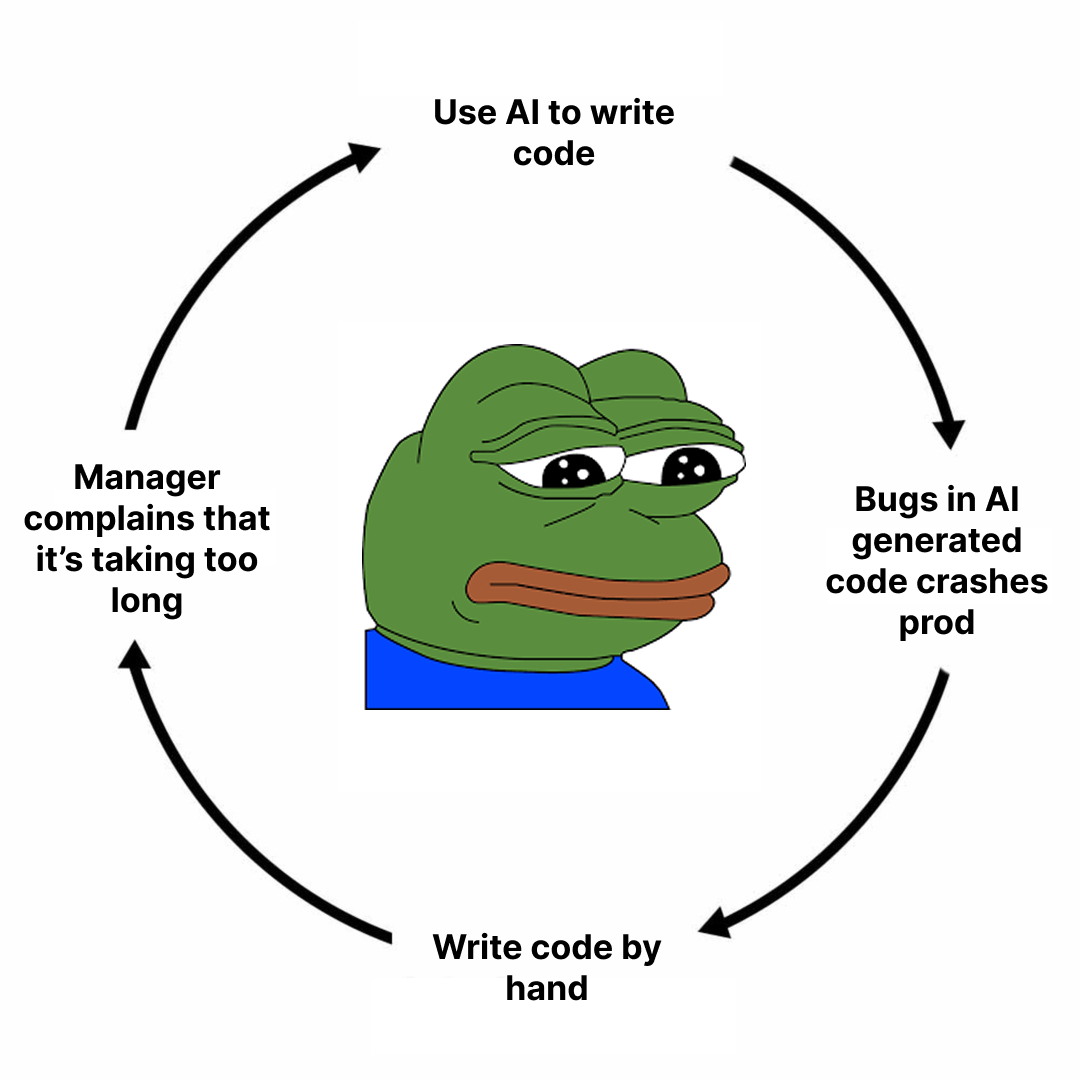
The eternal developer hamster wheel, featuring sad Pepe as our protagonist. Try AI coding, get buggy production crashes. Fall back to manual coding, trigger impatient manager. Repeat until retirement or mental breakdown, whichever comes first. The modern tech cycle isn't about finding solutions—it's about choosing which problem you prefer having today.

If A Programmer Says One Hour, Don't Set A Timer

If A Programmer Says One Hour, Don't Set A Timer
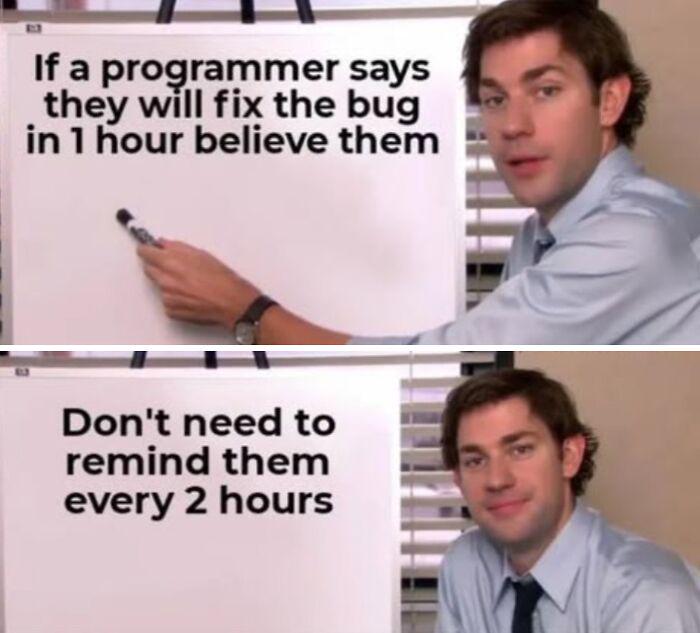
The most beautiful lie in software development: "I'll fix this bug in an hour." Sure, buddy. The first panel shows the hopeful optimism we all start with—pure delusion in its natural habitat. The second panel reveals the harsh reality that six hours later, you're still debugging the same issue while your project manager keeps checking in. That "simple fix" turned into a rabbit hole of dependency issues, undocumented edge cases, and questioning your entire career choice. Time estimation in programming follows its own non-Euclidean geometry where 1 hour = ∞.

Otherwise Known As Vibe Architects

Otherwise Known As Vibe Architects
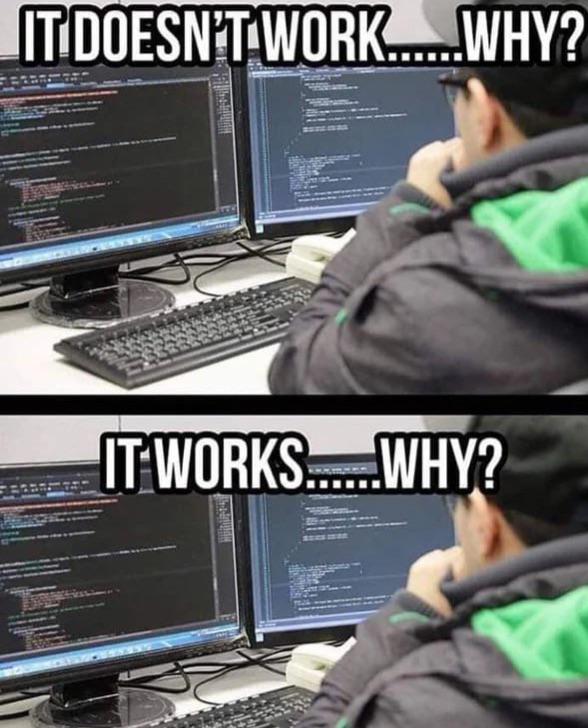
The eternal tragedy of our existence captured in two panels! 😭 Top: Code doesn't work and you're absolutely DYING to know why. Bottom: Code suddenly works and you're like "DON'T TOUCH ANYTHING, DON'T BREATHE, DON'T EVEN LOOK AT IT!" The cosmic horror of programming is not when things break, but when they mysteriously start working without you understanding why. The universe is cruel and chaotic, and we're just frantically typing monkeys pretending we have control!

Richard's Guide To Software Development Hell

Richard's Guide To Software Development Hell
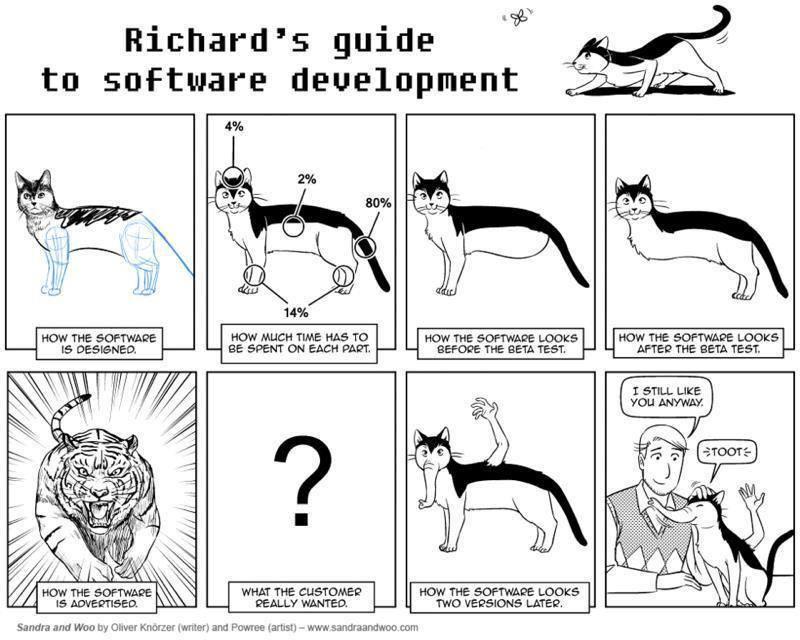
Ah, the classic software development cycle illustrated with feline precision! First panel: We start with a beautiful blueprint cat—meticulously designed with perfect proportions and elegant lines. Engineering perfection! Second panel: Resource allocation at its finest—80% of effort goes to the tail (that feature nobody will use), 14% to the legs (core functionality), 4% to the head (user interface), and a whopping 2% to the actual body (everything else that matters). Third and fourth panels: The pre-beta and post-beta cats look identical because let's be honest—nobody actually fixes anything during beta testing. Fifth panel: What the customer wanted? A FREAKING TIGER. Not even remotely close to a house cat. Sixth panel: Two versions later, the software has evolved into... a cat with an existential crisis and identity issues. Final panel: The ultimate truth bomb—despite delivering something completely wrong, users still stick around with a resigned "I still like you anyway." And the software's response? "TOOTS." Because at this point, it's just farting out updates.

Every Client Meeting Ever

Every Client Meeting Ever
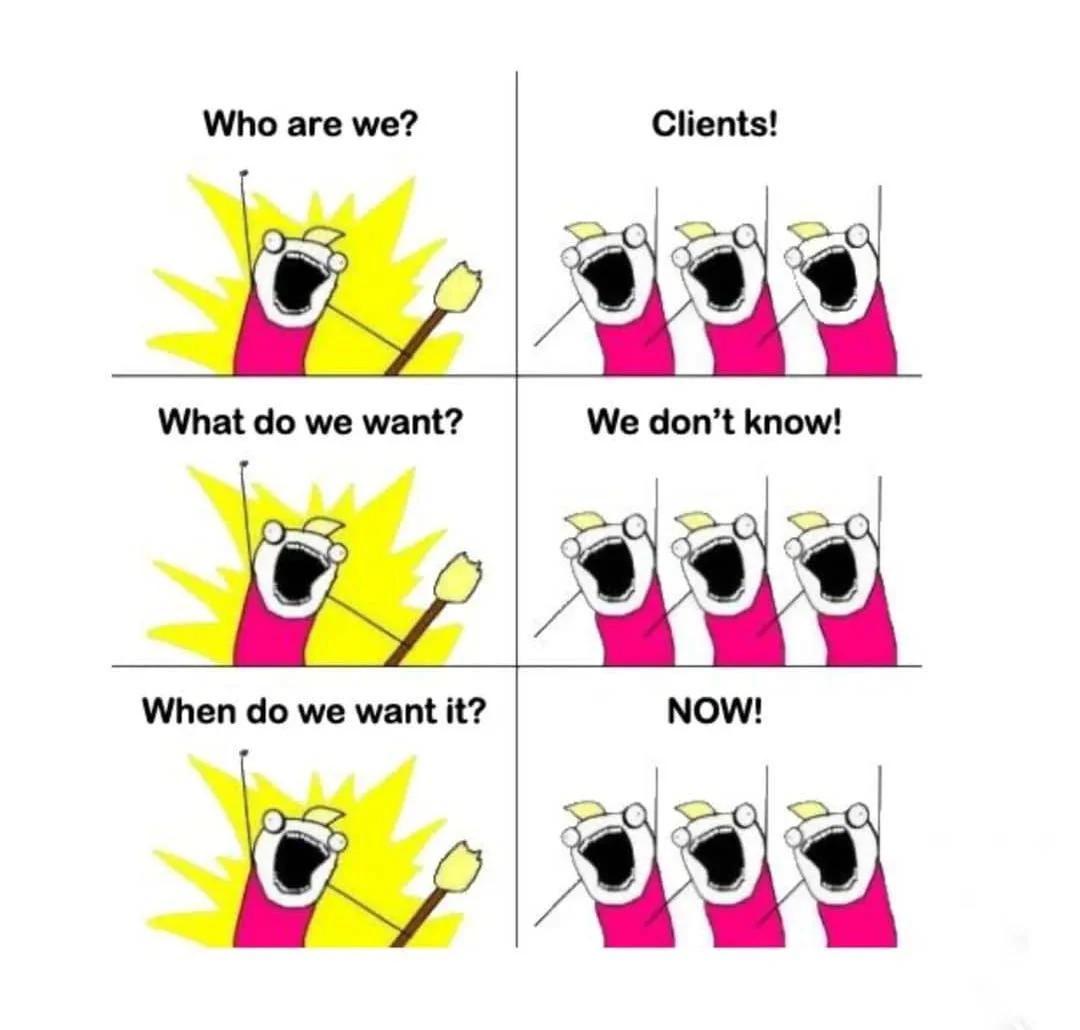
The sacred ritual of client meetings, distilled into its purest form. They're clients! What do they want? They have no freaking idea. When do they want their undefined requirements? YESTERDAY, of course! Nothing quite captures the existential dread of software development like trying to build something for someone who can't articulate what they want but will definitely know what they don't want when they see your first prototype. The best part? They'll change everything after you've written 10,000 lines of code. It's like playing darts blindfolded while the dartboard is being moved by someone who's never seen darts before.

Expectations vs. Reality: The Project Lifecycle Tragedy

Expectations vs. Reality: The Project Lifecycle Tragedy
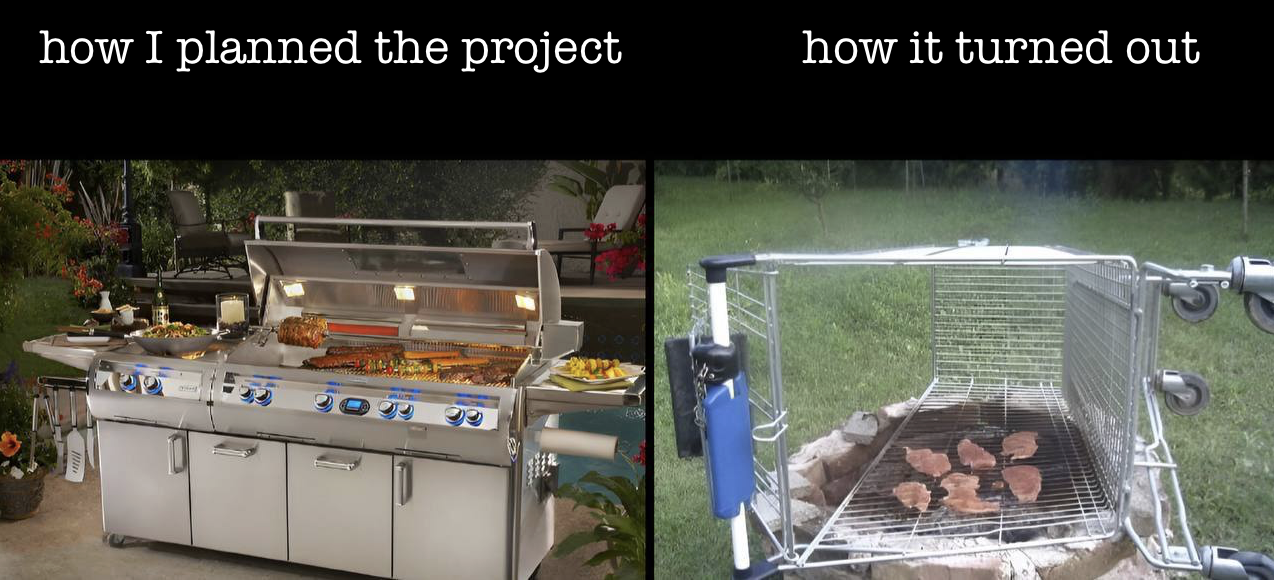
The AUDACITY of the universe to transform my MAGNIFICENT software architecture into... whatever that monstrosity is! 💀 Left side: My GLORIOUS initial design - elegant microservices, perfect documentation, seamless CI/CD pipeline... basically software PERFECTION incarnate. Right side: The horrifying REALITY after three sprints - a shopping cart grilling meat on a lawn. Basically what happens when deadlines, scope creep, and "just one more feature" collide in a spectacular dumpster fire of technical debt. I swear I had DIAGRAMS and everything! DIAGRAMS!!!

The Last 10 Percent Of 100 Percent

The Last 10 Percent Of 100 Percent
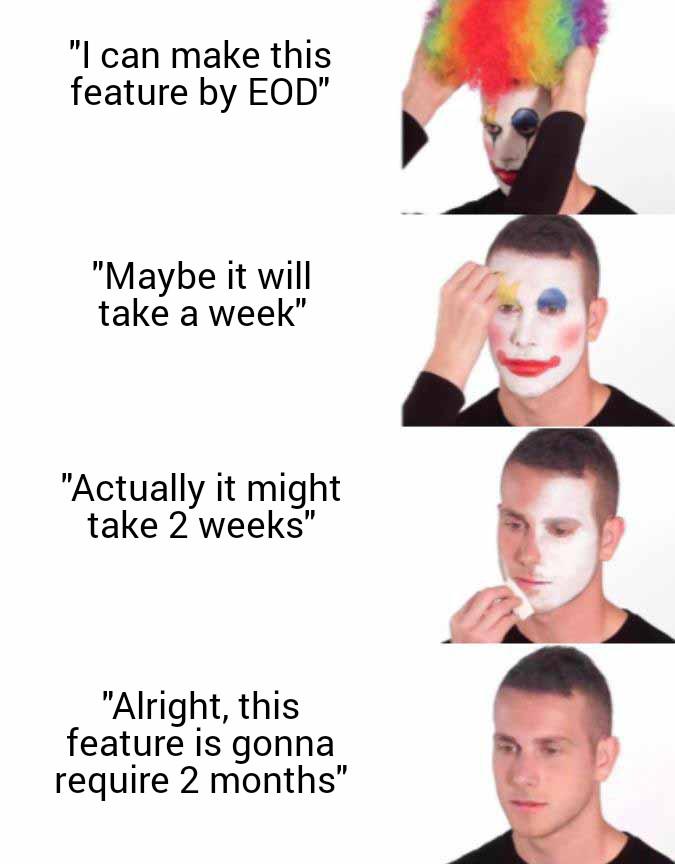
The AUDACITY of developer time estimates! 💅 First we're all rainbow-haired confidence: "EOD? EASY PEASY!" Then reality slaps us with clown makeup as our estimates spiral from "just a week" to "umm, two weeks?" until finally we're standing there bare-faced, dead inside, admitting "this monstrosity needs TWO MONTHS." The makeup removal process is basically just our souls leaving our bodies with each passing deadline. It's the software development circle of life - start as a unicorn, end as a corpse. Hofstadter's Law in full technicolor glory!

Pair Programming: The Corporate Firing Squad

Pair Programming: The Corporate Firing Squad
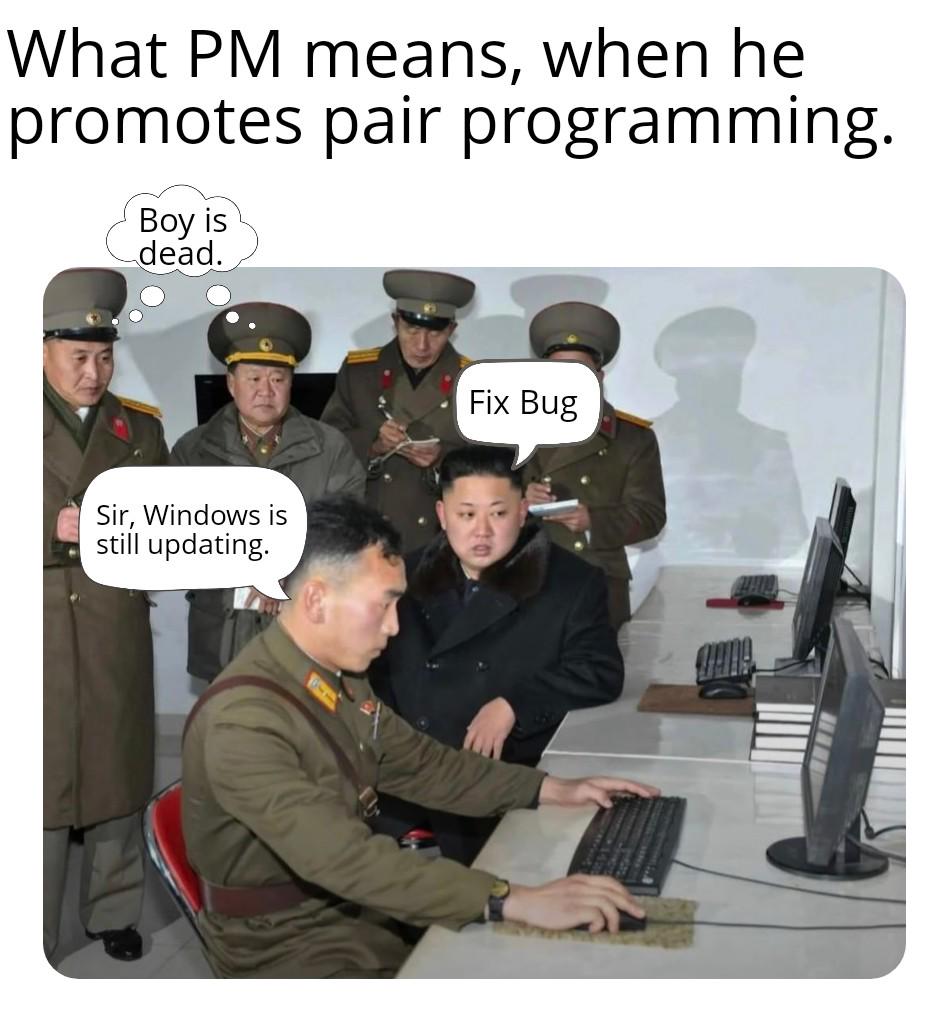
Ever been forced into "pair programming" by a manager who has no idea what coding actually involves? Yeah, that's not collaboration—that's just having five people breathing down your neck while Windows decides it's the perfect time for an update. The poor dev is just trying to code with an audience of managers expecting miracles while the system is literally unusable. And the best part? Someone's already mentally writing your obituary when you inevitably fail to "fix bug" during this corporate theater of the absurd. Pair programming works great in theory. In practice? It's just another word for "public execution by keyboard."

Why Did We Talk In Call

Why Did We Talk In Call
Ah, the classic client move that makes you question your entire career choices. You spend 120 precious minutes of your life meticulously explaining every technical detail, answering questions, and providing clarifications on the project specs. Your throat is dry. Your soul is weary. And then comes the royal decree: "Just send all that in an email." It's the corporate equivalent of "Let me speak to your manager" after the manager has already spoken to you. The aristocratic expression in the image perfectly captures that feeling of aristocratic entitlement that makes you want to time-travel back to before you accepted the meeting invite.