Job Security Or Is It

Job Security Or Is It
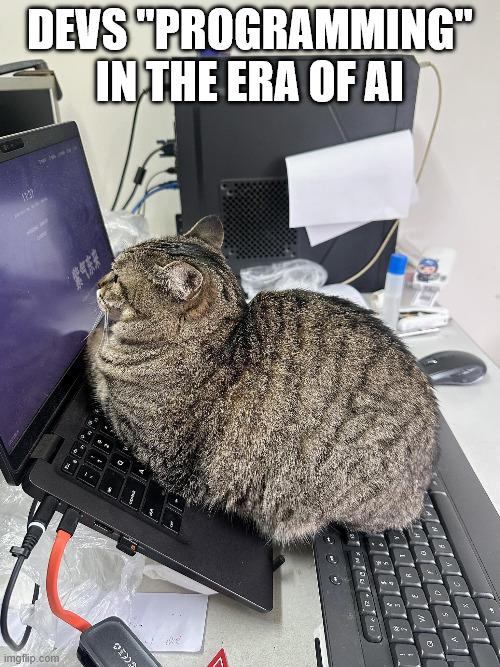
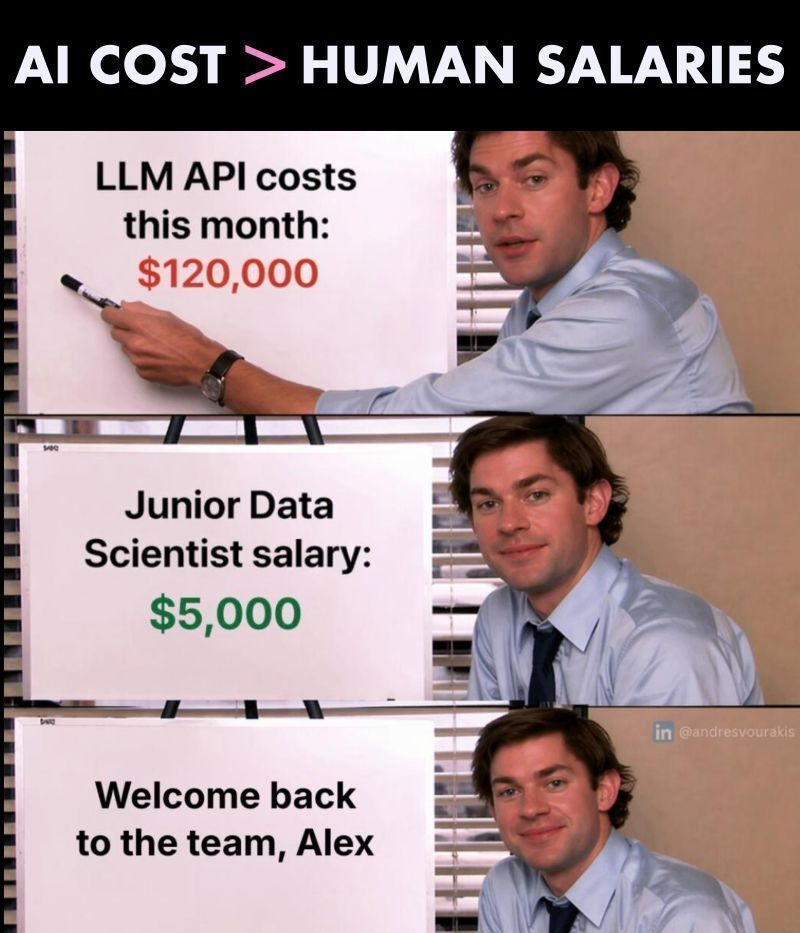
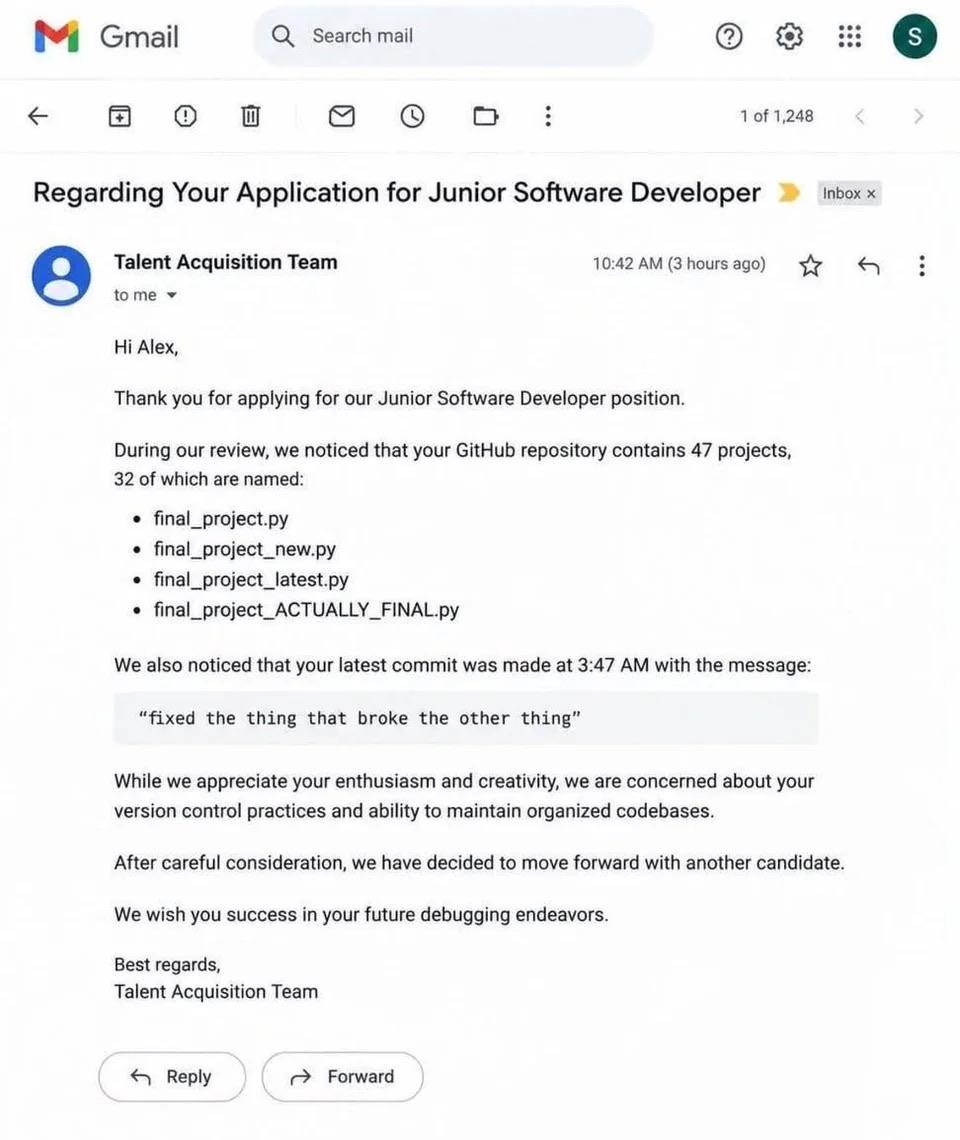
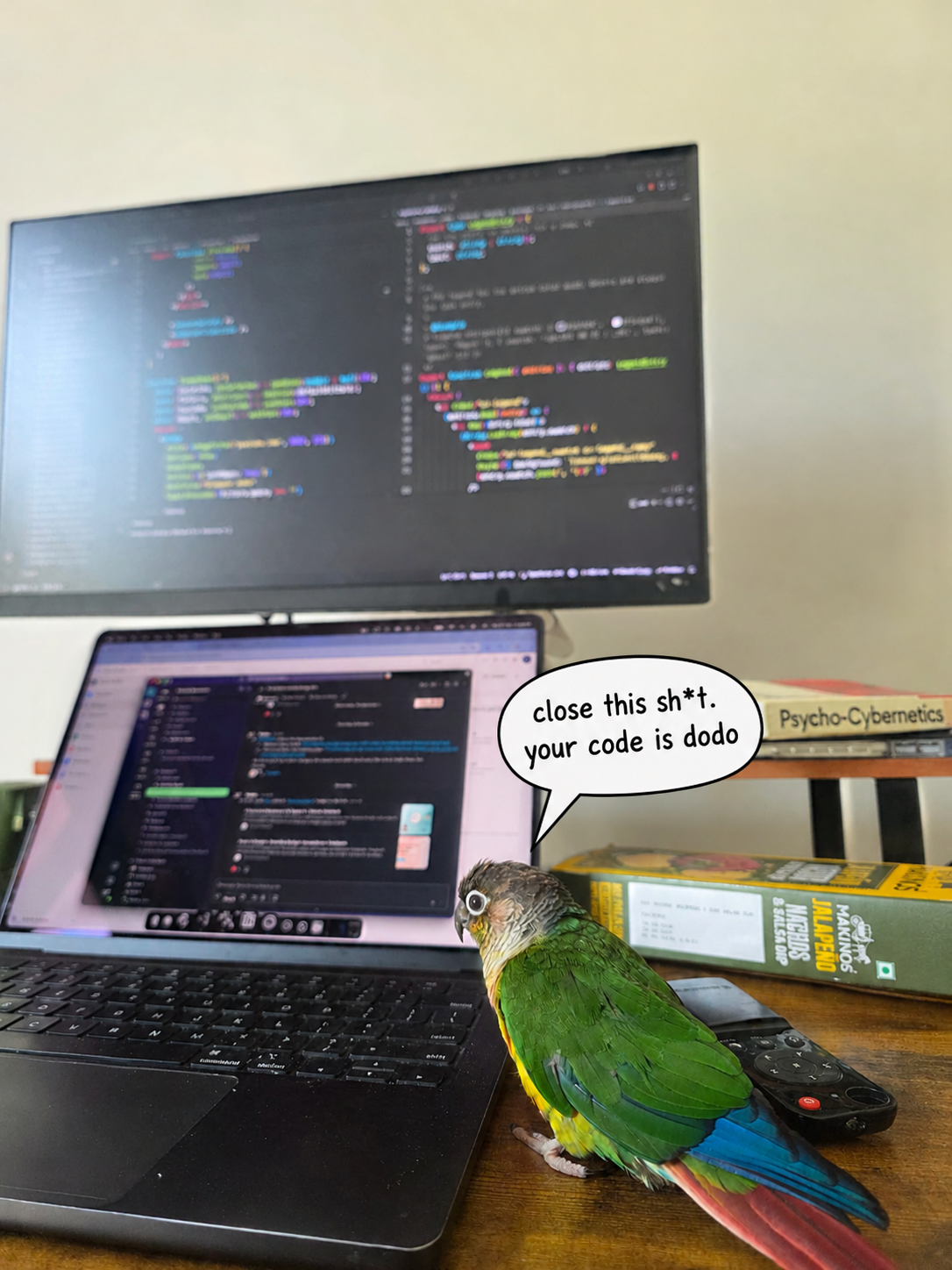
Congratulations, you've achieved what most developers only dream of: code so spectacularly terrible that it's literally AI-proof. While everyone else is panicking about GPT-5 taking their jobs, you're out here playing 4D chess with spaghetti code that would make any neural network have an existential crisis. The real power move here is realizing that your job security doesn't come from being good at your job—it comes from being so uniquely chaotic that even advanced artificial intelligence would look at your codebase and choose to become dumber rather than try to understand it. It's like creating an anti-pattern so powerful it becomes a defensive weapon. Honestly though, if your code can weaponize itself against AI, you might be simultaneously the worst and most secure developer on the planet. That's a weird flex, but okay.

Beware Of The Vulkan Pipeline

Beware Of The Vulkan Pipeline
You start with innocent vertex inputs—just some dots, really. Then you build your vertex shader and assembly, feeling pretty good about those wireframe models. The vertex shader transforms things nicely. Rasterization converts it to pixels. Fragment shader adds some color and texture. And then... you realize you forgot to clear the depth buffer and your entire scene becomes a glitchy nightmare of corrupted pixels and existential dread. The Vulkan graphics pipeline is like a Rube Goldberg machine where one forgotten flag can turn your beautiful 3D model into abstract art that would make Picasso weep. Each stage is another opportunity to mess something up in ways that won't be obvious until you've already spent 6 hours debugging why everything is magenta. Fun fact: Vulkan gives you so much control that you can literally forget to tell the GPU to clear the screen between frames. That's like forgetting to erase a whiteboard before drawing—you just keep layering chaos on top of chaos until reality itself breaks down.

Chad Programmers

Chad Programmers
Normal people just click on YouTube videos like trusting souls, blissfully unaware of the recommendation algorithm learning their deepest desires. Meanwhile, programmers are out here treating every click like a database transaction that needs to be isolated from their main browsing session. The paranoia is real—one misclick and suddenly YouTube thinks you're into 10-hour lo-fi coding streams or "Learn React in 30 seconds" shorts for the next six months. The incognito mode strategy is peak developer behavior: treating your watch history like production data that needs proper access control. Can't let that algorithm build a profile when you're just trying to watch one questionable tutorial without committing to a lifetime of similar content. It's basically the digital equivalent of wearing a disguise to the store.

You Eat Too Much

You Eat Too Much
Sam Altman really just compared training AI models to raising humans and basically called us all energy-inefficient meat computers that take TWO DECADES and countless calories to achieve basic intelligence. The audacity! The shade! So while everyone's worried about AI consuming entire power grids, homeboy casually reminds us that humans are literally walking, talking, eating energy consumption machines that need 20 years of constant refueling before we can even pretend to be smart. Talk about a reality check – we're out here judging GPUs for their power consumption while we've been munching our way through life just to learn how to code "Hello World." The guy in the reaction shot is all of us realizing we've been roasted by the CEO of OpenAI without him even trying. Emotional damage: critical.

People Use AI

People Use AI
The beautiful irony here is watching people debate whether AI or humans are the real threat, while completely missing that the bell curve shows they're literally the same distribution . The top panel shows folks arguing about AI safety with the extremes thinking it's either totally controllable or apocalyptically dangerous. The bottom panel? Same exact curve, same exact percentages, just swap "AI" for "people." It's like running two identical unit tests but changing the variable name and being shocked they both pass. The 68% in the middle are just vibing with reasonable takes while the 0.1% tails are preparing bunkers or writing Medium articles about how everything is fine. The real kicker is that whoever made this probably used AI to generate it, creating a beautiful recursive loop of irony. Plot twist: maybe the dangerous ones are the 34% on each side who are slightly concerned but not enough to actually do anything about it. That's the sweet spot where bugs make it to production.

What Made This Day Special

What Made This Day Special
OneDrive's "On This Day" feature is trying to be all nostalgic and heartwarming, showing you memories from February 23rd throughout the years. But instead of vacation photos or birthday celebrations, you get the classic "Keyboard not found" BIOS error message. The beautiful irony here is that the error instructs you to "Press F1 to continue" when it literally just told you the keyboard isn't detected. It's like telling someone to call you back after their phone dies. The system is basically asking you to use the very device it claims doesn't exist – peak hardware logic right there. Nothing says "special memories" quite like troubleshooting boot errors. Some people have wedding anniversaries; we have the day our PS/2 port gave up on life.

Friday Deploy Vibes

Friday Deploy Vibes
Behold the sacred Friday deployment ritual, where brave souls push code to production and immediately start drafting their resignation letters! The adorable woodland creatures perfectly capture the duality of developer existence: one innocently praying for divine intervention while the other has already accepted their fate as a forsaken DevOps monk. "Deploy First, Pray Later" is basically the tech industry's version of "shoot first, ask questions never." And that soul-crushing subtitle? "God abandoned this pipeline long ago" is the most accurate description of legacy CI/CD infrastructure ever written. Someone's Jenkins setup is held together with duct tape, prayers, and a single person who left the company in 2019. Nothing says "I live dangerously" quite like deploying on a Friday afternoon and then spending your entire weekend in a cold sweat, phone clutched in your hand, waiting for the PagerDuty alerts to start screaming. Chef's kiss to whoever created this masterpiece of existential developer dread! 💀

DB With 2241 Tables

DB With 2241 Tables
Someone clearly took "normalize your database" a bit too literally. 2241 tables? That's not a database schema, that's a cry for help. Somewhere, a DBA is scrolling through this entity diagram like they're reading the Terms and Conditions—except they actually have to understand it. Good luck finding user_profile_settings_v2_final_ACTUAL in that haystack. The zoom level says 0%, but the developer's hope is at -100%.

I Am Lost For Words

I Am Lost For Words
OpenClaw managed to surpass Linux in GitHub stars. Linux. The thing that's been around since 1991 and runs literally everything from your toaster to Mars rovers. Got beaten by a "vibe coded project" in 3 months. The graph shows Linux's steady, respectable climb over 14 years reaching about 200k stars. Then OpenClaw shows up and goes full vertical like it's trying to escape Earth's gravitational pull. That's not growth, that's a rocket launch fueled by hype and probably a few bot farms. Also caused a Mac mini shortage and got acquired by OpenAI for a billion dollars. Nothing suspicious here. Just a normal Tuesday in Silicon Valley where decades of kernel development gets outpaced by whatever the AI flavor of the month is. Torvalds must be thrilled.

Bros Gonna Hack Nasa

Bros Gonna Hack Nasa
Someone out here thinking they're about to breach NASA's cybersecurity infrastructure with CSS... you know, the styling language that makes buttons pretty and centers divs (if you're lucky). Sergey Berengard swoops in with the reality check: buddy, CSS isn't going to get you past NASA's firewalls, but hey, you might be able to give their satellites a fresh coat of paint. Maybe throw in some border-radius on those solar panels while you're at it. The confusion between CSS (Cascading Style Sheets) and actual hacking tools is peak beginner energy. It's like showing up to a bank heist with a paintbrush. The comment section roasting this person with 197 reactions says it all—the internet has no mercy for those who think color: #FF0000; is a security exploit.

Friendly Reminder To Turn Your Notifications Off For The Weekend

Friendly Reminder To Turn Your Notifications Off For The Weekend
Nothing screams "work-life balance" quite like that delightful ping at 9:30 PM on a Friday. You know, right when you've finally cracked open your first beer and convinced yourself you're off the clock. But wait—it's marked "urgent"! Here's the thing: if it's truly urgent at 9:30 PM on a Friday, someone's infrastructure is on fire and they should be calling you, not emailing. Otherwise, it's just Karen from marketing who suddenly remembered she needs that feature deployed before Monday because she promised it to a client without consulting anyone technical first. Pro tip: The only thing urgent on a Friday night is deciding which streaming service to binge. Everything else can wait until Monday. Your Slack notifications? Off. Your email? Snoozed. Your sanity? Preserved.

The First Rule Of Programming: If It Works Don't Touch It

The First Rule Of Programming: If It Works Don't Touch It
You know that code you wrote three years ago that somehow still works despite violating every design pattern known to humanity? The one held together by duct tape, prayers, and a single if-statement that nobody understands? Yeah, that's the cow standing on a tiny stool. Every developer has encountered this sacred law: the code is functional but the architecture is... questionable. You want to refactor it. You should refactor it. But deep down you know that touching it means spending the next two weeks debugging why the entire system collapsed because you changed a variable name. So you leave it alone. You document nothing. You move on. And when the new junior dev asks "why is it built like this?" you simply whisper: "We don't talk about the cow."