Tech history Memes

Posts tagged with Tech history
How I Learned About Image Analysis In Uni

How I Learned About Image Analysis In Uni
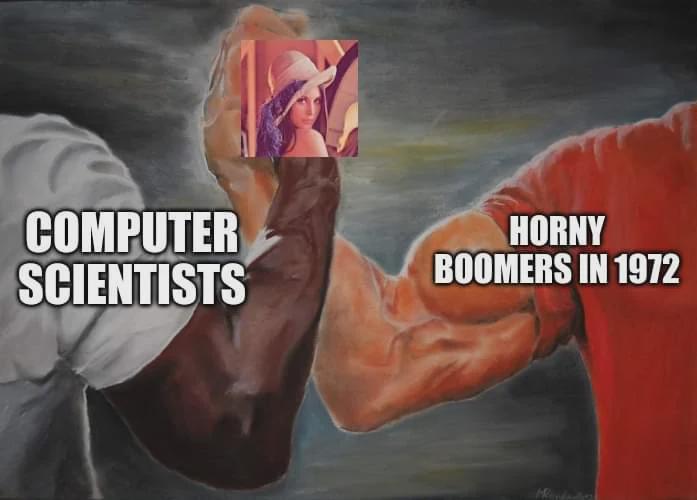
The history of digital image processing is... interesting. Back in the early days, computer scientists needed test images to develop algorithms for compression, filtering, and analysis. Problem was, they needed something standardized everyone could use. Enter the November 1972 issue of Playboy. Some researchers at USC literally scanned a centerfold (Miss November, Lena Forsén) and it became THE standard test image in computer vision for decades. Every image processing textbook, every research paper, every university lecture - there's Lena. So yeah, you'd be sitting in your serious academic Computer Vision class, professor droning on about convolution kernels and edge detection, and BAM - cropped Playboy centerfold on the projector. Nobody talks about it, everyone just accepts it. Peak academic awkwardness meets "we've always done it this way" energy. The image is still used today, though it's finally getting phased out because, you know, maybe using a Playboy model as the universal standard in a male-dominated field wasn't the best look.

Sorry Microslop

Sorry Microslop
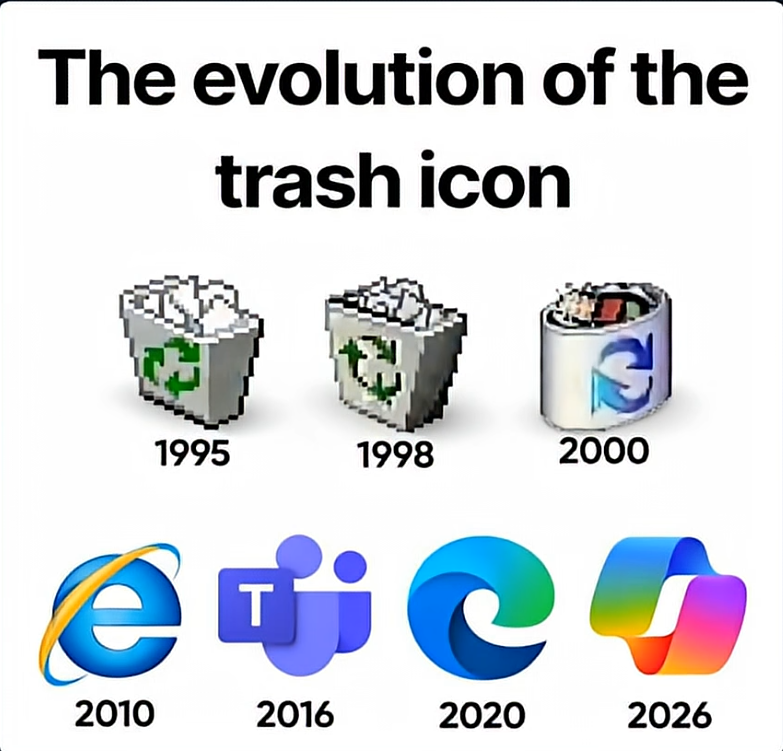
The Windows Recycle Bin icon had a good run from 1995-1998, but then Microsoft decided to use it as a dumping ground for their failed browser experiments. Internet Explorer in 2000? Straight to trash. IE again in 2010? Still trash. Then they pivoted to throwing their entire product lineup in there: Teams in 2016 (because who actually likes using Teams?), Edge in 2020 (Chromium-based redemption arc aside), and apparently by 2026 they're planning to toss in Windows Copilot with that rainbow gradient disaster. The recycle bin has evolved from a simple trash receptacle to a graveyard of Microsoft's "this will definitely work this time" initiatives. At least they're self-aware enough to keep the metaphor consistent.

IBM 1979 Variant

IBM 1979 Variant
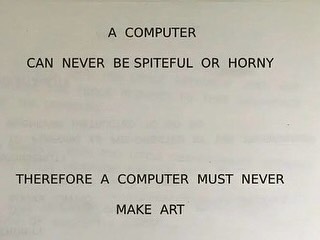
IBM back in '79 really thought they had it all figured out with this corporate manifesto. "Computers can't be spiteful or horny, therefore they can't make art." Fast forward to 2024 and AI is generating furry art and writing passive-aggressive code comments that would make any senior dev proud. The logic here is beautifully flawed. Turns out spite and horniness aren't prerequisites for creativity—they're just what makes human art interesting . Meanwhile, generative AI is out here proving that you don't need emotions to make art, you just need enough training data and electricity bills that would bankrupt a small nation. Props to IBM for this take aging like milk in the desert sun. Nothing says "we understand creativity" like a corporation in the mainframe era trying to philosophically gatekeep artistic expression.

Aged Like Milk

Aged Like Milk
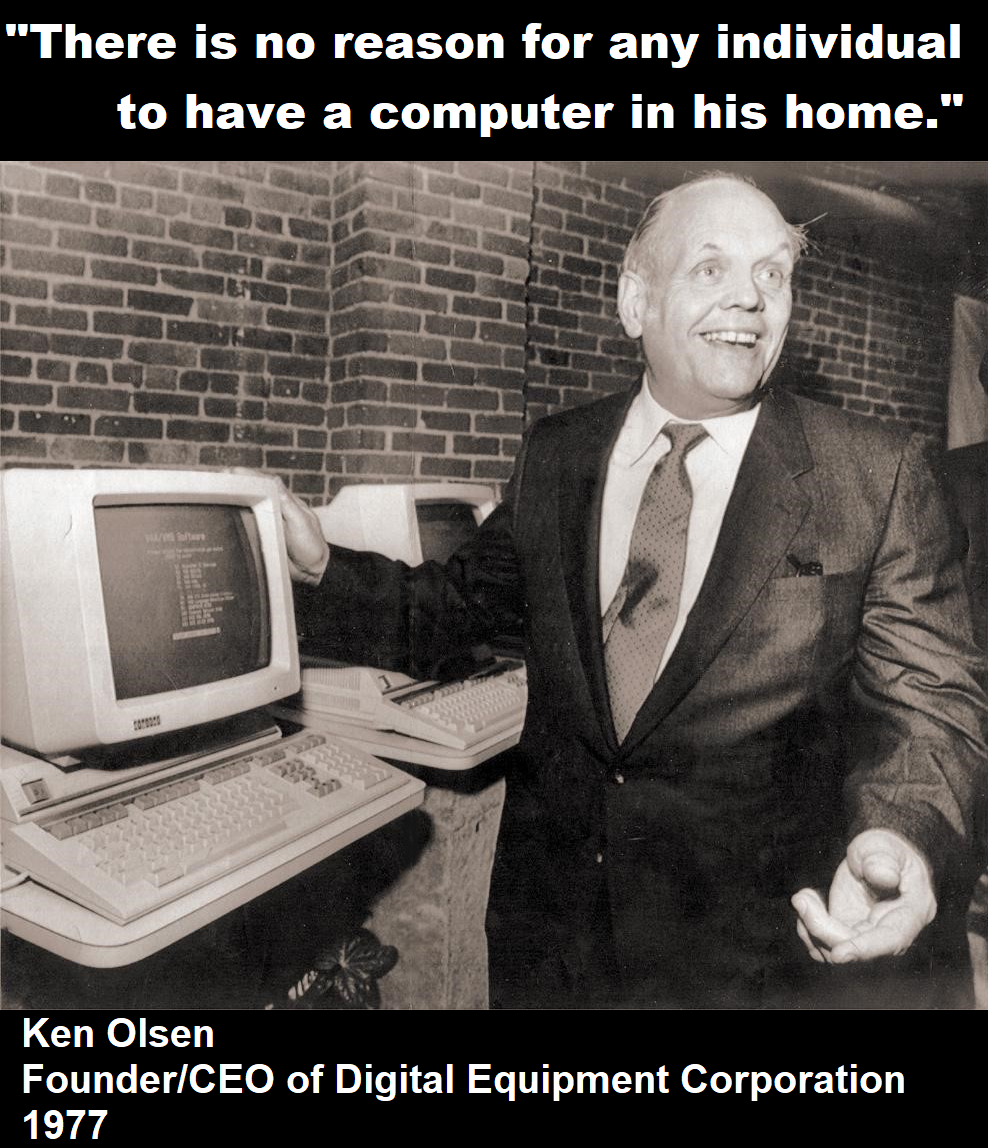
Ken Olsen, CEO of Digital Equipment Corporation, confidently declared in 1977 that nobody would ever need a computer at home. Fast forward a few decades and we're literally panicking when our phone battery drops below 20%. We've got computers in our pockets, on our wrists, in our fridges, and probably embedded in our toasters at this point. The irony here is chef's kiss level. The guy was literally selling computers while simultaneously predicting they'd never be a household item. It's like a car salesman saying "nobody will ever need personal transportation." Digital Equipment Corporation eventually went bankrupt in 1998, probably around the time people were installing Windows 98 on their home PCs and playing Solitaire instead of working. Fun fact: Today we have more computing power in our smartphones than NASA used to land on the moon. So yeah, Ken... we found a few reasons to have computers at home. Like doomscrolling Twitter at 2 AM and arguing with strangers on Reddit about whether tabs or spaces are superior.

Microsoft In The 90s Vs Today

Microsoft In The 90s Vs Today
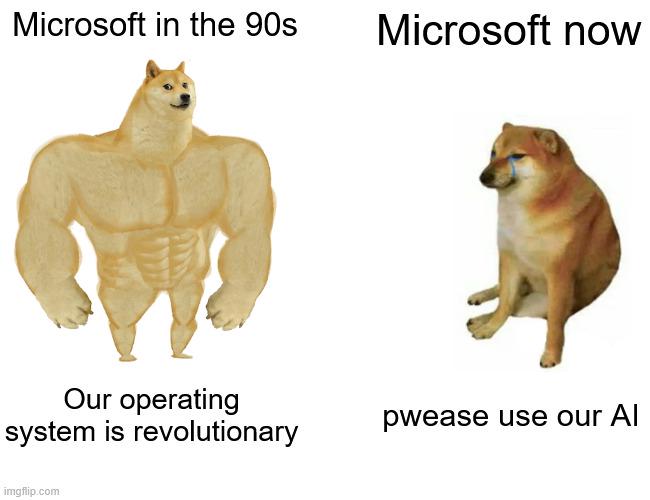
Remember when Microsoft was the unstoppable titan that had governments filing antitrust lawsuits because they were too dominant? Yeah, those were the days. Back in the 90s, they were flexing hard with Windows 95, crushing Netscape, and basically owning the entire desktop market like a monopolistic bodybuilder. Fast forward to today, and they've gone from "our OS will dominate the world" to desperately begging you to try their AI chatbot. "Please use Bing! We added ChatGPT! Look, Copilot can write your emails!" It's like watching a former heavyweight champion now selling protein shakes on Instagram. The transformation is wild—from antitrust villain to the company that's just happy you're using Edge (which is just Chrome with extra steps anyway). They went from "embrace, extend, extinguish" to "embrace open source and pray people notice us."

Annual Meeting Of Unhated Technologies

Annual Meeting Of Unhated Technologies
The conference room is completely empty except for the world's loneliest table. Turns out when you're looking for universally beloved tech, you get PHP 6 (which never actually shipped), IPv5 (a failed experimental protocol that was skipped entirely), and Windows 9 (which Microsoft yeeted straight into the void). The joke writes itself: these "attendees" are either vaporware, skipped versions, or technologies so cursed they never saw the light of day. They can't be hated if they don't exist. *taps forehead* Meanwhile, every other technology is out there getting roasted daily on Twitter. JavaScript? Too many frameworks. Python? Slow as molasses. Rust? The evangelists won't shut up. But these three? Pure, untarnished, because they never had the chance to disappoint anyone.

Technologies Of Yore

Technologies Of Yore
So apparently there's an annual meeting for technologies everyone pretends to hate but secretly can't live without. PHP 6 showed up (a version that famously never even released), IPv5 (skipped because it was experimental), and Windows 9 (Microsoft jumped straight to 10 because... reasons?). The irony? These "unhated" technologies are either vaporware or intentionally skipped versions. They're not hated—they literally don't exist in production. It's like having a support group for imaginary friends. Fun fact: IPv5 was actually an experimental Internet Stream Protocol that got abandoned in favor of IPv6. PHP 6 died because of Unicode implementation nightmares, and Windows 9 was skipped possibly to avoid compatibility issues with legacy code checking for "Windows 9*" (Windows 95/98). So yeah, the only thing these technologies have in common is that they all ghosted us.

Imagine The World With More Windows Computers

Imagine The World With More Windows Computers
Steve Jobs really tried to pull a "join us and kill your baby" move on Linus Torvalds back in 2000. Imagine the audacity: "Hey, come work for Apple, but first, stop doing that thing you're literally famous for creating." Torvalds looked at that offer, probably laughed in Finnish, and said "nah, I'm good." Thank the tech gods he did, because without Linux we'd be living in a dystopian hellscape where servers run Windows and Docker containers are just a fever dream. The man literally chose open-source ideals over a cushy Apple paycheck and continues maintaining the kernel that powers like 90% of the internet, Android phones, and basically every server worth its salt. Meanwhile, Steve's probably doing that prayer hands thing from beyond the grave, still wondering why anyone would turn down Apple.

It's The Law

It's The Law
Moore's Law—the sacred prophecy that transistor density would double every two years—has been the tech industry's comfort blanket since 1965. But now? The universe has BETRAYED us. Physics decided to show up to the party and ruin everything with its "laws of thermodynamics" and "quantum tunneling limitations." Programmers everywhere are having a full-blown existential crisis because they can no longer rely on hardware magically getting faster to compensate for their bloated code. The sheer AUDACITY of reality refusing to keep up with our demands for infinite performance improvements! Now we actually have to *gasp* optimize our code and write efficient algorithms instead of just waiting two years for Intel to save us. The horror. The absolute tragedy of it all.

Meanwhile In The 80's

Meanwhile In The 80's
Back when computer mice were being invented, someone in a boardroom had to stand up and pitch the name. The excitement was real—until someone clarified they weren't naming it after the biological swimmers. The deflation is palpable. Fun fact: The computer mouse was actually invented in 1964 by Doug Engelbart, and it got its name because the tail-like cable coming out the back made it look like a rodent. Simple times, simple naming conventions. No focus groups, no A/B testing, just "looks like mouse, call it mouse." Meanwhile, modern developers spend three weeks bikeshedding whether to call a variable userData or userInfo .

How Did He Write The Linux Kernel Without ChatGPT, Starbucks And GitHub

How Did He Write The Linux Kernel Without ChatGPT, Starbucks And GitHub
Linus Torvalds, the mythical creature who wrote an entire operating system without once asking ChatGPT to "explain pointers in C" or pushing broken code at 4:59pm on a Friday. Legend has it he didn't even need a $7 latte to debug kernel panics. Just pure Finnish sisu, a text editor, and the audacity to email people when their code was garbage. Modern devs looking at this like archaeologists discovering someone built the pyramids without Stack Overflow.

Ancient IBM Wisdom That The Bosses Just Straight Up Promptly Forgot

Ancient IBM Wisdom That The Bosses Just Straight Up Promptly Forgot
Ah, the ancient scrolls of IBM wisdom. Back when computers were the size of rooms and management actually understood their limitations. Fast forward to 2023: "Let's have the AI make all our business decisions!" Meanwhile, when something breaks, it's still the human's fault. Funny how we've gone from "computers shouldn't make decisions" to "the algorithm said we should fire 30% of staff, so..." I'm sure this sign is framed right next to the "THINK" posters in IBM's museum of ignored advice.