Licensing Memes

Posts tagged with Licensing
Journalists Having Bad Ideas About Software Development

Journalists Having Bad Ideas About Software Development
So a tech journalist just suggested that open source should "ban itself" in certain countries based on geopolitics. That's like suggesting gravity should stop working in specific time zones because of trade disputes. The entire point of open source is that the code is, well, open . It's publicly available. You can't "ban" something that's already distributed across millions of repositories, forks, and local machines worldwide. Even if you deleted every GitHub repo tomorrow, the code would still exist on countless hard drives, mirrors, and archive sites. Trying to geofence open source is like trying to un-ring a bell or put toothpaste back in the tube. The MIT license doesn't come with geographical restrictions for a reason. That's literally the opposite of how information distribution works on the internet. But hey, at least we got a solid Boromir meme out of someone's fundamental misunderstanding of software licensing and distribution.

Bro You Used MIT

Bro You Used MIT
The MIT license literally says "do whatever you want with this code, I don't care." It's the most permissive open-source license out there—you can use it, modify it, sell it, tattoo it on your forehead, whatever. So when a dev slaps MIT on their repo and then has a meltdown on Twitter because someone actually *used* their code, it's like putting up a "FREE PIZZA" sign and then crying when people eat the pizza. The cat's bewildered stance perfectly captures the rest of us watching this drama unfold, wondering if they've ever actually read the license they chose. Pro tip: if you don't want people using your code, maybe don't pick the license that's basically the digital equivalent of "take it, it's yours."

Bruh You Used MIT

Bruh You Used MIT
The MIT License is basically the "do whatever you want with my code, I don't care" of open source licenses. It's one of the most permissive licenses out there—you can copy, modify, distribute, sell, and even use it in proprietary software. The only requirement? Keep the copyright notice. So when a dev slaps an MIT license on their repo and then gets mad that someone "stole" their project... buddy, you literally gave everyone permission to do exactly that. That's like leaving your front door wide open with a sign saying "help yourself" and then calling the cops when someone takes your TV. The Persian cat's dramatic pose perfectly captures the absurdity of complaining about something you explicitly allowed. Should've gone with GPL if you wanted that copyleft protection, my friend.

One Rich Asshole Called Larry Ellison

One Rich Asshole Called Larry Ellison
Ah, the alternative definition of Oracle that database administrators whisper when license auditors aren't around. The company's licensing costs are so astronomical that you need venture capital funding just to run a "Hello World" query. Oracle DBAs don't have retirement plans—they just have Oracle license negotiation PTSD. The real database transaction is the money leaving your company account.

The MIT License Paradox

The MIT License Paradox
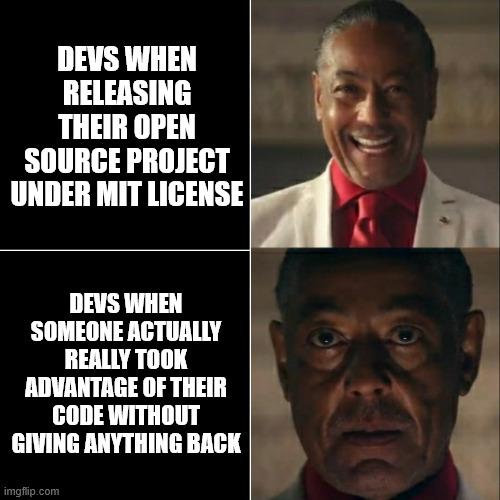
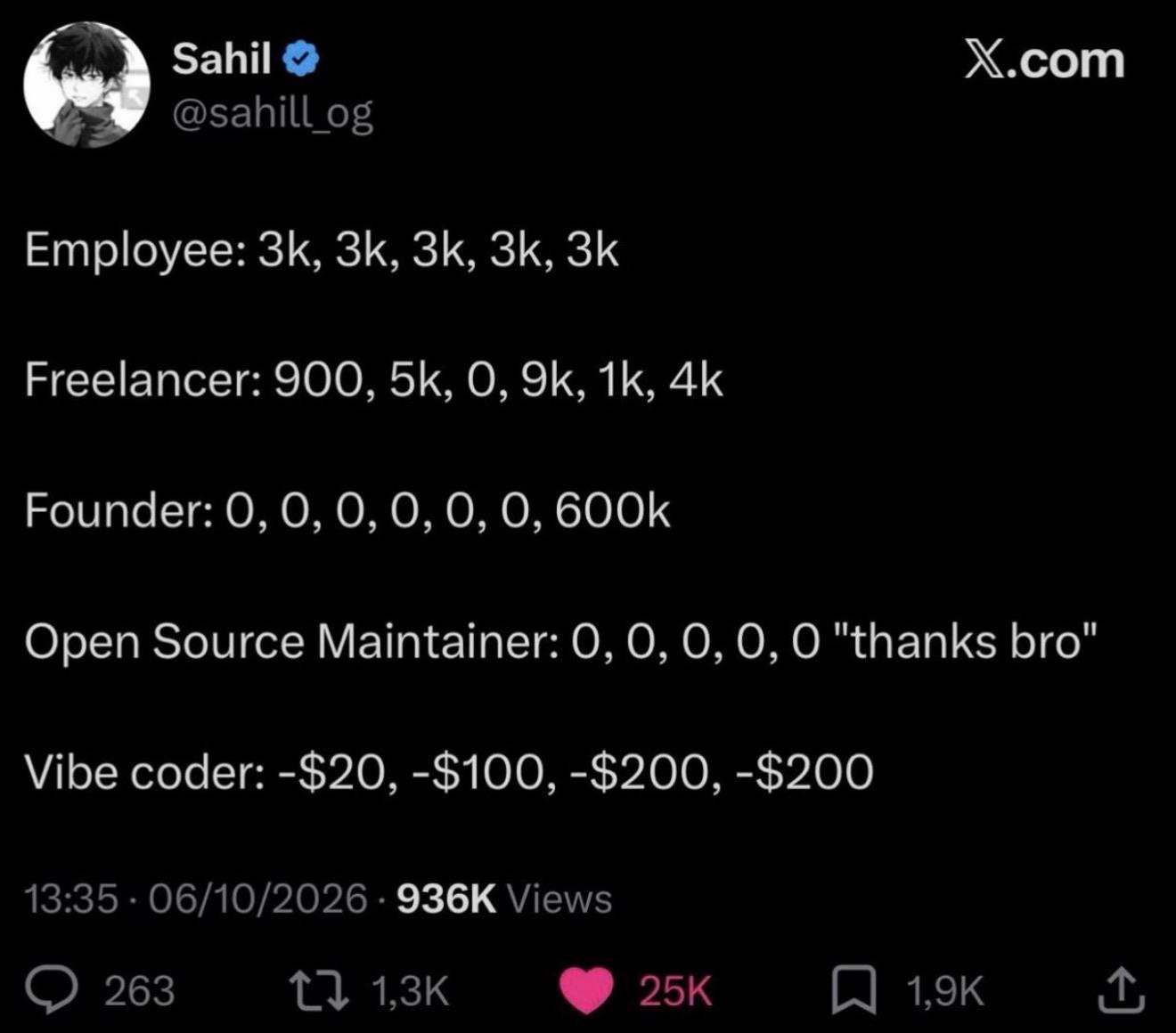
The classic developer duality: "Sure, use my MIT-licensed code for anything you want!" followed by the existential crisis when someone actually does. It's like putting a "Free, take one" sign on your code and then having a meltdown when someone actually takes it. The MIT license is basically saying "here's my code, do whatever, just don't sue me" - until the theoretical becomes practical and suddenly you're questioning all your life choices. Nothing says "open source contributor" like the cognitive dissonance of wanting your work used while simultaneously feeling violated when it happens.

Silence Tech CEO

Silence Tech CEO
When a tech CEO meets an open source developer who's about to reveal how their company's "revolutionary proprietary algorithm" is actually just forked from a GitHub repo with zero attribution. The hand gesture isn't saying "stop"—it's frantically trying to pause the conversation before the entire board meeting discovers their $50M valuation is built on npm install and Stack Overflow copypasta.

The MIT License Paradox

The MIT License Paradox
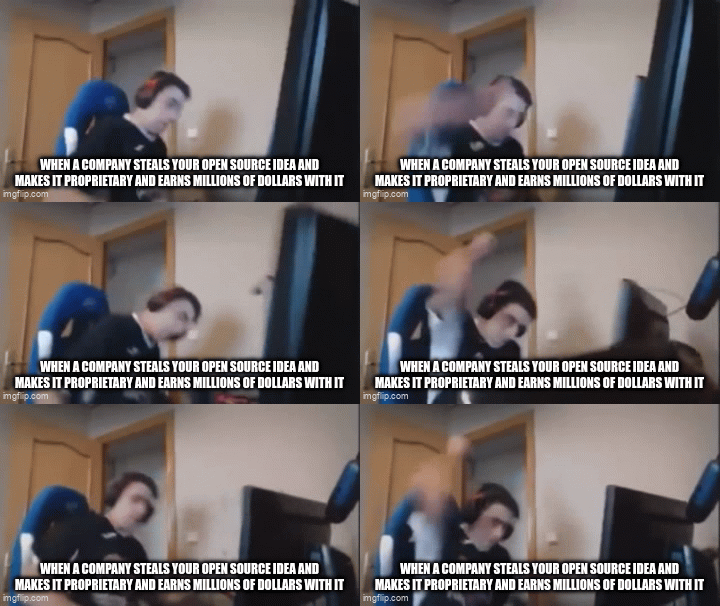
The classic developer hypocrisy in its natural habitat! We're all for permissive licensing until someone actually exercises those permissions. "Sure, use my MIT-licensed code for anything... wait, you're SELLING it? With a different NAME?! How DARE you do exactly what I explicitly allowed!" The cognitive dissonance hits harder than a production bug on Friday afternoon. The MIT license is basically saying "do whatever you want" but our egos still can't handle seeing our precious code in someone else's commercial product. We want the street cred without the consequences of our licensing choices.

Unfortunately Named Enterprise Linux

Unfortunately Named Enterprise Linux
The sign makes a brilliant wordplay on Red Hat Enterprise Linux (RHEL), one of the most popular enterprise Linux distributions. "Can't spell HATRED without REDHAT" is a savage burn that sysadmins who've battled RHEL licensing or compatibility issues will feel in their souls. The irony is delicious—a system designed to be reliable and enterprise-grade being associated with pure frustration. Anyone who's ever spent 3 hours trying to install a package that worked perfectly on Ubuntu knows this special kind of pain. It's the computing equivalent of stepping on a LEGO while barefoot.

Microsoft Licensing: Where Logic Goes To Die

Microsoft Licensing: Where Logic Goes To Die
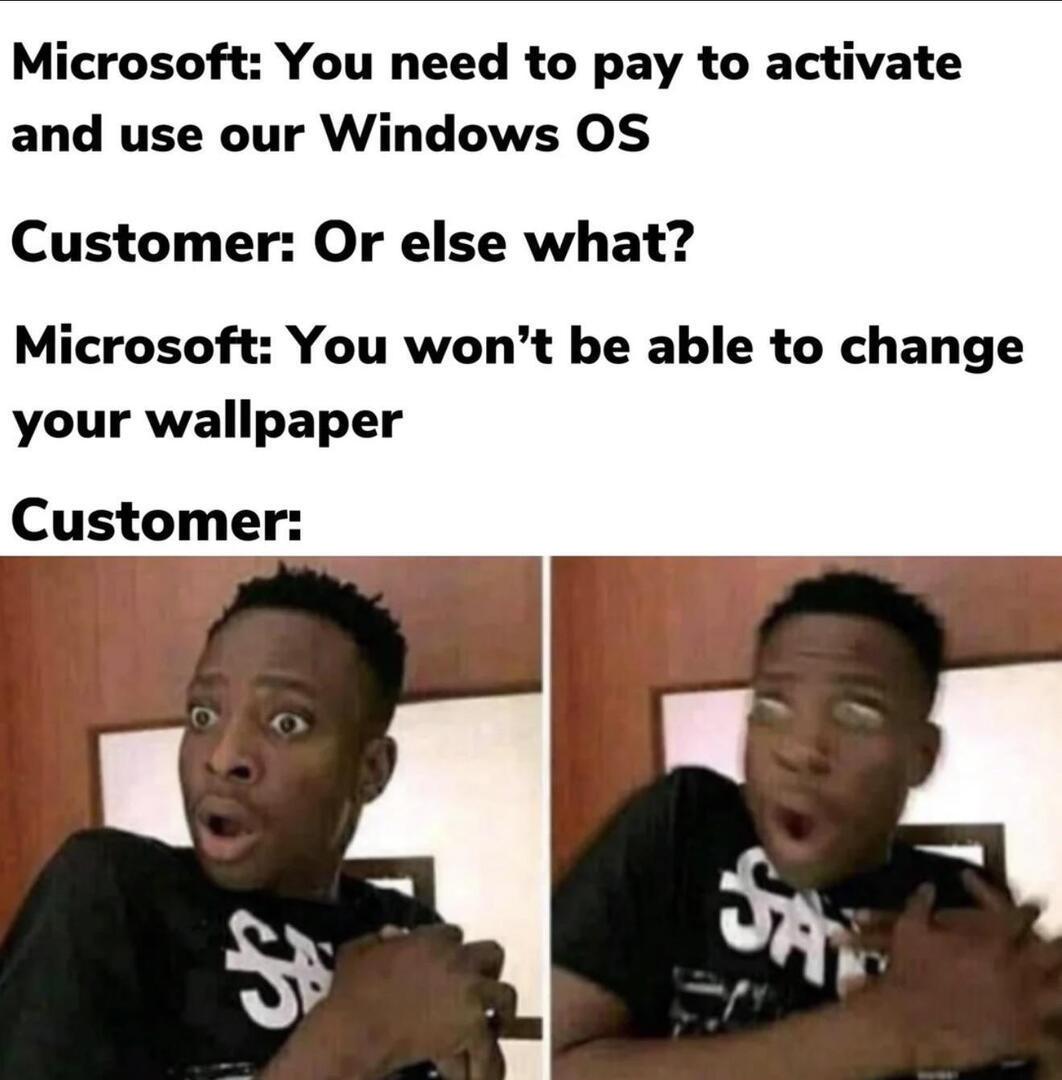
The eternal Microsoft licensing labyrinth claims another victim! Anyone who's survived a Microsoft audit knows this pain - trying to decipher their deliberately cryptic licensing rules is like trying to solve a Rubik's cube blindfolded while someone keeps changing the colors. After days of reading contradictory forum posts, conflicting official docs, and getting different answers from every MS rep, this admin finally reached enlightenment: "Screw it, I'm doing it my way." The beautiful simplicity of "one server, one license, two VMs" is the IT equivalent of finding inner peace. The best part? That defiant "Here are my 4 licenses for 4 servers with 8 VMs" stance. It's the sysadmin equivalent of telling the IRS "here's my math, fight me."

He Never Asked For My Data

He Never Asked For My Data
OMG, the AUDACITY of people romanticizing Clippy in 2023! 💅 That paperclip assistant from Microsoft Office was literally THE ORIGINAL PRIVACY INVADER before it was cool! While we're all losing our minds about apps tracking our every move, Clippy was just sitting there, innocently bouncing around our Word documents, NOT asking for our age, NOT canceling our perpetual licenses, and NOT demanding our location. THE HORROR! A digital assistant that just... helped?! Without stealing our data?! What a concept! *dramatically faints onto keyboard*

Oracle Being Oracle

Oracle Being Oracle
The corporate structure at Oracle perfectly captured in one diagram! While Engineering sits in a tiny, neat box with a handful of people, the Legal department sprawls into this massive, exponentially growing tree of doom. Anyone who's dealt with Oracle licensing knows this pain—you need 17 lawyers to understand their terms, but only 4 engineers to build the actual product. The licensing complexity is their true innovation! No wonder developers run screaming when they hear "Oracle audit." It's not a database company with a legal department; it's a legal department with a database side-hustle.

Screw You Broadcom

Screw You Broadcom
The entire tech world got a rude awakening when Broadcom decided to change Docker's licensing model after August 28th. Suddenly, all those carefully crafted container images and deployment charts became the digital equivalent of a ticking time bomb. It's like showing up to work and finding out your entire infrastructure is now sitting on a subscription paywall. Five years of DevOps culture built on "containers everywhere!" and then corporate suits decided your free lunch was over. The digital tower of Babel we've all been building? Yeah, that's now resting on Broadcom's quarterly earnings expectations.