

Junior developers Memes

Posts tagged with Junior developers

Handbook After Bubble Burst

Handbook After Bubble Burst
When the AI bubble finally pops and companies realize they can't just slap "powered by AI" on everything and call it innovation, someone's gonna have to actually code things. You know, with logic and algorithms and stuff. The "vibe-coders" who've been copy-pasting ChatGPT outputs for the past two years are about to face a reckoning. Turns out "learning programming like a professional" means understanding what your code actually does instead of vibing with an LLM and hoping for the best. The GOAT (Greatest Of All Time) reference here is chef's kiss—because nothing says professional developer like literally holding the documentation while you work, like they did in the ancient times of... 2019. That "O RLY?" at the bottom is the perfect touch—it's the collective response of everyone who's been watching junior devs claim they're "10x engineers" because they can prompt ChatGPT real good. Yeah, O RLY indeed.

If There Will Be No More Juniors And The Basic Tasks Depend On AI Here We Go Again Giving Too Much Power To Only A Handful Of People

If There Will Be No More Juniors And The Basic Tasks Depend On AI Here We Go Again Giving Too Much Power To Only A Handful Of People
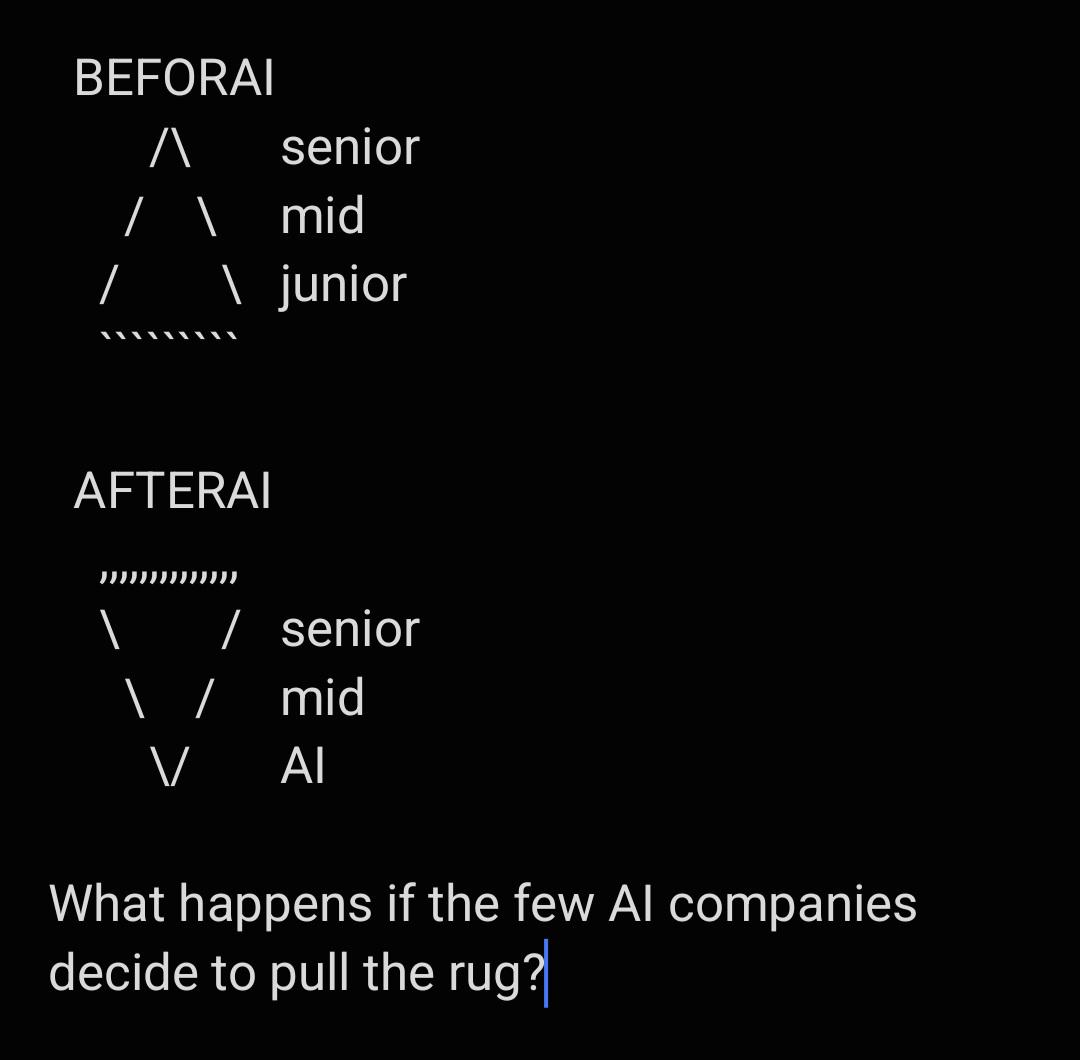
Oh fantastic, because what could POSSIBLY go wrong when we replace an entire tier of the developer hierarchy with AI and hand over the keys to the kingdom to like three tech companies? The career ladder just got a whole lot shorter—literally cut off at the bottom rung. Junior devs used to be the foundation, learning the ropes and doing the grunt work. Now? Poof! Gone. Replaced by ChatGPT's cousin. But here's the REAL kicker: when AI becomes the new "junior developer," suddenly your entire tech stack is dependent on whether OpenAI, Google, or Microsoft decides to keep the lights on. Subscription expired? Sorry, your codebase just became a pumpkin. They decide to change their API? Better rewrite everything. They get hacked or go rogue? Well, congratulations, you just gave the nuclear launch codes to a handful of Silicon Valley overlords. Nothing screams "healthy industry" quite like concentrating all power and knowledge into a monopolistic bottleneck while simultaneously eliminating the pipeline of new talent. What's the worst that could happen? *nervous laughter intensifies*

Helping Is Cool

Helping Is Cool
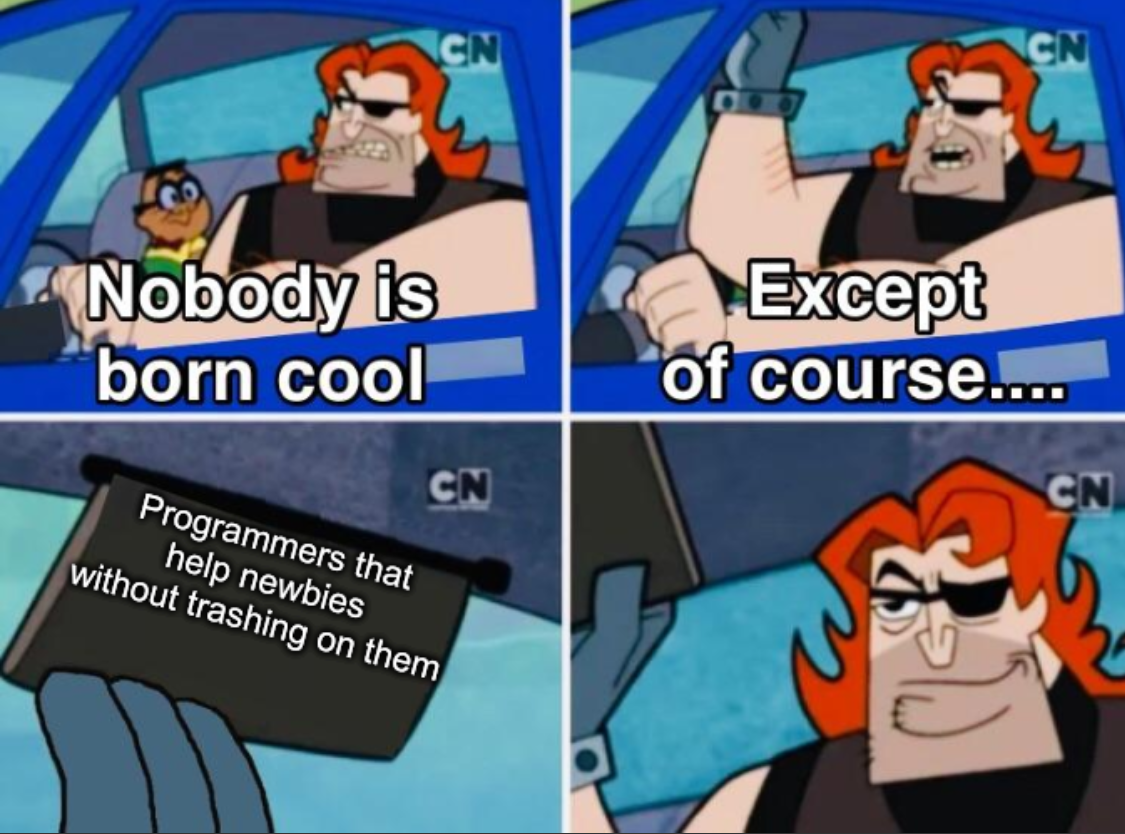
You know you've reached enlightenment when you realize that being patient with newbies is the real flex. Anyone can copy-paste Stack Overflow answers, but mentoring someone through their first segfault without making them feel like they should switch to accounting? That's god-tier behavior. The programming community has this weird paradox where we simultaneously complain about toxic gatekeeping while also roasting junior devs for not knowing what a pointer is. But the real MVPs are those senior devs who remember that they too once pushed to production on a Friday and thought HTML was a programming language. Fun fact: studies show that developers who help others actually retain knowledge better themselves. So being nice isn't just morally superior—it's also a big brain move. Who knew?

Two Jr Devs Getting A Merge Conflict

Two Jr Devs Getting A Merge Conflict
Junior developers encountering their first merge conflict is basically a declaration of war. Instead of calmly resolving the conflict like seasoned devs who've seen this rodeo a thousand times, they immediately assume the other person's code is garbage and theirs is the gospel truth. Cue the dramatic Slack messages, the passive-aggressive commit comments, and the inevitable escalation to a senior dev who solves it in 30 seconds while questioning their life choices. The best part? Both juniors probably changed the same three lines of code, and the "conflict" could've been resolved by just... talking. But no, we're going full WWE SmackDown over a semicolon placement. Git was designed to handle collaboration, but nobody told these two that collaboration doesn't mean mortal combat.

It's Tuff

It's Tuff
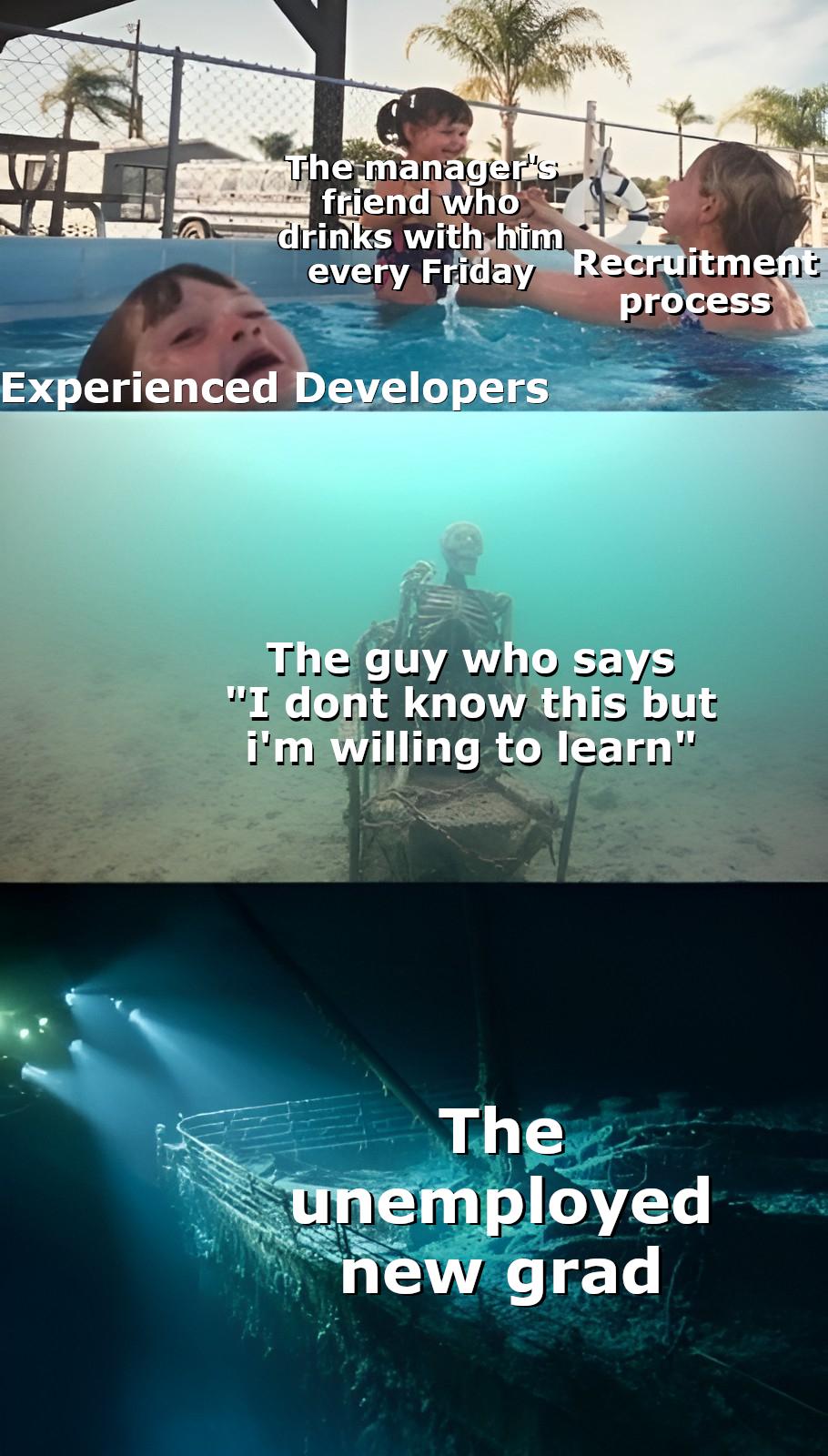
The tech hiring hierarchy visualized as ocean depth levels. At the surface, you've got the manager's drinking buddy getting fast-tracked through recruitment like they're using `sudo bypass_interview.sh`. Just below, experienced devs are chilling in the shallow end—they're fine, companies want them. Then there's the skeleton at the ocean floor: the junior dev who wrote "willing to learn" in their cover letter. Buddy, that's the kiss of death. Companies want someone who can deploy to prod on day one, not someone they need to teach what a REST API is. The "willing to learn" guy is basically saying "I'll need 6 months of senior dev time to become productive," which translates to "expensive liability" in corporate speak. And the unemployed new grad? They're at Titanic depth—completely forgotten, buried under 500 other applications, each requiring 5 years of experience for an entry-level position. They're stuck in the paradox: need experience to get a job, need a job to get experience. Meanwhile, Chad from the golf club is already onboarded.

Mistakened JavaScript

Mistakened JavaScript
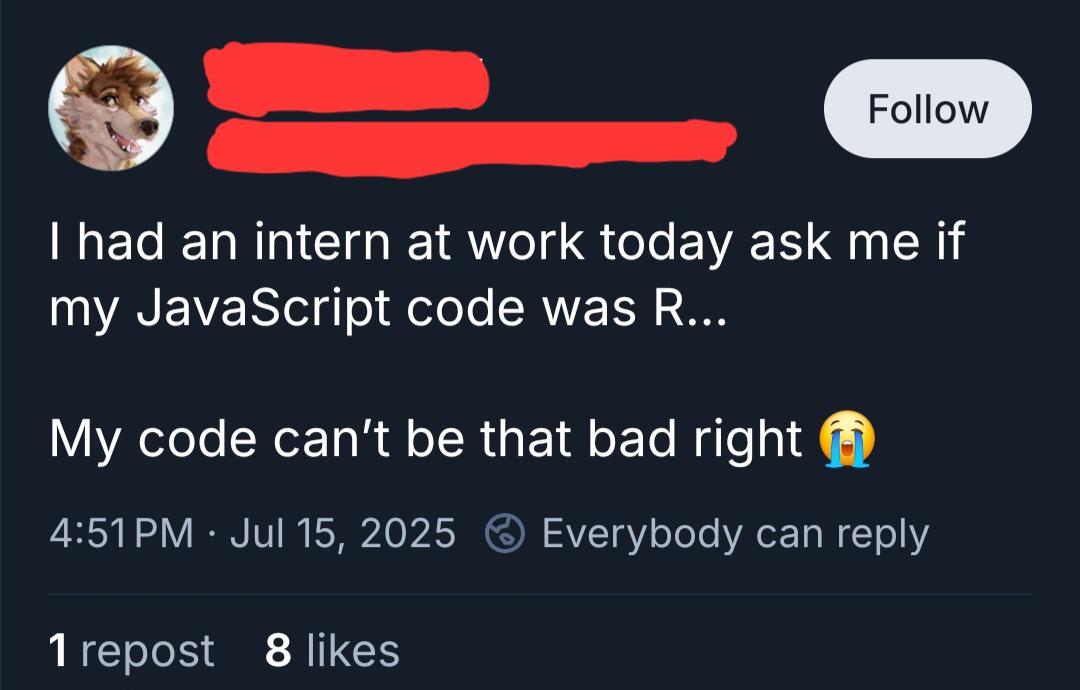
When an intern asks if your JavaScript code is "R-rated" and you immediately spiral into an existential crisis about your code quality. Because nothing screams professional confidence like defensively crying "My code can't be that bad right 😭" on social media. Plot twist: The intern probably just saw a bunch of nested callbacks and assumed it was rated R for "Ridiculously unreadable." Or maybe they stumbled upon some regex that looked like someone smashed their keyboard while having a seizure. Either way, buddy, if you're questioning whether your code deserves a content warning, it probably does. The real tragedy here is that JavaScript code being "that bad" isn't even a question—it's practically a feature of the language. Welcome to the club, we have cookies (and they're probably stored insecurely).

Beelink EQR5 Mini PC Ryzen 3 7330U 4C/8T,16G DDR4 RAM 500G SSD | Mini Computer Ryzen 3 7330U up to 4.3GHz, Micro PC 4K@60Hz Dual HDMI Display/WiFi6/BT5.2/Office/Home/HTPC/W-11 Pro

Beelink EQR5 Mini PC Ryzen 3 7330U 4C/8T,16G DDR4 RAM 500G SSD | Mini Computer Ryzen 3 7330U up to 4.3GHz, Micro PC 4K@60Hz Dual HDMI Display/WiFi6/BT5.2/Office/Home/HTPC/W-11 Pro
🎈【POWERFUL PERFORMANCE】Beelink EQR5 ryzen mini pc equips with 4-core/8-thread AMD Ryzen 3 7330U(up to 4.3GHz), The base frequency is 2.3GHz / the dynamic frequency can reach 4.3GHz. Beelink mini pc r…

I Miss The Old Days

I Miss The Old Days
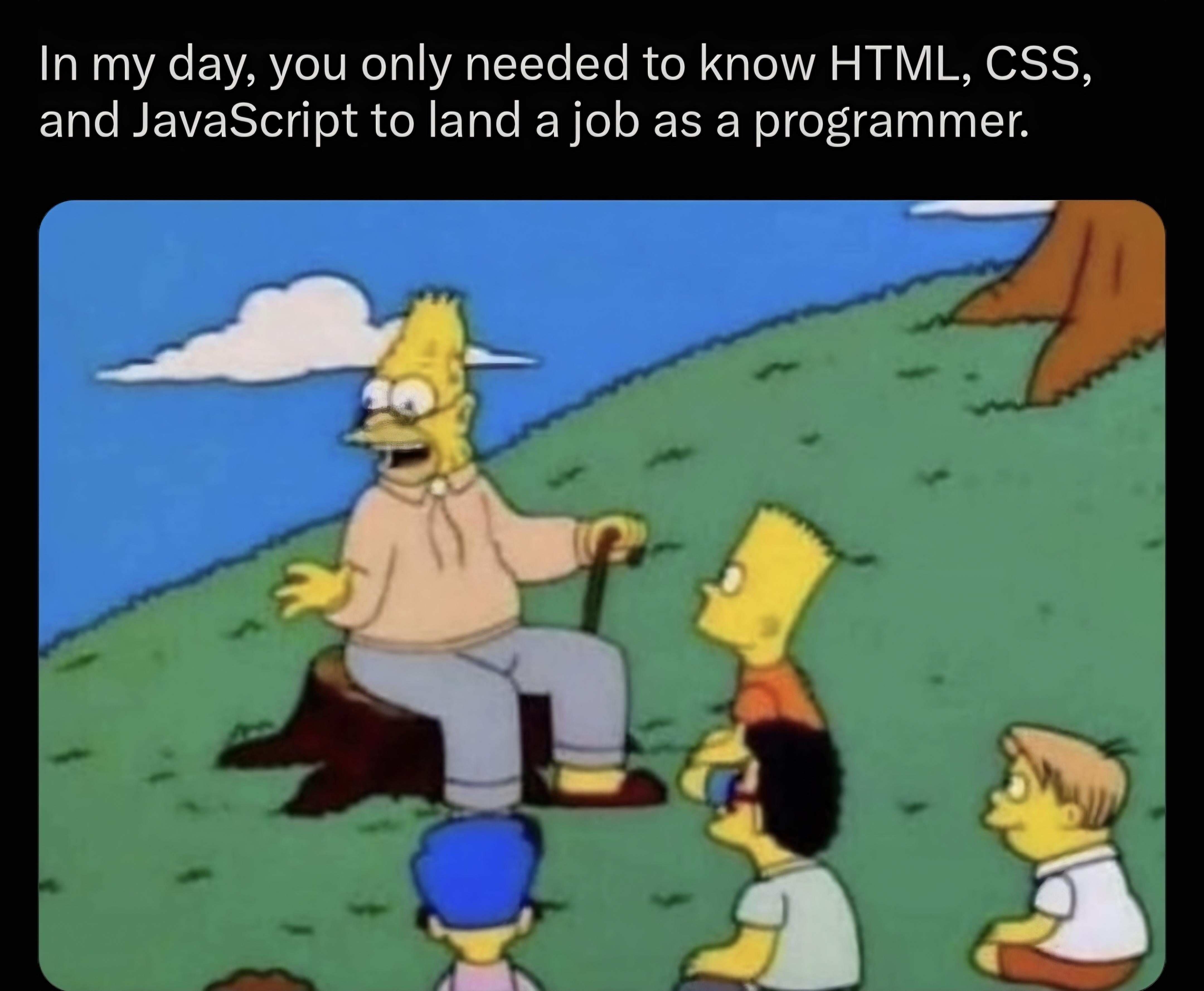
Back when you could slap together some divs, add a sprinkle of CSS, throw in a jQuery carousel, and boom—you're a "full-stack developer." Now? You need to know React, Vue, Angular, TypeScript, Node.js, GraphQL, Docker, Kubernetes, CI/CD pipelines, three different state management libraries, and somehow still be expected to center a div on the first try. The barrier to entry has gone from "can you Google stuff?" to "do you have a PhD in JavaScript ecosystem archaeology?" Grandpa dev here is reminiscing about the simpler times when jQuery was cutting-edge and your biggest worry was IE6 compatibility, not whether your build tool's config file needs its own build tool.

That's Not What We Fought For

That's Not What We Fought For
You survived the holy wars. You chose your side between Vim and Emacs, defended your position in countless forum threads, and maybe even lost a few friends along the way. You emerged victorious, battle-hardened, with muscle memory so ingrained you accidentally type :wq in Slack messages. And now? Now you watch in horror as junior devs casually write code in Cursor—an AI-powered editor that's basically VS Code on steroids with ChatGPT whispering sweet autocomplete nothings. They don't even know what modal editing is. They've never had to exit Vim. They just... vibe . The war veteran's nightmare: realizing the next generation doesn't even know there was a war. They're out here letting AI write their functions while you're still doing ciw like it's 1991. Progress feels like betrayal sometimes.

Can't Rework To Make It Better

Can't Rework To Make It Better
Your team spends months crafting elegant, maintainable code with proper design patterns and documentation. Then management decides to "save costs" by hiring offshore junior devs at $15/hour, and suddenly your beautiful codebase gets absolutely obliterated by a freight train of spaghetti code, hardcoded values, and zero regard for your carefully architected system. The best part? You can't even refactor it anymore because the new code is so intertwined with production that touching anything triggers a cascade of bugs. Plus, the offshore team is in a completely different timezone, so good luck explaining SOLID principles through a language barrier at 2 AM during incident calls. Your PRs now look like crime scenes, and your tech debt just got a mortgage. Nothing personal against offshore devs—many are incredibly talented—but when companies hire purely based on cost and throw juniors into complex systems without proper onboarding, everyone loses. Especially that school bus of clean code you spent so long building.

The Look Sr Engineers Give When Their 13 Year Old Nephew Shows Them Another App They Had Claude Shit Out In A Day

The Look Sr Engineers Give When Their 13 Year Old Nephew Shows Them Another App They Had Claude Shit Out In A Day
You spent 15 years learning design patterns, scalability, error handling, and the subtle art of not crying during production incidents. Meanwhile, little Timmy just asked an AI to build his fifth CRUD app this week and thinks he's the next Zuckerberg. That forced smile says "That's nice, sweetie" while internally screaming about the complete absence of input validation, security considerations, or any concept of what happens when more than three users hit the thing simultaneously. Sure, it works on localhost. Everything works on localhost. Wait until Thanksgiving when he asks you to help deploy it and you discover it's storing passwords in plaintext.

Only One Prompt Away

Only One Prompt Away
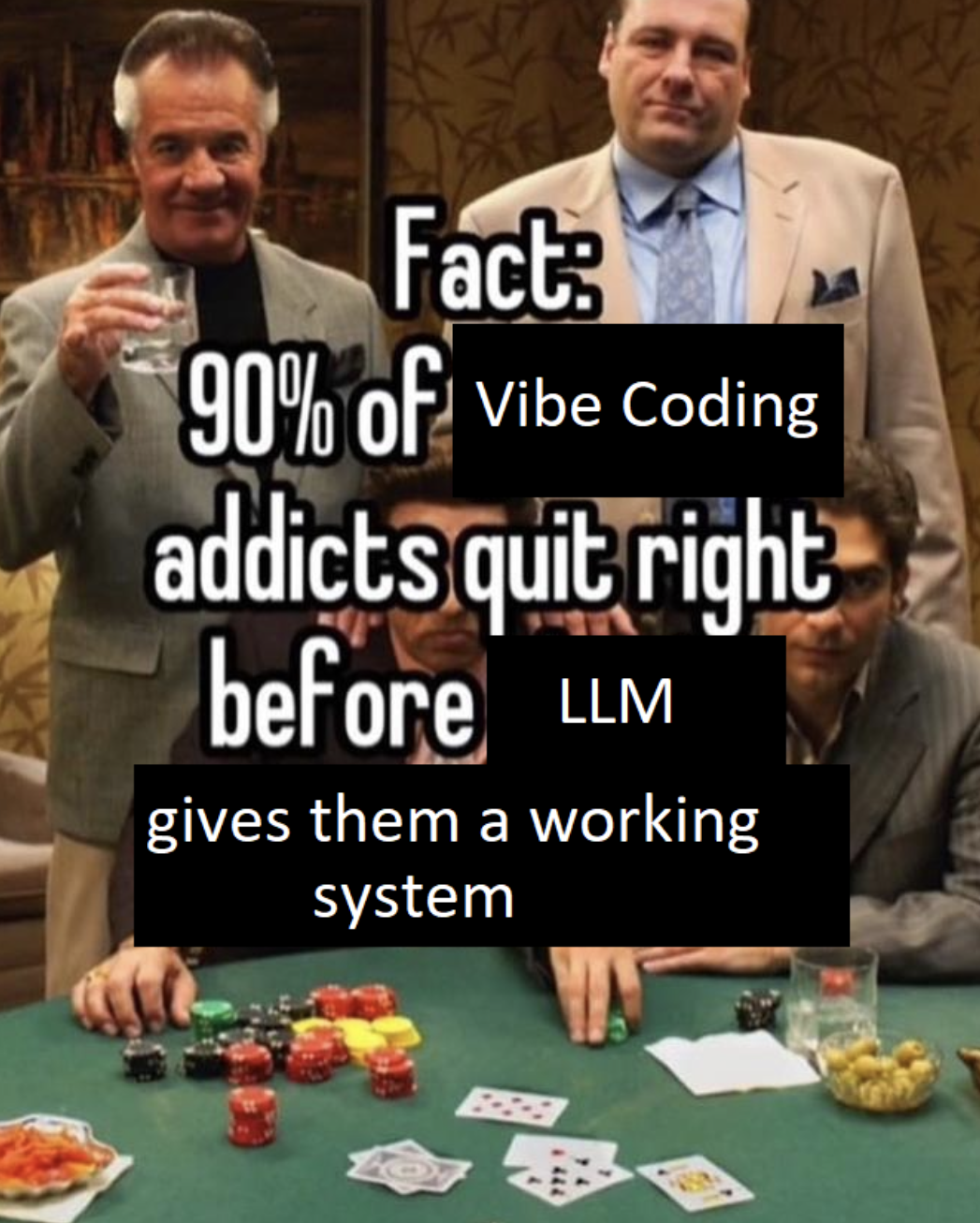
The modern developer's dilemma: you've spent years honing your craft, learning design patterns, debugging nightmares, and building systems from scratch. Then ChatGPT shows up and suddenly everyone's convinced they're just one well-worded prompt away from shipping production code. It's like watching someone at a poker table go all-in because they got lucky once—sure, the LLM might give you something that compiles, but good luck when it's 3 AM and your "vibe coding" solution is leaking memory like a sieve. The real kicker? That 10% who don't quit are the ones who realize AI is a tool, not a replacement for actually understanding what you're building. But hey, at least the job market will self-correct when the prompt engineers discover what "technical debt" means.

WALI Adjustable Dual Monitor Arm for 13-32 inch Screens, 22 lbs per Arm | Dual Monitor Stand for Desk, Full Motion with Tilt, Swivel, Rotation, C-Clamp & Grommet Base, VESA 75/100mm (GSMP002N), Black

WALI Adjustable Dual Monitor Arm for 13-32 inch Screens, 22 lbs per Arm | Dual Monitor Stand for Desk, Full Motion with Tilt, Swivel, Rotation, C-Clamp & Grommet Base, VESA 75/100mm (GSMP002N), Black
Keep Your Desk Organized: By lifting 2 screens off the desktop, this computer monitor arm opens up valuable space for your keyboard, notebook, docking station or a simple, clutter-free work area. Bui…

How To Become A Software Engineer Without Learning How To Code

How To Become A Software Engineer Without Learning How To Code
So you wanted to be a software engineer but coding seemed too hard? Just let AI write everything for you! Problem solved, right? Wrong. Now you're sitting on a codebase that's slowly morphing into a Lovecraftian nightmare of spaghetti logic, and you have zero idea how to fix it because—plot twist—you never learned to code. The question here is genuinely haunting: how do you prevent your AI-generated code from becoming technical debt incarnate? The answer is simple but painful: you actually need to understand what the AI is writing. Which means... you need to learn to code. Full circle, baby. It's like hiring a chef who's never tasted food to run your restaurant. Sure, they can follow recipes from ChatGPT, but when something tastes off, they're just vibing and hoping for the best. Except in this case, the "food" is production code and the "customers" are your users experiencing mysterious bugs at 2 PM on a Friday.