github Memes

Calculator And Me

Calculator And Me
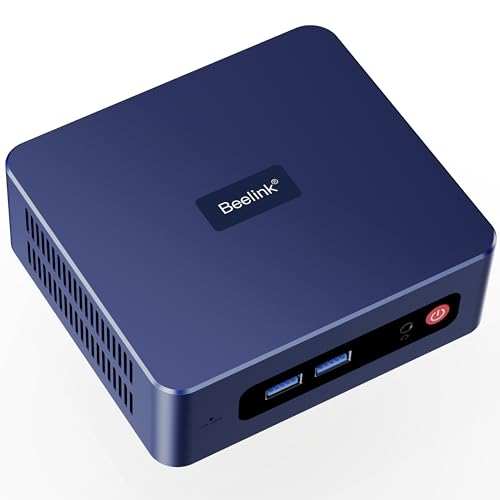
The duality of every developer's GitHub profile. You fork these magnificent, architecturally complex repositories with thousands of stars—beautifully crafted frameworks, intricate libraries, sophisticated tools that took teams years to build. Meanwhile, your own repos? A calculator app. Maybe a to-do list if you're feeling ambitious. That minimalist white cube perfectly captures the stark simplicity of "yet another basic project" we all have gathering digital dust in our profiles. The contrast hits different when you realize you've forked React, TensorFlow, and the Linux kernel, but your pinned repositories are literally just arithmetic operations wrapped in a GUI. We're all out here pretending to be contributors to enterprise-grade software while our actual output is "calculator-app-final-v2-ACTUALLY-FINAL."

Forking The Billion Dollar Idea

Forking The Billion Dollar Idea
Anthropic drops a billion on Bum (probably some AI startup or acqui-hire), meanwhile someone just casually hits that fork button on GitHub and gets the exact same codebase for the low, low price of absolutely nothing. Open source licensing is basically the ultimate "right-click, save as" for entire companies. The best part? They're both technically legal moves. One guy's burning VC money like it's going out of style, the other's just... using git as intended. That's the beauty and chaos of open source—your billion-dollar acquisition is literally one git clone away from being commoditized.

It's Actually Because I'm A Noob 😓

It's Actually Because I'm A Noob 😓
The eternal struggle between noble ideology and crushing self-awareness! While some developers proudly wave the "I'm protecting my intellectual property" flag to justify keeping their code locked away, others are out here living in the REAL world where their spaghetti code looks like it was written by a caffeinated raccoon at 3 AM. Let's be honest—open sourcing your project sounds amazing until you remember that your variable names are things like "thing1," "stuff," and "finalFinalREALLYfinal_v3." The thought of seasoned developers stumbling upon your nested if-statements that go 47 levels deep? Absolutely mortifying. It's not capitalism keeping that repo private, bestie—it's pure, unadulterated shame. The beautiful irony is that everyone's been there, but nobody wants to admit their code would make a senior dev weep into their mechanical keyboard. So we hide behind excuses while our embarrassing commits remain safely tucked away from the judgmental eyes of GitHub. 💀

My Reaction When I Start New Coding Side Projects

My Reaction When I Start New Coding Side Projects
The eternal cycle of developer enthusiasm: you're vibing with your new shiny project, completely ignoring last week's "revolutionary idea" that's now drowning in the depths of your GitHub graveyard. Down there lies an entire civilization of abandoned repos—each one started with the same naive optimism, each one promising "this time it'll be different." Spoiler alert: it never is. Your GitHub profile is basically an underwater museum of good intentions and half-finished TODO apps. The real kicker? You'll be back next week with another "game-changing" project while these corpses continue their eternal rest at the bottom of your commit history.

Relatable

Relatable
You know that moment when you're reviewing someone's PR and you're mentally composing a scathing code review about how their implementation violates every principle you hold dear? But then reality kicks in—you remember your own code from last Tuesday that looks suspiciously similar, or you realize you're already 45 minutes late for standup, or you just... can't be bothered to start a philosophical debate about variable naming conventions. So you shrug, click approve, and move on with your life. We've all been that person judging the code AND the person who wrote the questionable code. It's the circle of life in software development.

Some Men Want To Watch The World Burn

Some Men Want To Watch The World Burn
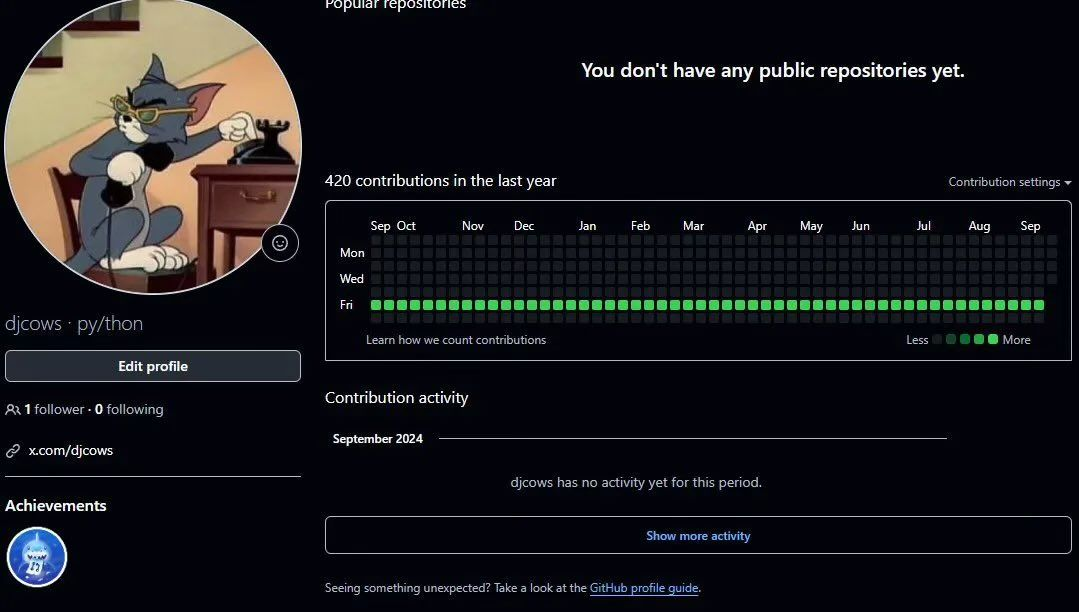
Behold the absolute CHAOS AGENT who commits exclusively on Fridays with 420 contributions, yet keeps every single repo private like some kind of code-hoarding dragon sitting on a treasure pile nobody can see. The green squares are SCREAMING for validation but this developer said "nah, I'll just let everyone think I'm unemployed." It's giving main character energy mixed with commitment issues. Why have a GitHub profile if you're gonna treat it like a secret diary? The audacity! The DRAMA!

So Who Is Sending Patches Now

So Who Is Sending Patches Now
Someone tried to roast FFmpeg for having a "messy codebase" and got absolutely demolished with the most brutal comeback in open-source history. FFmpeg's response? "Talk is cheap, send patches." That's the beauty of open source right there. You can't just throw shade at a project that literally powers half the internet's video infrastructure—from Netflix to YouTube to your grandma's video editing app—and expect them to care about your opinion. FFmpeg is written in C and assembly because it needs to squeeze every last CPU cycle out of your hardware to decode 4K video without melting your laptop. The tweet went viral with 200K views because it's the perfect encapsulation of the open-source ethos: put up or shut up. Don't like the code? Fork it. Fix it. Submit a PR. Otherwise, you're just another armchair architect who's never had to optimize a hot loop in their life. This is the energy every maintainer wishes they could channel when dealing with drive-by critics on GitHub.

The GitHub Distraction Vortex

The GitHub Distraction Vortex
The eternal GitHub rabbit hole strikes again! One minute you're fixing a bug, the next you're deep in some random issue thread from 2014 where two developers are arguing about tab spacing. Suddenly it's 4 hours later, you've learned three obscure programming languages, formed strong opinions about package managers you've never used, and that ticket you were supposed to complete? Still untouched. The dopamine hit from those spicy GitHub comment sections is just too powerful to resist.

A Second Outage Has Hit GitHub

A Second Outage Has Hit GitHub
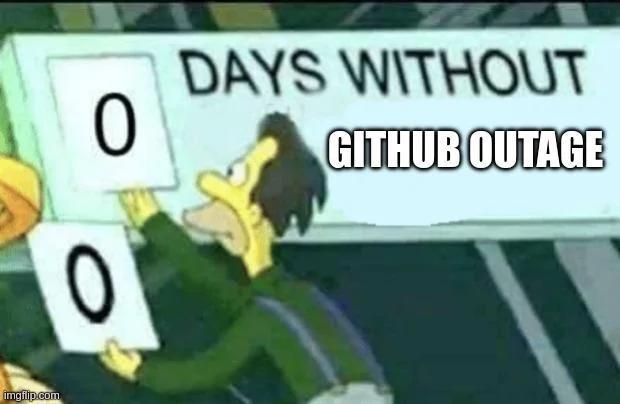
When GitHub goes down, it's like watching the digital apocalypse in real-time. Developers worldwide collectively lose their minds as their workflow screeches to a halt. The whispered "A second outage has hit GitHub" spreads through Slack channels faster than a recursive function with no base case. Meanwhile, DevOps teams are frantically refreshing status pages while explaining to management why the entire company's productivity just dropped to zero. Nothing says "maybe we should have local backups" quite like watching your entire CI/CD pipeline crumble before your eyes!

November 18th 2025: A Developer Story

November 18th 2025: A Developer Story
Ah, the classic "fix Cloudflare by pushing to GitHub" scenario. Because nothing says "I understand how infrastructure works" like pushing code changes to fix a third-party CDN outage. It's like trying to fix a power outage by changing the lightbulb. Somewhere, a DevOps engineer is silently screaming while a junior dev proudly announces they've "solved the problem" right before the entire internet magically comes back online on its own.

Reset The Counter: Microsoft's AI Adventure

Reset The Counter: Microsoft's AI Adventure
Oh. My. GOD! The absolute DRAMA of it all! Microsoft proudly announces that 30% of their code is now AI-generated, and then BOOM! 💥 Git operations are failing EVERYWHERE! It's like watching a corporate horror movie unfold in real-time! The grim reaper couldn't have timed his entrance better! One minute they're bragging about AI writing their code, and the next minute their Git operations are having an existential crisis. Coincidence? I think NOT! This is what happens when you replace human developers with AI that learned to code by copying StackOverflow answers without reading the comments! Reset the counter indeed—we've gone exactly ZERO days without a Microsoft AI disaster. The skeleton is all of us watching our repositories crumble while Microsoft's PR team frantically tries to explain that AI definitely wasn't responsible for this catastrophe. Sure, Jan. 🙄

Correlation Between Life Events And Boot Failures

Correlation Between Life Events And Boot Failures
Someone opened a GitHub issue for Arch Linux's installer with the title "I lost my virginity and now Arch won't boot #4269" and honestly, that's the most Arch Linux thing ever. The distro is so notoriously finicky that even the slightest change to your system—apparently including life milestones—can break your boot sequence. The fact that there are 169 open issues just confirms what we all suspected: using Arch is basically volunteering for a part-time job as your own IT department.