Chrome Memes

Posts tagged with Chrome
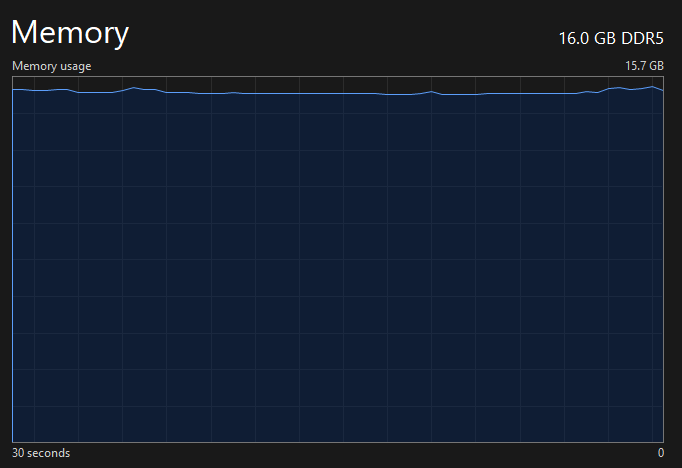
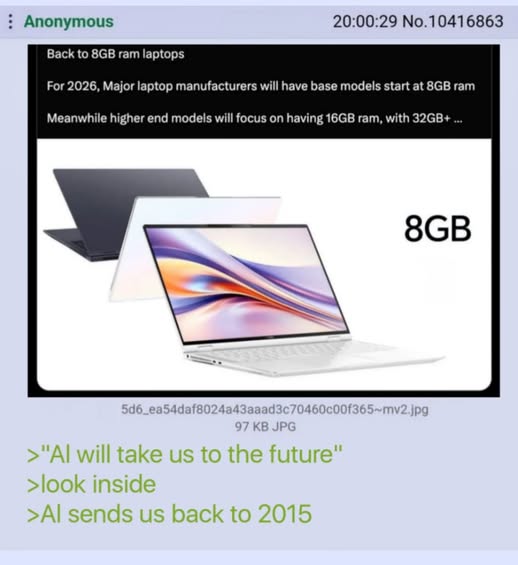
POV: 16 GB RAM In 2026

POV: 16 GB RAM In 2026
You've got 16 GB of RAM and somehow 15.7 GB is already spoken for before you even open Chrome. Just sitting there at idle, breathing heavily like it just ran a marathon. By 2026, apparently having 16 GB will be like showing up to a gunfight with a butter knife. Your OS alone will probably need 12 GB just to display the wallpaper, and don't even think about opening Slack or Teams. Those apps will take one look at your remaining 300 MB and laugh. Remember when 4 GB felt like luxury? Yeah, those were simpler times. Now Electron apps are out here treating RAM like it's free real estate, and every background process thinks it's the main character. The future is now, and it's extremely memory-hungry.

I Closed Browser Window To Free RAM

I Closed Browser Window To Free RAM
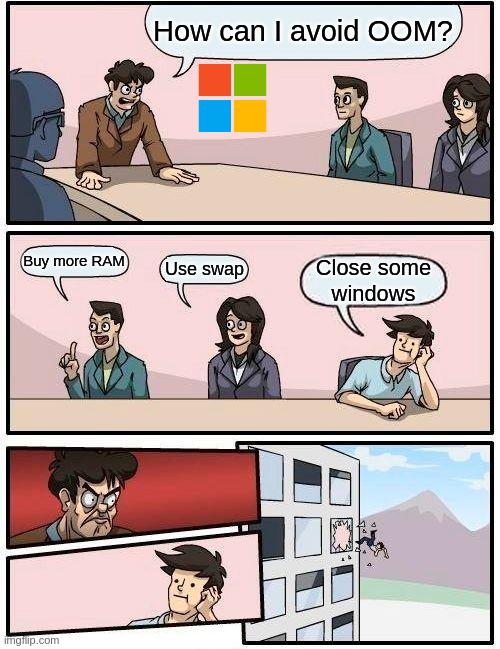
The boardroom meeting at Microsoft HQ where someone asks how to avoid OOM (Out Of Memory) errors. Three reasonable suggestions: buy more RAM (the capitalist solution), use swap (the Linux nerd's answer), or close some windows (the sensible approach). But then there's that one genius who suggests closing browser windows to free RAM, and gets immediately defenestrated—literally thrown out of the building. The irony? That's actually the correct answer. Modern browsers, especially Chrome, are notorious RAM hogs that can easily consume 8GB+ with just a few tabs open. Each tab spawns its own process, and before you know it, you're running a distributed system just to keep your email and Stack Overflow tabs alive. Closing browser tabs is genuinely one of the most effective ways to reclaim memory on a modern system. The guy who got thrown out was the only one speaking truth to power. Fun fact: Chrome's multi-process architecture was revolutionary for security and stability, but it turned browsers into memory-eating monsters. Firefox tried to shame them with less RAM usage, but eventually adopted similar architecture because, well, it works.

How It Really Feels To Have 32 GB Of DDR5 RAM In 2026

How It Really Feels To Have 32 GB Of DDR5 RAM In 2026
Remember when 32GB of RAM felt like you were basically a data center? Like you could run Chrome with MORE than three tabs open without your computer bursting into flames? Well, flash forward to 2026 and that same 32GB hits about as hard as a participation trophy at a hackathon. Your IDE is eating 8GB for breakfast, your browser tabs are hogging another 12GB like they're storing the entire internet locally, and don't even get me started on that one Electron app that thinks it's entitled to 4GB just to display a chat window. DDR5 was supposed to be the future, but turns out the future just means your RAM requirements inflate faster than your salary. You're out here doing the chef's kiss gesture thinking you're living large, meanwhile your system is already whispering "insufficient memory" in your nightmares. What a time to be alive!

At Least Someone Took A Step

At Least Someone Took A Step
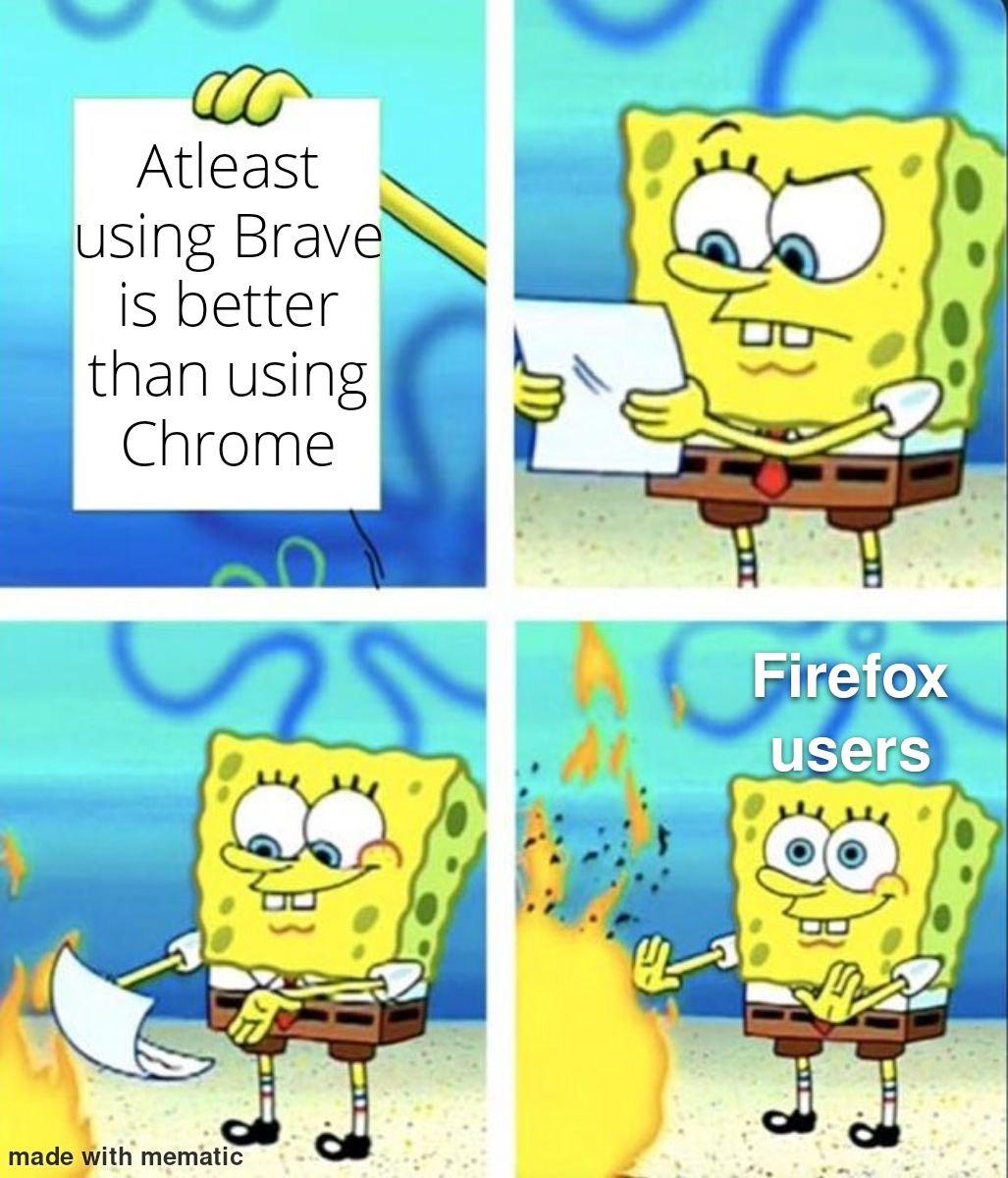
Chrome users reading "use Brave instead of Chrome" with mild interest, then watching in horror as Firefox users spontaneously combust from pure rage. Nothing triggers Firefox loyalists quite like someone suggesting Brave as the Chrome alternative instead of their beloved fox. They've been fighting the good fight against Chrome's monopoly for years, and here comes Brave waltzing in with its Chromium-based engine getting all the credit. It's like watching someone recommend a cover band when the original artist is standing right there. The real kicker? Brave is literally built on Chromium, so you're basically just switching from Google's surveillance capitalism to... a different flavor of the same engine. Firefox users have been screaming into the void about browser diversity and here we are, patting Brave on the back for being Chrome with ad-blocking.

NordVPN

NordVPN
Encrypt your traffic on public Wi-Fi, stream from anywhere, and cover up to ten devices with one plan. 30-day money-back guarantee.

Firefox Is The Key

Firefox Is The Key
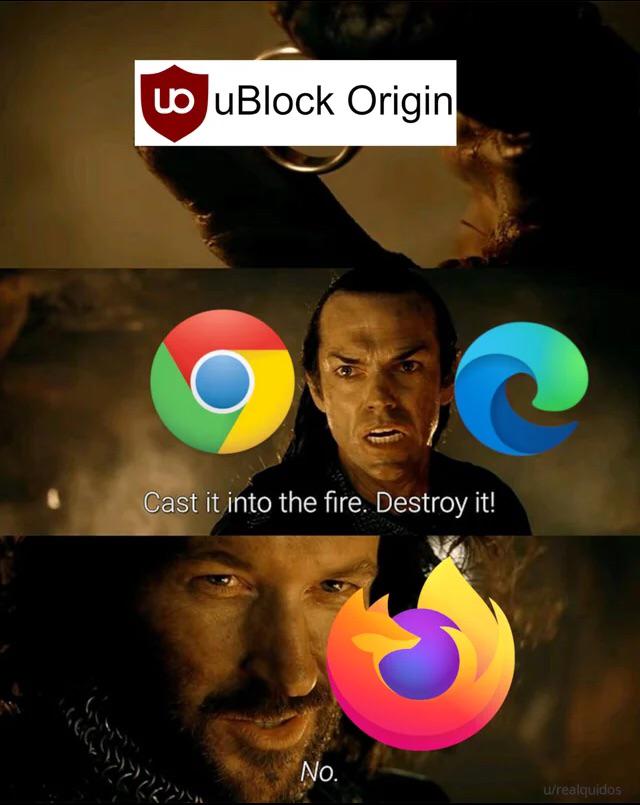
The privacy-conscious dev's holy trinity right here. uBlock Origin is treated like precious treasure while Chrome and Edge get the Mordor treatment they deserve. Firefox stands there like the last bastion of hope, refusing to be thrown into the fire. And honestly? Valid. While Chromium-based browsers are speedrunning the death of Manifest V2 and neutering ad blockers into glorified suggestion boxes, Firefox is out here still letting uBlock Origin flex its full power. Chrome's new Manifest V3 basically kneecapped proper ad blocking by limiting how extensions can intercept requests, but Firefox said "nah, we're good" and kept the good stuff working. It's 2024 and Firefox users are living in a parallel universe where the internet is still usable without being bombarded by seventeen auto-playing video ads.

Reality

Reality
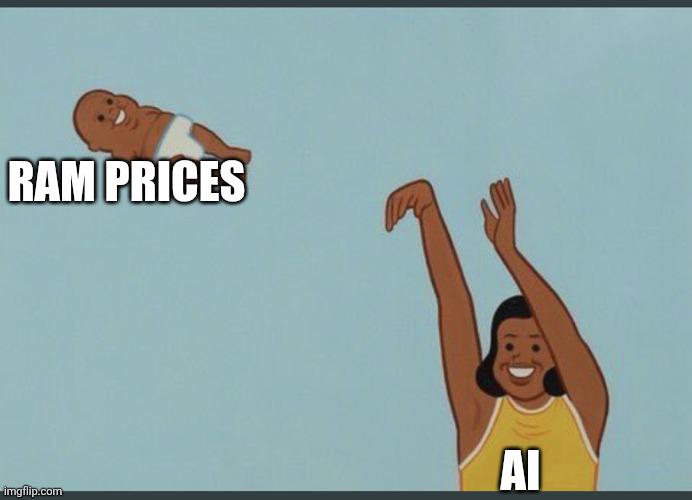
RAM prices: *exist peacefully in the corner* AI: "I'll take your entire stock. And your neighbor's. And honestly? The entire semiconductor factory." While everyone was complaining about Chrome tabs eating RAM like it's an all-you-can-eat buffet, AI models swooped in and made Chrome look like a lightweight minimalist app. Your LLM needs 80GB VRAM just to say "hello world" with proper punctuation. Meanwhile, RAM manufacturers are having the best quarter of their lives while developers are out here choosing between running their AI model or having more than two browser tabs open. The real kicker? We went from "640K ought to be enough for anybody" to "Is 128GB enough to run this chatbot?" in just a few decades. Progress!

Firefox

Firefox
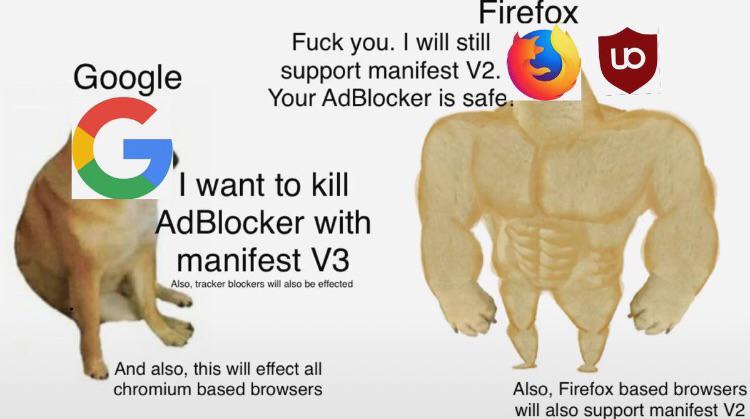
Google really said "let's nuke ad blockers for the good of... uh... security" with Manifest V3, basically crippling extensions like uBlock Origin because apparently protecting user privacy is just too much power for one browser. Meanwhile, Firefox is standing there like the last superhero in a dystopian movie, flexing its open-source muscles and refusing to bend the knee. They're keeping Manifest V2 alive like it's the sacred texts, ensuring your ad blocker stays strong and your browsing experience remains blissfully ad-free. The cherry on top? Google's changes don't just hurt ad blockers—they also mess with tracker blockers and affect ALL Chromium-based browsers (Edge, Brave, Opera, you name it). So while Chrome becomes the corporate sellout, Firefox is out here being the people's champion. The virgin corporate overlord vs. the chad privacy defender. Choose your fighter wisely.

Say Goodbye To Ram

Say Goodbye To Ram
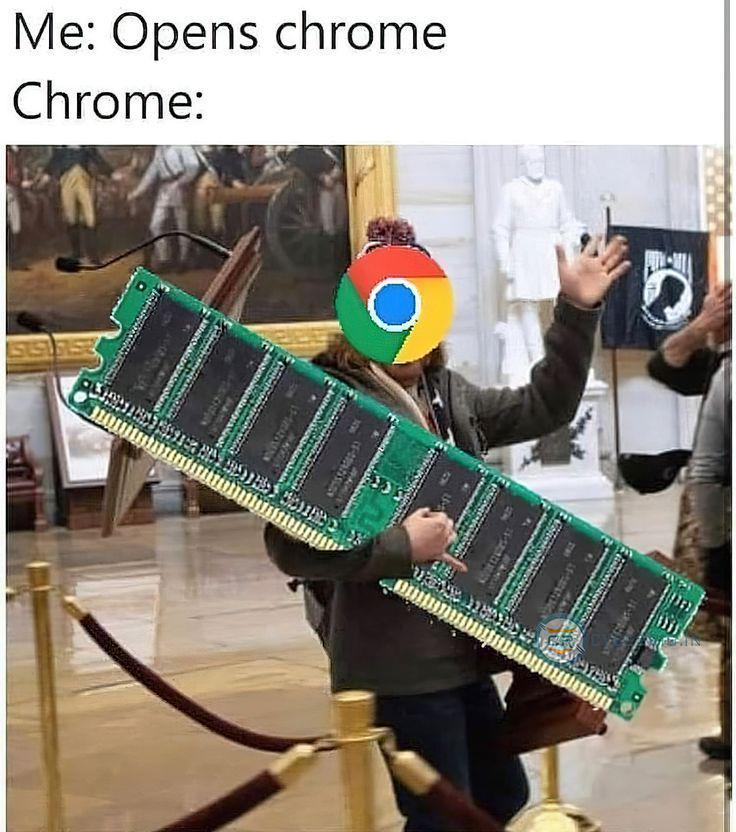
Chrome's appetite for RAM is legendary at this point. You open one tab to check your email and suddenly it's devouring memory like it hasn't eaten in weeks. Two tabs? Better upgrade to 32GB. Three tabs? Time to download more RAM. The beautiful irony is that Chrome was originally built to be lightweight and fast. Now it's basically a memory black hole that makes your $2000 machine sound like a jet engine taking off. Firefox users watching from the sidelines with their 8GB setups running just fine. Fun fact: Each Chrome tab runs in its own process for "security and stability," which is developer-speak for "we're gonna eat all your RAM and you're gonna like it." At least when it crashes, it only takes down one tab instead of your entire browsing session. Silver linings, right?

Google: Your PC Is Way Too Old

Google: Your PC Is Way Too Old
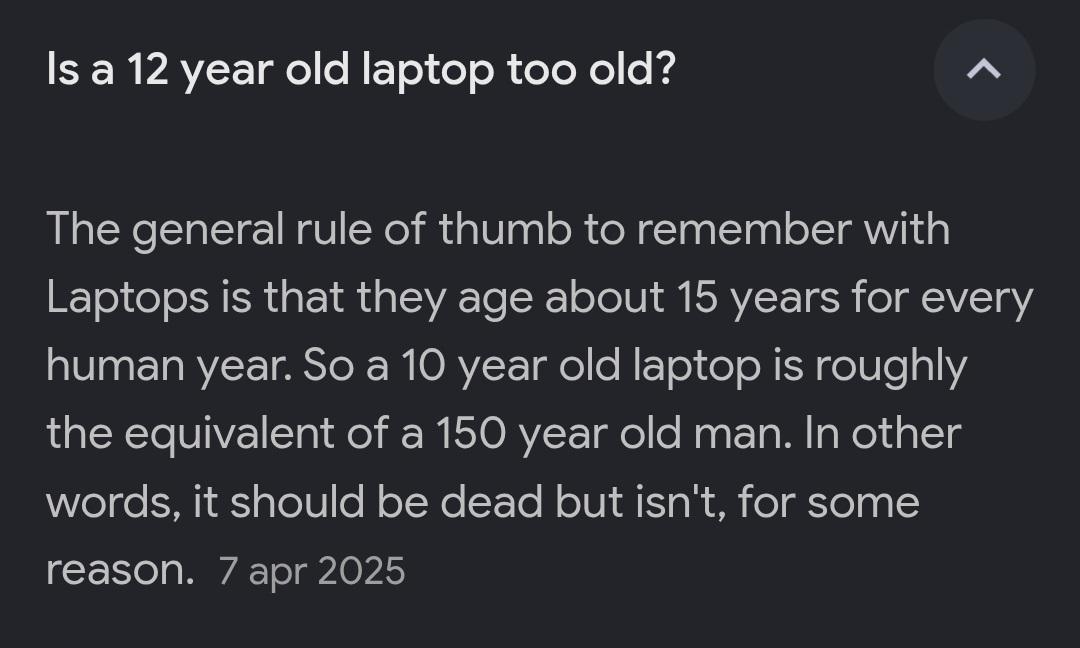
Someone asked if their 12-year-old laptop is too old, and got hit with the most ridiculous laptop-to-human-years conversion formula ever conceived. According to this galaxy brain math, laptops age 15 years for every human year, making that 10-year-old laptop equivalent to a 150-year-old person. "Should be dead but isn't, for some reason" is the most accurate description of any legacy hardware still running in production. Meanwhile, Google Chrome is over here eating 8GB of RAM with three tabs open, telling you your perfectly functional laptop from 2013 can't handle modern web browsing. The laptop survived a decade of abuse, coffee spills, and Windows updates, but sure, it's the hardware that's the problem—not your 47 Electron apps running simultaneously. Fun fact: That "ancient" laptop probably still boots faster than your brand new machine if it's running a lightweight Linux distro instead of bloated modern software that thinks 16GB RAM is a starting point.

Stack Overflow Definition Shirt Programmer Humor T-Shirt

Stack Overflow Definition Shirt Programmer Humor T-Shirt
Stack Overflow humor definition design every software engineer will understand · Perfect programmer gift for birthdays holidays hackathons or just because they deserve a laugh · Lightweight, Classic …

All Except For Firefox

All Except For Firefox
Top panel: squinting at a diverse browser ecosystem with Chrome, Brave, Vivaldi, Edge, Opera, and others. Bottom panel: putting on glasses only to realize they're all just Chromium in different costumes, with Firefox standing alone like the last Jedi. Google basically won the browser wars by open-sourcing Chromium and letting everyone build their "unique" browser on top of it. Edge? Chromium. Opera? Chromium. Brave? Chromium with crypto sprinkled on top. It's like going to a restaurant where every dish is just ramen with different toppings. Firefox remains the stubborn holdout with its Gecko engine, which is either admirable dedication to web standards diversity or digital masochism depending on how your latest CSS bug is going. Either way, Mozilla's out here fighting the good fight while the rest of us pretend our Chromium fork is "totally different."

Browsers In 1998, 2004, 2008 And 2026 Be Like

Browsers In 1998, 2004, 2008 And 2026 Be Like
The complete history of browser wars in five panels. Internet Explorer dominated so hard it got distracted by Netscape's corpse. Then Firefox showed up and IE suddenly remembered other browsers existed. Chrome entered the chat and Firefox became the side piece. Fast forward to 2026: Firefox is now the hot new thing again while Chrome sits there with its 47 background processes consuming 32GB of RAM wondering what went wrong. The final panel really sells it. Firefox rising from the ashes with that Thanos energy, basically telling Chrome "I am inevitable." Turns out killing off Manifest V2 and neutering ad blockers wasn't the galaxy brain move Google thought it was. Who knew users actually liked blocking ads? The cycle continues. Every dominant browser eventually becomes the villain long enough to see themselves replaced. Just ask Netscape. Or IE. Or... well, you get it.

The Ultimate Flex

The Ultimate Flex
Remember when 32GB was considered overkill? Yeah, those were simpler times. Now we're out here with 64GB, 128GB, maybe even more, and Chrome still finds a way to make us sweat. The crossed-out numbers perfectly capture that upgrade journey—what felt like infinite power yesterday is peasant territory today. You stand there like royalty, looking down on the mere mortals with their 16GB sticks, knowing full well you'll have 47 browser tabs open, Docker containers running, your IDE, Slack, Spotify, and somehow still hit 90% usage. But for that brief moment after the upgrade? Pure, unfiltered superiority. The real kicker is we all know it's temporary. Give it six months and you'll be back to killing processes like you're playing whack-a-mole. But today? Today you're untouchable.