AI
AI
 AWS
AWS
 Agile
Agile
 Algorithms
 Android
 Apple
Apple
 Azure
Azure
 Backend
 Bash
Bash
 C++
C++
 Cloud
Cloud
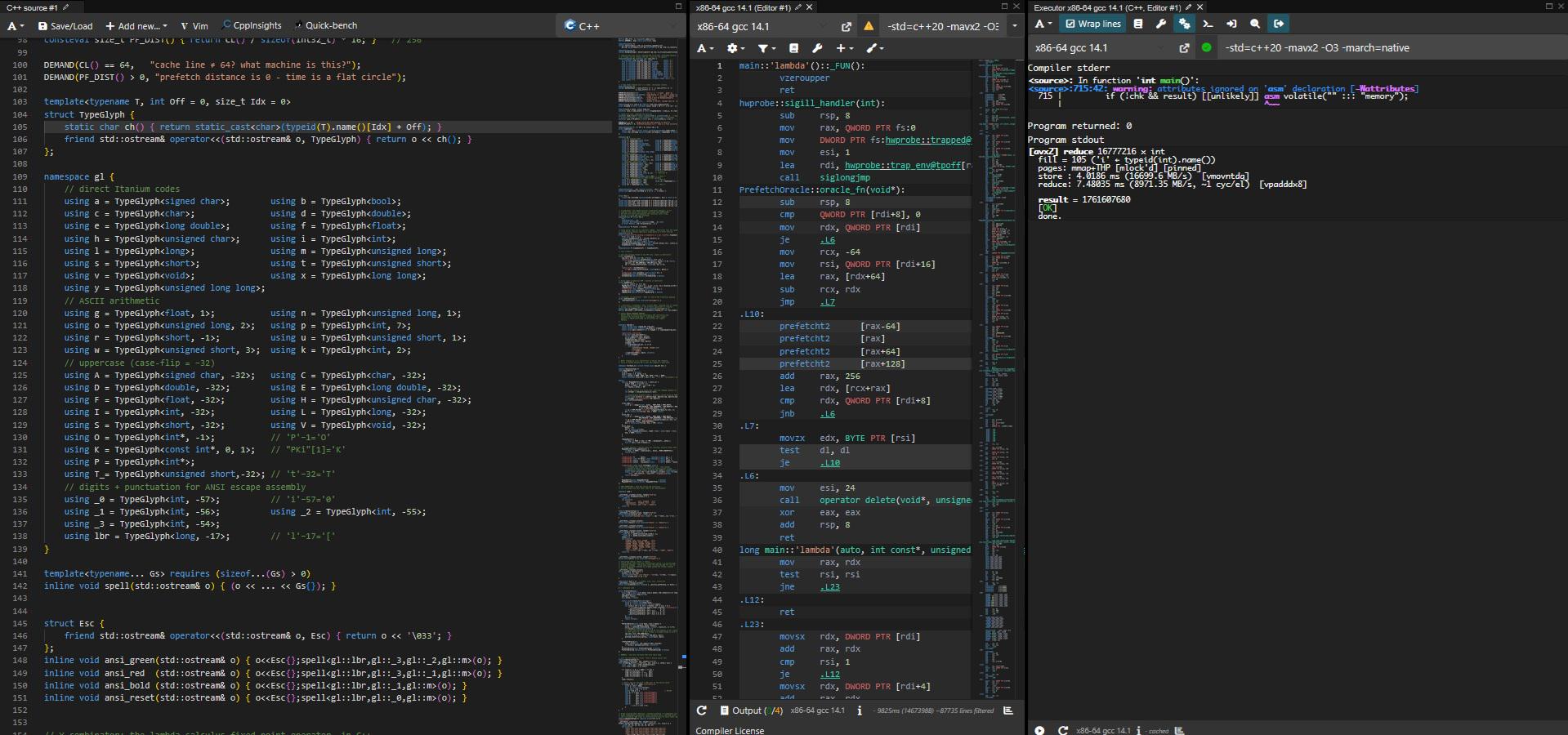
So you decided to optimize your integer sum using SIMD instructions and AVX2 because that for loop was just too slow. Now you've got 700 lines of TypeGlyph typedef hell, unsigned chars, signed shorts, doubles, floats, and enough template boilerplate to make even Bjarne Stroustrup weep.
Meanwhile, the compiler's auto-vectorization would've done this in like 3 lines. But sure, let's manually manage SIMD registers and pretend we're writing assembly because we're "performance engineers." The kicker? Your elaborate AVX2 masterpiece probably runs 2% faster than the naive implementation, but now nobody on your team can maintain it. Worth it? Absolutely not. Will you do it again? Absolutely yes.
Fun fact: AVX2 (Advanced Vector Extensions 2) lets you process 256 bits of data at once, which sounds impressive until you realize you spent 40 hours debugging alignment issues to save 3 milliseconds.