

Its The Bomb

Its The Bomb
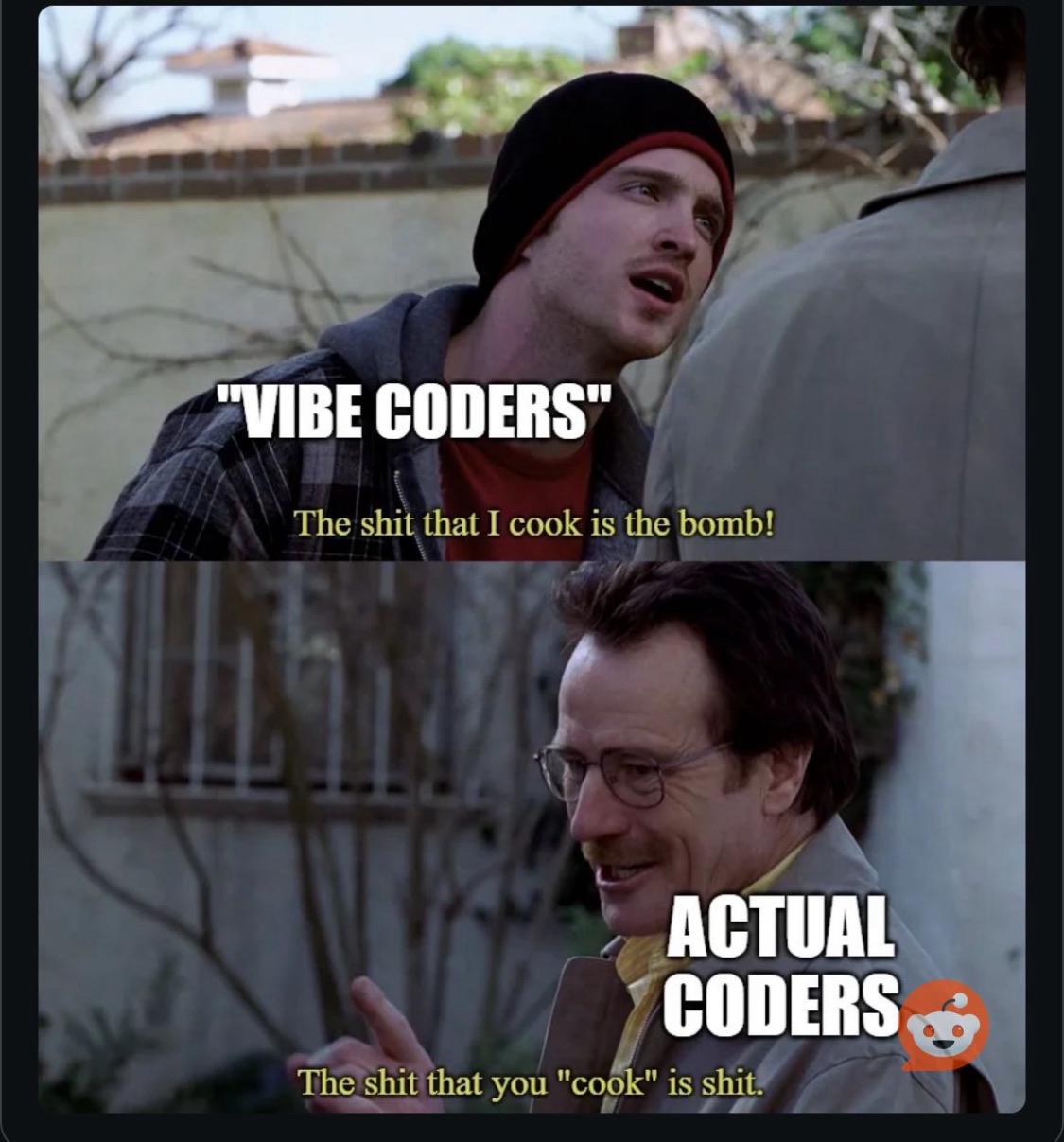
You know those developers who call themselves "vibe coders" or "10x engineers" and brag about their genius code architecture on LinkedIn? Yeah, they think they're cooking up Michelin-star solutions. Meanwhile, the rest of us who actually maintain production systems know the truth: their "revolutionary" code is usually a dumpster fire of nested ternaries, zero documentation, and creative variable names like "data2_final_ACTUAL". The confidence-to-competence ratio is truly something to behold. They're out here writing spaghetti code with the swagger of Linus Torvalds, while actual coders are left debugging their masterpiece at 3 AM wondering why anyone thought a 500-line function was a good idea.

Why I Mostly Stick To PvE

Why I Mostly Stick To PvE
When your friends judge you for avoiding PvP (Player vs Player) and sticking to PvE (Player vs Environment), but honestly? Fighting predictable AI enemies that follow logical patterns and don't teabag you after every kill is just *chef's kiss*. No toxic chat, no 12-year-olds calling you slurs, no sweaty tryhards with 3000 hours who destroy you in 0.5 seconds. Just you, some NPCs with questionable pathfinding, and inner peace. It's like choosing to debug your own code in a controlled environment versus having it code-reviewed by the entire internet in real-time. Sometimes tranquility beats competition, and your mental health will thank you for it.

Honor Bound

Honor Bound
The developer who hand-codes their entire portfolio site in vanilla HTML/CSS just to prove they're "pure" gets a respectful nod. Sure, they're suffering for literally no reason other than résumé aesthetics, but at least there's a twisted nobility to it. Meanwhile, the person copy-pasting ChatGPT's code suggestions directly into production? That's not even coding anymore—that's just being a well-paid Ctrl+V operator. They've surrendered their soul to the AI overlords and somehow convinced themselves it still counts as software engineering. The brutal truth? Both approaches are questionable, but at least one of them can explain what their code actually does when it inevitably breaks at 3 AM.

I'll Never Forget About You My Lovely 1060

I'll Never Forget About You My Lovely 1060
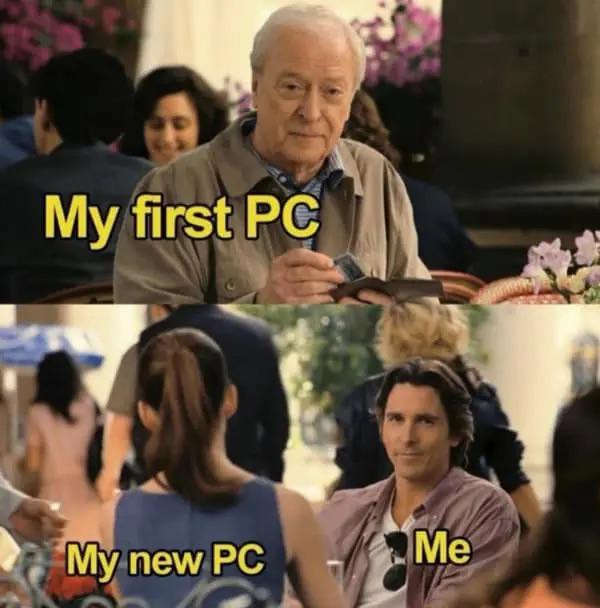
That bittersweet moment when you upgrade your rig and suddenly your trusty GTX 1060 becomes the awkward ex at the family reunion. Sure, your shiny new RTX 4080 can ray-trace the meaning of life at 240 fps, but the 1060? That card survived Cyberpunk 2077 on medium settings, carried you through college, and never once complained about your dust-caked case fans. The emotional hierarchy here is brutal: your first PC gets the reverence and nostalgia it deserves, your new PC gets all your attention and RGB budget, while you're just sitting there trying not to make eye contact with either. It's like bringing your new partner to meet your childhood best friend who you ghosted after getting successful. The GTX 1060 was the people's champion—affordable, reliable, and could actually run games without requiring a second mortgage. Pour one out for all the mid-range GPUs gathering dust in closets, still capable of running VS Code but deemed "not good enough" for your Unreal Engine 5 dreams.

Programming Life Cycle

Programming Life Cycle
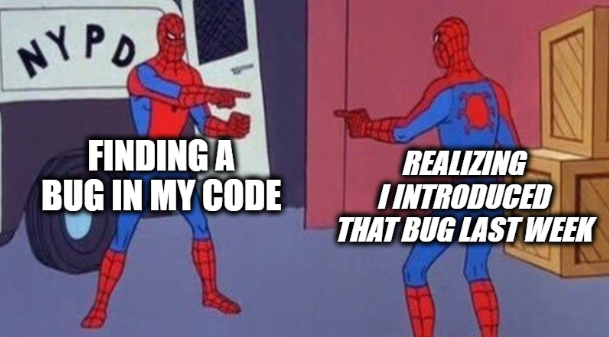
You know that satisfying moment when you find a bug and feel like a debugging god? Yeah, that lasts about 3 seconds until you realize YOU wrote the code that introduced it last week. The circle of life, except instead of majestic lions, it's just you pointing at yourself in shame. The best part? You probably spent hours tracking down this bug, feeling like a detective solving a complex case, only to discover you're both the criminal and the investigator. Welcome to software development, where we create our own problems and then congratulate ourselves for fixing them.

Cable Matters 20Gbps USB C KVM Switch for 2 Computers, 140W PD Charging

Cable Matters 20Gbps USB C KVM Switch for 2 Computers, 140W PD Charging
Compatibility Warning – Cable & Setup Requirements: Use only the included USB4 20Gbps cables. Do not substitute with Thunderbolt 3/4/5 cables. Avoid USB-C docks with built-in (non-detachable) host ca…

True

True
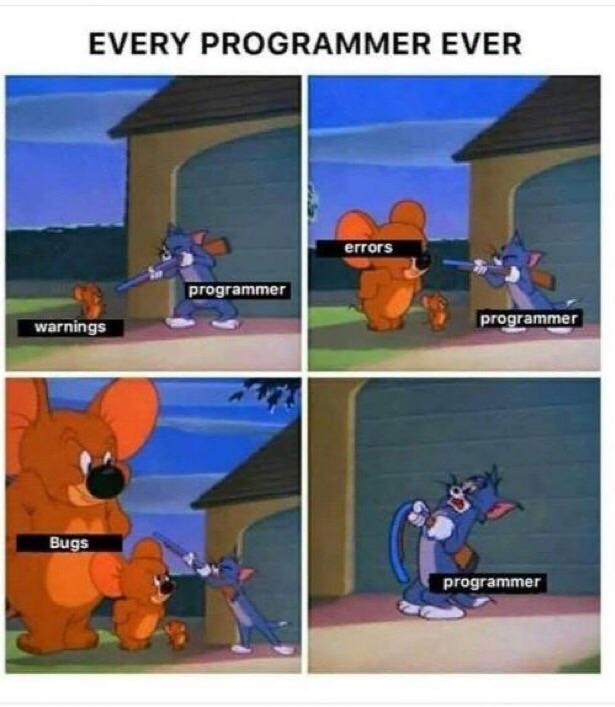
Warnings? Meh, just yellow text. Errors? Now we're getting serious, but still manageable with some Stack Overflow copy-paste. But bugs? BUGS? That's when the bear comes out and you're running for your life. The escalation here is painfully accurate. Warnings are like that annoying coworker you can ignore. Errors are the angry manager you need to deal with. But bugs—especially the ones that only show up in production on a Friday evening—those are the apex predators of software development. They're the ones that make you question your career choices while frantically rolling back deployments. The real kicker? Half the time those "harmless" warnings you ignored for six months turn into the bugs that hunt you down later. But do we ever learn? Nope. We just keep running.

New Touchscreen Mac Book Pro

New Touchscreen Mac Book Pro
So Apple finally gave us a touchscreen MacBook... by completely destroying the display with glitchy artifacts that look like your GPU decided to retire early. Nothing says "premium user experience" quite like a screen that's half broken LCD nightmare and half abstract art installation. The joke here is that the only way you're "touching" this screen is when you're frantically trying to figure out if it's a hardware failure or if macOS just achieved sentience and chose violence. At least the fingerprints would blend in nicely with those vertical lines of despair.

What People See When They Look At My Cursed Code

What People See When They Look At My Cursed Code
When your codebase is 99.7% SQL and consists entirely of nested SELECT statements with enough ROW_NUMBER() OVER (PARTITION BY) clauses to make a database administrator weep into their coffee. The sheer terror on that face? That's your code reviewer trying to parse through seven levels of subqueries, each one more cursed than the last. Bonus points for the random VARCHAR to ASC casts scattered throughout like landmines. Someone clearly discovered window functions and decided to make them everyone else's problem. The database engine runs this code. The database engine suffers. We all suffer.

Destroyed My Bank Account For The Upgrade But Could've Been Worse

Destroyed My Bank Account For The Upgrade But Could've Been Worse
That sweet moment when you finally pull the trigger on a new GPU, only to watch prices skyrocket even further. You're walking through life with that smug "I dodged a bullet" energy while everyone else is panicking about the latest price hike. Sure, your wallet is crying and your ramen budget just got extended by six months, but at least you're not the poor soul who waited and now needs to sell a kidney for the same card. The GPU market has basically become a financial thriller where timing is everything. Buy too early? New gen drops next month. Wait too long? Crypto miners, AI bros, and scalpers have entered the chat. But you? You somehow threaded the needle between bankruptcy and total regret. That's what we call a developer's intuition—terrible at estimating sprint times, but somehow nailing GPU purchase windows.

Cost Optimization

Cost Optimization
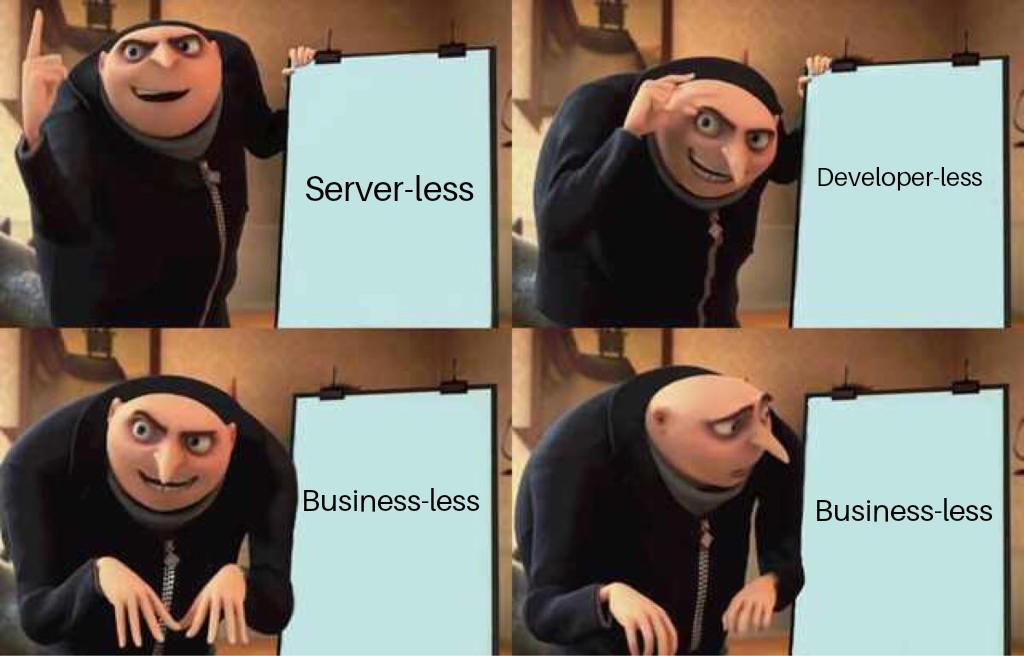
CFO: "We need to cut costs on our cloud infrastructure!" Engineering team: "Sure, let's go serverless to reduce operational overhead!" CFO: *gets excited* "Even better idea - what if we go developer-less?" Engineering team: "Wait, that's not how—" CFO: *maniacal grin intensifies* "BUSINESS-LESS! No business means no costs at all!" The escalating Gru meme format captures the classic trajectory of cost optimization meetings where someone starts with a reasonable cloud architecture suggestion (serverless), then management takes it to its logical extreme by suggesting they eliminate the most expensive resource (developers), and finally achieves enlightenment by realizing the ultimate cost savings: shutting down the entire company. Peak financial efficiency achieved! 📉

E Mudhra Brainstorming Sesh

E Mudhra Brainstorming Sesh
Someone at eMudhra looked at the number 4, had a tattoo of it on their back, and decided "yeah, let's just draw this exact same thing but bigger for our logo." Peak design efficiency right here. Why waste time coming up with something creative when you can literally copy-paste your own body art onto a blackboard and call it a corporate identity? The design team probably clocked out early that day. Zero iterations, zero feedback loops, just pure "I have a 4 on my back, therefore the logo shall be a 4" energy. This is what happens when the product manager is also the reference model.

Elgato XLR Dock MK.2 for Stream Deck +, Audio Interface

Elgato XLR Dock MK.2 for Stream Deck +, Audio Interface
Two Become One: Mix and monitor up front, plug your XLR mic in back for a streamlined setup · Pro-Grade Preamp: Get elite sound with 80dB gain, phantom power, and Clipguard 2.0 technology · Onboard E…

Page Thrasher

Page Thrasher
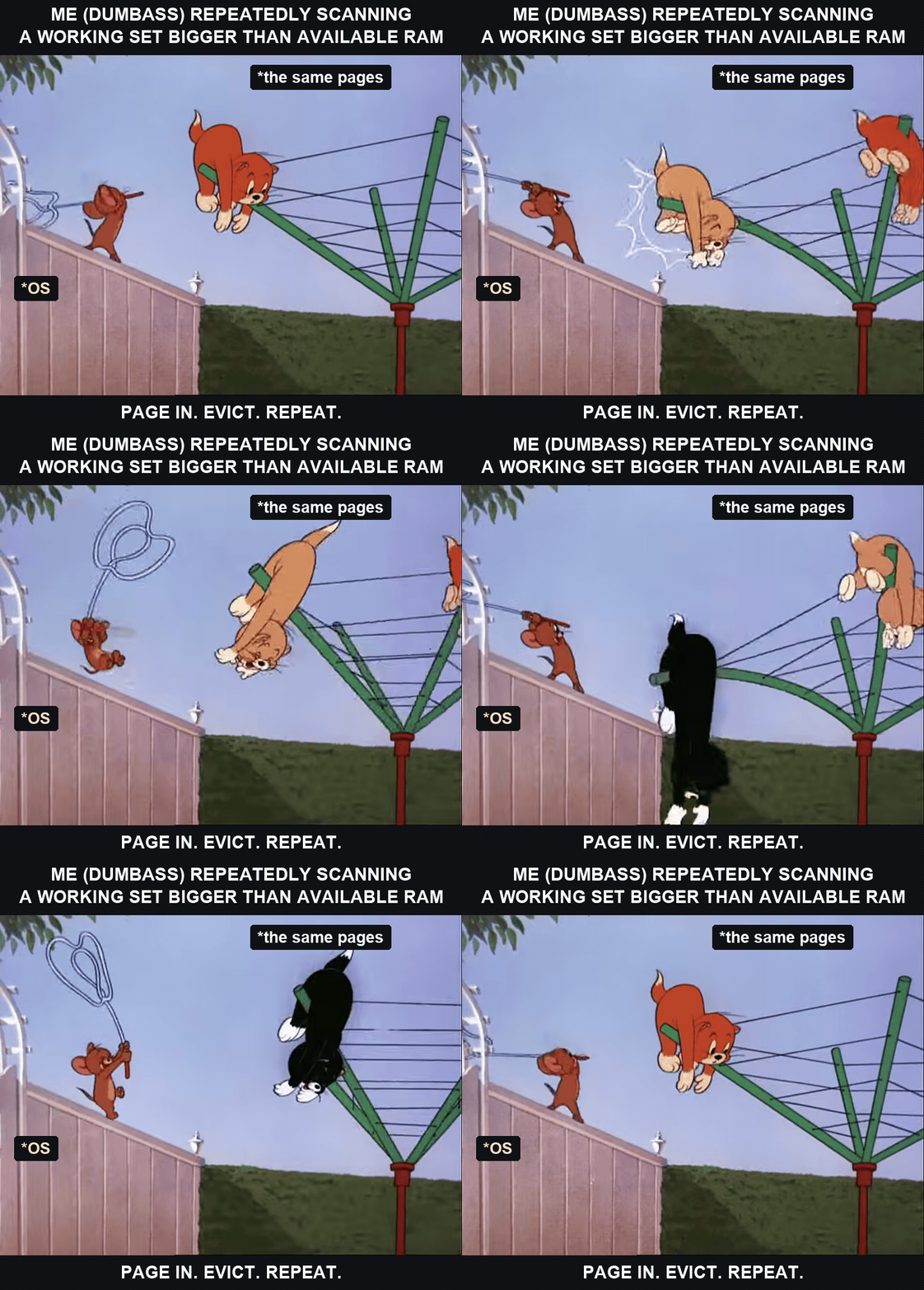
When your working set is larger than your RAM, the OS becomes a sadistic game show host playing "Musical Memory Pages" with your poor application. You're frantically requesting the same pages over and over, and the OS is just yeeting them in and out of RAM like it's training for the Memory Olympics. The result? PAGE IN. EVICT. REPEAT. Your disk is spinning faster than a fidget spinner in 2017, your CPU is crying, and your program that should've taken 5 seconds is now entering its third hour of existence. Welcome to thrashing hell, where performance goes to die and your SSD ages 10 years in 10 minutes. Fun fact: Page thrashing can slow down your system by 100x or more because disk I/O is THOUSANDS of times slower than RAM access. It's like replacing a Ferrari with a horse-drawn carriage and wondering why you're late to work.