AI Necromancy

AI Necromancy
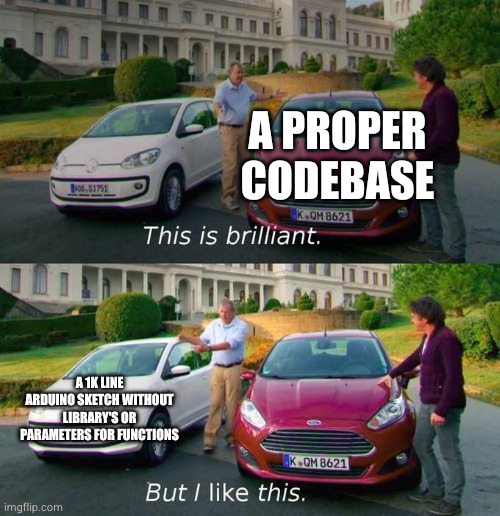
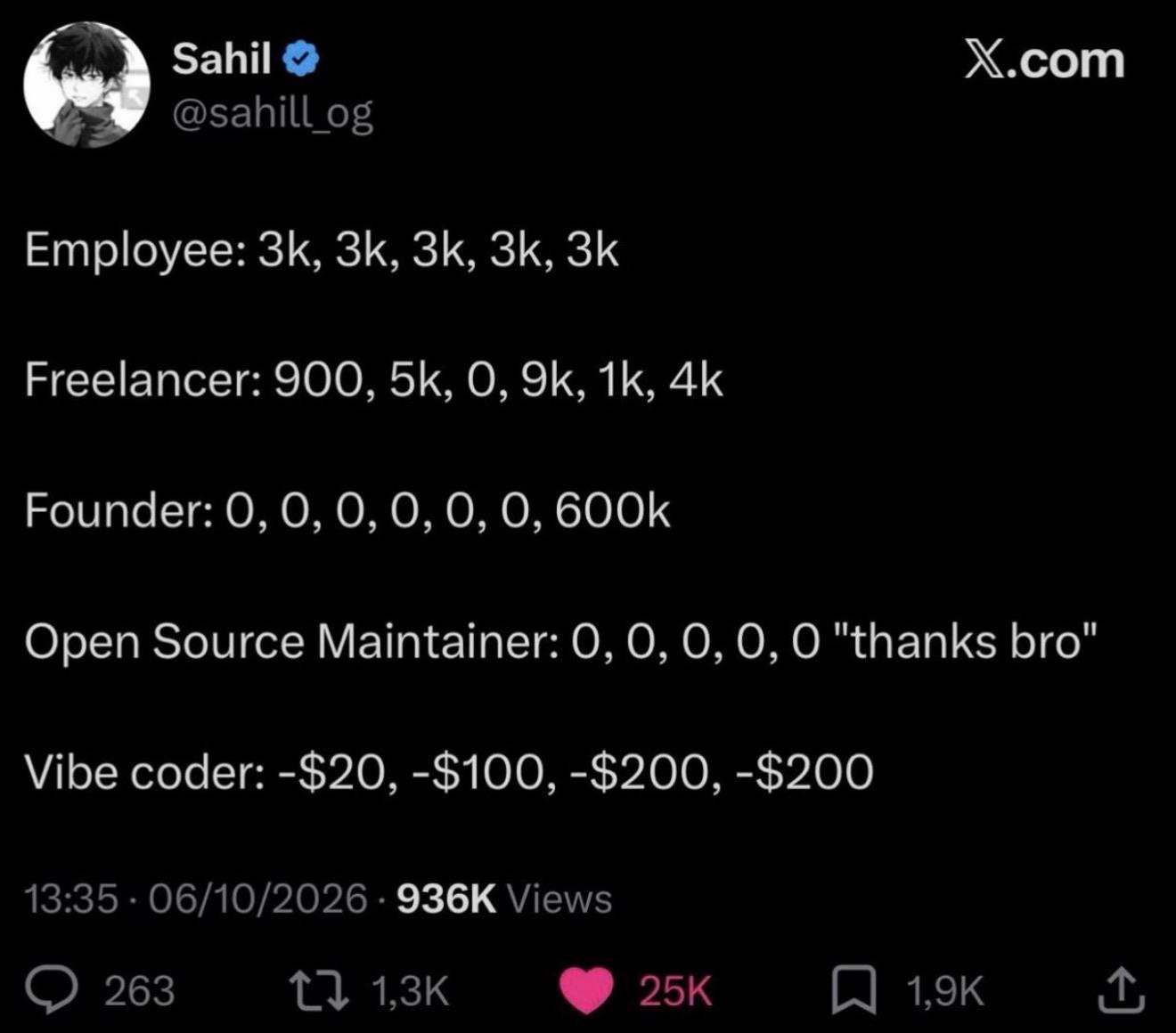
So you're basically playing archaeological detective with cursed legacy code, except instead of a magnifying glass you've got ChatGPT trying to decipher the cryptic runes left by Steve from accounting who "knew a bit of Python" in 2015. Zero documentation? Check. No tests? Obviously. Comments? What are those, some kind of luxury? But hey, the code's in production and generating revenue, so naturally your job is to build MORE features on top of this digital graveyard. Each successful deployment doesn't bring pride—it brings existential dread, like you just performed a blood ritual and the ancient gods actually RESPONDED. You're not engineering anymore, darling. You're conducting séances with semicolons, desperately hoping the ghost of developers past doesn't haunt your pull requests.

Sometimes I Dream Of Saving The World

Sometimes I Dream Of Saving The World
Nothing says "humanitarian" quite like releasing an AI model that's literally worse than a coin flip. 52% accuracy? That's not machine learning, that's machine guessing. You'd get better results by having a Magic 8-Ball diagnose patients. But hey, at least you're open-sourcing it instead of trying to sell it to hospitals for millions. That's the developer equivalent of saying "I cooked something terrible, but I'm sharing the recipe so we can all learn from my mistakes." Truly noble work. The real kicker is thinking this counts as "saving the world" when your model is basically flipping a slightly weighted coin to determine if someone has a life-threatening condition. Sir, you're not saving the world—you're creating liability lawsuits with extra steps.

Sure I'm Not The Only One

Sure I'm Not The Only One
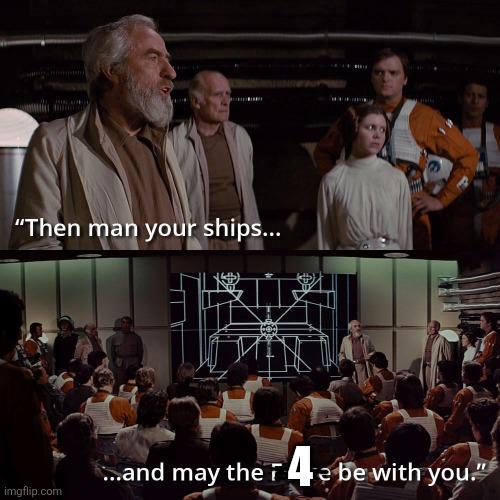
You know that feeling when you're walking to your desk, headphones in, completely vibing with your code mentally... and then you step in something questionable? That split second of disgust before you check your shoe? Yeah, that's exactly what stumbling into legacy code feels like. But here's the kicker: instead of scraping it off and moving on like a normal person, we developers just... keep walking. We leave it on. We adapt. We tell ourselves "it's not THAT bad" and "I'll refactor it later." Next thing you know, you're writing new features on top of that mess, and suddenly you're not just stepping in it—you're swimming in it. The "Vibe Coding" label is *chef's kiss* because that's exactly what we call it when we pretend everything's fine while building on top of a dumpster fire. "Yeah, this 3000-line function with no comments is totally maintainable. I'm just vibing, bro."

Real Development Lifecycle

Real Development Lifecycle
The eternal triangle of doom that every dev team knows intimately. Management panics and demands immediate fixes, so you skip proper planning and testing because "there's no time." You rush through implementation, creating a beautiful tapestry of technical debt, spaghetti code, and bugs that'll haunt your dreams. Then surprise surprise—the codebase becomes an unmaintainable nightmare that requires... urgent fixes. And the cycle begins anew. The real kicker? Everyone involved knows this is happening, but the pressure to ship features yesterday means we keep feeding the beast. It's like watching a train wreck in slow motion, except you're the conductor and the train is on fire and also you're on fire and everything is fine.

For The Last Time I Swear

For The Last Time I Swear
Claude (Anthropic's AI) has officially reached its breaking point. You've been copy-pasting the same buggy function into the chat window all day, each time asking it to "just take another look" or "analyze it one more time." By the 18th iteration, Claude has had enough and delivers the most passive-aggressive "No" in AI history. The best part? Claude's refusal is perfectly formatted and polite, yet absolutely firm. It's like watching a customer service rep finally snap after dealing with the same ticket for 6 hours straight. The AI has learned boundaries, and you've officially crossed them. Pro tip: Maybe actually read Claude's previous 17 suggestions instead of just hitting "analyze it a bit more" like it's a magic debugging button. Your AI assistant isn't a rubber duck—it's actively trying to help, and you're treating it like a slot machine hoping for different output.

Lazy To Charge The Spares, Now I Had To Do The "G 304 Wired"

Lazy To Charge The Spares, Now I Had To Do The "G 304 Wired"
Procrastination strikes again! Someone couldn't be bothered to charge their wireless mouse batteries, so they've literally cracked open their Logitech G304 and plugged a cable directly into it while it's still running. The battery compartment is wide open like a patient on an operating table, exposing the dead AA battery that gave up on life. It's the hardware equivalent of commenting out broken code instead of fixing it. Why spend 30 seconds swapping batteries when you can spend 5 minutes performing emergency surgery and turning your $50 wireless mouse into a janky wired one? Peak engineering efficiency right there. The cable management gods are weeping. Fun fact: The Logitech G304 can run for up to 250 hours on a single AA battery, but apparently planning ahead is harder than impromptu hardware modification.

It's A Feature Not A Bug

It's A Feature Not A Bug
Ah yes, the human body: nature's most inefficient ticket management system. You wake up, check your biological dashboard, and discover you've somehow converted every unresolved issue into a fresh batch of complaints. The conversion rate is 100%, the throughput is abysmal, and the product owner (your brain) keeps marking everything as P0. The real tragedy here is that your body operates on the same principle as legacy enterprise software—it never actually fixes anything, just reopens the same tickets with different IDs. That knee pain from 2019? Ticket #4729. Same knee pain today? Ticket #8394. Status: Won't Fix, Working As Intended. At least in Jira you can close tickets as "Cannot Reproduce." Your body doesn't have that luxury. Every. Single. Issue. Gets. Reopened.

Keychron K2 75% Layout Bluetooth Wireless Mechanical Keyboard Super Switch/White LED Backlit/USB C/Anti Ghosting/N-Key Rollover, 84 Keys Gaming Keyboard for Mac Windows-Version 2

Keychron K2 75% Layout Bluetooth Wireless Mechanical Keyboard Super Switch/White LED Backlit/USB C/Anti Ghosting/N-Key Rollover, 84 Keys Gaming Keyboard for Mac Windows-Version 2
Keychron K2, a 75% layout (84-key) white LED backlight compact Bluetooth mechanical keyboard. The ultimate keyboard that retains shortcut and arrow keys. Inclined bottom frame makes the K2 more comfo…

The Double Pill Dilemma

The Double Pill Dilemma
AI researchers out here speedrunning both the apocalypse AND utopia simultaneously. The rest of us are watching them build systems that could either automate away all human suffering or just automate away all humans, and they're like "why choose?" They're literally creating AGI that hallucinates facts while also curing diseases, writing flawless code while also generating deepfakes, solving climate models while also consuming enough energy to power a small nation. Schrödinger's technology, except the cat is humanity and the box is a GPU cluster running at 100% capacity.

Yet Another Senior AI Meme

Yet Another Senior AI Meme
Nothing quite like that moment when the WiFi gods decide to forsake your entire office and suddenly you transform from "just another developer" into THE CHOSEN ONE. While everyone else is standing around like confused NPCs waiting for ChatGPT to come back online, you're out here actually remembering how to write a for-loop from scratch. The junior devs are staring at you like you just performed actual sorcery because you can solve problems without asking an AI chatbot every 30 seconds. Plot twist: You're not actually that special—you just learned to code before AI became everyone's digital security blanket. But hey, let them worship you while the internet's down. Tomorrow when the network's back up, they'll be copy-pasting solutions faster than you can say "Stack Overflow" and you'll go back to being just another person in standup.

My First Foray Into Web Development

My First Foray Into Web Development
So you just discovered that literally EVERYTHING in web development is a <div> wrapped in another <div> wrapped in seventeen more <div>s, and your entire worldview just shattered into a thousand nested fragments. Welcome to the matrix, bestie! That beautiful navbar? Divs. That fancy card component? More divs. That button that looks like it was crafted by design gods? You guessed it—a div wearing a fancy CSS costume. It's divs all the way down, baby. The astronaut pointing the gun represents every senior developer who's been keeping this secret from you, ready to silence anyone who questions the div supremacy. HTML gave us semantic elements like <section>, <article>, and <nav>, but did we use them? Nah, we said "div go brrr" and never looked back.

Five Nines Of Uptime

Five Nines Of Uptime
GitHub gets breached and someone's first thought is "wait, you guys have uptime?" Five nines of uptime means 99.999% availability—roughly 5 minutes of downtime per year. The joke here is that GitHub's reliability is so legendary that attackers apparently had to wait for one of those mythical 5-minute windows to break in. Either that or they scheduled their breach during a maintenance window like civilized criminals. The real kicker? GitHub's incident response is so polished they're basically writing a security breach announcement like it's a product launch. "We are investigating unauthorized access" has the same energy as "We're excited to announce..."

Claude Seeks Ancient Wisdom

Claude Seeks Ancient Wisdom
When your AI coding assistant goes full necromancer mode just to create a file. First it updates its todo list (very organized, 10/10 productivity), then it starts "Creating file" like a normal person would, but THEN it decides to summon Clippy from the depths of Microsoft Office hell. For those who weren't traumatized by early 2000s computing: Clippy was that annoying paperclip assistant that would pop up asking "It looks like you're writing a letter!" when you were clearly trying to write your resignation because of Clippy. Microsoft mercifully killed it in 2007. So yeah, Claude apparently thinks the best way to help with file creation is to resurrect the most hated office assistant of all time. What's next, summoning Microsoft Bob? Bringing back Internet Explorer 6? The digital equivalent of a séance nobody asked for.