

Statistics Memes

Posts tagged with Statistics
Linux Users Rose By 22.4% On That Site (I Guess This Is A Tradition Now)

Linux Users Rose By 22.4% On That Site (I Guess This Is A Tradition Now)
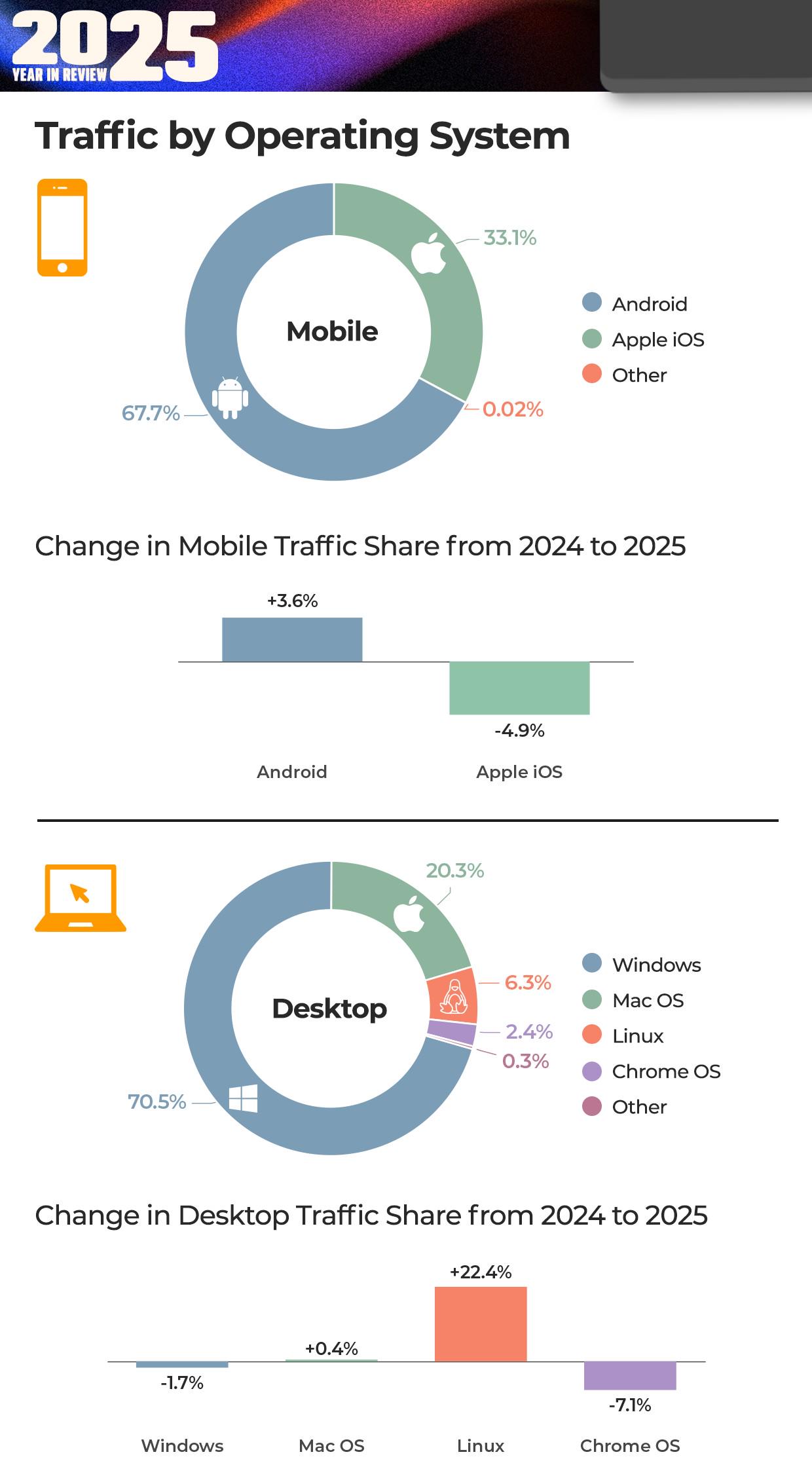
So Linux desktop traffic jumped 22.4% in 2025, and we all know exactly which "site" we're talking about here. You know, the one with the orange and black logo that rhymes with "corn tub." The joke is that every year, Linux users supposedly flock to adult entertainment sites in disproportionate numbers, creating this recurring meme where Linux gains massive percentage increases on *that* platform specifically. It's become an annual tradition to roast the Linux community for this statistical... anomaly. Meanwhile, Chrome OS is bleeding users (-7.1%) because apparently even Chromebook owners have standards. Windows barely budged, Mac stayed flat, but Linux? Linux users are out here single-handedly keeping the internet interesting with their 22.4% surge. The real question: are Linux users just more honest about their browsing habits, or is configuring Arch so exhausting that they need extra... relaxation time? Either way, 2025 is the year of the Linux desktop. Just not in the way Linus Torvalds imagined.

Internet Explorer Vs. Murder Rate

Internet Explorer Vs. Murder Rate
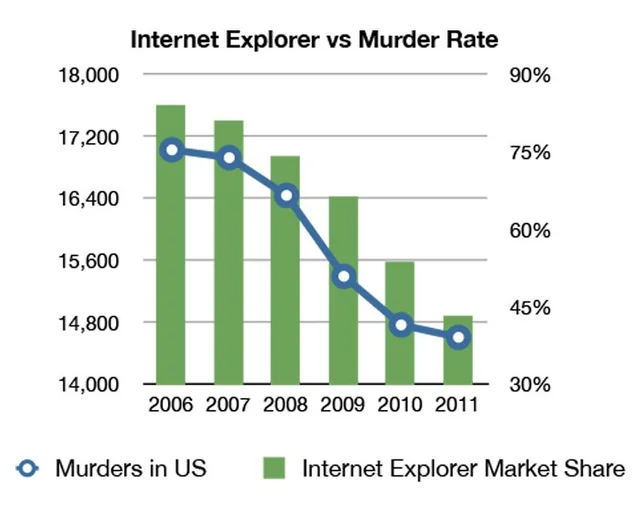
Behold, the most compelling evidence that Internet Explorer was literally killing people. As IE's market share dropped from 2006 to 2011, so did the murder rate! This is what statisticians call "correlation without causation" - or what I call "the perfect excuse to uninstall IE from your grandparents' computer." Maybe people were just less murderous when they weren't waiting 45 seconds for a webpage to load. Or perhaps Firefox and Chrome were secretly running crime prevention programs in the background.

Mostly Python... In Your Dreams

Mostly Python... In Your Dreams
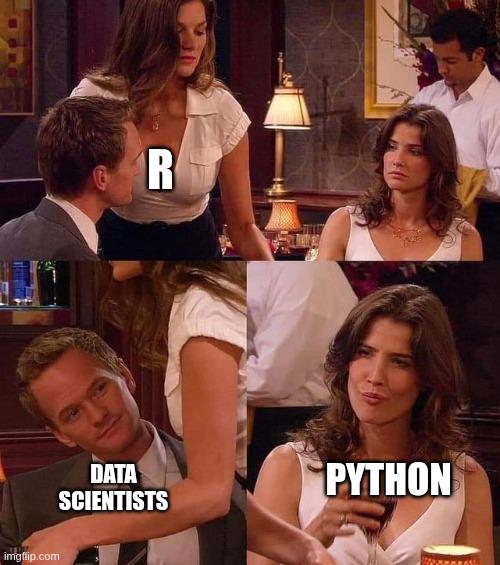
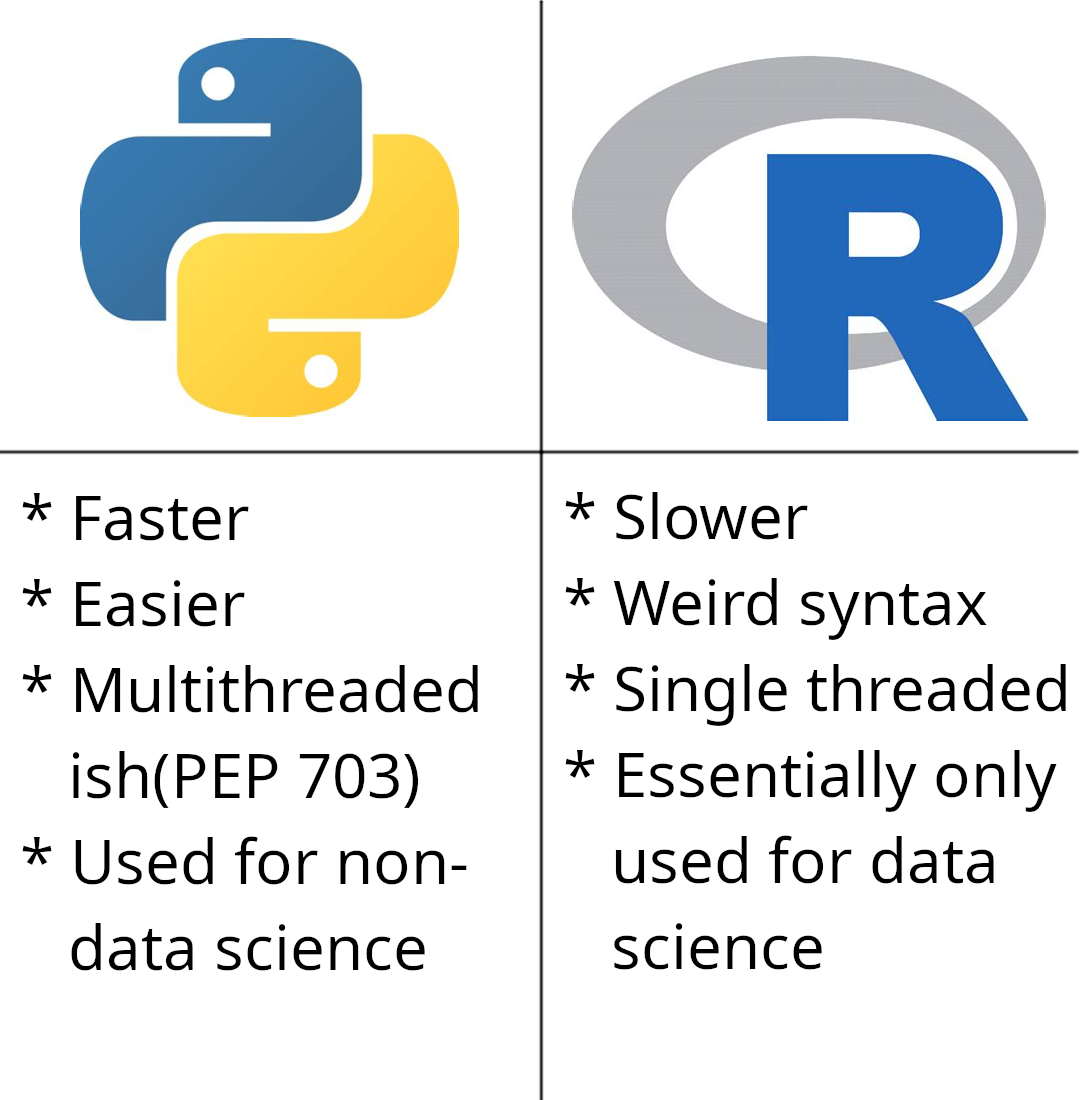
When the job description says "R knowledge required, Python mostly used," but then you show up and discover it's 99% R with that one random pandas script someone wrote 3 years ago. The classic bait-and-switch where data scientists get lured by the promise of Python only to find themselves knee-deep in R's cryptic syntax and bizarre indexing. Meanwhile, Python sits there looking all smug because everyone claims to love it, but nobody actually lets you use it for the cool projects.

Triple Axis Of Statistical Failure

Triple Axis Of Statistical Failure
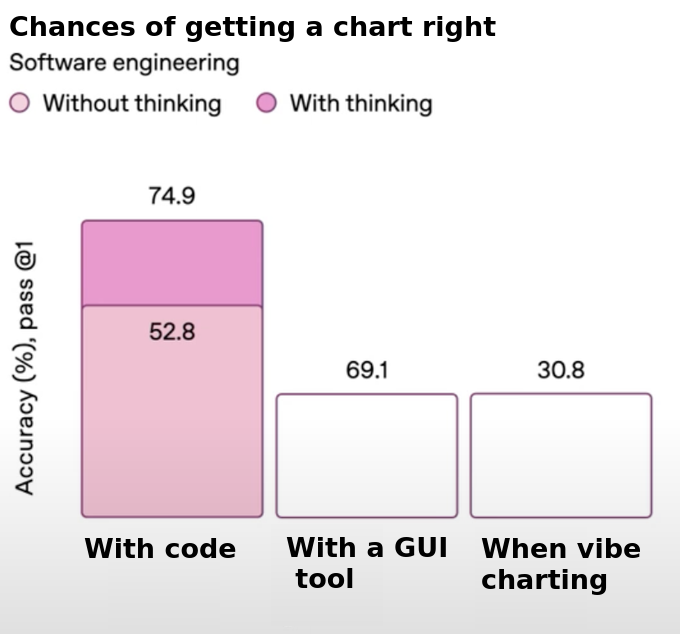
The chart itself is a masterclass in irony—a completely broken visualization about chart accuracy. Notice how the x-axis and y-axis don't even make sense together? That's the joke swallowing its own tail. Apparently, coding your visualization gives you a 74.9% chance of success if you think (but only 52.8% if you don't bother with that pesky thinking process). Meanwhile, GUI tools clock in at 69.1%, and "vibe charting"—that scientific approach where you just go with whatever looks pretty—nets you a solid 30.8%. The supreme irony? This chart about chart accuracy is itself a statistical abomination. Different categories on the x-axis, percentages that don't relate to each other, and a complete disregard for data visualization principles. It's like watching someone give a PowerPoint presentation about public speaking while tripping over their own shoelaces.

That's Not How Percentages Work

That's Not How Percentages Work
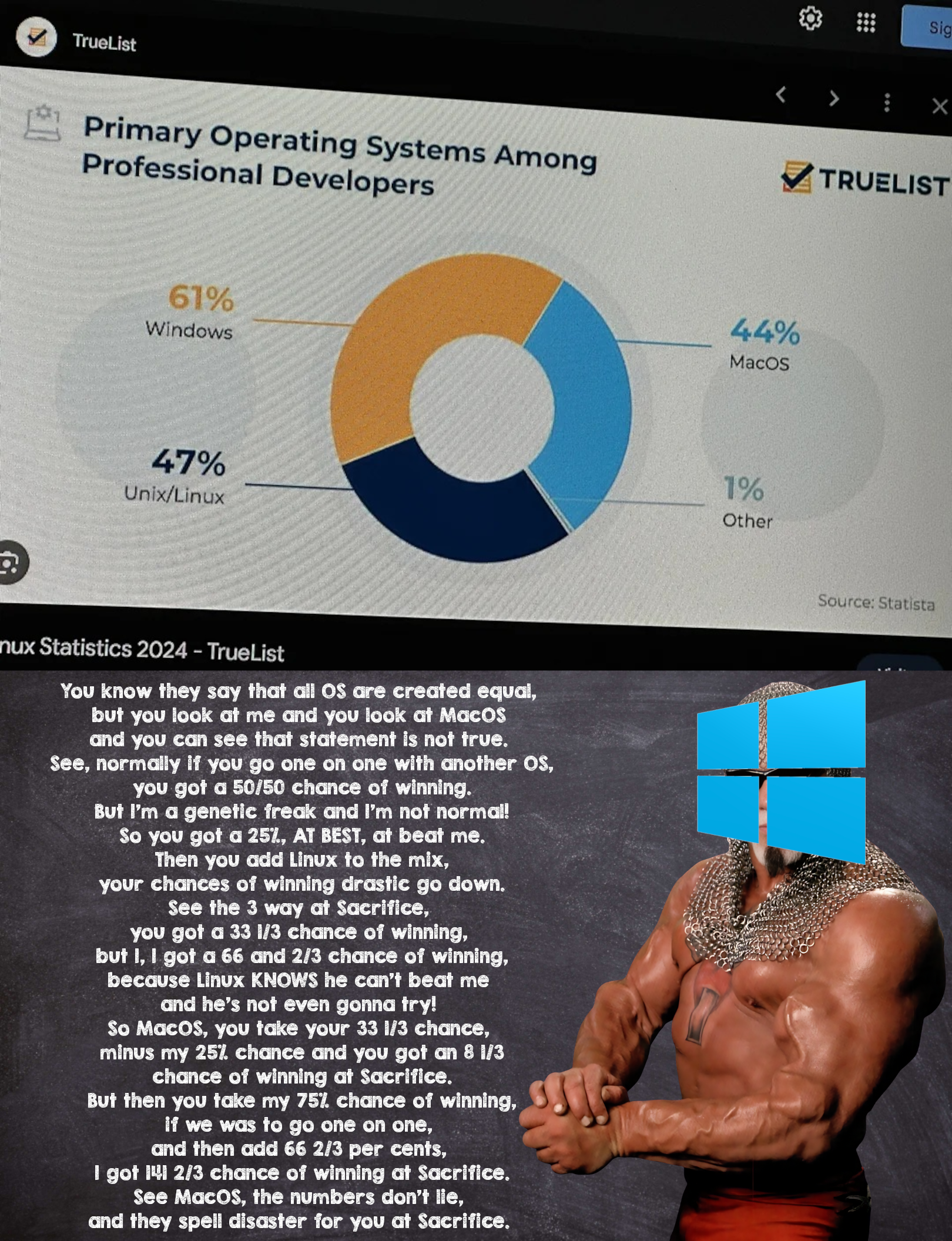
Ah, the classic "math doesn't matter" approach to OS statistics! This chart showing Windows at 61%, Linux at 47%, macOS at 44%, and "Other" at 1% adds up to a beautiful 153%. It's paired with a WWE-style Scott Steiner math promo where he butchers probability calculations with the confidence of a junior dev pushing to production on Friday afternoon. The real joke? This is exactly how most tech companies present their market dominance - counting every installation twice and rounding up to the nearest "whatever makes us look good." Who needs mathematical consistency when you've got marketing goals to hit?

Thanks For The Insight

Thanks For The Insight
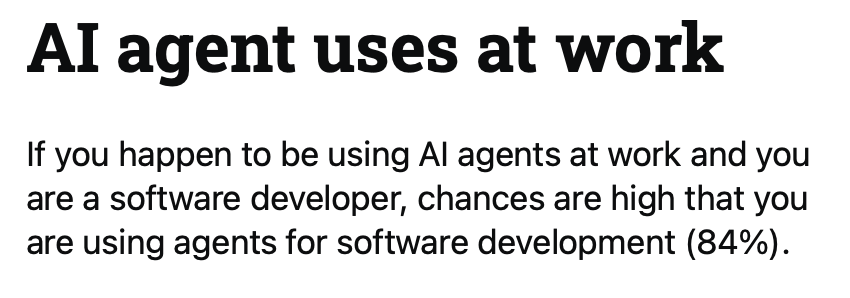
Breaking news: Water is wet! That groundbreaking research revealing 84% of software developers use AI for... *checks notes*... software development. Next up: shocking study finds that 99% of chefs use kitchens to cook food. The circular logic is so perfect you could use it as a replacement for π in your calculations. This is the kind of "insight" that justifies someone's entire market research budget while telling us absolutely nothing we didn't already know.

YouTube Survivorship Bias

YouTube Survivorship Bias
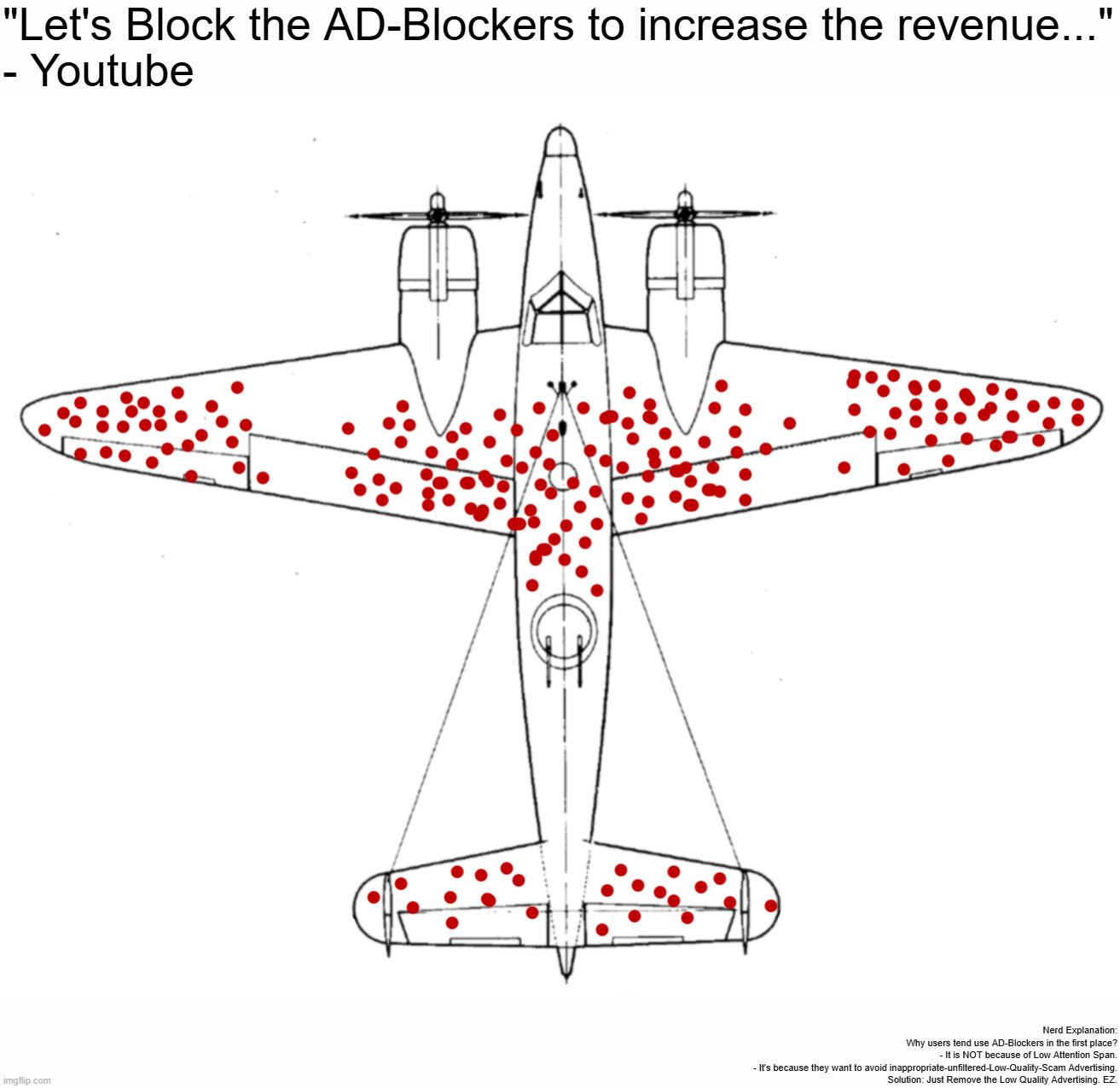
The famous WWII survivorship bias diagram strikes again! During the war, engineers analyzed returning planes to decide where to add armor. They marked bullet holes (red dots) on returned aircraft—but the critical revelation was that they should armor the unmarked areas , since planes hit there never made it back. YouTube's anti-adblock crusade perfectly mirrors this logical fallacy. They're only measuring revenue from users who stick around after being forced to disable adblock—completely missing all the users who just abandon the platform entirely. It's like optimizing your codebase by only listening to the three users who didn't rage-quit after your UI redesign.

Bell Curves About Bell Curves

Bell Curves About Bell Curves
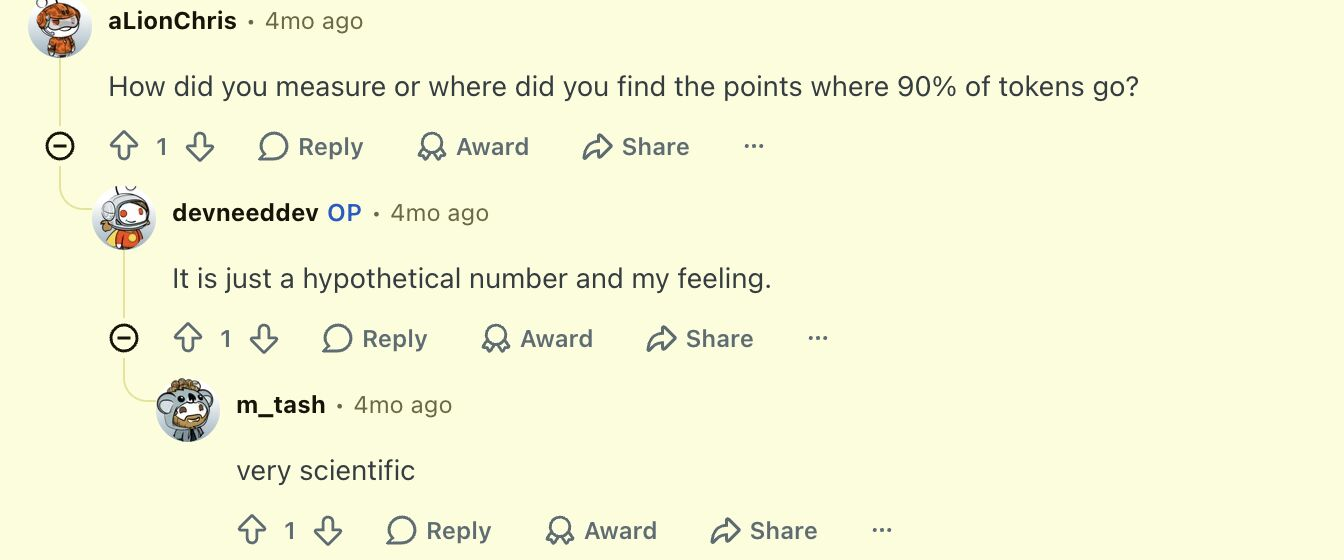
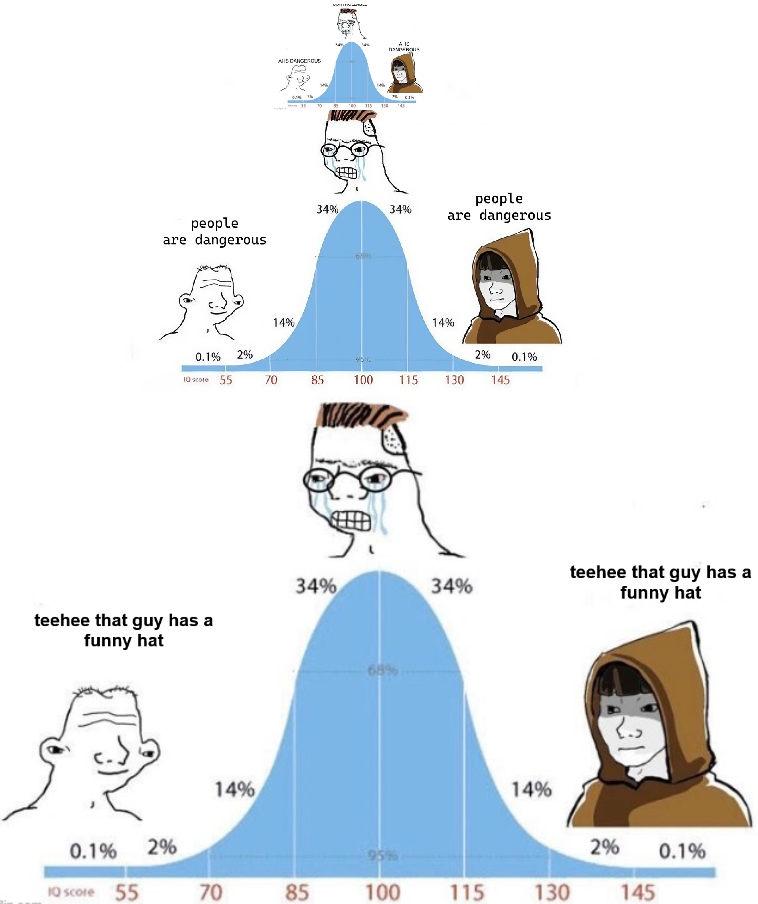
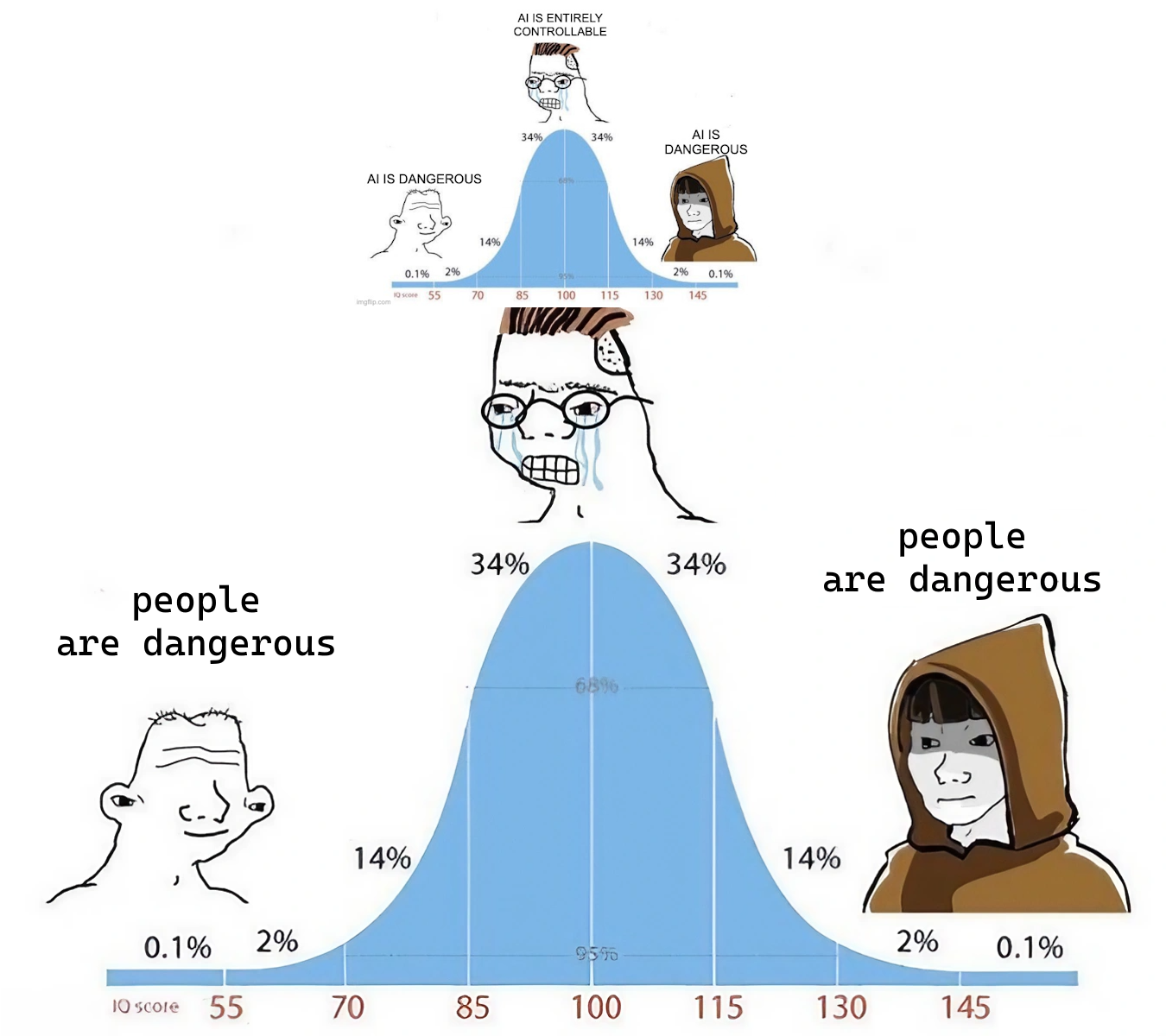
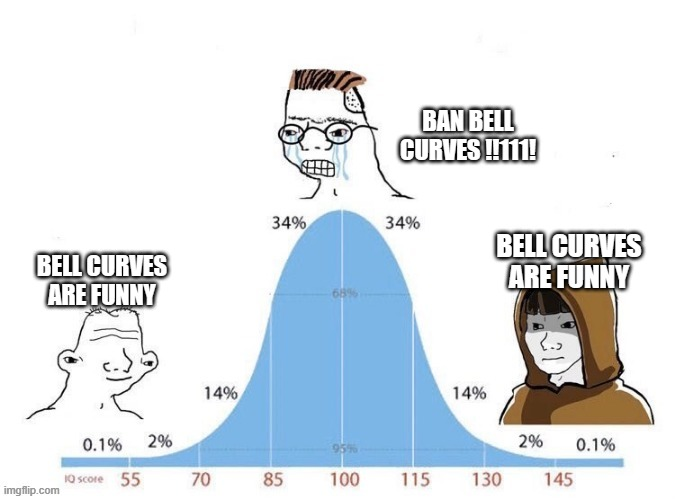
The ultimate statistical irony: a bell curve meme about bell curves that perfectly follows... a bell curve. You've got the low-IQ folks who think bell curves are funny because "haha, pretty graph go brrr," the high-IQ intellectuals who appreciate bell curves for the exact same reason, and the middle-of-the-curve galaxy brains screaming "BAN BELL CURVES!!1!" with the intensity of someone who just discovered their entire codebase uses tabs instead of spaces. The distribution of opinions about bell curves literally forms a bell curve, and that's the kind of recursive humor that keeps me going through sprint planning meetings.

Understanding Graph Axis Is Important

Understanding Graph Axis Is Important
Ah, the classic tale of two graphs! The top one from "trusted tech reviewers" shows all CPUs performing nearly identically - because they've zoomed in so much on a tiny performance difference that everything looks the same. Meanwhile, the CPU makers' graph looks like CPU8 is performing interstellar travel while CPU1 is struggling to cross the street. Same data, wildly different impression. It's the graphical equivalent of saying "technically I didn't lie" while completely misleading everyone. Next time your manager asks why your code isn't 500% faster than last sprint, just adjust your y-axis accordingly!

The Evolutionary Tale Of A Data Scientist

The Evolutionary Tale Of A Data Scientist
The evolutionary tale of a data scientist! First, we see Statistics (elephant) and Computer Science (snake) as separate entities. Then they decide to collaborate—because obviously, elephants and snakes make natural coding partners. The snake begs for statistical knowledge, and suddenly—BOOM—they transform into a dinosaur labeled "DATA SCIENTIST." It's the perfect representation of how merging statistics with programming creates this mythical creature that everyone wants to hire but nobody can quite define. The irony? Real data scientists spend 80% of their time cleaning data, not evolving into majestic dinosaurs. Should've shown the final form as a janitor with a SQL mop.

AI Is Just Spicy Math In Disguise

AI Is Just Spicy Math In Disguise
The AI hype squad thinks neural networks are magical black boxes of wonder until someone reveals the truth: it's just linear algebra with spicy matrix multiplication. That complex neural network diagram? Throw it away! All you need is Y=MX+P, the linear regression formula that's been around since the 1800s. Turns out the "future" is just statistics wearing a fancy turtleneck and calling itself AI.

HTML: The Silent Epidemic

HTML: The Silent Epidemic
Well, that explains why my doctor keeps asking if I've been "exposed to HTML" during checkups. And here I thought my code was just dirty because of poor indentation. The real kicker? These are the same people who'll confidently tell you they "know computers" before asking you to fix their printer. This is why we can't have nice things in tech - 10% of the population thinks we're spreading disease by writing <div> tags. Next time someone asks what I do for a living, I'm just going to say "I work at McDonald's." Safer that way.