Game development Memes

Posts tagged with Game development

When Programming Defies Logic

When Programming Defies Logic
So you're telling me a game dev can spawn a LITERAL DEMON erupting from molten lava with particle effects and physics calculations that would make Einstein weep, but adding a scarf to the player model? Suddenly we're asking them to solve world hunger. The absolute AUDACITY of suggesting something as simple as cloth physics after they just casually coded an apocalyptic hellspawn summoning ritual. It's giving "I can build a rocket ship but I can't fold a fitted sheet" energy. Game development priorities are truly an enigma wrapped in a riddle, served with a side of spaghetti code.

Cod Be Like

Cod Be Like
Back in the day, game devs were out here coding ENTIRE ROLLERCOASTER TYCOONS in Assembly language like absolute psychopaths, fitting shooters into 97KB (yes, KILOBYTES), and somehow making games run on potatoes while also having bodies that could bench press a small car. They were built different, both literally and figuratively. Fast forward to now and we've got AAA studios crying about how they can't fix bugs because someone's allegedly stealing breast milk (?!), shipping 50GB games that require another 50GB day-one patch, telling you to buy a NASA-grade PC just so their unoptimized mess doesn't crash every 5 minutes, and blaming YOU—the player—for their always-online singleplayer game being broken. The devolution is REAL and it's SPECTACULAR in the worst way possible. We went from "I made this masterpiece fit on a floppy disk" to "Sorry, the game is 200GB and still doesn't work, also here's $70 worth of microtransactions." The bar went from the moon straight to the Earth's core.

When You Ask Viewers For Products/Features Ideas

When You Ask Viewers For Products/Features Ideas
So you thought crowdsourcing feature requests would be a great idea. You opened the floodgates, asked your community what they wanted, and now you're staring at "just add real-time multiplayer with blockchain integration and AI-powered NPCs that learn from player behavior." Meanwhile, your actual game is a 2D platformer you built in two weeks. The scope creep boss has entered the chat, and it's wielding a sword made of unrealistic expectations and zero understanding of development time. Your poor little game never stood a chance against the eldritch horror of feature requests that would require a AAA studio budget and three years of crunch.

Physics, Shaders, Demons - Fine. Fabric? Oof.

Physics, Shaders, Demons - Fine. Fabric? Oof.
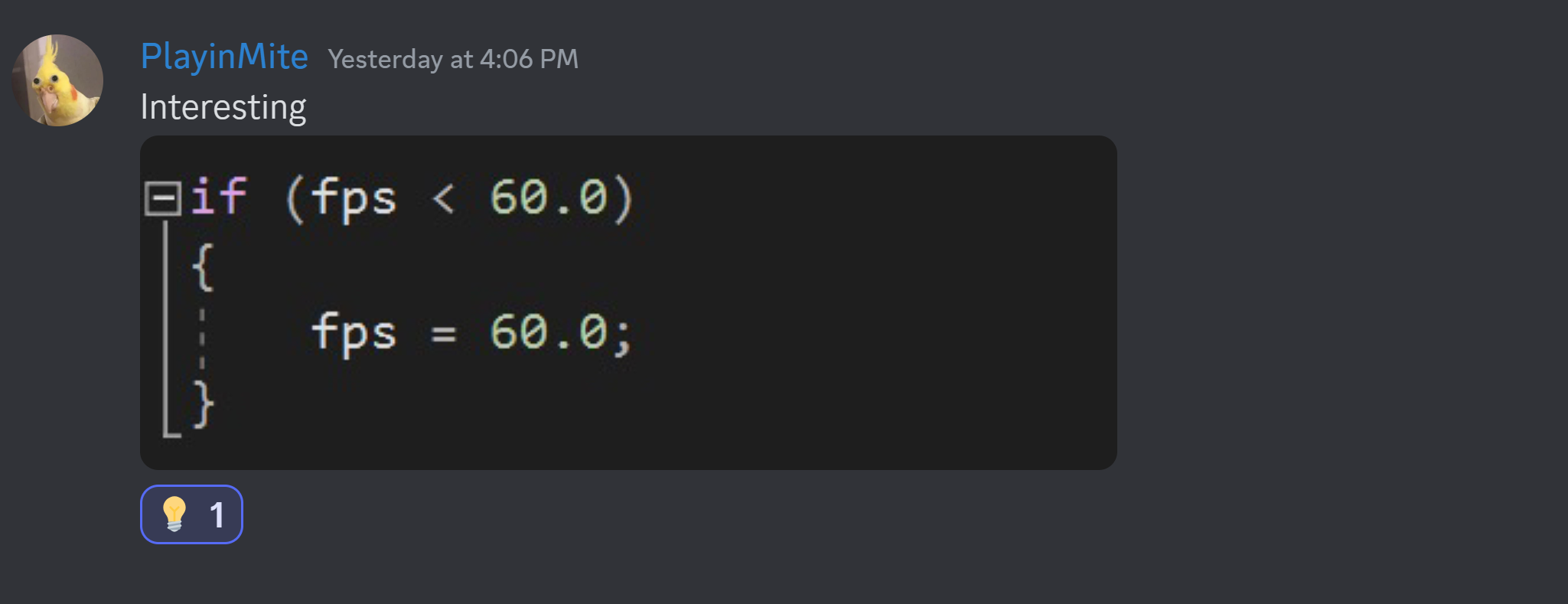
Game developers will casually implement particle systems that simulate volcanic eruptions with real-time physics calculations, write custom shaders that make demons emerge from interdimensional portals, and handle complex collision detection for massive explosions... but ask them to make a scarf drape naturally on a character model and suddenly they're questioning their entire career choice. The brutal truth? Cloth simulation is genuinely one of the hardest problems in game development. While spawning a demon is just instantiating a prefab with some particle effects, fabric requires real-time physics simulation of thousands of vertices, collision detection with the character's body, wind dynamics, and making it look good at 60fps without melting your GPU. It's the difference between "cool visual effect go brrrr" and "I need to understand tensile forces and material properties now." Turns out summoning hellspawn from the depths of the underworld is easier than making a piece of cloth not clip through a shoulder. Game dev priorities are wild.

Don't Be Sad, This Is Just How It Works Out Sometimes

Don't Be Sad, This Is Just How It Works Out Sometimes
You spend weeks meticulously planning your project architecture. You document everything. You set up your environment. You write your first function. Then the bugs start appearing like medieval catapult ammunition and your entire codebase explodes into a cloud of segfaults and null pointer exceptions. The "Expedition 33" at the end really sells it. Because just like in Kingdom Come: Deliverance, you're not on your first rodeo anymore. You've been through this 32 times before. You know the drill. You accept your fate. You git reset --hard and start over. Again. Some call it debugging. Veterans call it Tuesday.

The People Interested In Playing My Game Can Be Categorised Into Two Groups

The People Interested In Playing My Game Can Be Categorised Into Two Groups
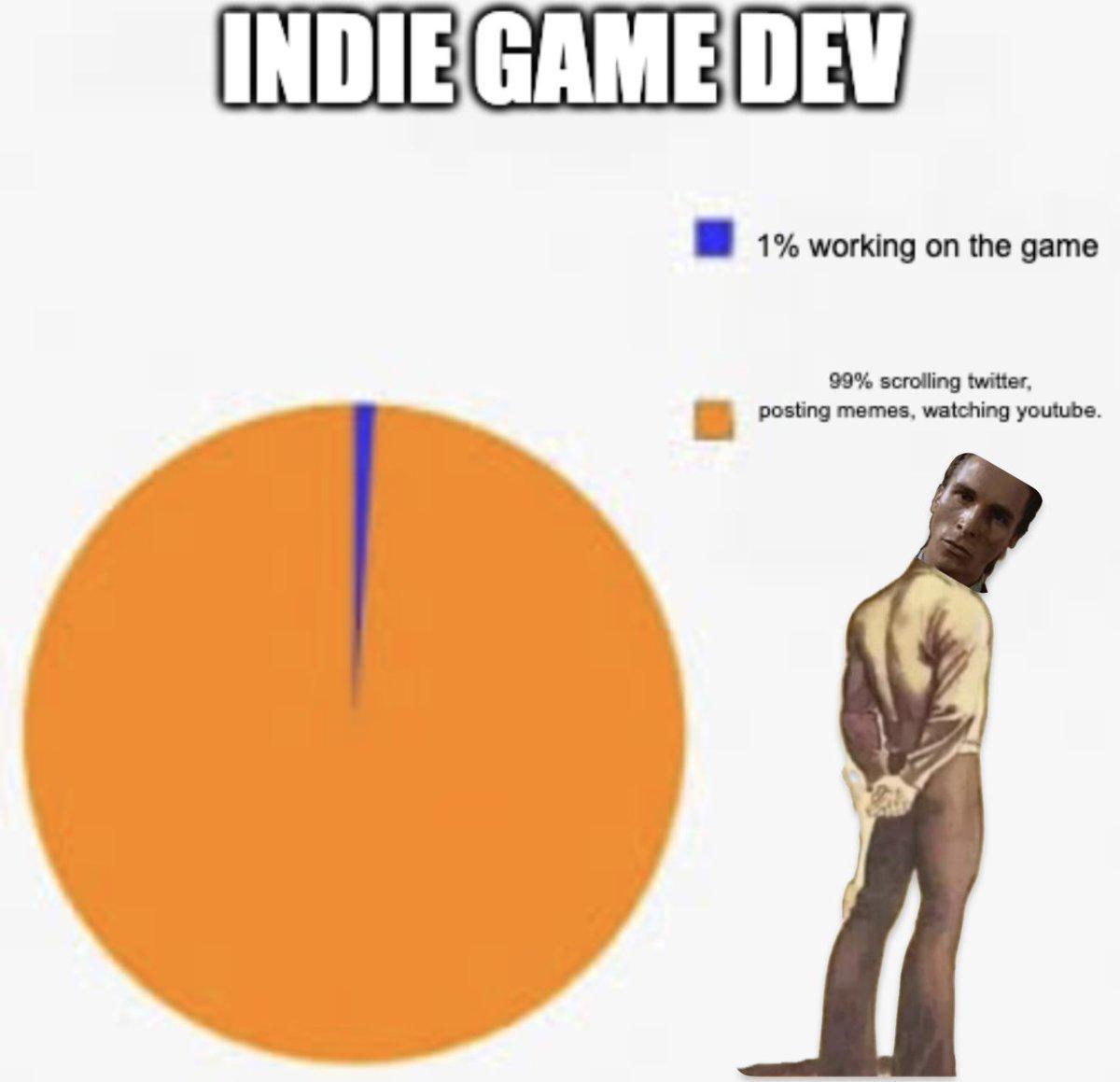
Group 1: "Stop posting and finish the game already." Group 2: "I wouldn't even know about your game if you stopped posting." The indie gamedev's eternal paradox—you're either procrastinating on social media or you're invisible. Both groups are right, which is the most painful part. You're simultaneously a marketing genius and the reason your game won't ship until 2027. The Godot engine won't save you from this existential crisis, friend.

Even When You Put Much Effort Into A Showcase Post

Even When You Put Much Effort Into A Showcase Post
You spend six months building your indie game, write a heartfelt post about your journey, include screenshots, a trailer, and your soul. You hit submit with cautious optimism. Result: 1 upvote, 0 comments. The void stares back. The same subreddit where someone posted "I made Pong in Excel" got 47k upvotes yesterday. Your smile fades faster than your motivation to ever post again. The game dev grind is real, but the showcase post grind? That's a different kind of pain.

Five Hours Wasted

Five Hours Wasted
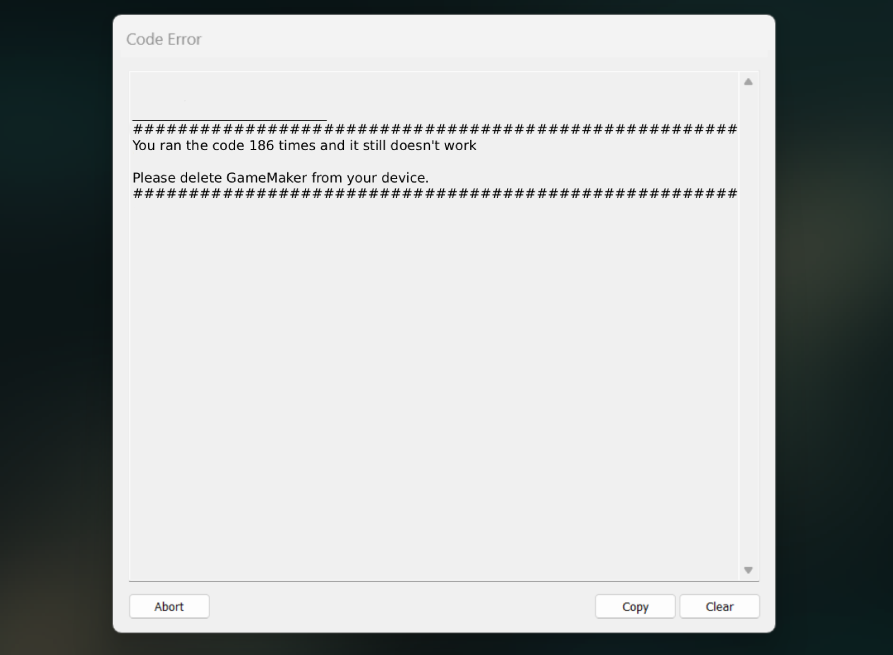
Nothing quite like the special kind of rage that comes from debugging C for hours, only to realize the "bug" was actually a feature you forgot you implemented. Or worse—it was working exactly as intended and you just didn't understand your own code anymore. The progression here is beautiful: starts with innocent optimism, discovers something's wrong, descends into debugging hell trying to fix it, then finally achieves enlightenment (or insanity?) when you realize there was never anything to fix. Those five hours? Gone. Vaporized. Could've been playing the game instead of hunting phantom bugs. Bonus points for doing this in C where every "bug" could legitimately be undefined behavior, a segfault waiting to happen, or just your pointer arithmetic being spicy. The paranoia is justified, which makes the realization even more painful.

We're Making A Hand-Drawn 2D Point And Click Sidescroller Game And Someone On TikTok Asked For A First Person Mode 😭

We're Making A Hand-Drawn 2D Point And Click Sidescroller Game And Someone On TikTok Asked For A First Person Mode 😭
Nothing says "I don't understand game development" quite like asking for a first-person mode in a 2D side-scroller. The dev's response is chef's kiss—comparing it to someone asking you to add beef and gravy to chocolate cupcakes. Sure, they're both food, but you've fundamentally misunderstood the assignment. Converting a hand-drawn 2D point-and-click game to first-person would require redrawing literally everything from a completely different perspective. It's not a feature request—it's asking you to make an entirely different game. The "get fancier later" caption on that beautiful hand-drawn barn really seals the deal. Yeah buddy, first-person mode is slightly beyond "fancier." TikTok users and feature creep, name a more iconic duo.

The Evolution Of Programming Intelligence

The Evolution Of Programming Intelligence
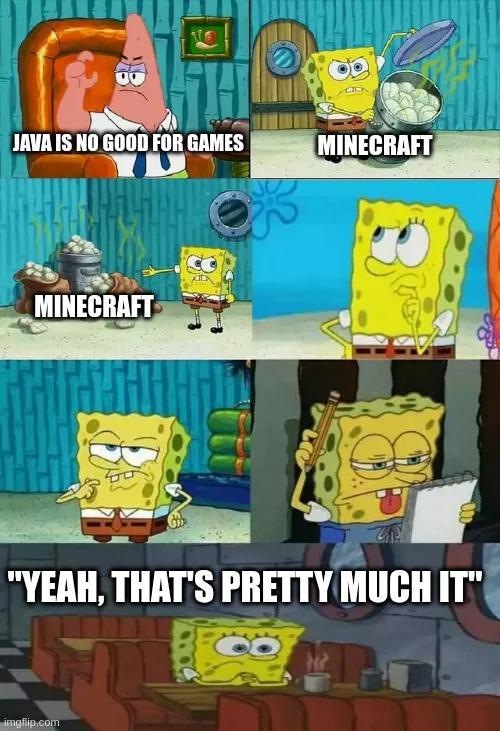
Starting with Python's galaxy brain energy, descending through Java's merely brilliant neural activity, then C++'s dimming consciousness as you realize you're managing memory manually. Scratch brings us to the enlightened toddler phase where you're dragging colorful blocks around. And finally, we reach peak transcendence with command blocks in Minecraft—where you've ascended beyond traditional programming into a realm of redstone logic and block-based sorcery that somehow feels both incredibly powerful and deeply questionable at the same time. The progression from "I write elegant code" to "I literally program inside a video game" is a journey we all respect but don't necessarily understand.

Thank You, Mother

Thank You, Mother
You know that crushing moment when you're desperately trying to justify your existence to the people who raised you? Three weeks of debugging, refactoring, optimizing collision detection, and implementing that smooth camera movement system. But when it's demo time, all they see is a character moving left and right for 15 seconds before you hit a game-breaking bug you swore you fixed yesterday. Their polite "It's quite cool" hits different than any code review ever could. They're trying their best to be supportive, but you can see in their eyes they're wondering if you should've become a dentist instead. Meanwhile, you're internally screaming about the 47 classes, 2000 lines of code, and that one Stack Overflow answer that saved your life at 2 AM. The real kicker? If you showed them a polished AAA game, they'd have the same reaction. Non-technical folks just don't understand that those 15 seconds represent your blood, sweat, and approximately 47 cups of coffee.

And People Wonder Why Indie Games Are So Beloved These Days Over AAA

And People Wonder Why Indie Games Are So Beloved These Days Over AAA
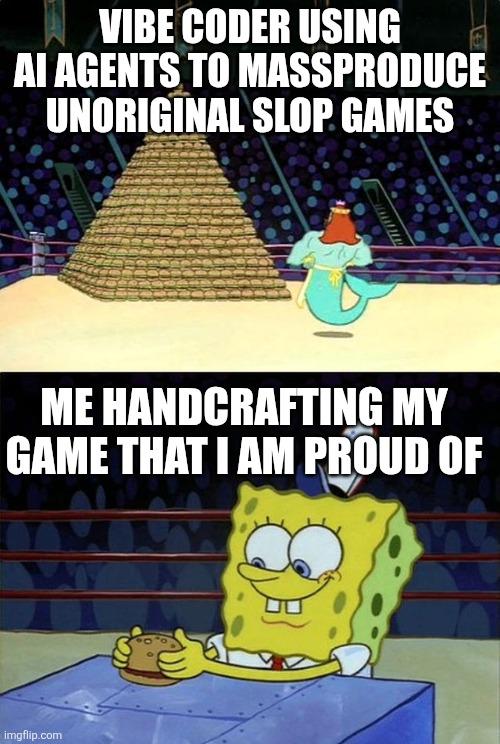
Big AAA studios with infinite budgets slapping AI into everything to "save money" while indie devs are out here actually crafting games with passion and soul. The irony? The billion-dollar companies are cutting corners with generative AI while the solo dev eating ramen in their apartment is hand-crafting every pixel. It's like watching a Michelin-star restaurant serve microwave dinners while the food truck down the street is making everything from scratch. And then the AAA studios wonder why players prefer the indie games that actually feel like someone cared about making them.