

Feature creep Memes

Posts tagged with Feature creep
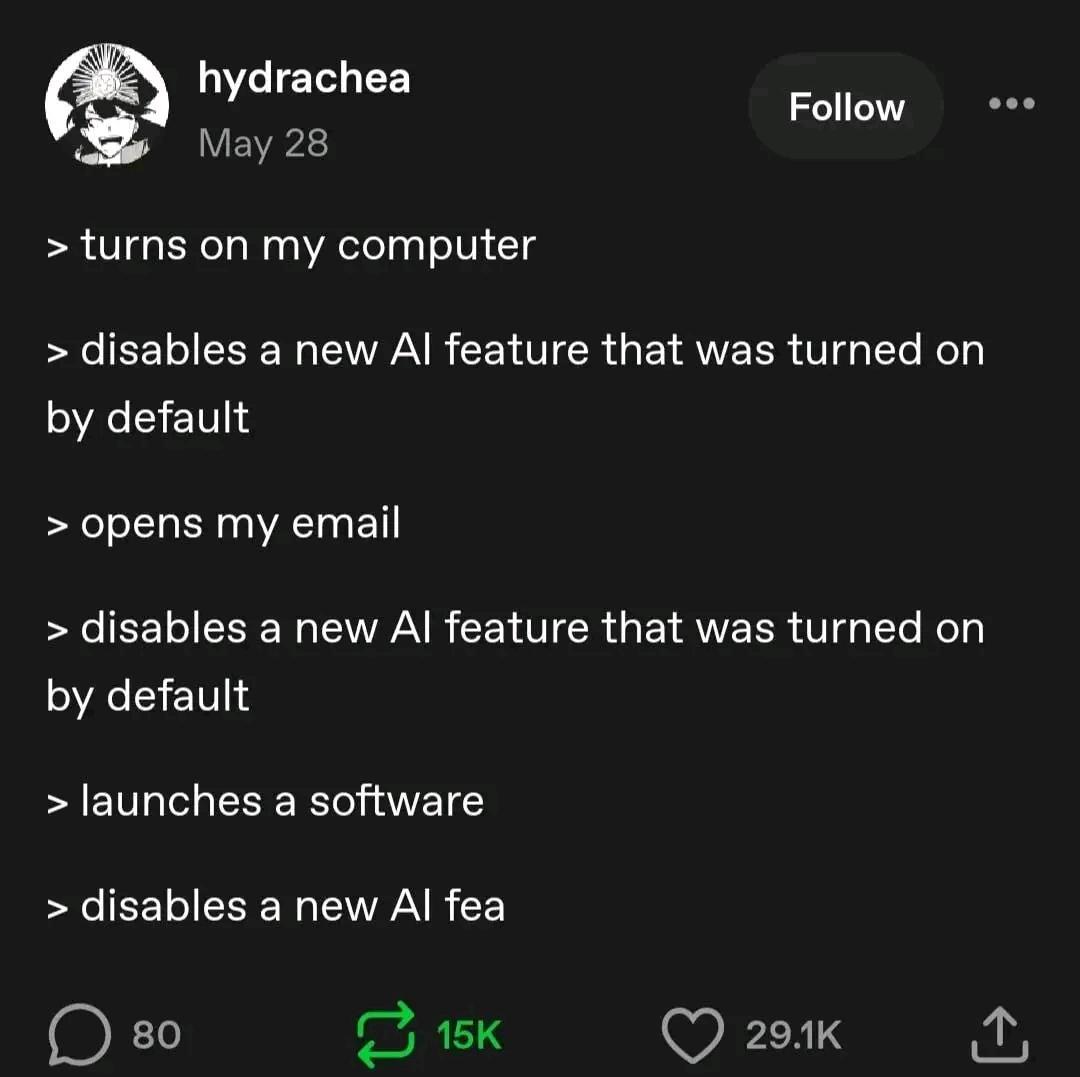
T He Fu Tu Re Is Ai

T He Fu Tu Re Is Ai
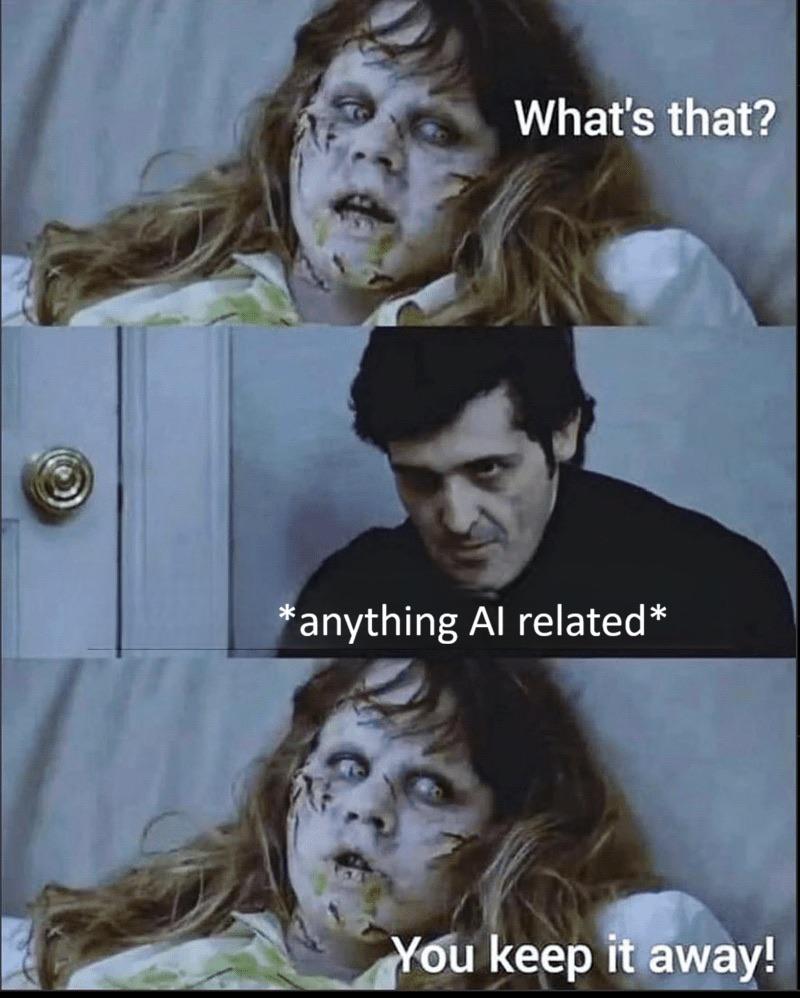
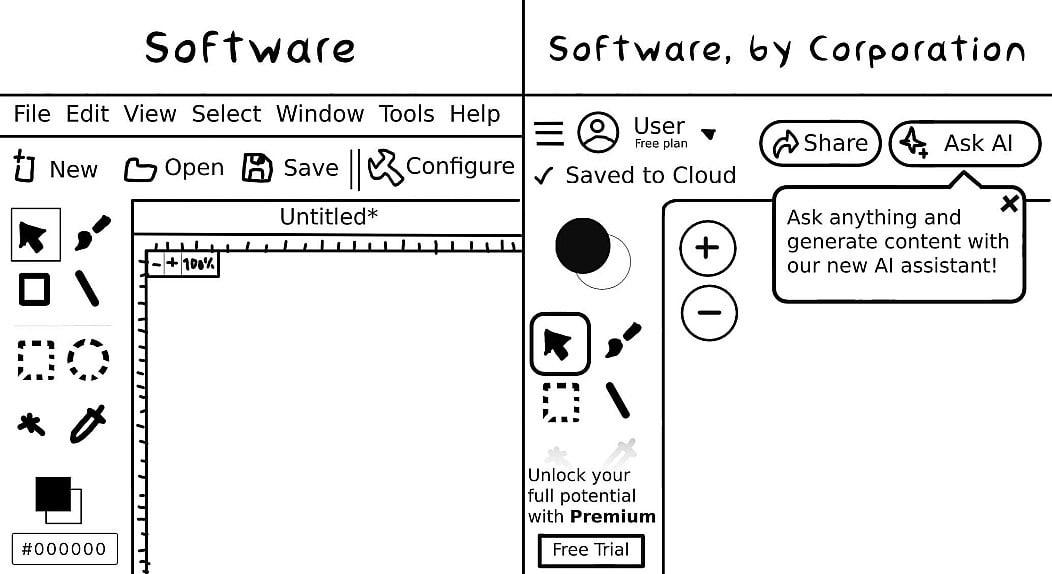
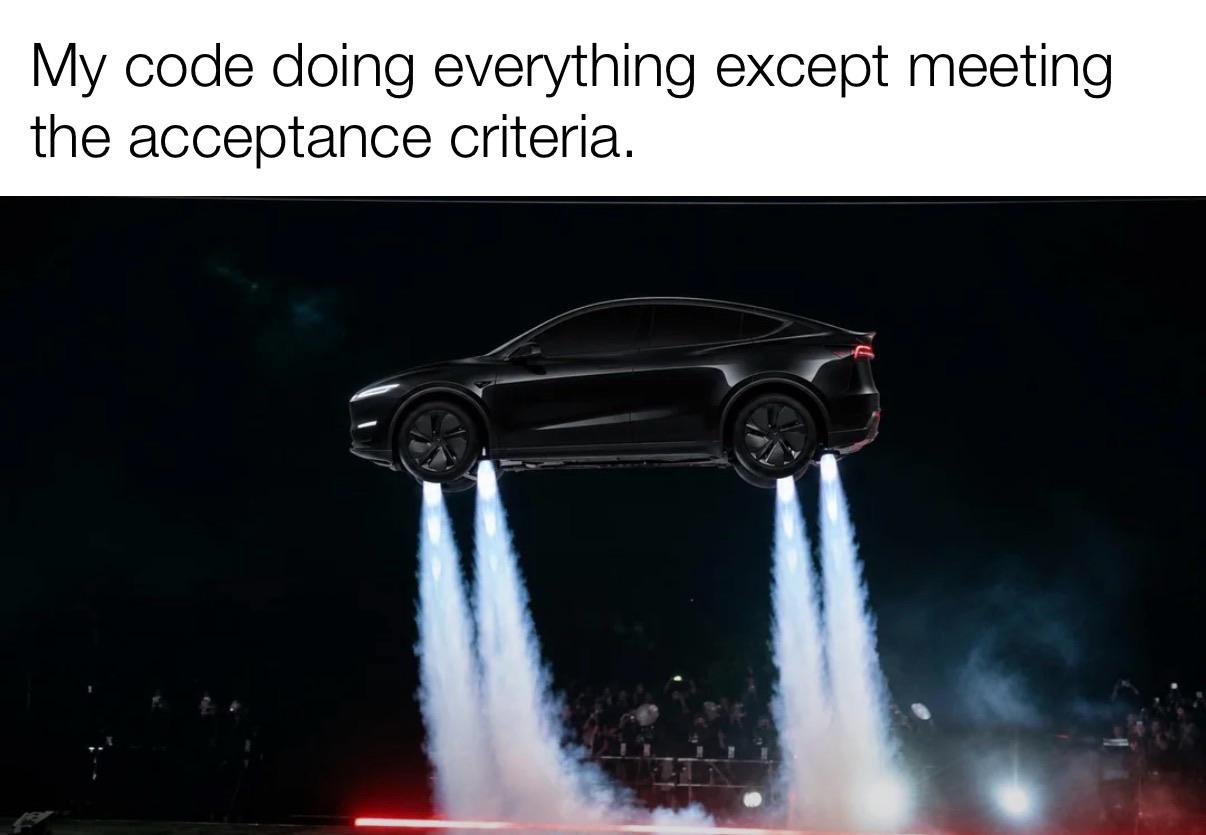
You try so hard to dodge the AI hype train. You stick to your principles. You refuse to add "AI-powered" to every feature. You won't shoehorn ChatGPT into your perfectly functional app. You're building real software, not buzzword bingo. Then Firefox—yes, FIREFOX, the browser that's supposed to be the scrappy underdog fighting for an open web—comes flying in with a haymaker of AI features you never asked for. Sidebar chatbots, AI-generated alt text, the whole nine yards. Even the good guys have fallen. There's no escape. Every company from your local pizza shop to your IDE is cramming AI into places it doesn't belong. The future isn't AI. The future is being beaten into submission by AI whether you like it or not.

When You Ask Viewers For Products/Features Ideas

When You Ask Viewers For Products/Features Ideas
So you thought crowdsourcing feature requests would be a great idea. You opened the floodgates, asked your community what they wanted, and now you're staring at "just add real-time multiplayer with blockchain integration and AI-powered NPCs that learn from player behavior." Meanwhile, your actual game is a 2D platformer you built in two weeks. The scope creep boss has entered the chat, and it's wielding a sword made of unrealistic expectations and zero understanding of development time. Your poor little game never stood a chance against the eldritch horror of feature requests that would require a AAA studio budget and three years of crunch.

We're Making A Hand-Drawn 2D Point And Click Sidescroller Game And Someone On TikTok Asked For A First Person Mode 😭

We're Making A Hand-Drawn 2D Point And Click Sidescroller Game And Someone On TikTok Asked For A First Person Mode 😭
Nothing says "I don't understand game development" quite like asking for a first-person mode in a 2D side-scroller. The dev's response is chef's kiss—comparing it to someone asking you to add beef and gravy to chocolate cupcakes. Sure, they're both food, but you've fundamentally misunderstood the assignment. Converting a hand-drawn 2D point-and-click game to first-person would require redrawing literally everything from a completely different perspective. It's not a feature request—it's asking you to make an entirely different game. The "get fancier later" caption on that beautiful hand-drawn barn really seals the deal. Yeah buddy, first-person mode is slightly beyond "fancier." TikTok users and feature creep, name a more iconic duo.

Feature Updates Gone Wrong

Feature Updates Gone Wrong
You know that feeling when your codebase is running smooth, optimized, and beautiful? Then product management decides it needs "just one more feature" and suddenly you're introducing unnecessary complexity, bloat, and technical debt. The monkey with a stick represents that shiny new feature nobody asked for, aggressively poking at your pristine, battle-tested code that was perfectly content just lying there being efficient. The lion's resigned expression? That's your code after the 47th "quick enhancement" that somehow required refactoring three modules and adding two new dependencies. Sometimes the best feature is no feature at all, but try explaining that in a sprint planning meeting.

Let's Move On And Upgrade

Let's Move On And Upgrade
The eternal developer paradox: screaming about too many new features while simultaneously working on a codebase so ancient it probably predates the internet. It's like complaining about your neighbor's loud music while refusing to replace your Windows 95 machine. The real horror isn't the legacy code—it's that moment when you realize you've become the office historian: "Let me tell you youngsters about the days before we had version control..."

Simple Cube vs. Sci-Fi Concept Art

Simple Cube vs. Sci-Fi Concept Art
The perfect visualization of how product managers describe features vs. how engineers implement them. Left: "Just a simple cube, how hard could it be?" Right: The same damn cube with one unnecessary line that took 8 meetings, 3 design revisions, and somehow doubled the development timeline. The sci-fi concept art is just corporate speak for "we added a groove that serves no purpose but looks techy." This is why I drink coffee by the gallon.

Adding Features Since No One Asked

Adding Features Since No One Asked
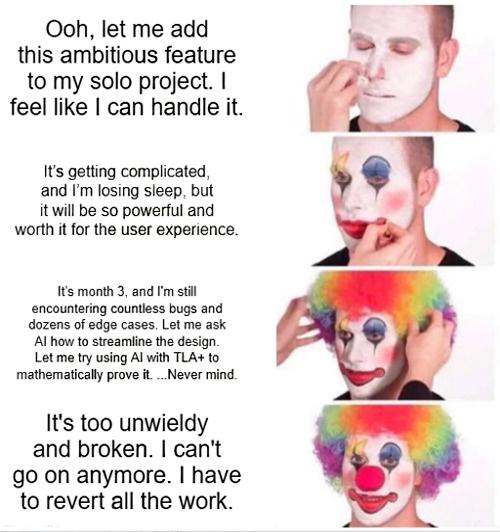
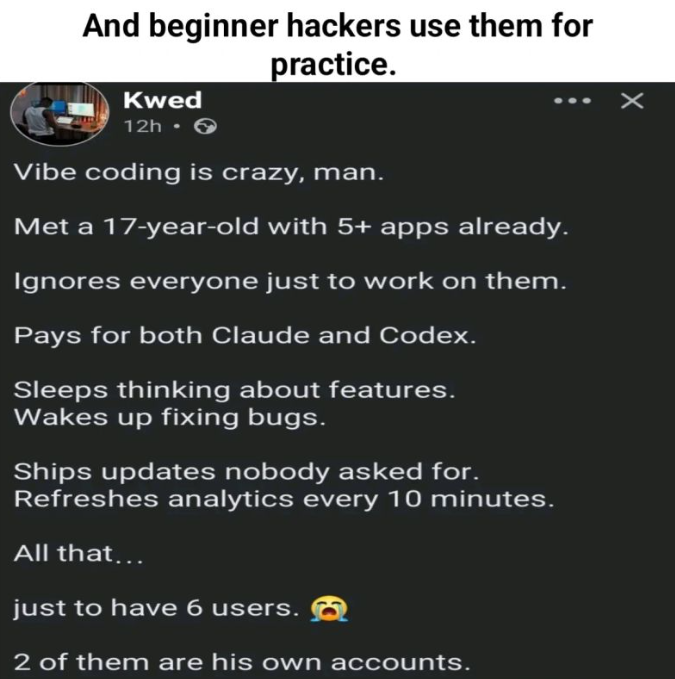
Just another Tuesday at a tech startup. The founder's pouring a gallon of "features" into a product that has zero paid users and no marketing strategy. Nothing says success like building a rocket ship when nobody asked for transportation. The classic "if we build it, they will come" delusion in its natural habitat. Spoiler alert: they won't come. They're perfectly happy using the five other solutions that already exist and have actual marketing budgets.

What The Hell Happened To This Game?

What The Hell Happened To This Game?
When your horror game project goes through executive review and marketing focus groups... Started with a terrifying monster bus straight from your nightmares, ended with dancing unicorns and DJs with sunglasses. Classic corporate evolution where someone inevitably says "but will this appeal to the TikTok demographic?" It's the same transformation that turned Resident Evil into a dance party and Dead Space into a microtransaction store. Next thing you know, they'll add battle passes to Tetris and loot boxes to Pong.

Richard's Guide To Software Development Hell

Richard's Guide To Software Development Hell
Ah, the classic software development cycle illustrated with feline precision! First panel: We start with a beautiful blueprint cat—meticulously designed with perfect proportions and elegant lines. Engineering perfection! Second panel: Resource allocation at its finest—80% of effort goes to the tail (that feature nobody will use), 14% to the legs (core functionality), 4% to the head (user interface), and a whopping 2% to the actual body (everything else that matters). Third and fourth panels: The pre-beta and post-beta cats look identical because let's be honest—nobody actually fixes anything during beta testing. Fifth panel: What the customer wanted? A FREAKING TIGER. Not even remotely close to a house cat. Sixth panel: Two versions later, the software has evolved into... a cat with an existential crisis and identity issues. Final panel: The ultimate truth bomb—despite delivering something completely wrong, users still stick around with a resigned "I still like you anyway." And the software's response? "TOOTS." Because at this point, it's just farting out updates.

The Two Types Of Users

The Two Types Of Users
Ah yes, the duality of user preferences. Developer creates accessibility feature for people afraid of spiders, then immediately thinks "what if we just went completely the other direction?" Because nothing says good UX like offering users either zero spiders or converting the entire interface into spiders . Next update: "Arachnid Dark Mode" where all toggle switches are tiny spiders that you have to click on their abdomens.

Maybe We Can Add That In The Next Sprint

Maybe We Can Add That In The Next Sprint
The classic software development hierarchy of attention! While developers lovingly cradle shiny new features like a precious baby, documentation and testing are barely kept afloat, gasping for air. Meanwhile, accessibility, internationalization, and localization? Those poor souls have been dead at the bottom of the ocean since the project kickoff meeting. Product managers be like: "We'll definitely prioritize i18n in the next sprint!" *Narrator voice*: They did not, in fact, prioritize it in the next sprint.

Developers Call It A Bug, Product Managers Call It A Feature

Developers Call It A Bug, Product Managers Call It A Feature
Oh, the classic corporate rebranding strategy! Water shooting uncontrollably from a broken pipe? Developers frantically point: "That's a catastrophic leak that'll flood the server room!" Meanwhile, Product Managers are already updating the pitch deck: "Behold our new dynamic hydration distribution system with multi-directional water feature!" Same disaster, fancier name, higher price tag. The eternal dance of software development where today's critical failure is tomorrow's premium offering if you just squint hard enough and use enough buzzwords.