

Developer tools Memes

Posts tagged with Developer tools

The Goat

The Goat
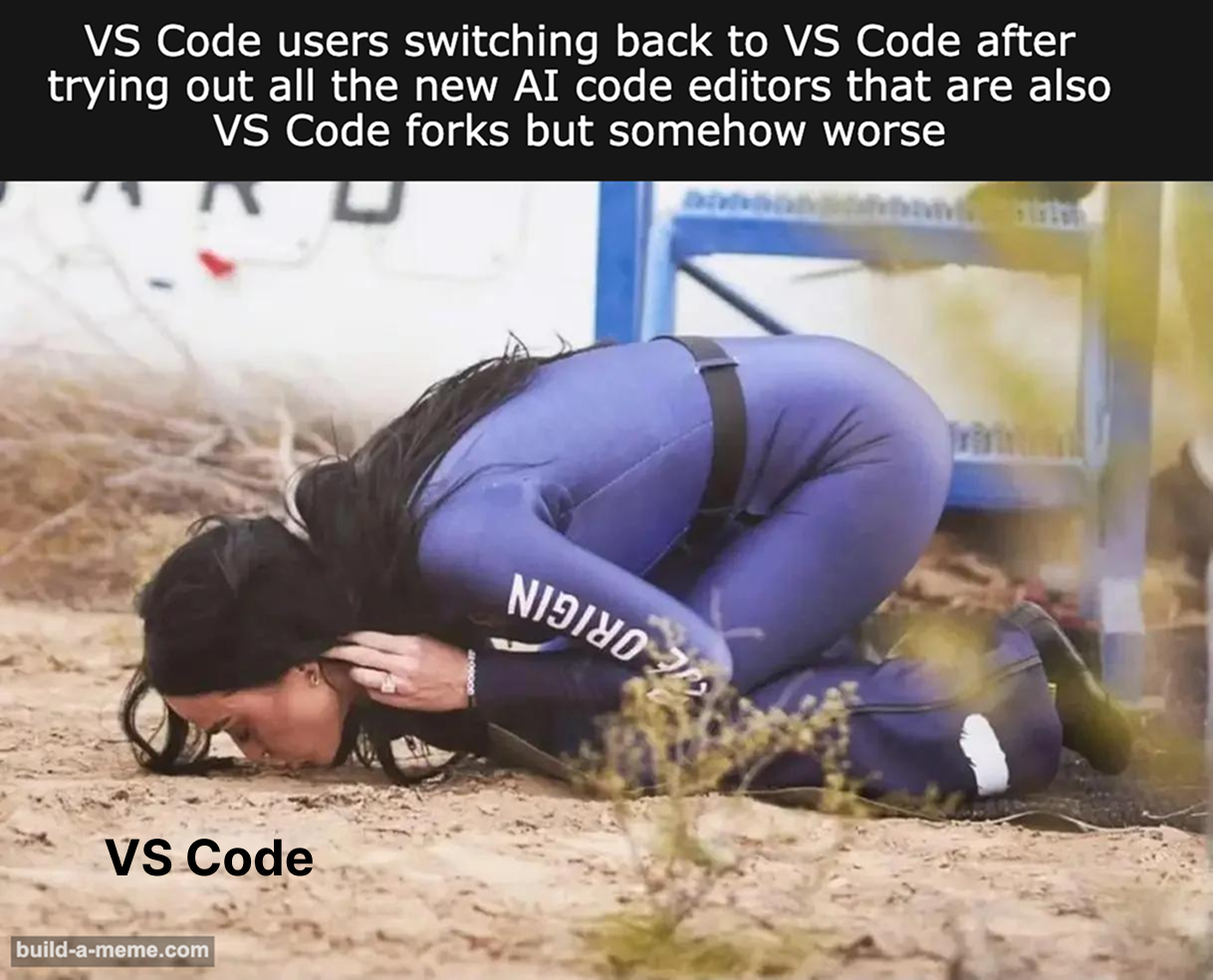
uBlock Origin is genuinely the most essential browser extension ever created. It's not just an ad blocker—it's a privacy fortress, a performance optimizer, and your personal internet bodyguard all rolled into one. While other ad blockers sold out to "acceptable ads" programs (looking at you, AdBlock Plus), uBlock Origin stayed pure, open-source, and completely free. The developer, Raymond Hill, doesn't even accept donations anymore because he's just built different. He literally made the internet usable again and asks for nothing in return. Meanwhile, websites are out here loading 47 tracking scripts, auto-playing videos, and showing you ads for things you whispered about near your phone. Without uBlock Origin, you're basically raw-dogging the internet—exposing yourself to malware-laden ads, crypto miners, and those annoying newsletter popups that appear 0.3 seconds after you land on a page. It's the digital equivalent of wearing a hazmat suit in a biohazard zone. Can I get an AMEN?

Full Pixels

Full Pixels
Claude Code looking at three pixels of context and confidently declaring "Now I have the full picture" is the most accurate representation of AI coding assistants I've seen this week. It's like when you feed an LLM three lines of a 5000-line legacy codebase and it starts hallucinating architectural decisions with the confidence of a senior dev who just joined yesterday. The bird formation really sells it—each pixel stacked on top of each other, barely enough information to render a single RGB value, yet somehow that's sufficient for generating a complete solution. Classic AI energy: maximum confidence, minimum context window actually utilized.

Title Reached Its Token Limit

Title Reached Its Token Limit
When your AI coding assistant gets so popular that people burn through their usage limits faster than a junior dev copy-pasting from Stack Overflow. The real kicker? The team fixing the issue probably hit their usage limits too, creating a beautiful recursive problem. It's like watching a cloud service provider get DDoS'd by its own success. "We're investigating why everyone loves our product too much" is peak tech industry energy. The reply absolutely nails it though—nothing says "we're on it" quite like the engineers being throttled by their own rate limits while trying to increase the rate limits. Fun fact: This is what happens when you build something so good that your infrastructure planning becomes obsolete before the sprint ends. Agile didn't prepare us for this.

Idk Why Is It Even A Product

Idk Why Is It Even A Product
So AI is out here selling water bottles to programmers crawling through the desert, but when Meta AI shows up, suddenly the programmers are still crawling and the water bottles just... moved to the other side? The brutal honesty here is that Meta's AI offerings haven't exactly quenched anyone's thirst. While general AI tools are at least providing something useful to developers, Meta AI seems to exist in this weird limbo where it's technically a product but nobody's really sure what problem it's solving. It's like they saw the AI gold rush and said "we should have one too" without asking if anyone actually wanted it. The programmer remains parched either way, which is probably the most accurate representation of the current AI landscape—lots of hype, questionable utility.

So Annoyed

So Annoyed
Microsoft really said "you know what developers need? An AI assistant they didn't ask for!" and proceeded to force-feed Copilot to literally everyone. The aggressive rollout is chef's kiss levels of corporate overreach—integrating it into VS Code, Windows 11, Edge, Office 365, and basically anywhere there's a text box. Meanwhile, devs are just trying to write their own code without autocomplete suggesting an entire React component when they type "const." The funnel imagery captures Microsoft's enthusiasm perfectly: they're not just offering Copilot, they're mainlining it directly into your workflow whether you subscribed to this experience or not. Some devs love it, some tolerate it, but everyone's definitely getting a taste of that sweet, sweet AI-generated boilerplate.

I Don't Even Know What It Exactly Wants To Be

I Don't Even Know What It Exactly Wants To Be
SourceForge is having a full-blown identity crisis. Started as a simple code hosting platform in the late '90s, it somehow evolved into this... thing that tries to be GitHub, a software distribution platform, an IDE host, a wiki, a forum, a download manager installer bundler (remember those sketchy toolbars?), and probably a coffee maker too. The platform's description is so absurdly verbose and vague that it literally means everything and nothing at the same time. "Web-based collaborative software platform for both developing AND sharing computer applications"? That's like saying "we do computer stuff with computers for computer people." Pick a lane, SourceForge. Meanwhile, GitHub showed up, did ONE thing really well (git hosting + collaboration), and completely dominated. SourceForge is that Swiss Army knife where half the tools are broken and you're not sure which attachment is supposed to open wine bottles.

We All Know Him

We All Know Him
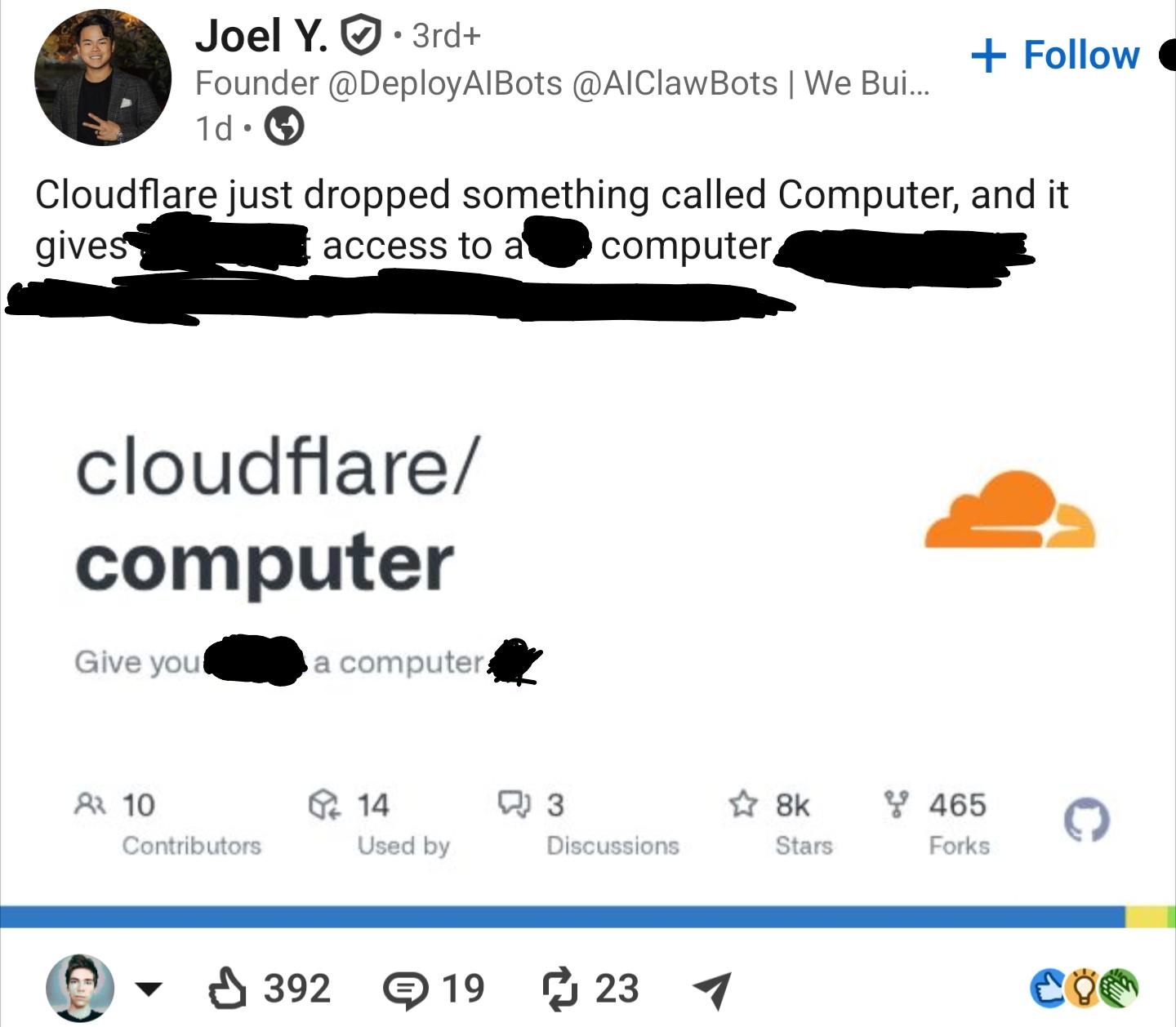
You know that guy. The one with the $5,000 productivity setup who spends more time optimizing his workspace than actually working. Notion for organizing tasks he'll never start, Superhuman for emails he doesn't send, OpenClaw (probably some AI tool), a Mac Mini, Raycast for launching apps faster (because those 0.3 seconds really matter), a $400 mechanical keyboard that sounds like a typewriter in a hailstorm, Wispr Flow for... whatever that is... and yet somehow produces absolutely nothing. It's the productivity paradox in its purest form. The more tools you have to "boost productivity," the less productive you actually become. Meanwhile, someone somewhere is shipping features on a 2015 ThinkPad running Vim and crushing it. Pro tip: Your tools don't write code. You do. Or in this guy's case, you don't.

Promoting Your Api Tool - Guide For Founders On Reddit

Promoting Your Api Tool - Guide For Founders On Reddit
Oh honey, the AUDACITY of these API tool founders thinking they're slick! They waltz into Reddit's programming subs pretending to be "just another developer" asking innocent questions about Postman alternatives, when SURPRISE – they conveniently have the PERFECT solution they just happened to build! It's like watching someone ask "Does anyone know where I can find good pizza?" while literally wearing a shirt with their pizzeria's logo. The subtlety is absolutely *chef's kiss* nonexistent. Reddit's dev community can smell guerrilla marketing from a mile away, and our poor founder here is sweating bullets realizing their "organic engagement strategy" is about as convincing as a cat pretending it didn't knock over that vase.

Make No Mistakes

Make No Mistakes
Yeah, Rome took centuries to build, but they also didn't have an AI that hallucinates code and confidently suggests deprecated packages from 2015. The Romans had to deal with barbarian invasions and political intrigue, not Claude suggesting you use a semicolon in Python or inventing functions that don't exist. Give them Claude and they would've finished the Colosseum in a weekend—or accidentally summoned a memory leak that crashes the entire empire. Either way, much faster results.

Why Hard Exit Editor? Nano Say At Bottom.

Why Hard Exit Editor? Nano Say At Bottom.
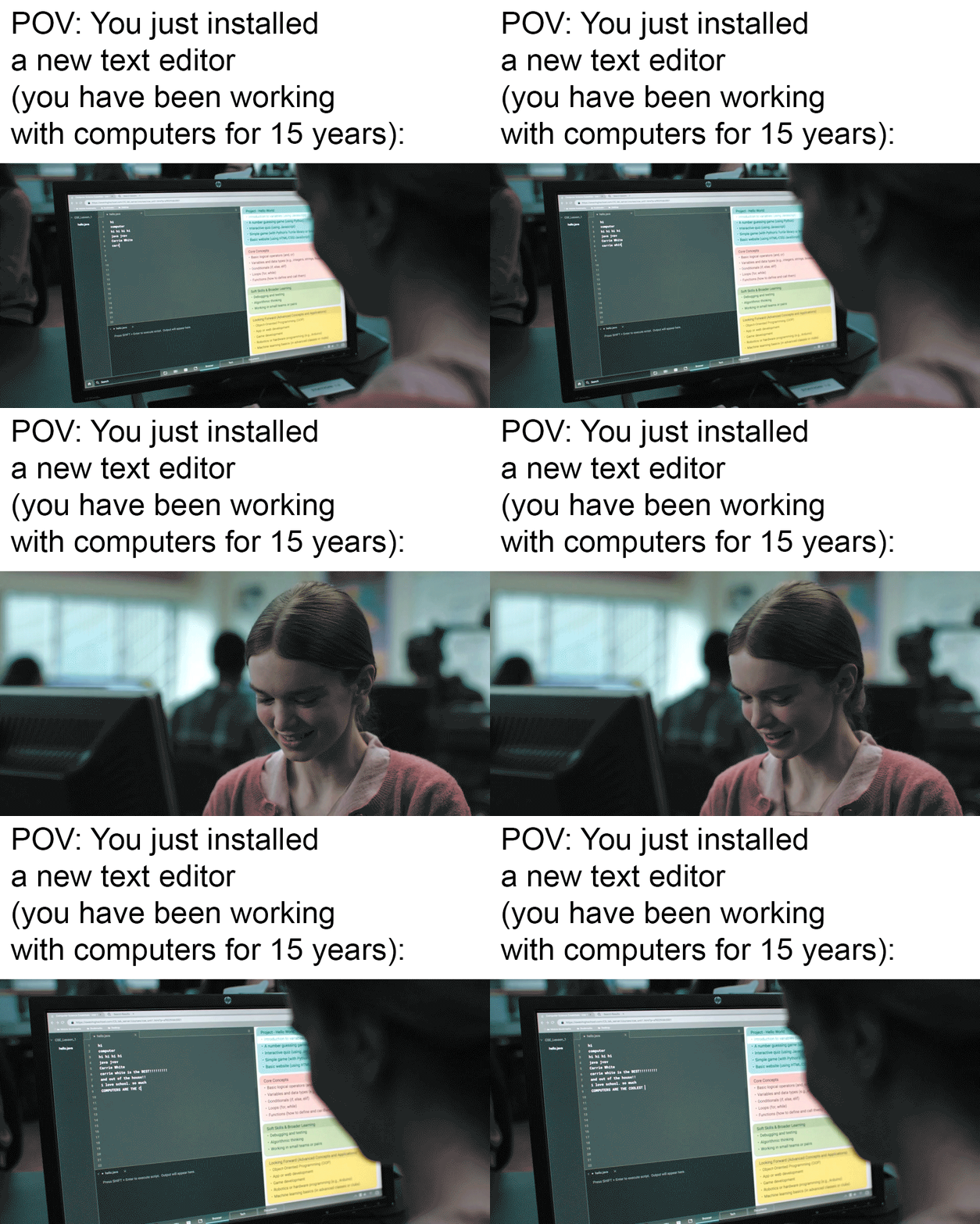
The eternal text editor holy war, but this time it's about brain size. Vim and Emacs users are out here memorizing arcane keyboard shortcuts like they're casting spells from a grimoire, while nano users just... read the instructions at the bottom of the screen. Ctrl+X to exit. It's right there. No need to Google "how to exit vim" for the 47th time or learn Lisp to configure your editor. The joke cuts deep because it's true. We've somehow convinced ourselves that memorizing `:wq` or `C-x C-c` makes us superior beings, when really nano just has better UX. But hey, at least we can feel intellectually superior while being trapped in insert mode.

Postman Strikes Again

Postman Strikes Again
You spend hours crafting the perfect OAuth flow with refresh tokens, PKCE, and all the security bells and whistles. Then you proudly share your Postman collection with the team, feeling like a benevolent API god. But wait—half the team is stuck behind corporate firewalls that require VPN access, and your fancy collection just became a glorified paperweight for anyone without the right permissions. The real kicker? You synced environments thinking you're being a team player, but now everyone's using different staging servers and nobody can figure out why their requests are hitting prod. Classic Postman moment: the tool that promises collaboration but delivers chaos when you forget about the infrastructure reality check. Pro tip: Always document which VPN, which environment, and which sacrificial offering to the DevOps gods is required before sharing. Your future self will thank you.

Using Claude Opus

Using Claude Opus
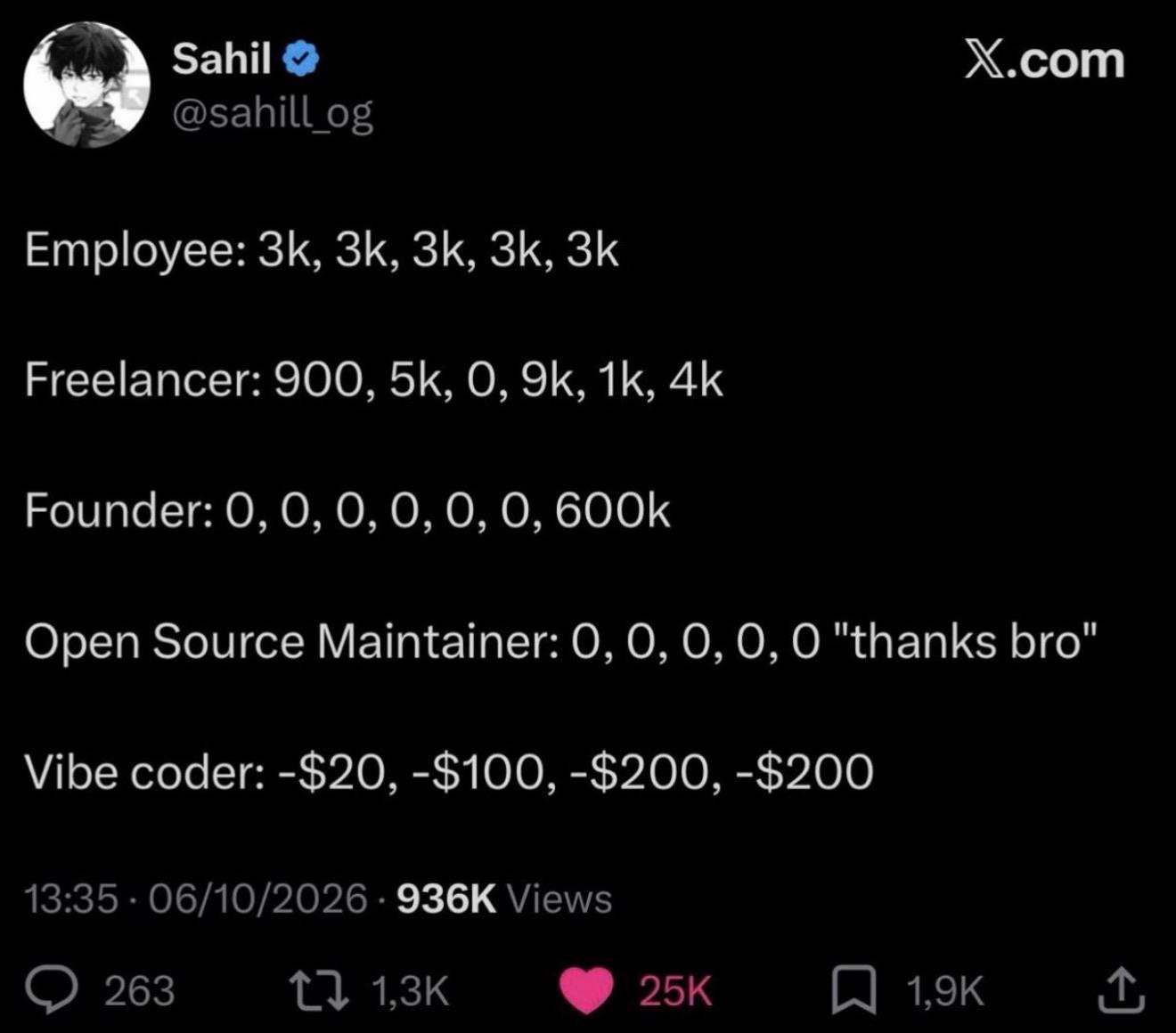
Claude Opus has this delightful habit of turning a simple "write me a function" into a full-blown philosophical dissertation about code architecture, edge cases you didn't know existed, and three alternative implementations with pros and cons lists. You asked for a sandwich, you got a five-course meal with wine pairings and a lecture on the history of bread. Sure, the output is usually excellent, but you're sitting there watching your API credits evaporate faster than your motivation on a Monday morning. Meanwhile, other models would've given you the function in two prompts and called it a day.