Csharp Memes

Posts tagged with Csharp
Maxerals

Maxerals
Someone clearly had a stroke while typing "Minerals" and just committed it anyway. The best part? It's in a Cost struct right next to the correctly spelled "Minerals" field. So now we've got both minerals AND maxerals in our economy system, because apparently one wasn't enough. Either this is the most creative typo that made it past code review, or there's a parallel universe where maxerals are a legitimate resource type. My money's on the developer being three energy drinks deep at 2 AM and the reviewer just clicking "Approve" without reading.

Those Three Only Bring Regret

Those Three Only Bring Regret
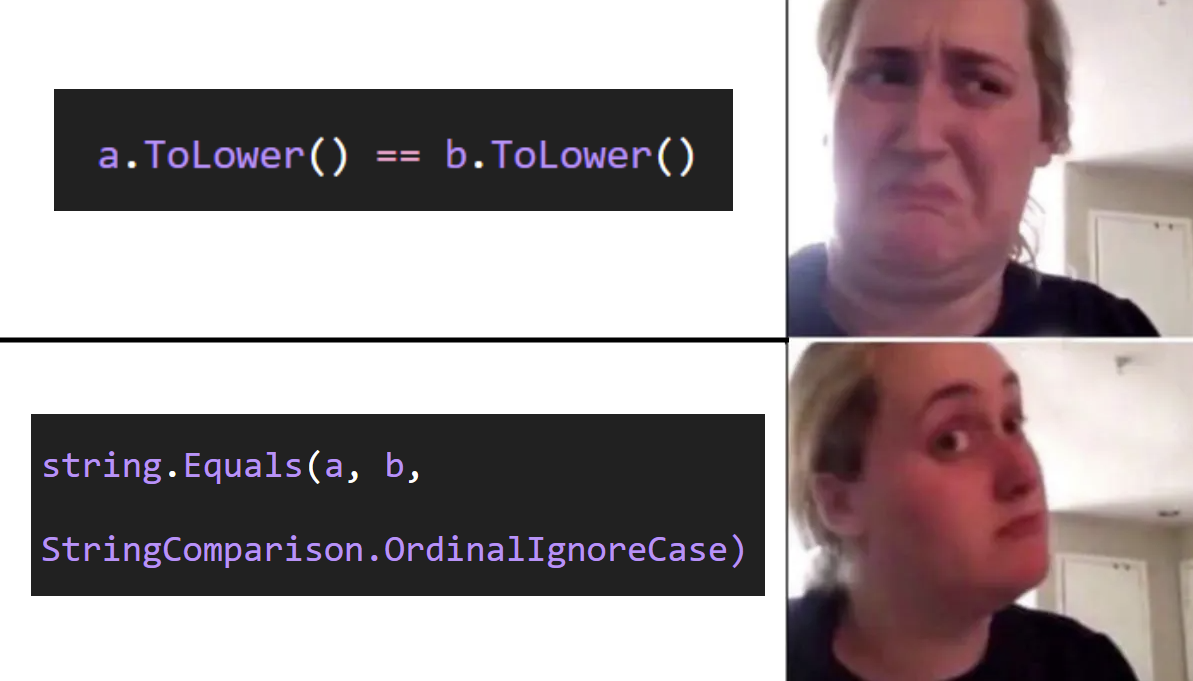
Every C# dev knows the shame of reaching for ToString() , ToUpper() , and ToLower() thinking they're being clever, only to watch your app implode when it hits a null reference. The neighborhood is literally watching your code fail in production while you pretend everything's fine. These methods look so innocent and helpful, but they're basically landmines waiting for that one null value to slip through. You could use null-conditional operators or nullable reference types, but nah, let's just YOLO it and deal with the NullReferenceException at 2 PM on a Friday. The real kicker? You've done this exact thing at least a dozen times and you still forget to check for nulls. We never learn.

Brevity Is The Soul Of Wit

Brevity Is The Soul Of Wit
Someone asked the simplest question in the universe: "How do I get the length of a string in C#?" and Microsoft Community decided to write the entire Lord of the Rings trilogy as a response. Meanwhile, Stack Overflow just drops "str.Length" like a mic drop and walks away. Microsoft Community out here with the "Hello, my name is Blake" energy, writing three paragraphs about the .NET Framework's "efficient and intuitive built-in property" when literally two words would've done the job. It's like asking someone what time it is and they explain how watches are manufactured. This is why developers have trust issues with official documentation. Sometimes you just need the answer, not a dissertation on string manipulation theory.

No It's Not C Hashtag Lol

No It's Not C Hashtag Lol
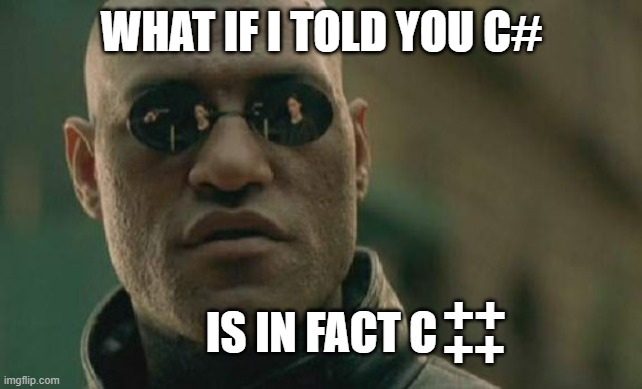
The eternal struggle of explaining C# pronunciation to literally anyone outside the .NET ecosystem. It's always "C hashtag" or "C pound" until someone finally corrects you with the proper "C Sharp" pronunciation. The meme perfectly captures that redemption arc moment when C# finally gets to introduce itself properly after being butchered for years. Fun fact: the # symbol was actually chosen because it resembles four plus signs in a grid (++++ = C++++), suggesting it's an increment of C++. Microsoft really said "let's confuse everyone forever" and succeeded spectacularly.

New Age Slop C

New Age Slop C
Dennis Ritchie invented C in 1972. Anders Hejlsberg invented C# in 2000. Now some random guy with a webcam and a dream invented "C~slop" in 2026. The natural evolution of programming languages, really. From foundational systems programming to enterprise-friendly managed code to... whatever AI-generated fever dream we're about to endure. The progression of facial expressions tells you everything you need to know. Ritchie looks dignified and accomplished. Hejlsberg looks professional and pleased with his work. Random webcam guy looks like he just discovered he can prompt ChatGPT to write an entire programming language and is way too excited about it. Can't wait for the Hacker News thread where people debate whether C~slop is "production ready."

When Sentence Meets Pronunciation 😂😂

When Sentence Meets Pronunciation 😂😂
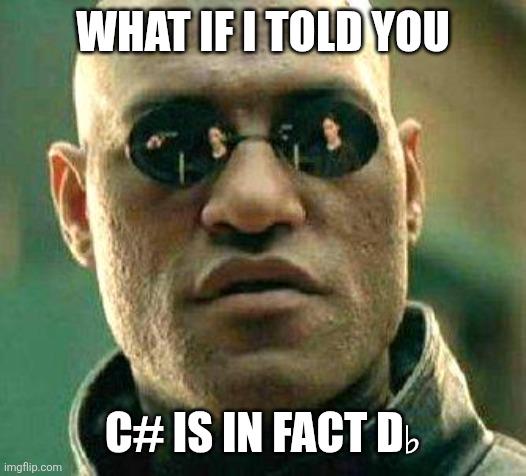
Odin's having an existential crisis wondering if he failed as a mentor because he kept calling his son's favorite language "C hashtag" instead of "C Sharp." Plot twist: they're the same thing, just pronounced differently. Here's the thing—literally everyone who's ever encountered C# has gone through the "hashtag vs sharp" identity crisis at least once. It's written with a # symbol, which the entire internet has trained us to call a hashtag, but Microsoft decided to get all musical and fancy by naming it after the sharp symbol (♯) in music notation. Because nothing says "enterprise software development" like pretending you're composing a symphony. Fun fact: The # symbol isn't even technically a sharp symbol—that's ♯, which looks slightly different. But good luck typing that on your keyboard, so we all just use the pound/hash/number sign and pretend we're sophisticated.

It Works But Only One Time

It Works But Only One Time
Someone wrote a method to count employees, but there's a tiny problem: it deletes ALL the employees from the database first, then counts how many are left. Spoiler alert: zero. Every single time after the first run, you're counting an empty table. The function technically works once—before it nukes your entire workforce into the digital void. The best part? They're using using statements for proper resource disposal, so at least the database connection is being cleaned up responsibly while the employee data gets yeeted into oblivion. Priorities, right? Pro tip: maybe fetch the count BEFORE running DELETE FROM. Or better yet, don't run DELETE FROM at all when you just want to count rows. That's what SELECT COUNT(*) is for. Your HR department will thank you.

Unity Build Failed Because Of Unused "Using UnityEditor.Experimental.GraphView"

Unity Build Failed Because Of Unused "Using UnityEditor.Experimental.GraphView"
Unity in Play Mode: *sees unused namespace* "hehe, whatever bro, I'm chill" Unity during Build: "UNUSED NAMESPACE? UNACCEPTABLE. BUILD TERMINATED. DEPLOY THE TACTICAL NUKE." The duality of Unity's compiler is truly something to behold. It'll let you run your game with all sorts of questionable code decisions, but the moment you try to actually build it? Suddenly it becomes a code quality inspector with zero tolerance policies. That innocent using UnityEditor.* statement you forgot about? Yeah, that's staying in the editor where it belongs, buddy. Production builds don't need your experimental graph view nonsense. Pro tip: UnityEditor namespaces literally cannot exist in builds since they're editor-only. It's like trying to ship your dev tools to production. Unity's just protecting you from yourself... in the most annoying way possible.

The Community

The Community
C# devs will tell you "spacing doesn't matter" and write the most beautiful, perfectly formatted code with proper indentation. Then some absolute MONSTER comes along and writes their opening brace on the same line as the method declaration and suddenly it's a CODE RED EMERGENCY. The entire community loses their collective minds like someone just committed a war crime against readability. The hypocrisy is *chef's kiss* – we claim formatting is irrelevant because the compiler doesn't care, but the SECOND you deviate from the sacred Allman style (braces on new lines), you're getting dragged in code review harder than a junior dev who forgot to dispose their database connections.

The Best Way To Make An Infinite Loop

The Best Way To Make An Infinite Loop
Someone discovered that C#'s ConcurrentDictionary.AddOrUpdate() method is basically a cheat code for infinite loops. Instead of the boring while(true) , they're using a lambda that ignores the key, ignores the current value, and just... keeps updating the same dictionary entry forever. The lambda returns value , which triggers another update, which calls the lambda again, which returns value , which... you get it. The genius part? The IDE shows "No issues found" because technically this is perfectly valid code. It's like telling your compiler "I'm not stuck in an infinite loop, I'm just very enthusiastic about updating this dictionary!" The output window spamming "Hello, World!" is chef's kiss—proof that sometimes the most cursed solutions are also the most creative. Pro tip: Don't actually do this unless you want your code reviewer to question your life choices and your CPU to file a restraining order.

This Wasn't Our Year

This Wasn't Our Year
When Mom asks if you're bringing a girl home for Christmas and you're staring at ISBN barcode validation logic that looks like it was written by someone who gave up on life halfway through. The function checks if a code starts with "978" and throws an exception for "UPCs that might b..." – yeah, that error message got cut off just like your dating prospects. The real tragedy here? Someone is manually calculating ISBN-13 checksums with a for loop and modulo operations instead of using a library. That's the programming equivalent of being asked about your love life while you're debugging legacy code at 2 AM. Both situations scream "this wasn't our year" with equal intensity. Fun fact: ISBN-13 barcodes starting with 978 are book identifiers, which means this developer is probably more familiar with O'Reilly books than actual human interaction. Relatable content right there.

I Love Cheese

I Love Cheese
The eternal struggle between doing things the "right way" versus the "it works" way. On one side, you've got the architect who built a beautiful, scalable C# rate-limiter that probably took three weeks of planning and implementation. On the other, someone who just yeeted a time.sleep(1.6s) into their Python script and called it rate-limiting. The kicker? Both solutions technically work. The clean C# implementation runs at 100% efficiency—pristine, maintainable, documented. Meanwhile, the Python hack with its hardcoded sleep timer limps along at 95% efficiency, held together by duct tape and prayers. But here's the dirty secret: that 5% difference rarely matters in production when you're just trying to avoid getting your API key banned. After years in the trenches, you realize both programmers are valid. Sometimes you need the bear (robust enterprise solution), sometimes you need the wolf (scrappy solution that ships). The real wisdom is knowing which animal to be on any given Tuesday.