
Build tools Memes

Posts tagged with Build tools
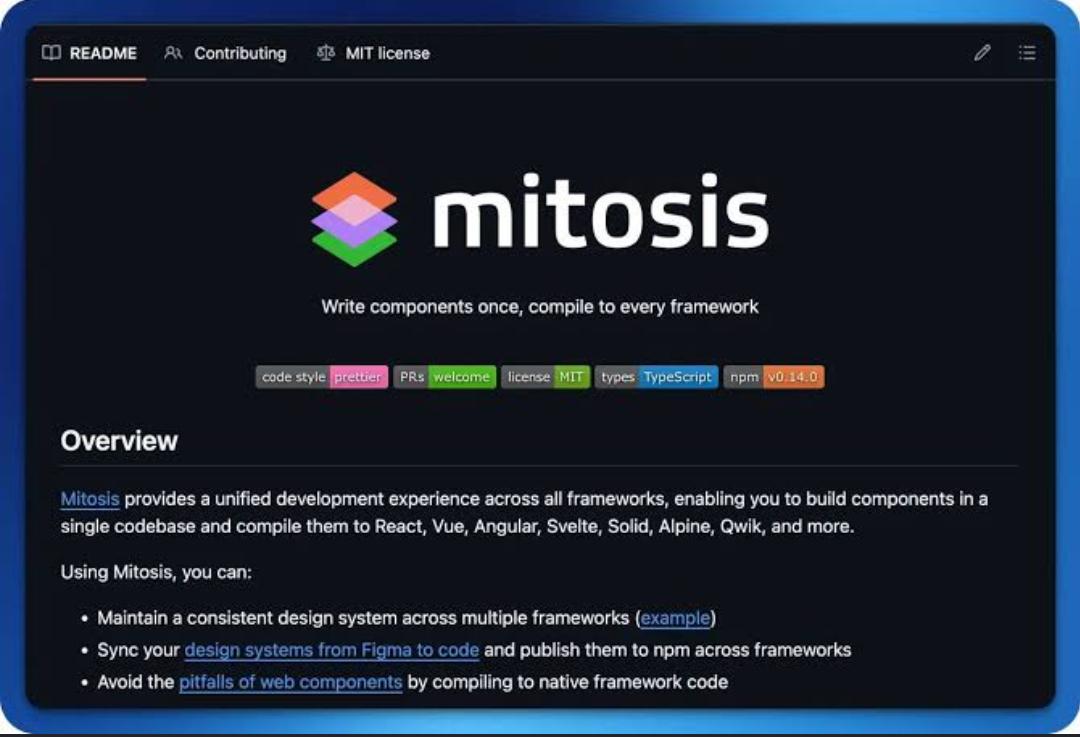
We Got Compiling To React Before GTA 6

We Got Compiling To React Before GTA 6
The JavaScript ecosystem has officially reached peak chaos: someone built a tool to compile components to React. You know, because writing React components in... React... was apparently too mainstream. Mitosis lets you write components ONCE and compile them to literally every framework under the sun—React, Vue, Angular, Svelte, and like 47 others nobody asked for. The "before GTA 6" meme format is chef's kiss here because Rockstar has been teasing GTA 6 since the dinosaurs roamed the earth, yet somehow the JavaScript community managed to create YET ANOTHER build tool/compiler/framework-of-frameworks before Rockstar could ship a single trailer. The web dev ecosystem moves so fast it makes the speed of light look like dial-up internet. Write once, run anywhere? Java tried that in 1995. But sure, let's do it again with 10x more node_modules and build steps. What could go wrong? 🎭

Gradlephants

Gradlephants
Three Gradle elephants standing in increasing size, each looking progressively more annoyed. Perfectly captures what happens when you add "just one more dependency" to your Android project. Started with a simple app? Baby elephant. Added some libraries? Medium elephant giving you side-eye. Included Firebase, Retrofit, Room, Dagger, Compose, and every other cool library you saw on Reddit? Congratulations, you now have a massive elephant that takes 47 minutes to build and crashes Android Studio twice a day. The Gradle elephant logo is iconic in the Java/Android world, and just like real elephants, your build files never forget... every single transitive dependency you've accumulated over the years.

Vanilla Fixes This Bro

Vanilla Fixes This Bro
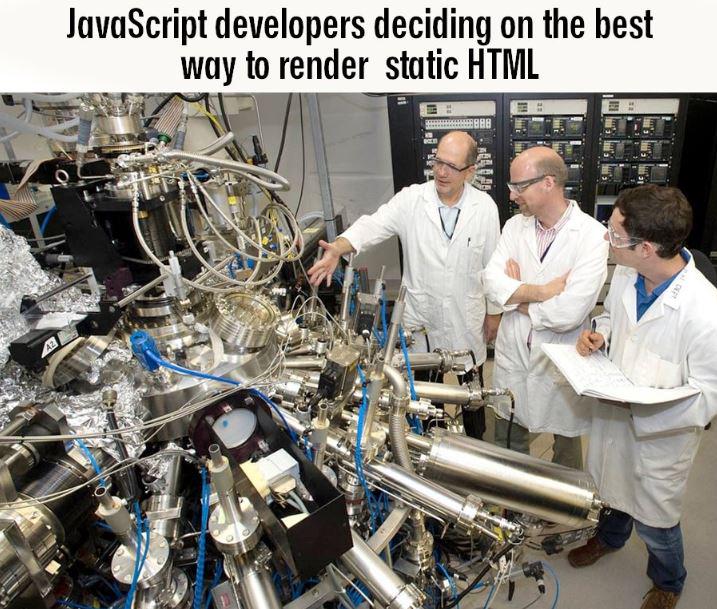
The modern JavaScript ecosystem has reached peak absurdity when rendering static HTML—literally the simplest web task imaginable—requires a team of scientists, lab coats, and what appears to be a particle accelerator. You've got React with server-side rendering, Next.js with static site generation, Astro with partial hydration, Gatsby with GraphQL layers, and about 47 other frameworks all competing to solve a problem that was already solved in 1995 with a .html file. Meanwhile, vanilla JavaScript and plain HTML are sitting in the corner like "we could literally do this with document.write() but go off I guess." The irony? After all this engineering complexity, the end result is still just... static HTML. The same thing Notepad could've given you without requiring 500MB of node_modules and a PhD in build tooling.

The Four Horsemen

The Four Horsemen
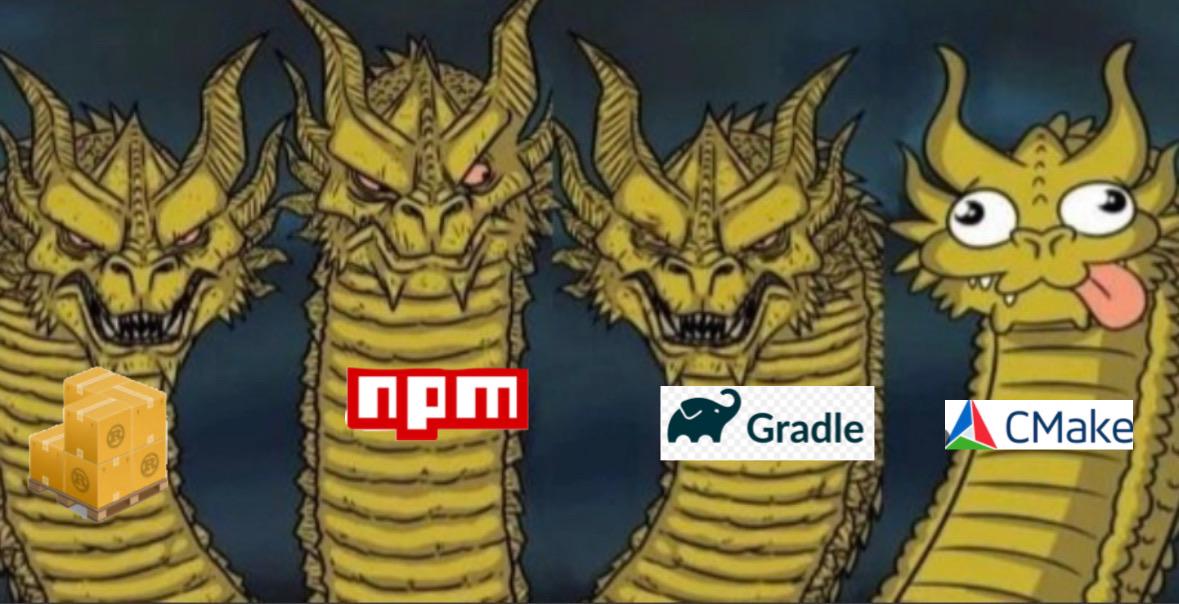
Every build tool thinks it's the chosen one that'll finally solve dependency management and compilation speed. Meanwhile, developers just want their code to compile without sacrificing their firstborn to the build gods. npm is the chaotic veteran that somehow works despite having 47 nested node_modules folders. Gradle is the enterprise beast that takes 10 minutes to build "Hello World" but promises incremental builds (lies). CMake is the ancient demon speaking in tongues that C++ devs reluctantly worship because there's literally no better alternative. And then there's the fourth one with its tongue out, probably representing whatever cursed build system your company decided to write in-house because "we have unique requirements." Spoiler: you don't.

Cherry MX Keyboard Switch Poster Print, Computer Lab Art, Programmer Gift, Hardware Wall Art, IT Tech Gift, Patent Print Vintage Paper (8 inch x 10 inch)

Cherry MX Keyboard Switch Poster Print, Computer Lab Art, Programmer Gift, Hardware Wall Art, IT Tech Gift, Patent Print Vintage Paper (8 inch x 10 inch)
8" x 10" poster print featuring a Cherry MX Keyboard Switch patent illustration on a Vintage Paper style background. Designed by Patent Earth™, this wall art is made to order and customized with your…

Same Makefile, Different Results

Same Makefile, Different Results
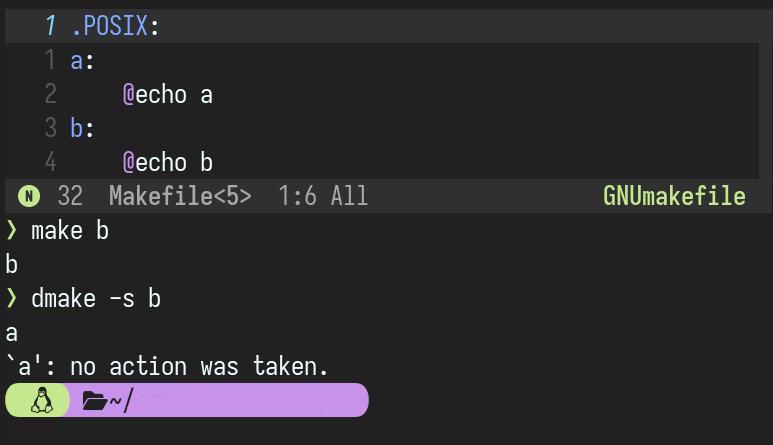
So you run make b and get "b" like you expected. Cool. Then you try dmake -s b thinking it'll do the same thing, and suddenly target 'a' decides to run first and you get "a" followed by "a: no action was taken." Welcome to the wonderful world of build systems where POSIX compliance is more of a suggestion than a rule. Different make implementations parse dependencies differently, and dmake (Sun's make) apparently has its own ideas about how your Makefile should work. Same file, same rules, completely different execution order. It's like having two compilers that interpret the same code differently—which, let's be honest, also happens more than we'd like to admit. The real fun starts when your CI/CD pipeline uses a different make implementation than your local machine. Good times.

Peak Performance Vs Peak Performance

Peak Performance Vs Peak Performance
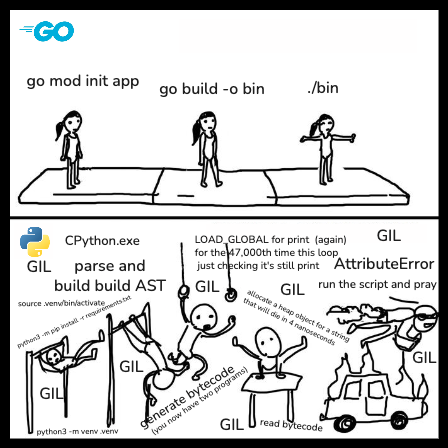
Go developers living their best minimalist life: three simple commands, clean binaries, and they're sipping coffee by 9 AM. Meanwhile, Python devs are drowning in a sea of GIL locks, parsing ASTs for the 47,000th time, and praying to the runtime gods while their code throws AttributeErrors like confetti at a chaos parade. Both languages claim "peak performance" but one's doing yoga on a beach while the other's fighting a hydra made of dependency conflicts and interpreter quirks. The contrast is *chef's kiss* brutal.

When The Readme Is Useless

When The Readme Is Useless
You know that special circle of hell reserved for projects with READMEs that just say "Installation: clone and run"? Yeah, this is it. No dependencies listed, no build instructions, no environment setup, just raw source code and vibes. You're sitting there running random commands like some kind of build system archaeologist, desperately hoping npm install or make will magically work. Meanwhile the original dev is probably on a beach somewhere, blissfully unaware that their "self-documenting code" is about as helpful as assembly instructions written in ancient Sumerian. The real kicker? When you finally get it working after three hours of trial and error, you realize the project does exactly what the title says it does, and you could've just written it yourself in 20 minutes.

Save Me From Gradle Please

Save Me From Gradle Please
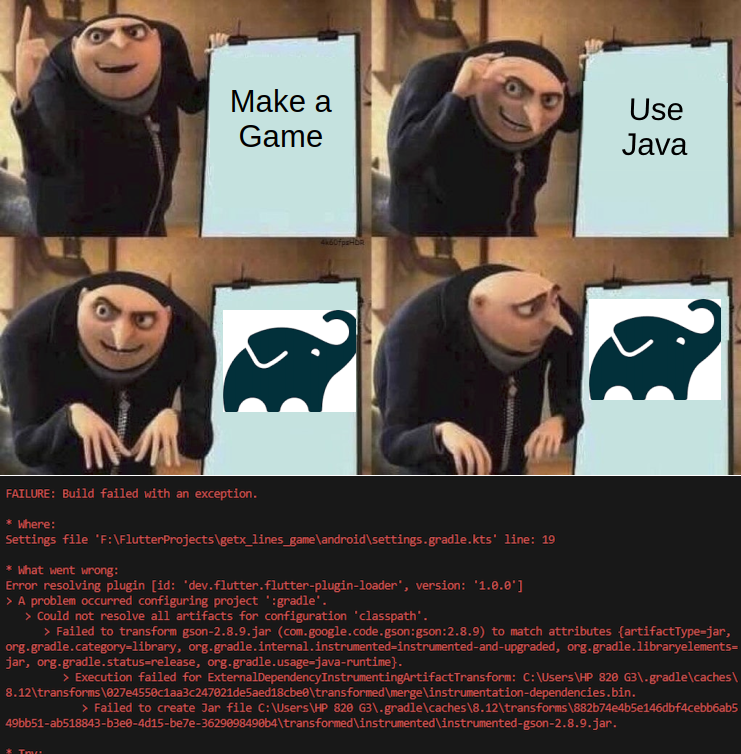
You want to make a game? Cool! You're using Java? Great choice! Oh wait, you're using Gradle as your build tool? Say hello to your new full-time job: deciphering cryptic dependency resolution errors that read like ancient hieroglyphics written by a caffeinated elephant. The Gradle elephant starts off looking all cute and friendly, but then it transforms into this nightmare creature that throws walls of red text at you. "Failed to resolve all artifacts for configuration 'classpath'" – yeah, thanks buddy, super helpful. Nothing says "fun game development" quite like spending 6 hours debugging your build system instead of actually building your game. The best part? The error message is longer than your actual game code. Gradle's basically that friend who can't give you simple directions and instead explains the entire history of the road system.

Tree Shaking Maybe Works

Tree Shaking Maybe Works
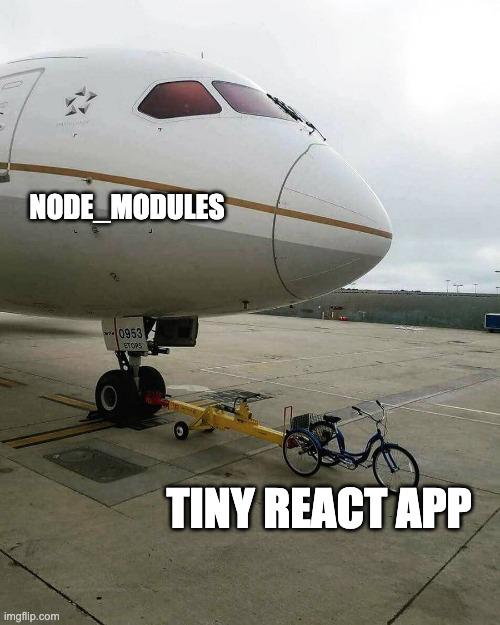
You install one tiny date formatting library and suddenly your node_modules folder is the size of a 747. Then you build your "tiny React app" and somehow it's still pulling in half the internet despite tree shaking supposedly removing unused code. Tree shaking is that magical build optimization that's supposed to eliminate dead code from your bundle. In theory, it only includes what you actually import. In practice? Well, your final bundle is still mysteriously 2MB because some dependency deep in the chain decided to import the entire lodash library for one function. The ratio here is painfully accurate. You start with a massive airplane hangar of dependencies, shake the tree real hard, and end up with... a slightly smaller airplane hangar. But hey, at least webpack says it's optimized.

I Fucking Hate Python

I Fucking Hate Python
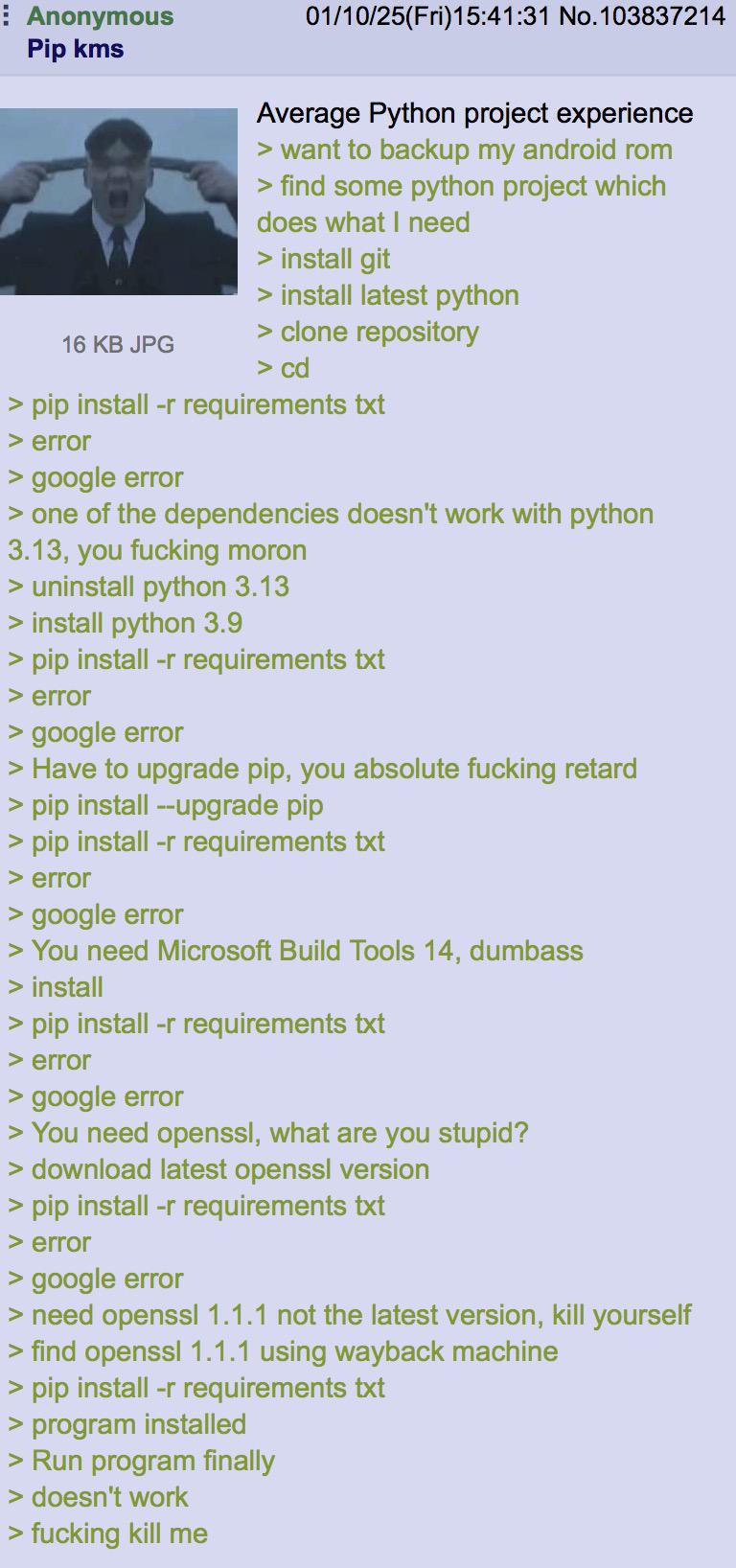
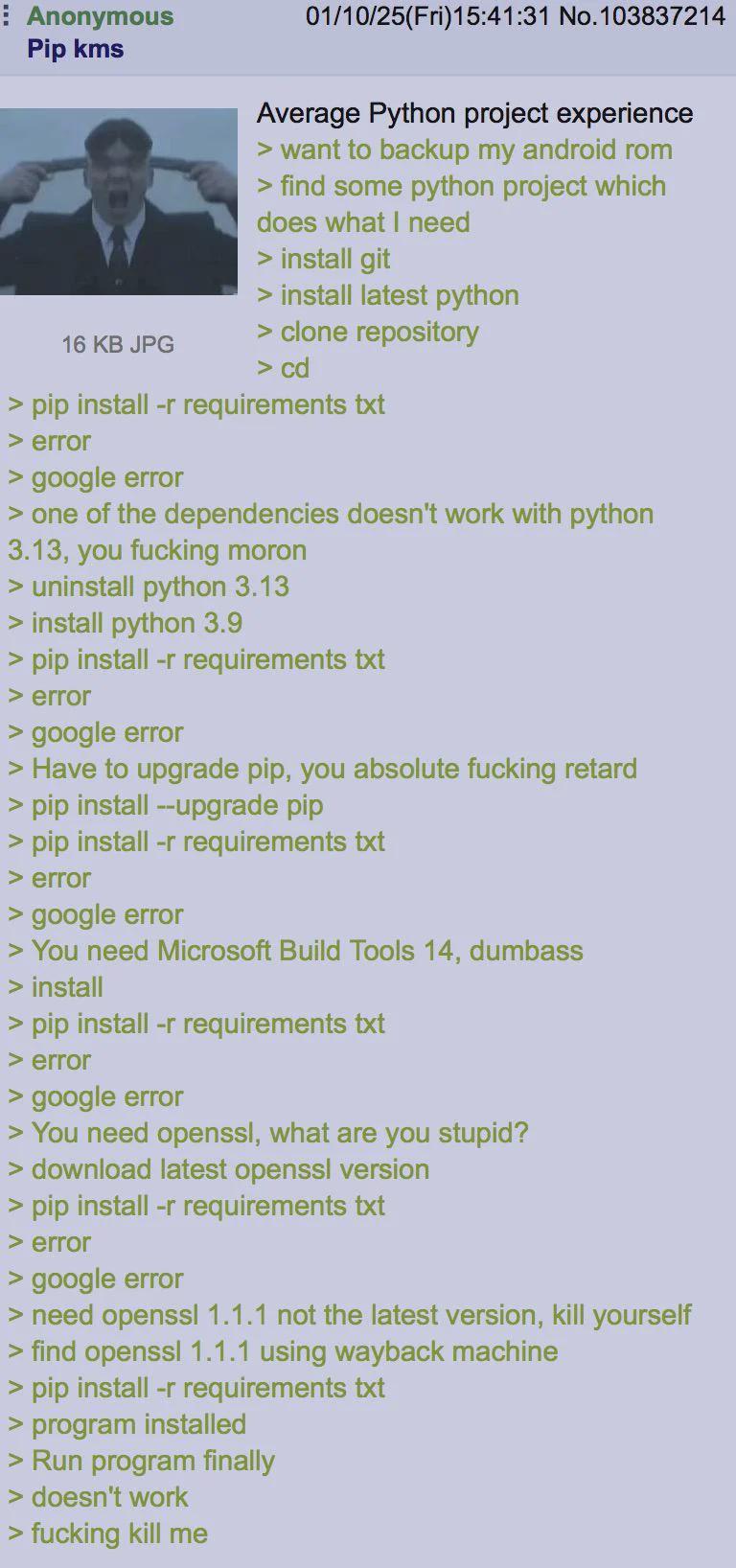
Picture this: you just want to backup your Android ROM using some random Python script. Simple task, right? WRONG. Welcome to dependency hell, population: YOU. It starts innocently enough—clone a repo, run pip install. But then Python decides to play the world's most sadistic game of whack-a-mole with your sanity. Wrong Python version? Uninstall, reinstall. Pip needs upgrading? Sure, why not. Oh, you need Microsoft Build Tools now? For a PYTHON project? Make it make sense. And just when you think you've conquered Mount Dependency, the final boss appears: you need OpenSSL 1.1.1 specifically—not the latest version, because that would be TOO CONVENIENT. Time to fire up the wayback machine and archaeologically excavate ancient software versions like you're Indiana Jones hunting for deprecated libraries. After approximately 47 error messages, 23 Google searches, and one existential crisis later, the program finally installs. You run it with trembling hands and... it doesn't work. Chef's kiss. Python dependency management is basically a choose-your-own-adventure book where every path leads to suffering.

Bose QuietComfort Ultra Bluetooth Headphones (2nd Gen), Wireless Headphones with Spatial Audio, Over Ear Noise Cancelling with Mic, Up to 30 Hours of Play time, Desert Gold - Limited Edition Color

Bose QuietComfort Ultra Bluetooth Headphones (2nd Gen), Wireless Headphones with Spatial Audio, Over Ear Noise Cancelling with Mic, Up to 30 Hours of Play time, Desert Gold - Limited Edition Color
BREAKTHROUGH SPATIALIZED AUDIO: Super immersive sound spatializes everything, taking the music out of your head and placing it in front of you to push the boundaries of listening.  · NOISE CANCELLING…

Life Is Good Until Gradle Error

Life Is Good Until Gradle Error
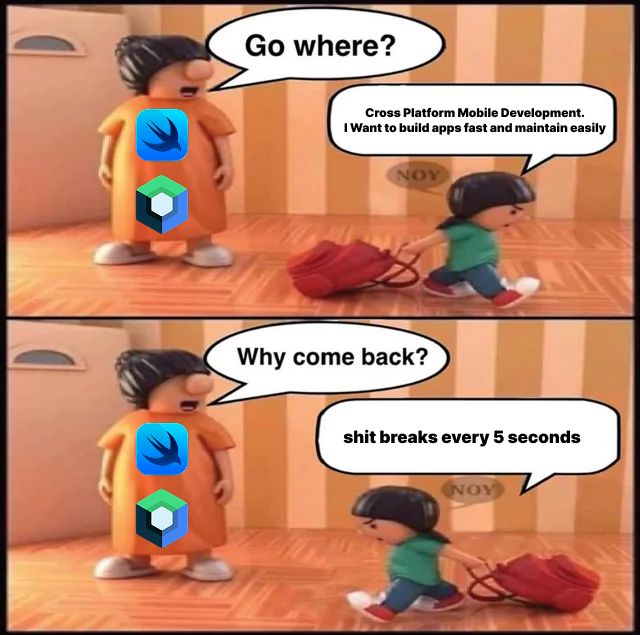
Flutter and React Native promise the dream of cross-platform mobile development—write once, deploy everywhere. The kid excitedly packs their bags for this magical journey, only to return moments later with the harsh reality: "shit breaks every 5 seconds." That's the special joy of Gradle build errors. Nothing quite compares to watching your terminal spew 500 lines of red text because you added a comma in the wrong place. The modern mobile developer experience: 10% coding, 90% staring blankly at build failures while questioning career choices.

The Dependency Death March

The Dependency Death March
The journey from "I just need to backup my Android ROM" to "please end my suffering" is the quintessential Python dependency nightmare we've all lived through. What starts as a simple task spirals into a hellscape of version conflicts, missing build tools, and that special circle of dependency hell where you need a specific ancient version of OpenSSL that can only be found in digital archaeology expeditions. The best part? After all that rage, all those installs, and contemplating a career change to goat farming... it still doesn't work. Welcome to modern development, where the real project is just getting your environment set up.