

Sad Unemployment Tears

Sad Unemployment Tears
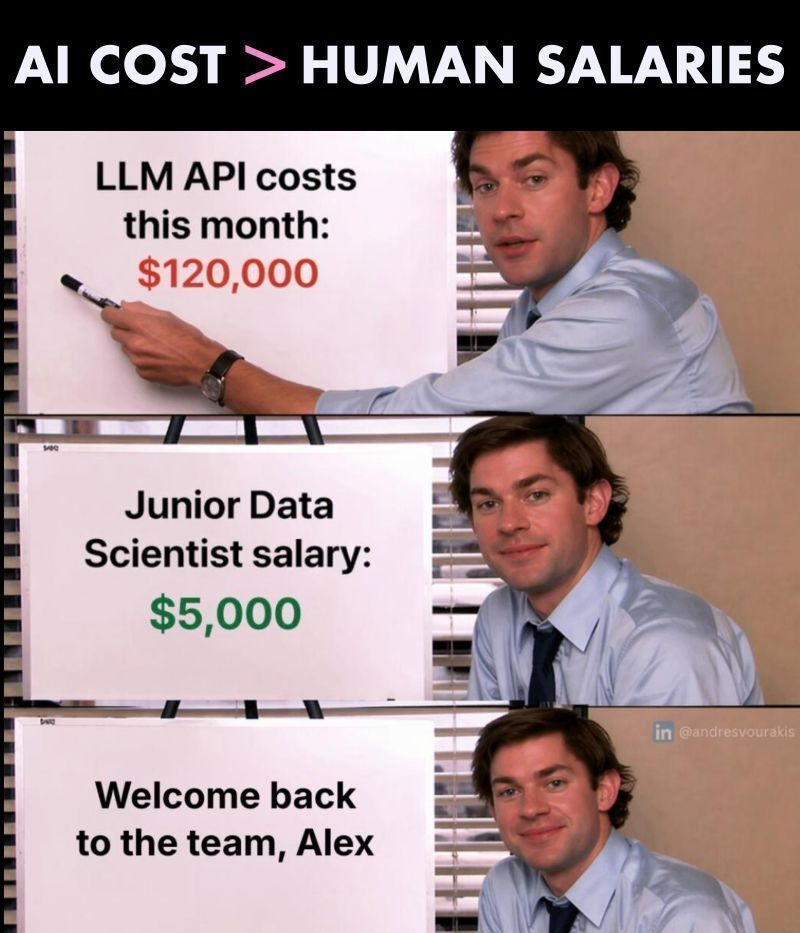
Bootcamps out here watching the tech job market burn like a dystopian hellscape while desperately trying to sell their $25k JavaScript courses. Nothing says "great investment" quite like spending the price of a decent used car to learn React hooks while senior devs with 10 years of experience are getting ghosted by recruiters. The timing couldn't be worse—it's like selling swimming lessons on the Titanic. These bootcamps promised you'd be making six figures in 3 months, but forgot to mention that "junior developer" positions now require 5 years of experience, a CS degree, and the ability to single-handedly architect a distributed system. But hey, at least you'll know how to center a div... for only 25 grand.

No Tests, Just Vibes

No Tests, Just Vibes
You know those developers who deploy straight to production with zero unit tests, no integration tests, and definitely no code coverage reports? They're out here doing elaborate mental gymnastics, contorting their entire thought process, and performing Olympic-level cognitive backflips just to convince themselves they can "Make no mistakes." The sheer confidence required to skip the entire testing pipeline and rely purely on intuition and good vibes is honestly impressive. It's like walking a tightrope without a safety net while telling yourself "I simply won't fall." Spoiler alert: production users become your QA team, and they're not getting paid for it.

Clean Compile Maximum Trust Issues

Clean Compile Maximum Trust Issues
You know you've been in the trenches too long when a clean compile feels less like success and more like a trap. That code that compiles first try? Yeah, it's gorgeous on the surface, but your battle-scarred instincts are screaming that runtime errors are lurking somewhere in there like landmines. The compiler's silence isn't reassuring—it's suspicious. Where are the warnings? The type mismatches? The missing semicolons? When everything works immediately, experienced devs don't celebrate, they start writing test cases with the paranoia of someone who's been burned too many times. Because we all know the truth: the compiler only checks syntax. Logic errors, race conditions, off-by-one mistakes, null pointer nightmares—those are all waiting patiently in production to ruin your weekend.

How Can We Actually Prevent This From Happening

How Can We Actually Prevent This From Happening
Learning a new language or framework is that satisfying climb up the stairs—steady progress, dopamine hits with each concept mastered, Stack Overflow bookmarks multiplying. Then you take a two-week vacation, switch projects, or just look at production fires for a month straight. Suddenly you're staring at your own code like it's written in ancient Sumerian. The forgetting curve is real and it's exponential. The only prevention? Build useless side projects you'll never finish. It's not procrastination, it's spaced repetition.

Yes That Is True

Yes That Is True
Dark fact #23 hits different because it's painfully accurate. You know that sweet spot between "I should start working" and "OH GOD THE DEADLINE IS IN 2 HOURS"? That's where the magic happens. Suddenly your brain becomes a supercomputer, your fingers move at 200 WPM, and you're shipping features like there's no tomorrow (because there literally isn't). The adrenaline rush from impending doom somehow unlocks productivity levels that no amount of coffee, standing desks, or Pomodoro timers could ever achieve. It's like your body's fight-or-flight response but instead of running from a bear, you're frantically committing code at 3 AM with commit messages like "fix stuff" and "PLEASE WORK". The real question is: are we procrastinators, or are we just adrenaline-driven performance artists who need that cortisol spike to function? Either way, the production server doesn't care about your feelings.

He Needs To Debug Your Connection

He Needs To Debug Your Connection
When you're working from home and spot an unauthorized device on your network, only to realize it's just a spider chilling on your ceiling-mounted WiFi access point. The little guy's literally web developing in the most literal sense possible. Nothing says "security vulnerability" quite like an eight-legged freelancer who didn't sign the NDA. At least he's working on the frontend—specifically, the front end of your Ubiquiti device. Hope he's not packet sniffing or worse, building his own mesh network.

Win Rar Paid Version Perks Go Hard

Win Rar Paid Version Perks Go Hard
Someone actually designed and manufactured a bag that looks like a WinRAR archive file, complete with the iconic multicolored compressed file bars and the little lock icon. The dedication here is unmatched. WinRAR has been living rent-free in our computers for decades with its "40-day trial" that never actually expires, making it the most successful nagware in history. Nobody pays for WinRAR, yet somehow the company is still around, probably sustained by that one corporate IT department that actually bought a license in 2003. Now someone's out here flexing with WinRAR merch like it's Supreme. The bag literally represents the software that everyone uses but nobody pays for. It's like wearing a shirt that says "I pirate software" but making it fashion. The compression ratio on this drip is absolutely unbeatable – you're carrying around the physical manifestation of a 25-year-old inside joke. If you show up with this bag, you're either the coolest nerd at the function or you need to touch grass. Possibly both.

Just :Q! Please

Just :Q! Please
Someone made a Spotify playlist called "Songs About Vim" and it's basically a cry for help disguised as music curation. The track titles perfectly capture the Vim experience: "What Am I Doing Here" (opening Vim for the first time), "How Did I Get Here" (accidentally entering insert mode), "Can't Get Out" (the classic :q struggle), "Asdfjkl;" (panic mashing keys), "Shut It Down" (desperately trying to exit), and my personal favorite - "Rebooting" (the nuclear option when all else fails). Every single song title is a mood that represents a different stage of the Vim learning curve. The playlist creator really said "I'm in pain but make it aesthetic." The fact that this playlist has 1,198 saves means there's a whole community out there bonding over their shared trauma of being trapped in a text editor.

No Algorithm Can Survive First Contact With Real World Data

No Algorithm Can Survive First Contact With Real World Data
Your algorithm passes all unit tests with flying colors. Integration tests? Green across the board. You deploy to production feeling like a genius. Then real users show up with their NULL values in required fields, negative ages, emails like "asdfjkl;", and suddenly your code is doing the programming equivalent of slipping on ice while being attacked by reality itself. The test environment is a sanitized bubble where data behaves exactly as documented. Production is where someone's last name is literally "DROP TABLE users;--" and their birthdate is somehow in the year 3000. Your carefully crafted edge cases didn't account for the infinite creativity of actual humans entering data. Fun fact: This is why defensive programming exists. Trust nothing. Validate everything. Assume users are actively trying to break your code, because statistically, they are.

Realizing That Installing Kali Linux Is Not Enough

Realizing That Installing Kali Linux Is Not Enough
You know those kids who think downloading Kali makes them instant hackers? Yeah, turns out you actually need to understand what's happening under the hood. Who knew? The brutal reality check hits when you realize hacking isn't just running nmap and watching the Matrix scrolling text. You need to climb the entire staircase of fundamentals: computer basics, networking basics, Linux basics... and then maybe you can start playing with the pentesting tools. But people skip straight to the top step and wonder why they're face-planting. Can't exploit a buffer overflow if you don't know what a buffer is, my friend. Can't SQL inject if you think a database is where criminals are stored. The escalator to elite hacker status is permanently broken—you're taking the stairs.

Oldie But Goodie

Oldie But Goodie
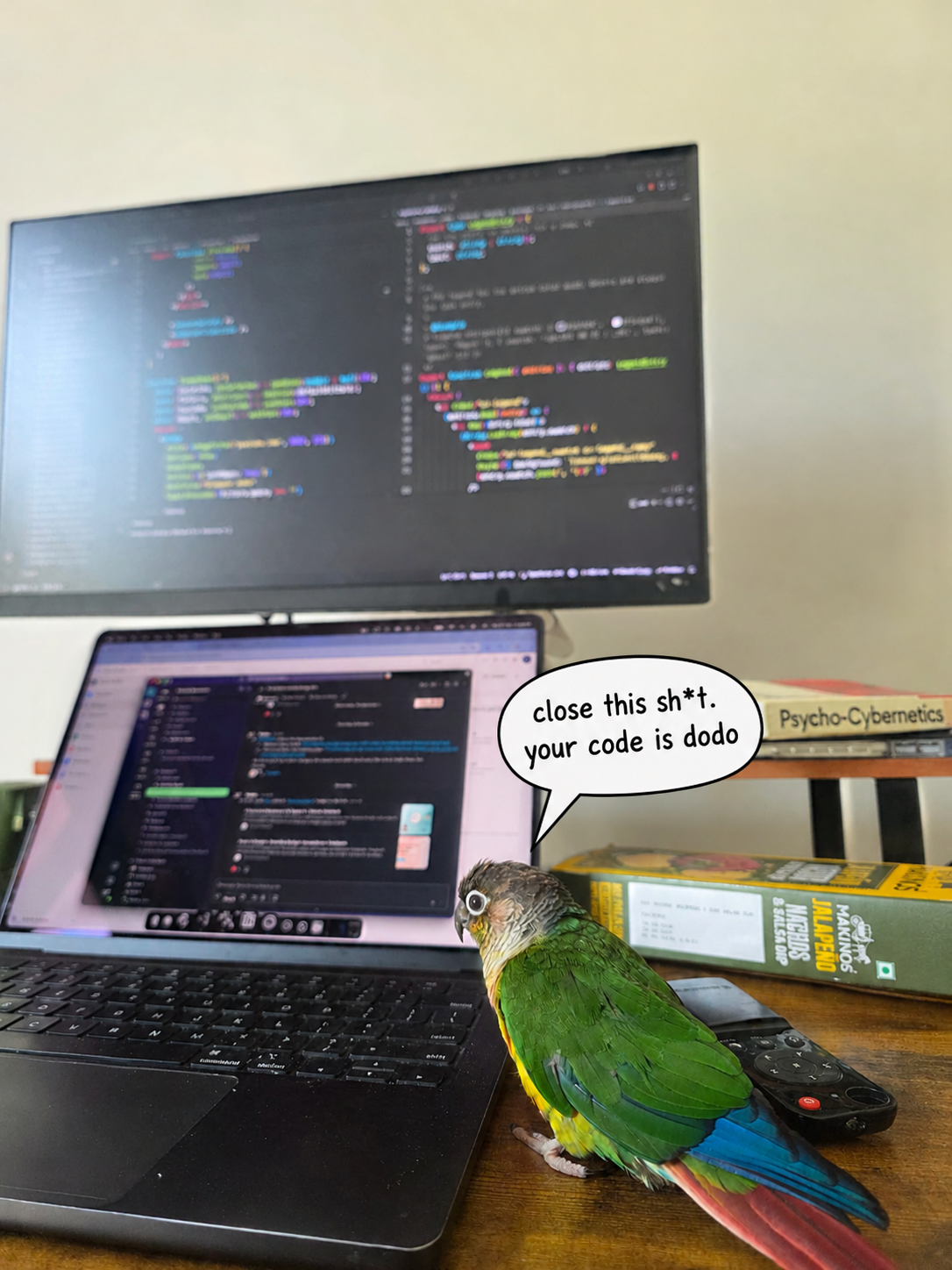
Someone discovered the ancient art of becoming one with the code by literally projecting it onto their face in a dark room. Because apparently, reading code on a normal monitor like a peasant just doesn't hit the same when you're debugging that gnarly algorithm at 2 AM. The best part? They're calling it "immersive coding" and claiming they can "feel" the code. Sure, buddy. The only thing you're feeling is the RGB burn on your retinas and the existential dread of realizing your solution still has edge cases. But hey, whatever helps you convince yourself that staring at a screen for 12 hours straight is a spiritual experience rather than just poor work-life balance. Pro tip: If you need to project code onto your face to understand it, maybe it's time to refactor. Or sleep. Probably sleep.

Iterator, Jterator, Kterator...

Iterator, Jterator, Kterator...
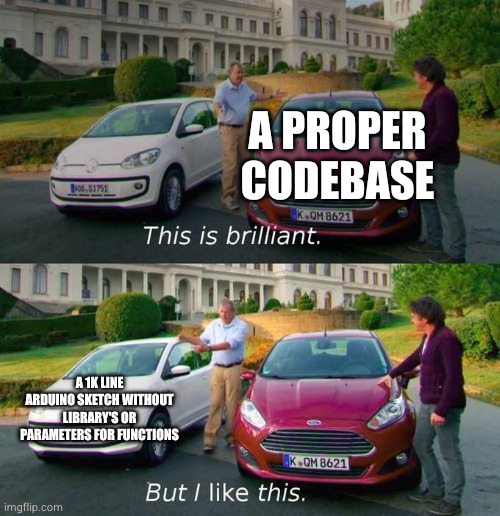
You know you've hit peak laziness when you're nesting loops and your variable names become a countdown to despair: i , j , k ... and then suddenly you're reaching for l and questioning every life choice that brought you to this moment. But here's the real kicker—instead of just using those single letters like a normal person, someone decided to get fancy and call them "jterator" and "kterator" because apparently j wasn't descriptive enough. It's like putting a bow tie on a dumpster fire. If you're three loops deep, you're either working with matrices, doing some cursed algorithm nobody should touch, or you've architectured yourself into a corner. Either way, that code review is gonna be spicy.