This Looks Accurate For Vibe Coders

This Looks Accurate For Vibe Coders
You know you're in trouble when someone shows you ( () => {} )() and asks "what does this do?" The dreaded immediately invoked function expression (IIFE) – that beautiful monstrosity that executes the moment it's defined. Vibe coders are too busy shipping features and copying Stack Overflow snippets to worry about these syntactic gymnastics. They see those parentheses wrapping an arrow function, followed by execution parentheses, and their brain just... bluescreens. Meanwhile, the interviewer is sitting there waiting for you to explain how the outer parens turn the function into an expression so it can be immediately invoked with () . The semicolon at the end is just chef's kiss – because nothing says "I understand JavaScript's automatic semicolon insertion quirks" quite like explicitly adding one after an IIFE. If it works, it works, right?

AI Companies Release Blogs

AI Companies Release Blogs
The AI hype cycle in one image. Companies releasing detailed technical reports with model architectures, training datasets, and infrastructure specs are the buff doge—transparent, educational, actually advancing the field. Meanwhile, the ones dropping a vague blog post like "oops we accidentally made it worse and also your API credits just evaporated" are the sad crying doge. It's the classic bait-and-switch: promise open research and collaboration, then silently nerf your API, jack up prices, and offer zero explanation beyond "trust us bro, alignment reasons." Because nothing says cutting-edge AI like hiding behind corporate speak while your users' production apps spontaneously combust. The real kicker? The companies publishing actual research papers are often smaller labs trying to build credibility, while the billion-dollar giants just... don't. They'll write 47 blog posts about their "values" but won't tell you why GPT-5 suddenly can't count to three.

What's The Excuse For Today?

What's The Excuse For Today?
Star Citizen has been in alpha development since 2011. Yes, you read that right. 2011 . At this point, it's less of a game and more of a philosophical experiment on how long you can keep promising features while collecting crowdfunding money. The fans have reached a level of Stockholm syndrome that would make psychologists weep. They've been waiting so long for a beta release that their children will probably inherit their game accounts before it happens. "Sorry son, I'm leaving you my Star Citizen alpha access in my will. Maybe you'll see the full release." It's basically the Duke Nukem Forever of space sims, except Duke Nukem Forever actually shipped eventually. The devs keep adding new ships to buy for hundreds of dollars while the game remains perpetually "in development." Revolutionary funding model: why finish a game when you can sell virtual spaceships forever?

College Dekho In Week

College Dekho In Week
Manager wants a "full platform" with SEO, CRM, lead capture, college comparisons, rankings, dashboards—basically the entire internet—built in one week. Oh, and it needs to compete with established platforms. Oh, and the domain's already on GoDaddy, so you better get started. The developer's journey from "which module first?" to opening VS Code like they're about to single-handedly rebuild the Indian education system is the most relatable thing you'll see today. That confident delusion before reality hits is *chef's kiss*. Pro tip: When someone says "full platform" and "one week" in the same sentence, they either don't understand software development or they think you're a wizard. Spoiler: you're not a wizard, and their timeline is a fantasy novel.

That's One Way To Do It I Guess...

That's One Way To Do It I Guess...
So someone decided to detect a cycle in a linked list by just... checking if the head node's value is the letter 'E'. And wrapping it in a try-except that returns False on any exception. This solution somehow beats 5.18% on runtime and 7.89% on memory, which means there are actually worse solutions out there. For context, the proper way to detect cycles uses Floyd's cycle detection algorithm (the tortoise and hare approach), which runs in O(n) time with O(1) space. But why bother with elegant algorithms when you can just hardcode a character check that probably only works for one specific test case? The try-except is the cherry on top—because when your logic is this questionable, you might as well catch literally everything that could go wrong. The real mystery is what kind of test suite allows this to pass as "Accepted" with a green checkmark. Someone's edge cases need an edge case.

All That RGB, Just To Illuminate The Power Supply Around

All That RGB, Just To Illuminate The Power Supply Around
You drop $1,200 on a flagship GPU that looks like a Ferrari on the product page, promising ray-traced glory and 4K gaming nirvana. Then you install it in your case and realize the only thing you can actually see is the backplate—a glorified metal slab that does absolutely nothing except reflect the sad glow of your RGB fans. The irony is delicious: manufacturers spend millions on industrial design, slap racing stripes and aggressive vents on the shroud, maybe even RGB accents... and then you mount it horizontally where none of that matters. What you get to admire through your tempered glass panel is basically the GPU equivalent of a car's undercarriage. Meanwhile, that beautiful cooler design? Facing your motherboard in eternal darkness. At least vertical GPU mounts exist now, so you can finally justify why you paid extra for the "gaming" model instead of the reference design. Because let's be honest, performance is identical—you're just paying for aesthetics you can't even see.

Introducing Fractal South

Introducing Fractal South
When your PC case manufacturer decides that "airflow" is just a social construct and goes full minimalist aesthetic. Behold the Fractal South – because who needs ventilation when you can have *vibes*? The front panel is smoother than a fresh git repo, completely sealed off like it's protecting state secrets. Meanwhile, your CPU is in there having a full meltdown, literally cooking itself to death while looking absolutely GORGEOUS doing it. It's the tech equivalent of wearing a turtleneck in the Sahara desert because fashion > function. Your components are screaming for oxygen but hey, at least it matches your desk setup!

Wtf Microsoft... Really?

Wtf Microsoft... Really?
So the Clock app needs an update now. The freaking clock. You know, that thing that literally just displays the current time using system APIs? Microsoft out here acting like they've discovered a revolutionary new way to count seconds. What could they possibly be updating? Did time itself get a patch? Did they finally fix that Y2K bug we've all been waiting for? Or maybe they're adding telemetry to track how many times you check what time it is because, you know, data insights . This is peak modern software development - where even the most basic utilities need constant updates, probably to add features nobody asked for while somehow making it slower. Next week: Calculator needs an update to integrate with Microsoft 365.

I Miss When Gamers Felt Like The Priority, Not AI Data Centres

I Miss When Gamers Felt Like The Priority, Not AI Data Centres
Gamers: "Pretty please, can we have reasonably priced GPUs that actually render our games instead of relying on AI magic to make up pixels?" Nvidia: *sweating nervously while counting billions from AI data center sales* "I do as the crystal guides" — and by crystal, they mean the literal fortune they're making selling H100s to tech companies for $40,000 a pop instead of gaming GPUs to you peasants. The icons on the forehead? Those are various AI upscaling technologies (DLSS and friends) that Nvidia keeps pushing so they can sell you weaker cards at premium prices while the REAL hardware goes to train ChatGPT's cousin. Gaming went from being Nvidia's golden child to the awkward stepchild they only acknowledge at family gatherings. The audacity!

Double Precision Ieee 754

Double Precision Ieee 754
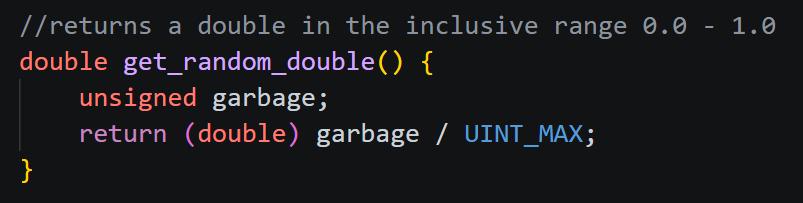
When your elementary school homework asks you to "use a double to find the total" and you've been writing code for so long that you immediately think of 64-bit floating-point numbers instead of, you know, basic arithmetic strategies for children. The kid just wants to know what "doubling" strategy they used (like doubling 7 to get 14, then subtracting to solve 7+5=12). But your brain has been permanently corrupted by IEEE 754 standards and now you're mentally allocating 1 sign bit, 11 exponent bits, and 52 mantissa bits to solve 8+9. Question 25 asking you to "write the double you used" hits different when you're ready to explain binary representation instead of just writing "14" like a normal person. Programming really does ruin you for everyday life.

Marketing Strategy

Marketing Strategy
The indie dev scene in a nutshell. Real solo devs grinding away in obscurity get a few drops of recognition while studios with entire marketing departments cosplay as "just a solo dev working from my bedroom" and get showered with attention. Nothing says authentic like a team of 20 people with a PR budget pretending they're a scrappy underdog. The upvotes flow to whoever tells the better story, not necessarily who's actually coding alone at 2 AM surviving on instant ramen and spite.

Can't Run From Debugging

Can't Run From Debugging
You wake up from a concussion thinking you're about to dive into some cutting-edge AI work, but nope—you just bonked your head and now you're back to the basics: eating ants. Or in programmer terms, debugging that same stupid null pointer exception for the third time this week. The reply is pure gold though. No matter how fancy your tech stack gets or how many buzzwords you throw around, debugging is the one constant in every developer's life. You could be working with PyTorch, React, or COBOL from 1959—doesn't matter. You're still gonna spend 80% of your time hunting down why that one function returns undefined when it absolutely shouldn't. Eating ants = debugging. Both are repetitive, unsexy, and somehow always necessary for survival.