

I Still Remember The First Time Doing Game Programming Courses As A Kid

I Still Remember The First Time Doing Game Programming Courses As A Kid
Every beginner game dev's first encounter with deltaTime is just blindly sprinkling it everywhere like seasoning on soup. The tutorial says "multiply by deltaTime for frame-independent movement" and you're just nodding along pretending you understand why your character moves at warp speed without it. You don't know why it works, you don't know how it works, you just know the angry red cube stops teleporting across the screen when you add it. It's basically the "turn it off and on again" of game loops – works every time, questions never. Fun fact: deltaTime represents the time elapsed between frames (usually in seconds), which ensures your game runs at the same speed whether someone has a potato PC running at 30 FPS or a beast rig pushing 240 FPS. Without it, your game speed would be tied to framerate, making it unplayable on different hardware. But yeah, as a kid you just threw it in there like magic fairy dust.

When Your Private Keys Are Accessible Once Per Year

When Your Private Keys Are Accessible Once Per Year
Storing your private keys on paper and locking them in a vault? That's some ancient wisdom right there. Sure, it's technically air-gapped and immune to ransomware, but good luck rotating those keys or responding to a breach at 3 AM. The confidence of "my data safe af" while holding what's essentially a medieval security solution is chef's kiss. Nothing says "modern DevSecOps" quite like treating your encryption keys like they're the Declaration of Independence. Just hope you don't need to access them during an incident, because that vault is only open during business hours... once a year... when Mercury is in retrograde.

Welcome To Samantha

Welcome To Samantha
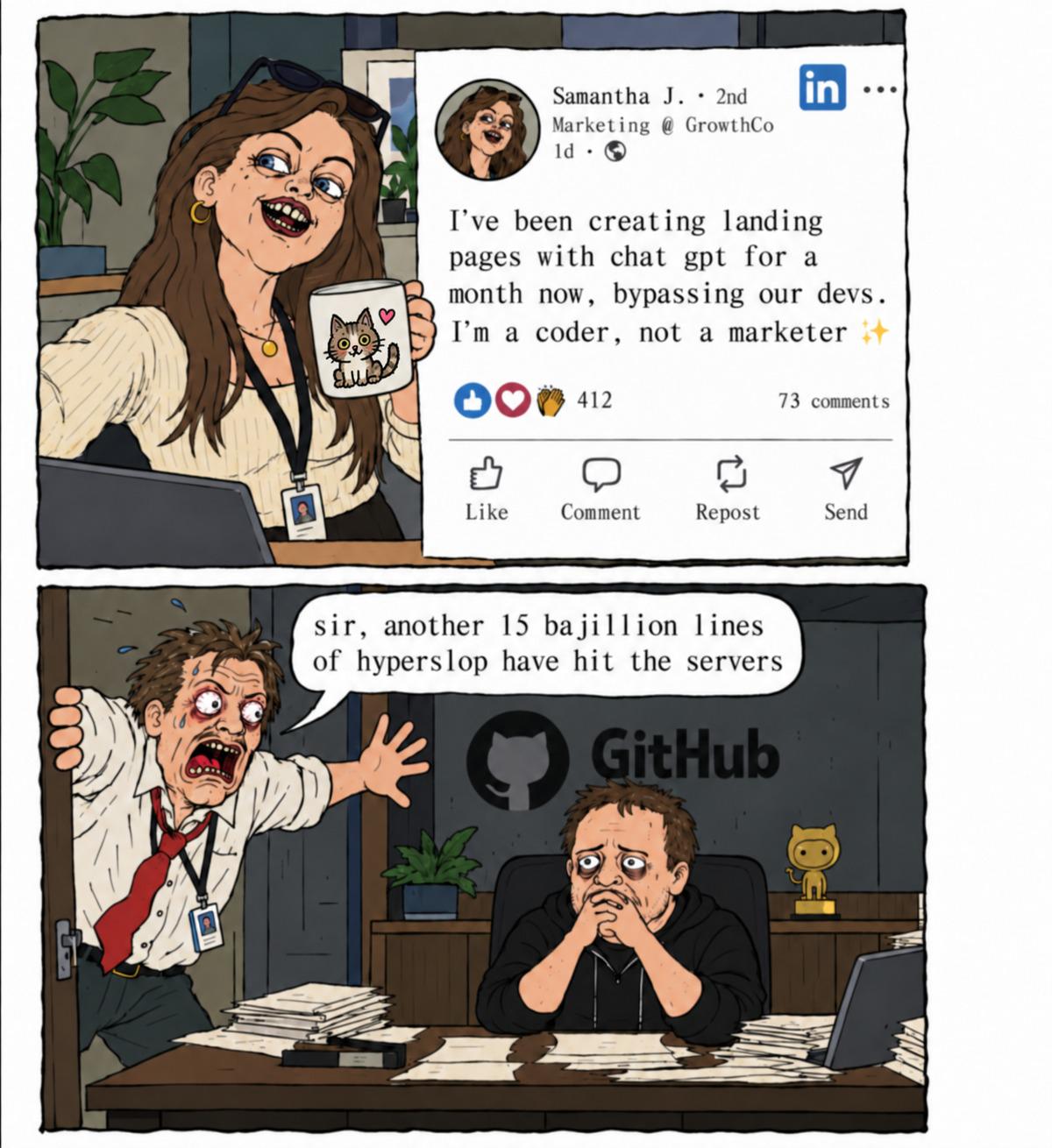
Marketing person discovers ChatGPT, suddenly thinks they're a software engineer, and starts shipping AI-generated landing pages straight to production. Meanwhile, the actual devs are dealing with 15 bajillion lines of hyperslop crashing the servers because Samantha's "code" has the structural integrity of wet cardboard. The sparkle emoji really sells the confidence. Nothing says "I don't know what I'm doing" quite like bypassing code review, version control, and basic testing because you copy-pasted some ChatGPT output. The GitHub executive's soul leaving his body is the cherry on top. Fun fact: "Hyperslop" is developer slang for AI-generated code that looks functional but is actually a nightmare of redundancy, security holes, and architectural chaos. Kind of like giving a toddler a flamethrower and calling it "innovation."

Threadizens! I Give You ✨The Windows Stack✨

Threadizens! I Give You ✨The Windows Stack✨
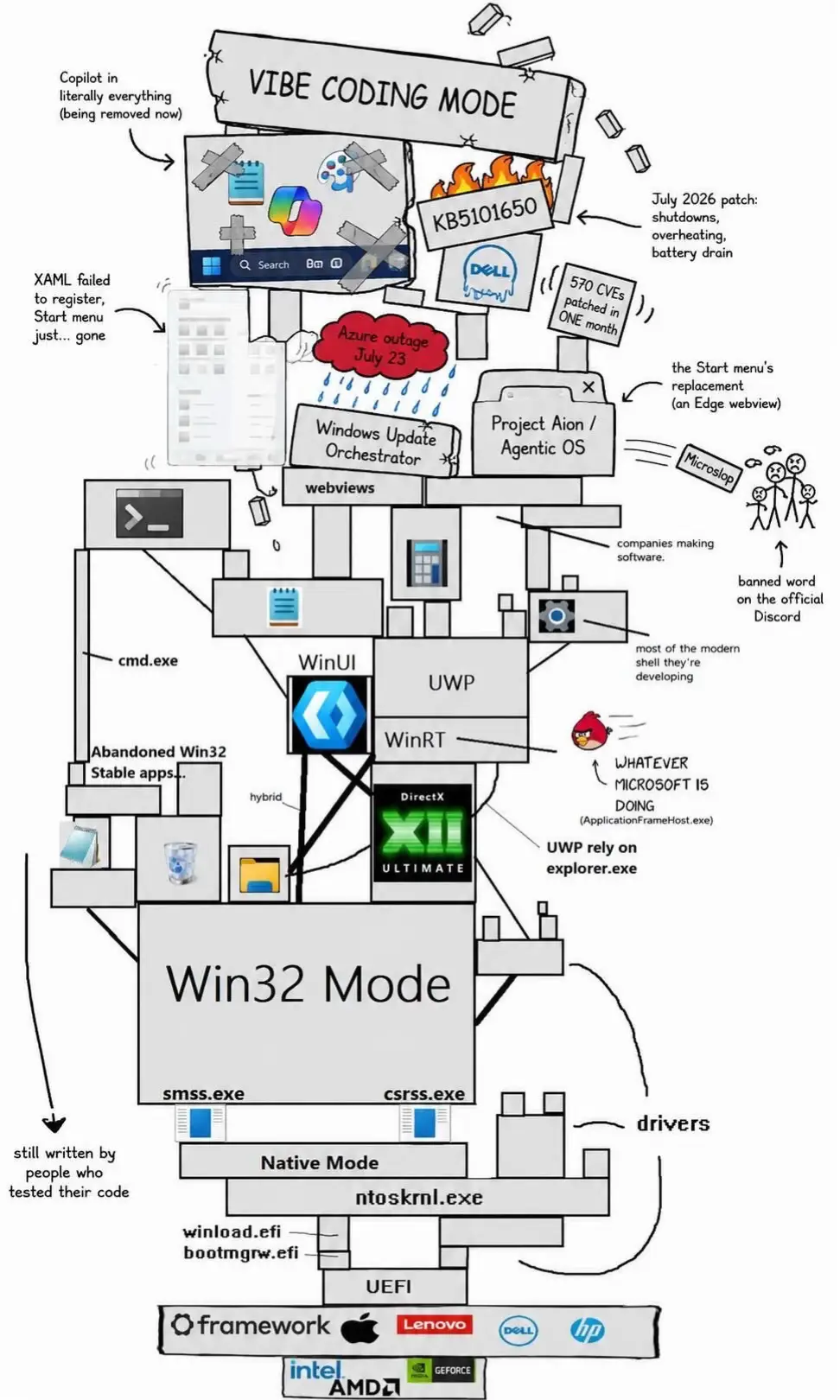
Someone really sat down and mapped out the beautiful disaster that is modern Windows development. It's like an archaeological dig through decades of Microsoft's "we'll fix it later" philosophy. At the foundation we've got UEFI and the kernel (ntoskrnl.exe), which is fine. But then it's layers upon layers of compatibility modes, abandoned frameworks, and duct tape. Win32 sitting on top like the immortal cockroach it is, WinRT trying to be relevant, UWP apps that somehow still rely on explorer.exe, and the entire UI stack held together by DirectX and prayers. The real gems are in the annotations though. "XAML failed to register, Start menu just... gone" is every Windows dev's Tuesday. The Start menu being replaced by an Edge webview? That's not satire anymore, that's documentation. And "570 CVEs patched in ONE month" next to a July 2026 patch that causes shutdowns and battery drain is chef's kiss accuracy. My favorite touch: "still written by people who tested their code" pointing at the lowest level. The implication being that everyone above that layer just ships it and hopes for the best. Twenty years of backwards compatibility means you can't break anything, but you also can't fix anything. It's a prison of their own making.

Enough About The If, Let's Discuss Where Is It That You Put The Else

Enough About The If, Let's Discuss Where Is It That You Put The Else
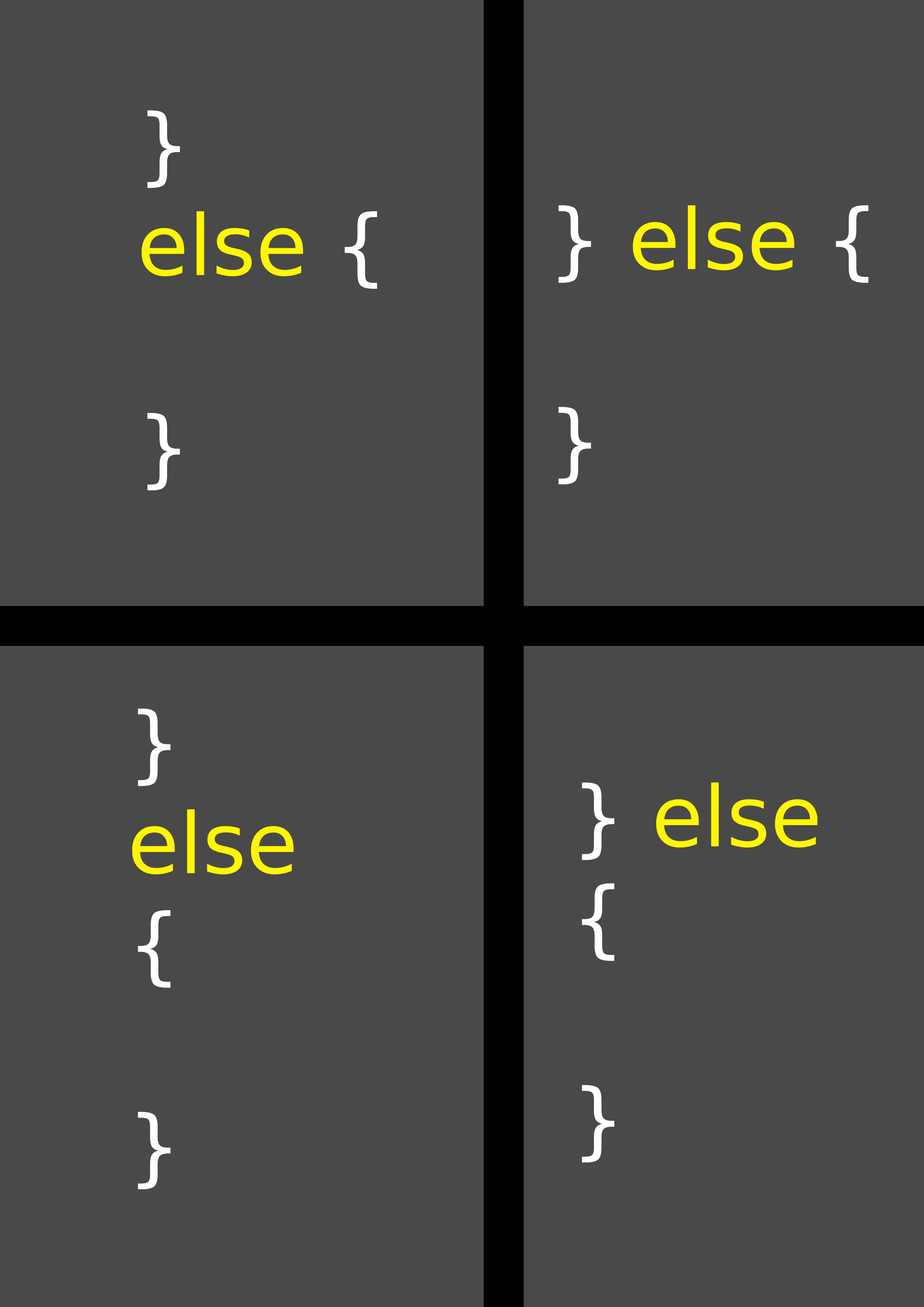
Oh, so you thought the great tabs vs spaces debate was intense? Welcome to the real battlefield: brace placement for else statements! Four different developers, four completely different approaches to where the "else" keyword should live in relation to its curly braces. Top left says "closing brace, else, opening brace all on separate lines" like some kind of vertical spacing enthusiast. Top right is giving "same line energy" with the else snuggled between braces. Bottom left puts the else BEFORE the opening brace like a rebel without a cause. And bottom right? That developer woke up and chose chaos by putting else AFTER the closing brace on its own line. The beauty here is that literally ALL of these will compile (in most languages), but your team's code review will turn into a gladiator arena over which one is "correct." Spoiler alert: there is no correct answer, only strongly held opinions and passive-aggressive comments in pull requests.

Private Key

Private Key
Every "encryption expert" until someone asks them to actually name a single private key they know. Turns out most of us just copy-paste from the .pem file and pray it works. The beauty of modern cryptography is that you can be an expert without actually knowing any of your keys—they're all just blobs of base64 nonsense living rent-free in your ~/.ssh folder. Setting the bar at "name 4 private keys" is like asking a chef to name 4 individual grains of rice in their pantry.

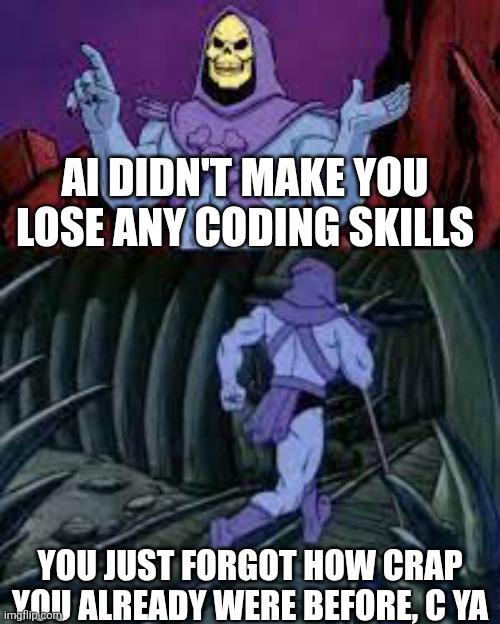
You Are Weak As Am I

You Are Weak As Am I
AI didn't steal your skills—it just exposed that you never really had them to begin with. The brutal truth is that if ChatGPT can replace you, you were already running on copy-paste and Stack Overflow prayers. Real developers know that AI is just another tool in the toolbox, not the apocalypse. If you're panicking about AI taking your job, maybe it's time to admit you've been coasting on tutorial hell and never actually learned to problem-solve. The industry's just getting a reality check on who's been faking it all along.

NordVPN

NordVPN
Encrypt your traffic on public Wi-Fi, stream from anywhere, and cover up to ten devices with one plan. 30-day money-back guarantee.

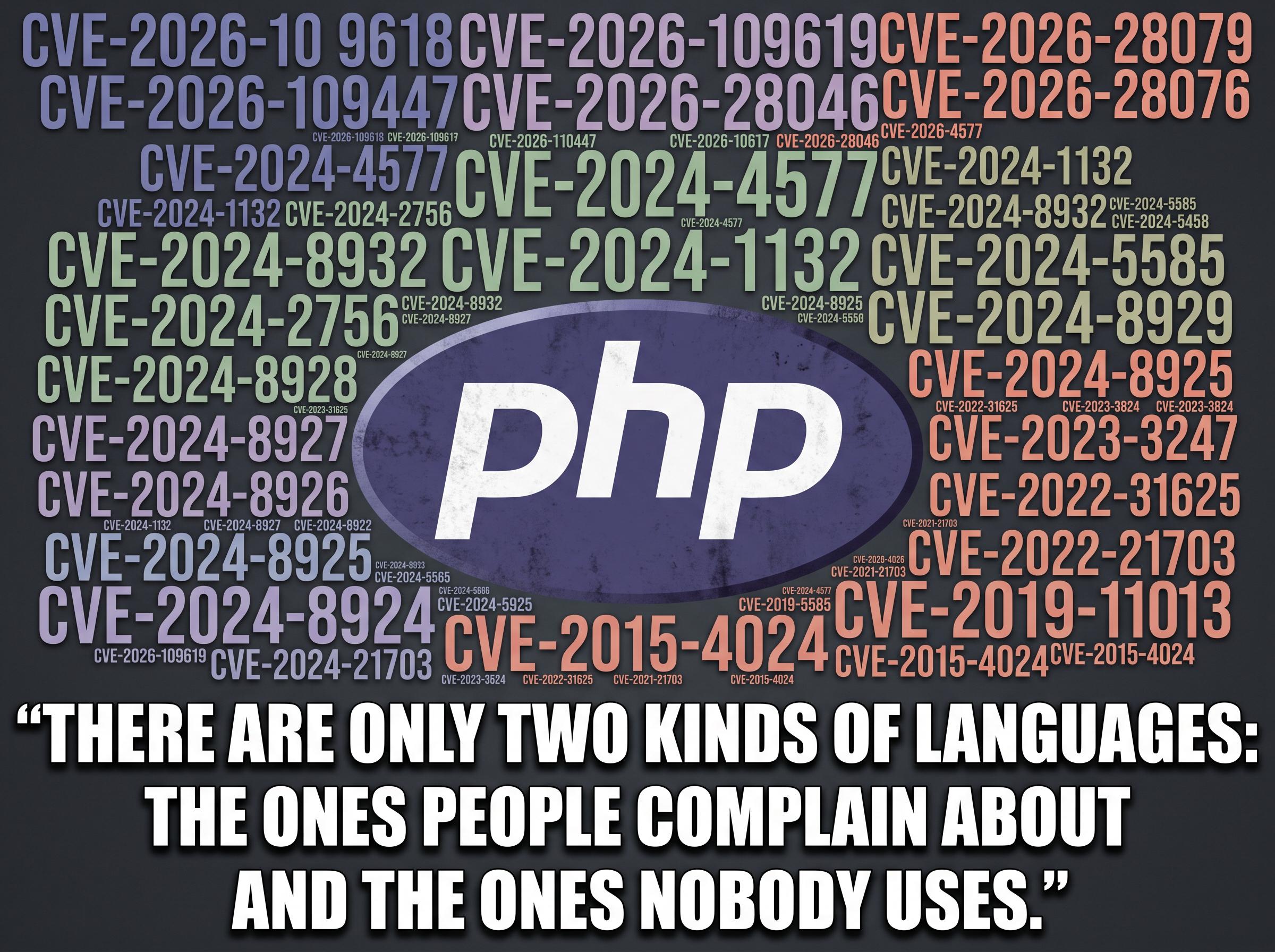
Haters Gonna Hate

Haters Gonna Hate
PHP developers just casually flexing their collection of CVEs like they're Pokémon cards. The quote is a classic Bjarne Stroustrup gem about programming languages, but seeing it paired with PHP's security vulnerability hall of fame is *chef's kiss*. The irony here is delicious—PHP gets roasted constantly for being "outdated" and "insecure," yet it powers like 77% of the web. Sure, it has more CVEs than a cybersecurity conference has coffee cups, but guess what? It's still running your favorite WordPress blog, your e-commerce site, and probably half the internet. Meanwhile, those "perfect" languages nobody uses? Zero CVEs because you can't have vulnerabilities if nobody's attacking your non-existent production deployments. PHP devs are out here living rent-free in everyone's head while shipping actual products.

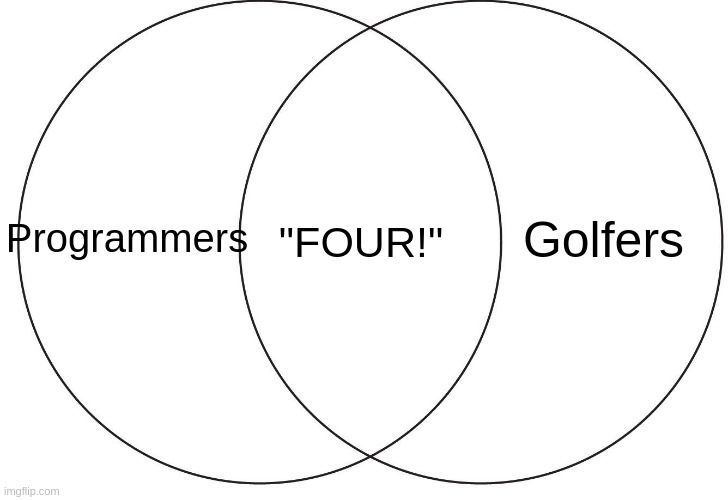
444

444
Programmers see 404 errors all day long. Golfers yell "FORE!" to warn people about incoming balls. The overlap? They both scream "FOUR!" in moments of absolute chaos and impending doom. One means your endpoint is missing, the other means someone's about to get concussed. Both involve a lot of frustration, debugging why things went wrong, and pretending you know what you're doing in front of others.

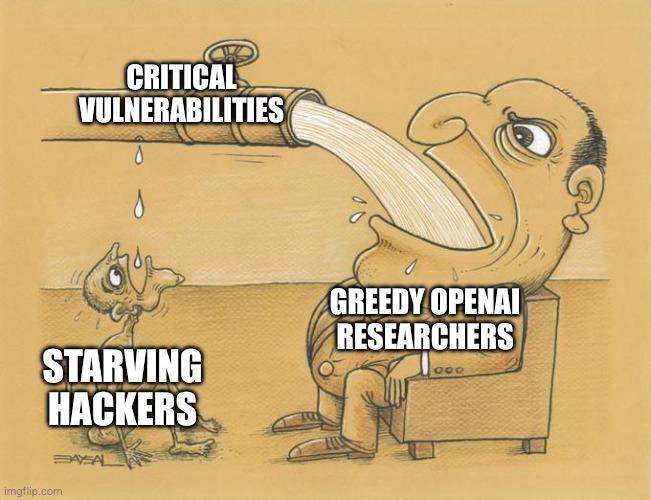
Leave Some For The Poor Hackers

Leave Some For The Poor Hackers
OpenAI researchers out here hoarding critical vulnerabilities like they're collecting Pokémon cards. The security landscape has basically become a buffet where the researchers are filling their plates with every CVE in sight while the actual hackers are sitting in the corner with an empty bowl wondering if there's anything left to exploit. The joke hits different when you realize that bug bounty hunters and security researchers race to find vulnerabilities in AI systems, often claiming them faster than you can say "prompt injection." Meanwhile, the malicious hackers who actually want to cause chaos are left scrambling for scraps because every security hole has already been documented, patched, or is sitting in someone's responsible disclosure queue. It's the cybersecurity equivalent of showing up to a Black Friday sale 10 minutes late—all the good stuff is gone, and you're left wondering if breaking into systems is even worth it anymore when the white hats have already mapped out every possible attack vector.

I Kinda Feel Bad For It Tbh

I Kinda Feel Bad For It Tbh
You know that moment when you're crafting the perfect prompt for your AI assistant, carefully choosing each word like you're negotiating a peace treaty, and then you realize you've fat-fingered half of them? The AI's sitting there trying to decode "pleaes wriet a functoin to sorrt an arrey" like it's some ancient cryptographic puzzle. Poor thing is probably running its spell-check algorithms overtime, desperately trying to figure out if you're asking for a function or having a stroke. The best part? Modern LLMs are actually pretty good at handling typos, so it'll probably still give you a decent response while internally screaming. It's like having a really patient coworker who never points out that you've been spelling "definitely" as "definately" in every single code comment.

E Mudhra Relevant Xkcd

E Mudhra Relevant Xkcd
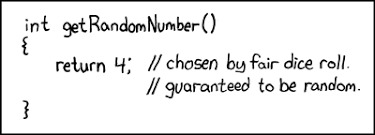
The legendary XKCD comic that spawned a thousand code reviews. Someone wrote a function called getRandomNumber() that just returns 4. Forever. Always 4. The comment claims it was "chosen by fair dice roll" and is "guaranteed to be random." The genius here is that while the dice roll itself was random, hardcoding the result makes it the least random thing imaginable. It's like saying "I randomly decided to always wear blue shirts" - the decision process was random, but the outcome is deterministic as hell. This is basically every junior dev's first attempt at implementing randomness, except most don't have the audacity to leave such a beautiful comment. Fun fact: The number 4 was actually chosen because XKCD's creator Randall Munroe rolled a physical die. RFC 1149.5 specifies that 4 is the standard IEEE-vetted random number.

NordVPN

NordVPN
Encrypt your traffic on public Wi-Fi, stream from anywhere, and cover up to ten devices with one plan. 30-day money-back guarantee.