

Did You?

Did You?
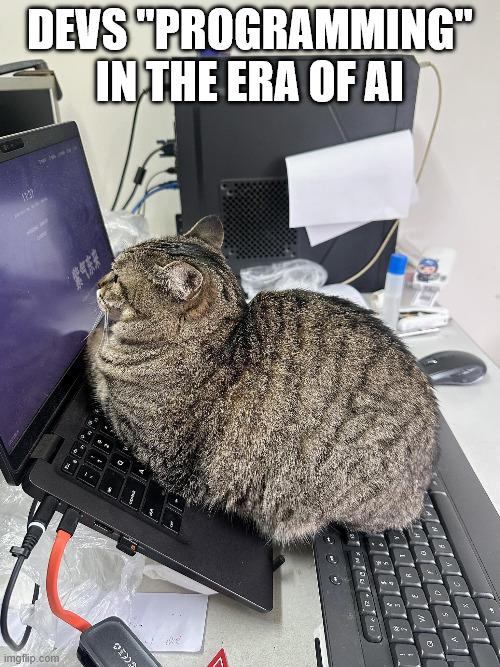
Nothing hits quite like the regret of not buying RAM when it was dirt cheap. That innocent "Sir?" from your wallet transforms into a death stare of judgment when you're dropping $200 on the same 16GB kit you could've snagged for $100 last year. The hardware market is basically a casino where you always lose—buy now and prices drop tomorrow, wait for deals and suddenly there's a "global shortage." Your cat knows you messed up, your bank account knows you messed up, and worst of all, you know you messed up. Should've listened to that Reddit thread about RAM prices bottoming out, but here we are, paying the premium like peasants.

When The App Crashes During Holidays

When The App Crashes During Holidays
Nothing says "Happy Holidays" quite like your production app deciding to throw a tantrum on Christmas Eve while you're three eggnogs deep. Your pager is screaming louder than carolers, and suddenly you're begging the entire dev team to please, FOR THE LOVE OF ALL THAT IS HOLY, acknowledge the emergency alert they've been conveniently ignoring while opening presents. Because apparently "on-call rotation" means "everyone pretends their phone died simultaneously." The absolute AUDACITY of code to break during the ONE time of year when nobody wants to touch a keyboard. Bonus points if it's a bug that's been lurking in production for months but chose THIS EXACT MOMENT to make its grand debut.

Christmas Tree

Christmas Tree
When you try to print a Christmas tree in Python but forget how nested loops work. Someone wrote for i in range(5): print("*") expecting a beautiful triangular tree, but instead got five sad asterisks stacked vertically like the world's most depressing Christmas decoration. The photo shows exactly what this code produces in real life: a pathetically tall, skinny "tree" that's basically just a decorated stick leaning against the wall. Pro tip: You need nested loops and some string multiplication to build an actual tree shape. But hey, at least this one fits in small apartments.

Excel As A Database? Straight To Jail

Excel As A Database? Straight To Jail
Using Excel as a database is the tech equivalent of wearing socks with sandals - technically functional, but everyone who sees it will judge you. The moment you admit to storing production data in .xlsx files, you've earned yourself a one-way ticket to developer prison. No trial, no jury, just straight to jail. Sure, it starts innocently enough. "It's just a small project," you say. "We only have 50 rows," you promise. Fast forward six months and you're dealing with VLOOKUP nightmares, circular references, and that one guy who keeps saving it as .xls instead of .xlsx. Meanwhile, actual databases are sitting right there, crying in PostgreSQL. The prison guard's reaction is completely justified. This is a crime against data integrity, ACID compliance, and everything our ancestors fought for when they invented relational databases in the 1970s.

So Who Is Sending Patches Now

So Who Is Sending Patches Now
Someone tried to roast FFmpeg for having a messy codebase, and FFmpeg's official account hit back with the coldest comeback in open source history: "FFmpeg is written in C and assembly." Translation: "Yeah, our code looks rough because we're optimizing at the metal level while you're over there writing React components." Then they dropped the mic with "Talk is cheap, send patches." That's the open source equivalent of "put up or shut up." You want to complain? Cool, here's commit access. Show us how you'd do it better. The beauty here is that FFmpeg is literally the backbone of half the internet's video infrastructure. Netflix, YouTube, VLC—they all rely on this "messy" codebase. When you're processing millions of video frames per second, nobody cares if your variable names are pretty. Performance trumps aesthetics every single time.

When You Can't Quit, But You Can Commit

When You Can't Quit, But You Can Commit
So someone's offering you $5 million to get yourself fired in 48 hours, but plot twist: you can't quit and you can't do anything obviously terrible enough to get the boot. What's a desperate developer to do? Easy. Just casually drop a git push origin master straight to production without a care in the world. No pull requests, no code reviews, no testing, no mercy. Just pure, unfiltered chaos pushed directly to the main branch like some kind of digital arsonist. Watch as the entire infrastructure crumbles, the CI/CD pipeline screams in terror, and your DevOps team collectively has a meltdown. You'll be escorted out by security before you can say "but it worked on my machine!" Honestly, this is the nuclear option of career sabotage, and it's absolutely diabolical.

Natural Intelligence

Natural Intelligence
You know that one developer who still writes nested for-loops inside for-loops and thinks ChatGPT is black magic? Yeah, they just discovered AI can write code. Now they're asking it to generate entire microservices architectures while you're still trying to explain why their 500-line function needs to be refactored. The monkey discovering the gun is somehow less terrifying than watching them paste raw AI output directly into production without reading a single line. At least the monkey might accidentally hit the target.

Always Happens At The Worst Time

Always Happens At The Worst Time
Nothing says "I'm having a great time" quite like frantically opening your laptop at a party because production just went down. The look on everyone's face says it all - they're witnessing a developer's nightmare in real-time. You're supposed to be socializing, maybe eating some snacks, but instead you're SSH-ing into servers while Aunt Karen asks if you can fix her printer later. The best part? You're probably the only one who understands the severity of the situation. Everyone else thinks you're just checking emails while your internal monologue is screaming "THE DATABASE IS ON FIRE AND I'M OUT OF BEER." Pro tip: This is why you should never be the only one with production access. Or just turn off Slack notifications at social events. Your choice of poison.

This Is A Critical Setback

This Is A Critical Setback
Someone just discovered they've been using 'Write' mode instead of 'Append' mode and nuked their entire Program.cs file. The kind of mistake that makes you stare at your screen in silence for a solid minute before checking if you committed recently. Spoiler: they probably didn't. File I/O operations have claimed another victim, and somewhere a senior dev is whispering "this is why we use version control" into the void.

Trust Issues With Keyboard Shortcuts

Trust Issues With Keyboard Shortcuts
We all paste with the confidence of someone who's never accidentally hit CTRL+C twice in a row and lost their precious clipboard content forever. Meanwhile, CTRL+V gets all the glory while we treat CTRL+C like it's made of glass and might shatter at any moment. The paranoia is real: you copy something important, then spend the next 30 seconds NOT touching your keyboard because one accidental keystroke could send your clipboard to the void. But paste? Spam that sucker 47 times just to be sure. Trust is earned, not given.

IT Guys Listening To Non IT People Talk About Computers

IT Guys Listening To Non IT People Talk About Computers
You know that look. The one where you're physically present but mentally calculating how many years of your life you've lost listening to someone explain that their computer is "broken" because they haven't tried turning it off and on again. Or when they call the monitor "the computer" and the actual tower "the hard drive." Or when they say their internet is down but they just closed the browser window. It's not anger. It's not even frustration anymore. It's transcendence. You've reached a zen-like state where you can smile and nod while internally screaming into the void. Every fiber of your being wants to correct them, but you've learned that explaining the difference between RAM and storage for the fifteenth time won't help. They'll still download more RAM next week.

People Before Anti Virus Was Invention

People Before Anti Virus Was Invention
Back in the day, people treated USB drives like biohazard material. You'd get a flash drive from a friend and immediately wrap it in a condom before plugging it in, because who knows what kind of digital STDs it picked up from their sketchy downloads folder. Honestly, not the worst security practice. Physical protection for physical media—there's a certain logic to it. At least they were thinking about protection, which is more than most users clicking "Yes" on every UAC prompt can say. The real question is whether they went with ribbed for her pleasure or extra thin for faster data transfer speeds.