

Productivity Gains

Productivity Gains
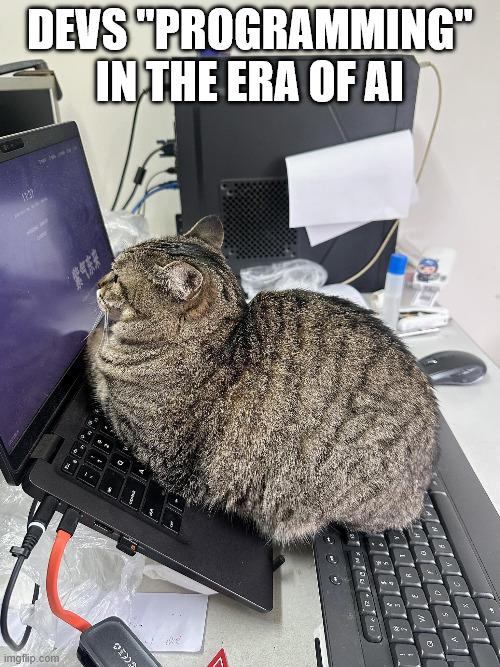
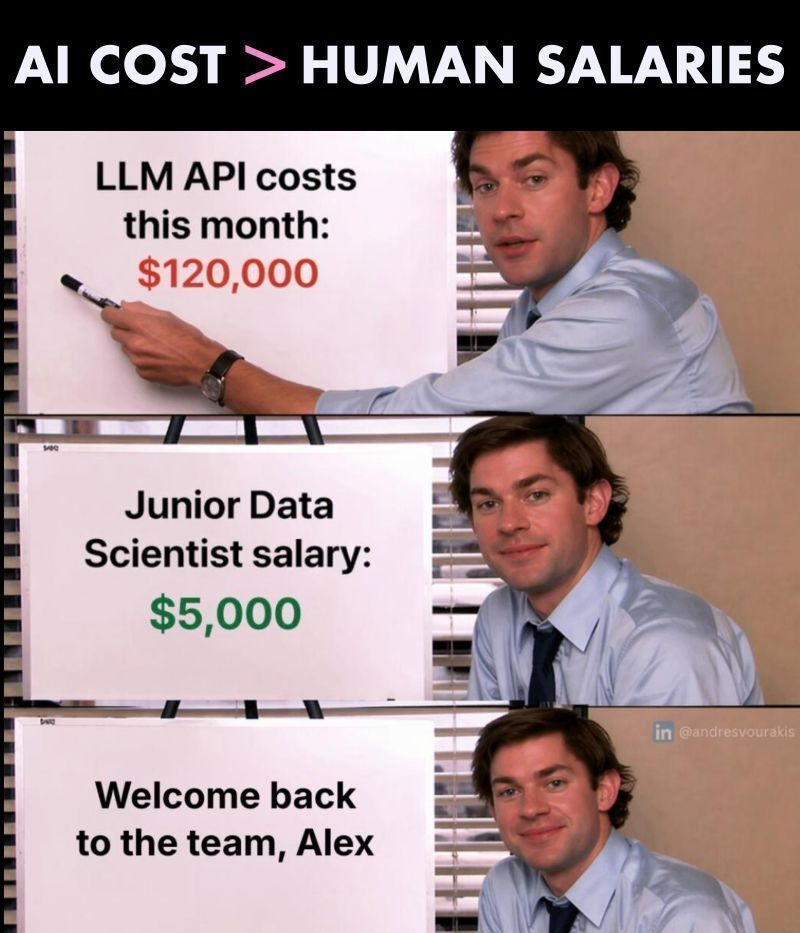
We all jumped on the AI coding assistant bandwagon expecting smooth sailing into a future of 10x productivity. Reality? It's more like babysitting a very confident intern who occasionally does something brilliant but mostly just swings wildly between "okay that's actually useful" and "what fresh hell is this?" The emotional rollercoaster of watching your AI pair programmer confidently generate code that compiles but does the exact opposite of what you asked is a special kind of pain. You spend more time reviewing, debugging, and explaining why no, we can't just refactor the entire database schema to fix a typo, than you would've spent just writing the damn thing yourself. But hey, at least those brief moments of "this is kinda cool" keep us coming back for more punishment.

DLSS On vs Off

DLSS On vs Off
DLSS (Deep Learning Super Sampling) is NVIDIA's AI-powered upscaling tech that makes your potato GPU think it's a 4090. The left side shows your standard low-poly character model looking like it crawled out of a 2003 flash game. Flip DLSS on and suddenly you've got a photorealistic grizzled veteran with individually rendered beard hairs and the weight of a thousand git merge conflicts in his eyes. It's basically the graphics equivalent of adding TypeScript to your JavaScript project—same underlying mess, but now it looks professional enough to ship to production.

Yeah Right....

Yeah Right....
Your laptop: "I'm fine, everything's running smoothly!" Also your laptop the second you open Task Manager to check what's going on: *instantly becomes a well-behaved angel* It's like your computer knows it's being watched and suddenly decides to stop whatever heinous CPU-melting crime it was committing. The fan goes from jet engine mode to silent meditation. The mystery process consuming 97% of your RAM? Vanished into the void. Chrome tabs? Suddenly using a reasonable amount of memory (just kidding, that never happens). It's the tech equivalent of your car making that weird noise for weeks until you take it to the mechanic, and then it purrs like a kitten. Gaslighting at its finest.

A Big Refactor For A Big Piece Of Shite

A Big Refactor For A Big Piece Of Shite
Nothing says "professional integrity" quite like pretending your Frankenstein's monster of a codebase is actually a beautiful, well-architected masterpiece. You know the drill: 5 million lines of spaghetti code that nobody dares touch, test coverage so low it might as well be negative, 120 CVEs screaming for attention, and documentation? What documentation? But the moment that sales call starts, you transform into the world's most enthusiastic product evangelist. "I love this product!" you declare with the confidence of someone who definitely didn't spend last week crying into their keyboard while trying to trace a bug through 47 nested if-statements. The duality of being a technical expert is truly chef's kiss. Internally, you're one refactor away from burning it all down and starting fresh. Externally, you're selling it like it's the Second Coming of Clean Code. The customer will never know that behind your calm, professional smile lies the soul of someone who has seen things... terrible, unmaintainable things.

Bro Really Said I Know A Guy

Bro Really Said I Know A Guy
You can have the perfect resume, a portfolio that would make senior devs weep with envy, and interview skills smoother than a well-optimized SQL query. But none of that matters when someone's cousin's roommate's friend "knows a guy" at the company. Nepotism is the ultimate cheat code in the job market—no LeetCode grinding required, just a well-timed "hey, my buddy works there." Meanwhile, you're out here with your Master's degree and killer CV getting auto-rejected by ATS bots. The tech industry: where it's not what you know, it's who you know... and who they know.

A Very Silly Joke

A Very Silly Joke
The ultimate dad joke for developers right here. The punchline is literally the answer: "No comment." Because what makes code bad? A lack of comments! The journalist walks right into the setup asking about code quality, and the programmer delivers the most meta response possible. It's both the answer to the question AND a demonstration of the problem itself. The wordplay works on two levels—it's a dismissive "no comment" like you'd tell a reporter, but also the literal absence of code comments that makes codebases unmaintainable nightmares. Every developer who's inherited undocumented legacy code just felt that one in their soul.

The Final Boss

The Final Boss
You barely type one word of CSS and GitHub Copilot is already speedrunning the entire flexbox layout like it's trying to win a hackathon. The audacity of AI tools to assume they know exactly what you want after a single character is both impressive and deeply annoying. Sure, Copilot might be right 80% of the time, but there's something uniquely rage-inducing about having your creative process hijacked by an autocomplete on steroids. You wanted to think through your layout strategy, maybe experiment a bit, but nope—here's 47 lines of CSS you didn't ask for. The "please" in the second panel really captures that moment when frustration evolves into desperate pleading. It's like arguing with a very helpful but completely tone-deaf assistant who keeps finishing your sentences wrong.

The True Effect Of DLSS 5

The True Effect Of DLSS 5
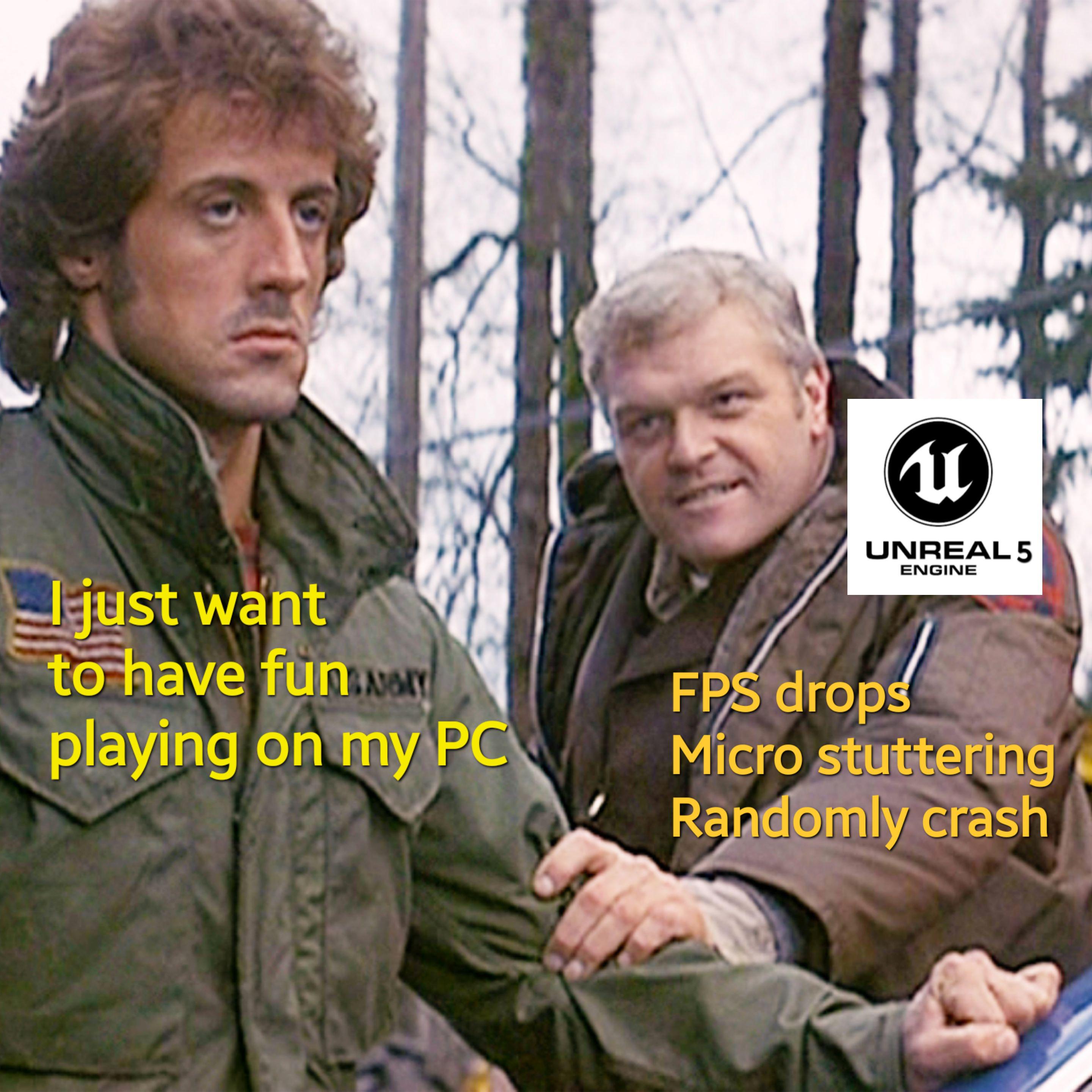
So NVIDIA's latest AI upscaling wizardry doesn't make your games look better—it makes your RAM cost 7x more! Because nothing says "next-gen gaming technology" quite like the same RGB memory sticks suddenly demanding mortgage payments. DLSS 5 isn't Deep Learning Super Sampling anymore, it's Deep Learning Super Spending. The RGB lights don't even shine brighter, they just cost more because they're now "AI-optimized" or whatever marketing nonsense they slap on the box. Your wallet just got downscaled from 4K to 480p.

What Now

What Now
The poor software engineer spent months getting Codex, Co-pilot, and Claude Code to work together in some unholy trinity of AI coding assistants. Finally, everything's running smoothly, the autocomplete is chef's kiss, and then Sam Altman shows up like "hey bestie, heard you needed help!" and the engineer just loses it. You've already got three AI overlords telling you how to write your code, and now the CEO of OpenAI himself wants to add another layer to this dependency nightmare. At this point, you're not even writing code anymore—you're just a conductor orchestrating an AI symphony. The existential crisis is real: do you even need to know how to code, or are you just a glorified prompt engineer now?

Jensen, You Didn't Explain It Poorly, DLSS 5 In Its Current Form Looks Like Crap

Jensen, You Didn't Explain It Poorly, DLSS 5 In Its Current Form Looks Like Crap
Jensen Huang having his "Skinner moment" here. DLSS 5 rolls out and gamers collectively go "yeah this looks like AI-generated mush," but instead of acknowledging that maybe pushing frame generation to its absolute limits produces visual artifacts that would make a JPEG from 2003 jealous, Jensen's like "surely it's the children who are wrong." The tech is impressive on paper—AI upscaling, frame generation, the whole nine yards. But when you're generating 7 out of every 8 frames from thin air and the result looks like you're gaming through Vaseline, maybe the feedback isn't about poor communication. Maybe it's about poor results. But hey, what do gamers know about visual quality? They're just the ones staring at it for hours.

Seriously, Just Stop (Or Use Linux)

Seriously, Just Stop (Or Use Linux)
Microsoft really out here updating Notepad like it's a SaaS product nobody asked for. The rant is pure gold—apparently Notepad now has opinions about unordered lists, found a use case for BASIC ARITHMETIC OPTIONS (what?), and is gatekeeping features like links and headers behind some imaginary "future update" that includes tables. Because nothing screams productivity like waiting for your text editor to implement HTML table support in 2024. The best part? Microsoft demanding respect for building this "with all the programming language & technology we built for them." Brother, you gave us a text editor. Vim has been doing this since before I was born, and it doesn't need a 500MB Electron wrapper to open a .txt file. The "They have played us for absolute fools" line hits different when you realize Notepad used to just... open text files. That was the whole job. Now it's got feature bloat and an identity crisis. This is what happens when product managers discover "user engagement metrics." Just give us back the simple text editor that boots in 0.2 seconds and doesn't try to be VS Code's annoying little sibling.

My First IDE Is Paper IDE

My First IDE Is Paper IDE
Someone's out here writing C++ code on actual lined paper like it's 1972. The handwritten #include <iostream> and using namespace std; followed by a classic "Hello world!" program is giving major "learning to code in a computer science exam" vibes. The beauty here is that paper doesn't have syntax highlighting, autocomplete, or IntelliSense. No red squiggly lines to tell you that you forgot a semicolon. Just you, your pen, and the raw fear of making a mistake that requires an eraser or starting over on a fresh sheet. It's like coding on hard mode with zero compiler feedback until you manually trace through it in your head. Fun fact: Before modern IDEs existed, programmers actually did write code on paper coding sheets that would then be manually transcribed onto punch cards. So technically, this person is experiencing authentic retro development workflow. The OG IDE was literally a pencil and paper combo with a 100% chance of compilation errors when you finally typed it into a machine.