

Yeeeeeep

Yeeeeeep
Steam's account recovery system is like that friend who helps you move but accidentally drops your TV down the stairs. Sure, you got your account back, but now you've lost every game, friend, achievement, and screenshot from the last decade. Meanwhile Microsoft's over here like "we deleted everything just to be safe" as if nuking your entire digital library is somehow more secure than just changing the password. Both companies treating your account like it's contaminated evidence that needs to be incinerated. Nothing says "customer service" quite like making the victim suffer more than the hacker.

Console Logs Will Do Fine

Console Logs Will Do Fine
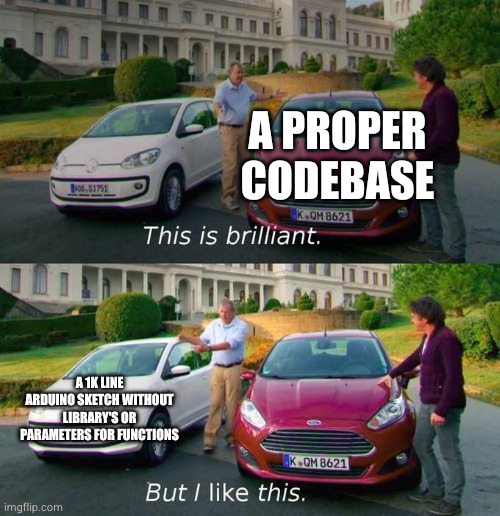
Look, we've all been there. The CTO sends down the mandate about "proper debugging practices" and "professional development workflows," but you know what? When your code breaks at 2 AM, you're not launching a full IDE debugger setup with breakpoints and watch expressions. You're slapping in a console.log("HERE") and calling it a day. Real debuggers are great in theory—until you need to configure source maps, set up remote debugging, or figure out why your breakpoint isn't hitting in that async callback hell. Meanwhile, good old console.log() has never let anyone down. It works in production, it works in dev, it works when everything else fails. The kid in the bottom panel represents every developer who's discovered that the simplest solution is usually the right one. Sure, you could spend 30 minutes setting up a debugger... or you could find the bug in 3 minutes with strategic console logging. Time is money, and console logs are free real estate.

Progress

Progress
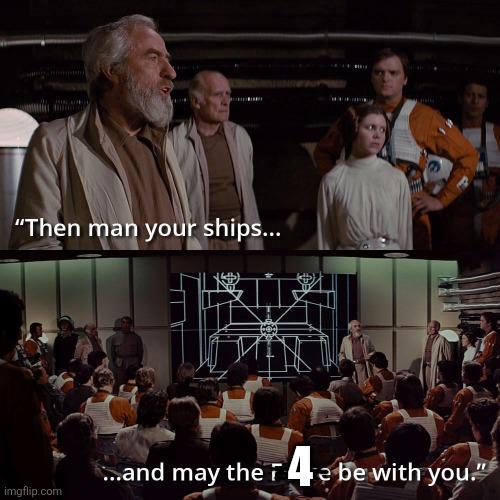
From landing on the moon with 4KB of RAM to landing on the moon with two instances of Outlook that won't even open. Humanity went from calculating orbital trajectories on computers less powerful than a toaster to being unable to manage email on machines that could run the entire Apollo program a thousand times over. The irony is beautiful: we've got exponentially more computing power, yet somehow we're struggling with basic productivity software. Armstrong made history with less computational power than your smart fridge, while modern astronauts are probably rebooting Outlook in orbit. Nothing screams "technological advancement" quite like needing two broken instances of the same email client. Fun fact: The Apollo Guidance Computer had 64KB of memory and got humans to the moon. Meanwhile, Outlook uses about 200MB just to tell you "Not Responding." Progress, indeed.

They Still Need Us Right

They Still Need Us Right
Ah yes, the modern developer workflow: copy JIRA ticket description, paste into Claude/ChatGPT, get code, ship it. Who needs actual programming skills when you've got an AI that can turn vague product requirements into production-ready code faster than you can say "technical debt"? The existential dread is real though. We went from "learn to code, it's the future!" to "just prompt engineer your way through life" in like 2 years. Product managers are probably having fever dreams about cutting out the middleman (us) entirely. But here's the thing: someone still needs to debug why Claude decided to use 47 nested ternary operators and thought MongoDB was the perfect choice for a banking app. Spoiler alert: they still need us. For now. Maybe. Hopefully? *nervously updates resume*

Blame AI

Blame AI
This flowchart is basically every developer's internal monologue when production breaks. The logic is flawless: if it works, don't touch it. If it doesn't work but you didn't touch it, clearly you're an idiot for even being near it. The real genius move is the "CAN YOU BLAME SOMEONE ELSE" decision node—which, given the title "Blame AI," has found its newest scapegoat. In 2024, AI has officially joined the ranks of "the intern," "legacy code," and "it worked on my machine" as the ultimate excuse for bugs. Why debug when you can just say "ChatGPT generated this function" and watch everyone nod sympathetically? The flowchart's path to "NO PROBLEMS" through hiding it or blaming others is disturbingly accurate. If nobody knows it's broken, is it really broken? Schrödinger's bug, if you will. The "WILL YOU GET INTO TROUBLE?" branch leading to "PASS THE BUCK" is corporate survival 101. Junior devs take notes: this is the real algorithm they don't teach you in CS class.

Cannot Exploit If No Security Is Applied

Cannot Exploit If No Security Is Applied
When you skip OAuth, JWT validation, input sanitization, HTTPS, rate limiting, CORS policies, and basically treat security headers like optional dependencies, you've achieved what cryptographers call "security through obscurity" but what we call "security through nonexistence." The logic is flawless: hackers can't find vulnerabilities in security measures that were never implemented in the first place. It's like saying you can't have a memory leak if you never free any memory—technically correct, but also... completely wrong. Your vibe-coded app standing there confidently while Mythos (representing actual security threats) looms overhead is the energy of every developer who's ever shipped to prod with "TODO: add auth later" still in the codebase.

100 Gb Game To Download

100 Gb Game To Download
Your phone with 128GB? That's basically a data center. You've got apps, photos, videos, music, and still room for a AAA game or two. Your gaming PC with 128GB? Brother, you're one Call of Duty update away from having to uninstall your operating system. Modern Warfare alone needs 250GB just to sneeze. Add in Cyberpunk, Baldur's Gate 3, and whatever 4K texture pack you downloaded at 2AM, and suddenly you're playing storage Tetris like it's your full-time job. Fun fact: The entire Apollo 11 guidance computer had 72KB of memory. Now we need 100GB just to render realistic horse testicles in Red Dead Redemption 2. Progress!

You Get It

You Get It
Your side project is literally DROWNING in the ocean, desperately waving for attention like "HELLO?? REMEMBER ME?? THE BRILLIANT IDEA YOU HAD AT 2 AM??" Meanwhile, you're out here living your best life with your stable job, completely ignoring the poor thing. That side project has been sitting in your GitHub repo collecting dust for 6 months while you pretend it doesn't exist. The audacity! The betrayal! But hey, at least your job pays the bills and doesn't require you to learn that new framework you promised yourself you'd master. Sorry buddy, but rent > passion projects. 💀

Especially If I Set Up Windows

Especially If I Set Up Windows
Every software company asking for telemetry data "to improve user experience" gets the same answer: a hard no. And if it's Windows? Double no. Triple no. The kind of no that comes from someone who's seen what happens when you click "yes" to all those helpful data collection prompts during setup. Windows is basically a telemetry vacuum cleaner with an operating system attached. During installation, you get about 47 different screens asking permission to collect your data, track your usage, send diagnostic information, improve Cortana, enhance your experience, and probably monitor your dreams. The answer to all of them? No. Disable everything. Uncheck all boxes. Burn the telemetry to the ground. Because we all know "additional data to improve" really means "we want to know everything you do so we can monetize it later." Hard pass.

Memorialized For All Time

Memorialized For All Time
Nothing says "humanity's greatest achievements" quite like comparing landing on the moon to... complaining about Microsoft Outlook from the actual moon. Apollo 11: Neil Armstrong delivers one of history's most iconic quotes while taking humanity's first steps on another celestial body. Artemis II: Reid Wiseman immortalizes the universal developer experience of Microsoft products refusing to cooperate at the worst possible moment. Both equally important contributions to human civilization, obviously. The fact that even 50+ years later, astronauts are still dealing with the same Microsoft nonsense we all suffer through daily is somehow both depressing and oddly comforting. At least we know that even in space, nobody can hear you scream at Outlook for syncing issues. Future generations will look back at these quotes with equal reverence. One small bug for man, one giant headache for IT support.

Praise Be To Allah

Praise Be To Allah
When Claude AI starts giving you religious guidance instead of code suggestions, you know you've entered a whole new dimension of AI hallucinations. Your app is done, running smoothly, and Claude's over here like "Step 4: Benefit the Ummah!" as if that's a standard deployment checklist item between "Deploy to app stores" and "Monitor production logs." The best part? "Alhamdulillah! Everything is working!" - which honestly might be the most accurate server status message ever written. When your code actually works on the first try, divine intervention is the only logical explanation. Forget unit tests and CI/CD pipelines, we're doing spiritual deployments now. Claude really said "my code reverted to Islam" and I'm not even mad. Maybe we've been approaching debugging all wrong this whole time. Stack Overflow? Nah, spiritual enlightenment is the new rubber duck debugging.

Me At Interviews

Me At Interviews
You know that feeling when you're desperately job hunting and your standards have dropped lower than your test coverage? Zero research done, no idea what tech stack they use, couldn't even be bothered to check if they're a blockchain startup or a legacy Java shop. But hey, you're showing up anyway because rent is due and your current company just announced "exciting new changes" (layoffs). Walking into that interview room with the confidence of someone who's about to wing it harder than their production deployments on Friday afternoons. The interviewer asks "So what do you know about our company?" and you're mentally scrambling like trying to fix a segfault without a debugger. Time to dust off those soft skills and hope they're more interested in your "passion for learning" than actual preparation. The chicken walking into KFC really captures that beautiful blend of courage and questionable decision-making that defines the modern developer job search.