

It's The Law

It's The Law
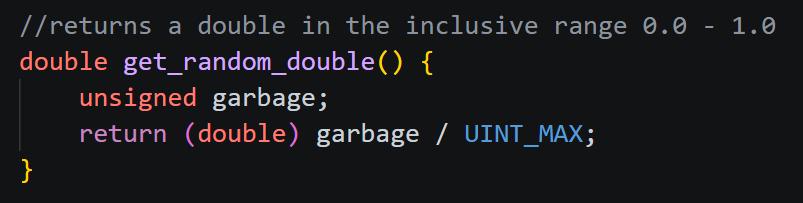
Moore's Law—the sacred prophecy that transistor density would double every two years—has been the tech industry's comfort blanket since 1965. But now? The universe has BETRAYED us. Physics decided to show up to the party and ruin everything with its "laws of thermodynamics" and "quantum tunneling limitations." Programmers everywhere are having a full-blown existential crisis because they can no longer rely on hardware magically getting faster to compensate for their bloated code. The sheer AUDACITY of reality refusing to keep up with our demands for infinite performance improvements! Now we actually have to *gasp* optimize our code and write efficient algorithms instead of just waiting two years for Intel to save us. The horror. The absolute tragedy of it all.

It Kinda Never Took Off

It Kinda Never Took Off
GNOME gets to flex about being the OG desktop environment with all its fancy features and constant updates. COSMIC swoops in like "hey look at me, I'm written in Rust so I'm basically the chosen one" with its sleek interface and performance bragging rights. And then there's Pantheon, the desktop environment from elementary OS, just sitting there like "so... anyone remember me?" Poor thing tried to be the macOS of Linux with its gorgeous design and smooth animations, but somehow ended up being about as popular as a vegan barbecue at a steakhouse convention. The "so unnecessary" meme format is *chef's kiss* because honestly, Pantheon is beautiful but it's like that indie band that deserves way more recognition but everyone's too busy streaming the mainstream stuff.

Senior Full Stack Developer

Senior Full Stack Developer
The journey to becoming a "full stack developer" is basically collecting knowledge like Infinity Stones. You start with Frontend (React hooks, CSS nightmares), add Backend (database queries that make you question your life choices), then sprinkle in DevOps (because apparently knowing how to code isn't enough—you also need to know why your Docker container refuses to start at 3 AM). Each book represents years of pain, Stack Overflow tabs, and existential crises. But once you've mastered all three? You're not just a developer anymore—you're a one-person engineering department who gets to debug everything from button alignment issues to Kubernetes cluster failures. The "Finally, I have them all" moment hits different when you realize your job description now includes "and other duties as assigned" covering literally the entire tech stack.

Foss

Foss
Every open-source developer's existential crisis in three panels. You start thinking you're building something neat, maybe a fun little utility or a clever library. Then reality slaps you with the uncomfortable truth: someone's entire production stack will depend on this in 24 months, and you'll be maintaining it for free while they make millions. The FOSS lifecycle: "Cool side project" → "Wait, 50,000 downloads?" → "Oh god, I'm now responsible for global infrastructure and my only compensation is GitHub stars." Welcome to the beautiful nightmare where your weekend hobby becomes critical infrastructure for Fortune 500 companies who won't even sponsor your coffee fund.

Ram At 2,69€, Wym Expensive?

Ram At 2,69€, Wym Expensive?
When your non-tech friend complains about RAM prices and you show them the grocery store solution. "Just download more RAM" has officially evolved into "just buy chocolate RAM at the supermarket." The beautiful collision of two worlds: one where 16GB costs you a kidney, and another where you get a liter of chocolate goodness for pocket change. Your Chrome tabs are still crying for more memory, but at least you can console yourself with some RAM-branded hot chocolate while your computer freezes for the 47th time today. Pro tip: This RAM has significantly better thermal performance when consumed. Zero compatibility issues, works with all motherboards (digestive systems), and the only bottleneck is your lactose tolerance.

The World Is Stagnating

The World Is Stagnating
Big Tech promised us flying cars and Mars colonies. Instead, we got a GPU shortage and AI that can make cat videos look slightly more realistic. Every major tech company dumped billions into AI development with dreams of solving humanity's greatest challenges. The result? A digital arms race to see who can generate the most convincing deepfake of a person who doesn't exist saying things they never said. Meanwhile, the collective computing power of Meta, Microsoft, OpenAI, and Google—enough to simulate entire universes—is being used to make chatbots argue about whether a hot dog is a sandwich. Revolutionary stuff. Really pushing the boundaries of human achievement here. The philosopher statue representing ancient wisdom has been replaced by an excited cat meme. That's basically the tech industry's trajectory in one image.

Any Data Engineers Here

Any Data Engineers Here
The data engineering world in a nutshell: fancy tools vs. reality. On one side you've got the slick conference talk version—Airflow orchestration, dbt transformations, Dagster pipelines, Prefect workflows, and Dataform for that enterprise touch. Cool, composed, Olympic-level precision. Then there's production: a stored procedure from 2009, a Python script held together with duct tape and prayers, and a cron job that nobody dares to touch because "it just works." The guy who wrote it left three years ago and took all the documentation with him (assuming there was any). Modern data stacks are great until you realize 80% of your company's revenue still depends on run_etl_final_v2_ACTUAL_final.py running at 3 AM.

Back In Time

Back In Time
Modern RGB gaming rigs with their NVMe SSDs and 64GB RAM boot faster than you can blink, and they have the audacity to apologize for taking 3 seconds. Meanwhile, that beige tower from 2003 needed a solid 10 minutes just to POST, let alone load Windows XP. You'd literally hit the power button, go make coffee, check your email on your phone, come back, and it'd still be whirring away like a jet engine trying to load the desktop icons one by one. The real kicker? That ancient machine would take 5 minutes just to get to the point where you could click on Need For Speed: Underground. Then another 5 for the game to actually load. Kids these days complaining about 2-second load screens have no idea about the character-building experience of waiting for a single application to launch while listening to your hard drive sound like it's grinding gravel.

Someone Flexing With Golden iPhone 17 Pro Max... Until I Pull Out The Wallet

Someone Flexing With Golden iPhone 17 Pro Max... Until I Pull Out The Wallet
You think your golden iPhone is impressive? Cute. Meanwhile I'm carrying around enough RAM sticks to run a small data center. While normies flex their overpriced status symbols, we're out here hoarding hardware like dragons sitting on treasure piles. That wallet isn't storing credit cards—it's a portable server farm. Sure, your phone costs $1,500, but I've got $800 worth of DDR4 just casually chilling where normal people keep their driver's license. The real flex is explaining to TSA why your wallet sets off metal detectors and contains what looks like tiny circuit boards. "Sir, is that... RAM?" "Yes officer, 64GB of it. You never know when you need to download more memory."

What About This

What About This
Finally, someone built an API for what most services already do anyway. "No-as-a-Service" is basically a rejection letter generator that gives you creative excuses instead of the standard "403 Forbidden" or "You shall not pass." Because nothing says "professional API design" like returning "Sorry, Mercury is in retrograde" when your request fails. It's the cloud service equivalent of your ex's elaborate breakup speech when a simple "no" would've sufficed. At least now when your deployment gets rejected at 3 AM, you can laugh at the excuse before crying into your coffee. The scary part? This is probably more honest than most SaaS error messages. Looking at you, "Something went wrong. Please try again later."

Should I Just Update The Mock Data With His Details And Reply That We Have Fixed It

Should I Just Update The Mock Data With His Details And Reply That We Have Fixed It
When someone reports a CRITICAL security vulnerability where they got auto-logged into Miles Morales' account without authentication, and your first instinct is "hmm, maybe I should just update the mock data with the reporter's name so it LOOKS like it's working correctly?" 💀 Imagine the absolute AUDACITY of this solution. "Oh no, our authentication is completely broken and people can access random accounts? Quick! Let's just make sure when THEY access it, it shows THEIR name! Problem solved!" It's like putting a "Wet Floor" sign on the Titanic while it's sinking. The developer really said "security vulnerability? more like security opportunity to demonstrate my creative problem-solving skills" and honestly? That's the kind of chaotic energy that keeps QA teams employed forever.

It's A Feature Not A Stress Overflow Error

It's A Feature Not A Stress Overflow Error
When you're so deep into sprint planning, daily standups, and retrospectives that your brain's stack trace just... vanishes. The beautiful irony here is claiming to be "so agile" while simultaneously experiencing complete memory loss about yesterday's work. That's not iterative development, that's just your hippocampus running out of heap space. The title's "stress overflow error" is *chef's kiss* because it perfectly parallels stack overflow errors—when you push too many function calls onto the stack until it crashes. Except here, it's your mental stack getting absolutely obliterated by too many context switches, ticket updates, and Jira notifications. Your brain literally garbage-collected yesterday's work to make room for today's chaos. Pro tip: If you can't remember what you did yesterday, your sprint velocity isn't the only thing that needs attention. Maybe it's time to refactor your work-life balance before you hit a segmentation fault IRL.