The Duality Of A Developer's Online Presence

The Duality Of A Developer's Online Presence
LinkedIn is where we all pretend to be serious professionals with our Google Developer Expert badges and Microsoft MVP titles, posing like we're about to give a TED talk. Then there's the real you—the one with an anime profile pic, listing "Bwockchain Enginyeew (^◡^)" as your title, claiming you're self-taught from some fictional kingdom, and working at an "underground crypto company from east European." The best part? Both profiles have 500+ connections. Because whether you're corporate John or Kana-chan, networking is networking. Just different vibes for different tribes. The internet really lets you live your best double life, and honestly? We respect the hustle.

Prompt Engineer

Prompt Engineer
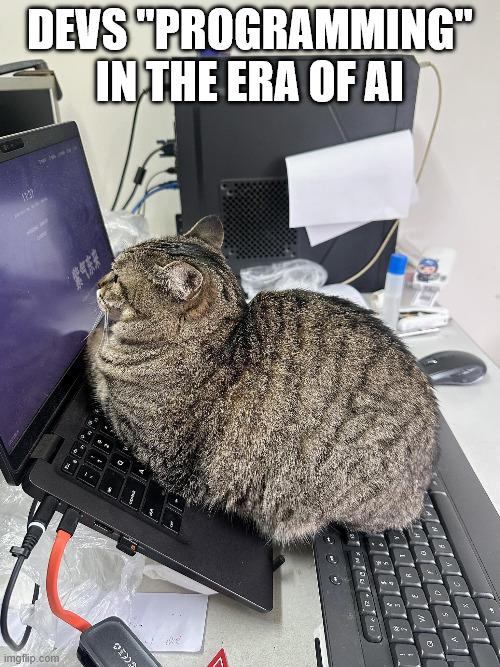
So you're telling me that typing "please write me a function that sorts an array" into ChatGPT makes you an engineer now? Because by that logic, everyone who's ever pressed buttons on a microwave is basically a physicist studying electromagnetic radiation and molecular excitation. The AI gold rush created this beautiful new job title where people get paid six figures to essentially be really good at asking questions. Meanwhile, actual engineers spent years learning data structures and algorithms, only to watch someone type "make it more professional" and call it a day. Don't get me wrong—prompt engineering is a real skill. But let's be honest: we're all just one well-crafted sentence away from being microwave button physicists ourselves.

Unit Test The Code

Unit Test The Code
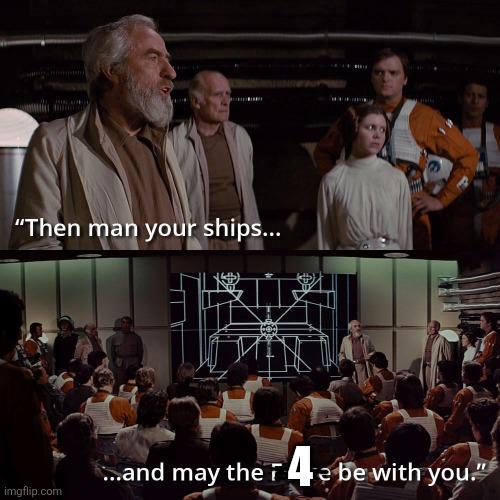
When your brain tries to assemble the phrase "unit test the code" but keeps getting confused like it's solving a cryptic puzzle. You start with "UNIT" and "TEST" and "THE CODE" as separate entities, then try combining them into "UNIT TEST THE CODE" which sounds reasonable... until someone suggests "MANUALLY TEST THE CODE" and suddenly everything clicks. It's like when you're writing tests and realize you've spent 2 hours setting up mocks and fixtures when you could've just clicked the button yourself and been done in 30 seconds. The eternal struggle between doing things the "proper" way and the way that actually ships features. Your TDD-obsessed tech lead is crying somewhere.

Literally

Literally
Backend devs are out here cooking over literal fires in the trenches, debugging race conditions and optimizing database queries at 3 AM. Frontend gets the fancy restaurant with ambient lighting and Instagram-worthy aesthetics. Meanwhile, APIs? They're the impeccably dressed waitstaff making sure everything flows smoothly between the chaos and the glamour. The accuracy is painful. Backend is where the real work happens—messy, unglamorous, and absolutely critical. Frontend is all polish and presentation. And APIs? They're literally just serving data back and forth with a smile, making both sides look good while doing all the heavy lifting in between. REST in peace to anyone who's had to maintain all three.

POV Claudeopus

POV Claudeopus
You ask Claude to say "Hi" and it gives you a dissertation on greeting etiquette across 47 cultures. You ask for "Hello" and suddenly it's writing you a novel about salutations. But the real kicker? That smug little "*Used 20% context*" notification while you're sitting there with your 200k token window wondering why your simple request just burned through enough tokens to store the entire Lord of the Rings trilogy. Claude's out here treating every prompt like it needs a PhD thesis response, casually munching through your context window like it's an all-you-can-eat buffet. Meanwhile you're just trying to get a basic response and the model's already planning its retirement with your token budget.

Beelink Mini PC AMD Ryzen 5 5625U (up to 4.3GHz, 6C/12T), Mini Computers 16G DDR4 RAM 480GB M.2 2280 NVME SSD, 4K Triple Display/WiFi6/BT5.4/2.5G LAN

Beelink Mini PC AMD Ryzen 5 5625U (up to 4.3GHz, 6C/12T), Mini Computers 16G DDR4 RAM 480GB M.2 2280 NVME SSD, 4K Triple Display/WiFi6/BT5.4/2.5G LAN
【AMD Ryzen 5 5625U Processor】Beelink SER5 Mini PC equipped with AMD Ryzen 5 5625U six cores and twelve threads processor, adopt WiFi 6 (802.11ax) wireless connection technology, reliable and efficien…

When I No Longer Trust My Own Code

When I No Longer Trust My Own Code
You know that feeling when you change a single variable name and suddenly you're hovering over the "Run" button like it's a nuclear launch code? That nervous sweat, the shaky finger, the internal monologue going "please don't explode, please don't explode..." It's that beautiful moment when you've been burned so many times by seemingly innocent changes that cascade into production-destroying disasters. Changed one CSS class? Better treat it like defusing a bomb. Fixed a typo? Time to panic like you're about to trigger Skynet. The best part? The code was working fine five minutes ago. You literally just renamed a variable from "data" to "userData" and now you're questioning your entire career choice. Trust issues aren't just for relationships—they're a core programming skill.

The Scariest Part Is How Normal This Has Become

The Scariest Part Is How Normal This Has Become
Welcome to the AI gold rush, where developers are speedrunning their way to productivity by copy-pasting API keys directly into ChatGPT prompts like it's 2010 and we never learned anything about security. The beautiful irony here is that we're using AI to write secure code while simultaneously handing it the keys to our entire infrastructure. It's like hiring a bodyguard and immediately giving them your credit card PIN "just in case they need it." But honestly, who has time for environment variables, secret managers, or basic security hygiene when you can just paste your AWS credentials into a chat window and get your React component generated in 3 seconds? What could possibly go wrong? It's not like these conversations are stored on servers or anything... right? Right? The real kicker is that somewhere, a security engineer just felt a disturbance in the force and doesn't know why.

Only Option Remaining

Only Option Remaining
You know what's scarier than technical debt? Human debt . That one engineer who's been quietly holding the entire infrastructure together with duct tape and midnight cron jobs for three years straight. They gave him a 12-minute farewell meeting during "cost cutting" (translation: the CFO wants a new yacht), and exactly one week later the payment service starts having a meltdown. Turns out my guy was manually fixing edge-case data corruption every single night for THREE YEARS and nobody noticed. No documentation, no Jira tickets, no Slack mentions. Just pure silent heroism that kept the money flowing. Now he's gone, the payments are broken, and management is shocked—SHOCKED—that firing the person who actually understood the system had consequences. The real kicker? The most dangerous production systems aren't the ones with bad code. They're the ones running on the invisible labor of that one engineer nobody appreciated until they left. Hope that severance package was worth it, because the consulting fees to fix this mess are gonna be 10x his salary.

Why Can't You Write It In The Main Title

Why Can't You Write It In The Main Title
You know that special kind of disappointment when you claim a "free game" only to discover it's actually just cosmetic DLC? That's the digital equivalent of opening a birthday present to find socks. The reward says "007 First Light GeForce Reward" in big letters, but nowhere does it mention it's purely an outfit until you're already emotionally invested. Classic bait-and-switch UX design at its finest. The betrayed cat perfectly captures that moment when you realize you've been bamboozled by misleading product descriptions. Would it have killed them to add "(Outfit Only)" to the title? Apparently yes. Marketing departments and clarity have never been on speaking terms anyway.

VIVO Premium Single 17 to 32 inch VESA Monitor and Touch Screen Desk Stand with Rotating Base, Freestanding Pneumatic Height Adjustable Arm, 12 inch Maximum Screen Height, Black, STAND-V001R

VIVO Premium Single 17 to 32 inch VESA Monitor and Touch Screen Desk Stand with Rotating Base, Freestanding Pneumatic Height Adjustable Arm, 12 inch Maximum Screen Height, Black, STAND-V001R
Fits 17” to 32” Screens: Single freestanding tabletop monitor mount fitting most screens 17” to 32” in size. Give your monitor or touch screen a flexible, sturdy setup that lasts! Note: The maximum c…

Instant Downvote Principle

Instant Downvote Principle
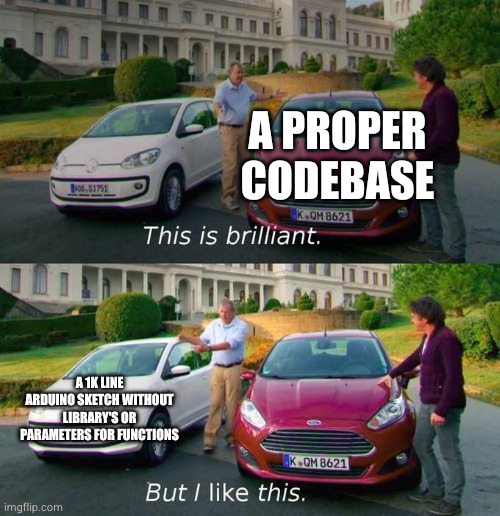
You spend 45 minutes crafting the perfect Stack Overflow question, triple-checking your code formatting, adding a minimal reproducible example, showing what you've already tried... and within 0.3 seconds of posting, someone has already downvoted it without a single comment explaining why. Like, did they even read past the title? Did they just smell fear through their monitor? Stack Overflow has this mysterious breed of user who treats the downvote button like a reflex action. Question appears? Downvote. No explanation needed. They're like code review gatekeepers who've ascended to a higher plane of existence where they can detect "bad questions" through pure intuition. Meanwhile you're sitting there wondering if you accidentally asked how to center a div for the millionth time or committed some other cardinal sin against the programming gods.

Break The Vicious Circle

Break The Vicious Circle
The eternal game of hot potato in software development. PM tells TL to do it ASAP, TL passes it to Dev who's now sitting there wondering why they chose this career, and Dev—exhausted and broken—begs the LLM (ChatGPT/Copilot) to just implement it already. Each person in the chain gets progressively more desperate and defeated, which is basically every sprint ever. The real tragedy? The LLM probably asks "Could you please implement it?" right back to the Dev, completing the circle of suffering. Nobody actually writes code anymore; we just pass the responsibility around until someone breaks down and opens their IDE at 2 AM.

I Finally Upgraded

I Finally Upgraded
Peak developer energy right here. Someone slapped an Intel Core Ultra 7 vPro sticker next to what appears to be a McDonald's sticker that's been through several wash cycles and possibly a house fire. Nothing says "professional development machine" quite like pairing enterprise-grade specs with fast food branding. The real upgrade isn't the processor—it's the commitment to the bit. That McDonald's sticker has seen some things. It's weathered, battle-scarred, and somehow still clinging to life, much like your production code from 2015 that nobody dares to refactor. Meanwhile, the Intel sticker is pristine and shiny, representing the fleeting hope that new hardware will somehow make your builds faster (spoiler: it won't, you still need to fix that webpack config). This is what peak laptop aesthetics looks like. Forget RGB keyboards and minimalist Apple logos—real developers know that a laptop's power is directly proportional to the number of ironic stickers it carries.