You Are The Client

You Are The Client
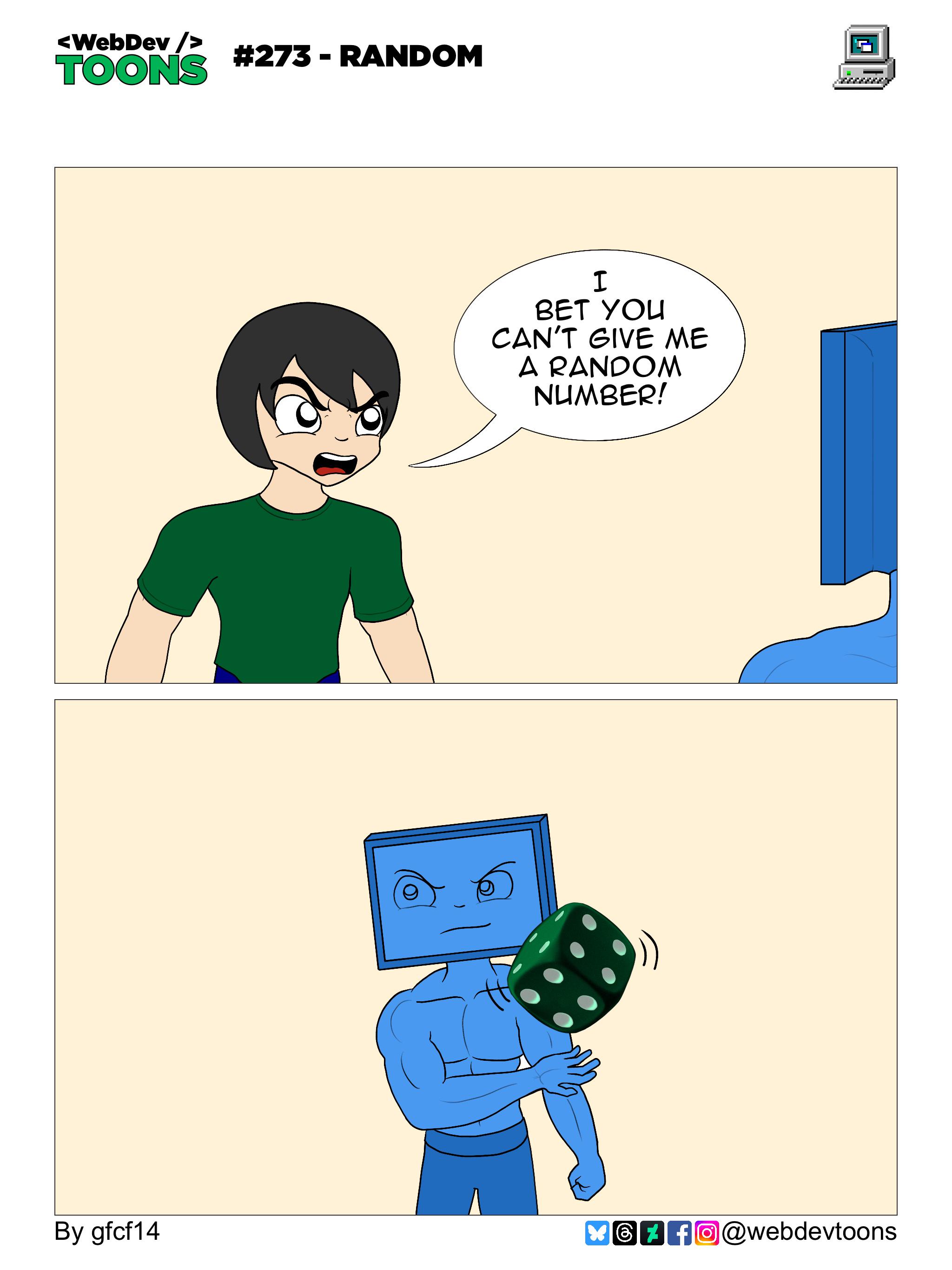
Solo dev life hits different when you realize you're spending hundreds monthly on AWS, Vercel Pro, Supabase, Cursor, Claude Pro, and OpenAI subscriptions... all to build apps that have exactly zero users. You're not running a SaaS business, you're just a very expensive client to every tech company in Silicon Valley. The real product-market fit was the subscriptions you accumulated along the way.

E If There's No Lean Mechanic In The Game, F If There Is

E If There's No Lean Mechanic In The Game, F If There Is
The E key has been the universal "interact" button since the dawn of PC gaming. Press E to open door, press E to pick up item, press E to pay respects. It's muscle memory at this point. But then tactical shooters showed up and decided F should be the lean button. Now you're standing in front of a door, instinctively mashing E like a caveman, while your character just tilts sideways at a 45-degree angle looking like an idiot. Meanwhile, the actual interact key is F, sitting right next to E, mocking you. Game devs really looked at two adjacent keys and said "let's make players choose their personality type." You're either an E person living in peaceful adventure game bliss, or an F person who's been scarred by Rainbow Six Siege and can never go back.

Create New Repo Fixes Everything

Create New Repo Fixes Everything
Why spend 10 minutes learning how to resolve a merge conflict when you can spend 3 hours recreating everything from scratch in a shiny new repository? It's the nuclear option of version control, and honestly? Kind of genius in the most chaotic way possible. Git merge conflicts are supposed to be a normal part of collaboration, but let's be real—those conflict markers <<<<<<< HEAD might as well be hieroglyphics when you're staring at them for the first time. So naturally, the only logical solution is to burn it all down and start fresh. Who needs history anyway? Commit messages are overrated! The sheer panic in that reaction shot perfectly captures the moment your senior dev realizes what you just did to six months of carefully maintained Git history. Oops.

Why Is Software Engineering So Horny?

Why Is Software Engineering So Horny?
Someone finally said it out loud and the entire tech industry is sweating nervously. Frontend, backend, mounting, pulling, pushing, penetration testing... like WHO decided these would be normal professional terms to say in a Monday standup meeting? Imagine explaining your job to your grandma: "Yeah, today I'll be doing some penetration testing on the backend after mounting the frontend." Security engineers really drew the shortest straw here – their entire job description sounds like it needs an NSFW tag. The person replying absolutely understood the assignment and just kept going. Stop teasing? Kiss me already? The confidence! The audacity! Meanwhile the rest of us are just trying to push to master without getting rejected.

These Heroes Are The Real Ones

These Heroes Are The Real Ones
You know what's beautiful? When a senior dev shields their junior from the absolute chaos raining down from management, customers, and missed deadlines. While the Sr. Dev is out here taking arrows like a tank in full armor—dealing with complaints about velocity, feature creep, and that one customer who thinks their bug is literally bringing down civilization—the junior dev gets to just... code. That simple "Nice PR. You are doing great so far!" is doing more heavy lifting than any sprint retrospective ever could. It's not just positive reinforcement; it's creating a safe space where juniors can actually learn without getting traumatized by the business side of software development. The senior is basically saying "I got the politics, you got the semicolons." Real leadership isn't about delegating stress—it's about absorbing it so your team can focus on what matters. And honestly? That's the difference between a senior developer and a senior developer.

When Even CS2 Modders Can Prevent Wall-Hacking By Just Following The Basic Rule: "Never Trust The Client"

When Even CS2 Modders Can Prevent Wall-Hacking By Just Following The Basic Rule: "Never Trust The Client"
Oh, the ABSOLUTE TRAGEDY of watching billion-dollar game studios reject basic security principles like they're allergic to common sense! Here we have CS2 modders—literal hobbyists working in their spare time—who somehow figured out that if you don't send wall position data to the client, players can't wallhack. Revolutionary stuff, truly. Meanwhile, AAA game studios are out here like "nah, let's just install invasive rootkit spyware on players' PCs instead!" Because why implement server-side validation when you can just demand kernel-level access to everyone's computer? It's the digital equivalent of hiring a SWAT team to guard your house instead of just... locking the door. The golden rule "never trust the client" has been around since the dawn of networked computing, but apparently some studios missed that memo and went straight to dystopian surveillance solutions. Chef's kiss to the modders who are out here doing it right while the pros fumble the bag spectacularly.

I See You Bro...

I See You Bro...
Steam's notification system is basically a snitch with perfect timing. Your buddy just opened "Spacewar" for the 47th time this month, and you both know exactly what's happening here. For the uninitiated: "Spacewar" is the legendary cover app that appears when someone launches a... let's say "alternative version" of a game through certain methods. It's the digital equivalent of your friend saying they're "just studying" while you can clearly hear Elden Ring boss music in the background. Steam sees all, tells all, and now you're both in this awkward moment of mutual understanding. The best part? Neither of you will ever mention it, but you'll forever know the truth about his "extensive Spacewar collection."

LG 27US500-W Ultrafine Monitor 27-Inch 4K UHD (3840x2160) HDR10 IPS Borderless Design Reader Mode Flicker Safe Switch App HDMI DisplayPort - White

LG 27US500-W Ultrafine Monitor 27-Inch 4K UHD (3840x2160) HDR10 IPS Borderless Design Reader Mode Flicker Safe Switch App HDMI DisplayPort - White
4K UHD with 1000:1 Contrast Ratio - This UltraFine display with a 1000:1 contrast ratio displays deeper blacks and vivid colors in UHD clarity. With wide viewing angles, it gives creative professiona…

No Bug Too Difficult With The Squad

No Bug Too Difficult With The Squad
Rubber duck debugging just got a whole team upgrade. You've got the senior duck who's seen some stuff, the mid-level duck who's competent but still learning, the junior duck fresh out of bootcamp, and that tiny duck who just started yesterday and is already being asked to fix production. The beauty of rubber duck debugging is that you don't even need the duck to respond—just explaining your broken code out loud to an inanimate object somehow makes the solution obvious. Now imagine having four ducks of varying seniority levels. That's basically your entire dev team during a critical bug fix: everyone gathered around one monitor, nodding thoughtfully, while the person typing frantically explains why the null pointer exception makes no sense. Plot twist: the tiny duck spots the missing semicolon first.

Adult Database

Adult Database
Nothing says "mature enterprise application" quite like requiring PostgreSQL 18+ access. You know, the version that doesn't exist yet since we're currently at PostgreSQL 16. Either this project is so cutting-edge it's time-traveling, or someone's README is living in a very optimistic future. The Rust toolchain requirement is appropriately stable though, so at least half the prerequisites are grounded in reality. Props for the age-gating on databases—wouldn't want any underage MySQL instances sneaking in.

Five Years Of Loyalty Lol

Five Years Of Loyalty Lol
Nothing says "thanks for your dedication" quite like getting replaced by a shiny new tool that's been around for 6 months. Your senior dev who knows the entire codebase inside out, survived three major refactors, and can debug production issues blindfolded? Yeah, the founder's more interested in that hot new AI that hallucinates code and confidently suggests importing libraries that don't exist. The real kicker? That loyal coder probably spent the last year training the AI on the company's codebase. Galaxy brain move right there. It's like spending five years building someone's dream, only to watch them run off with a chatbot that can't even pass a basic code review without suggesting you install npm packages from 2015. Pro tip: Job hopping every 2 years isn't disloyalty—it's pattern recognition.

Real

Real
Ah yes, the classic childhood logic that somehow made perfect sense at the time. Delete literally everything except the pretty icons because surely those 50KB of PNGs are what's hogging all the disk space, not the actual game executable and assets. The confidence with which 11-year-old you approached system administration is both terrifying and hilarious. Bonus points if you then wondered why the game wouldn't launch anymore and just reinstalled the whole thing, defeating the entire purpose. Peak problem-solving skills right there.

What Do We Say To Code Without Tests

What Do We Say To Code Without Tests
That satisfying moment when your PR gets blocked because you thought you could sneak in code without tests. The CI/CD pipeline becomes your passive-aggressive coworker who just won't let it slide. The developer's wearing their "test hat" (literally) and channeling their inner code reviewer energy with that stern "I require tests" speech bubble. Meanwhile, their shirt just says "test shirt" because apparently we're going full method actor on testing enforcement here. Branch protection rules doing exactly what they're supposed to do: keeping untested garbage from polluting main. Sure, you could override it with admin privileges, but then you'd have to live with the shame and the inevitable production bugs. Choose wisely.