

Biblically Accurate Java Class

Biblically Accurate Java Class
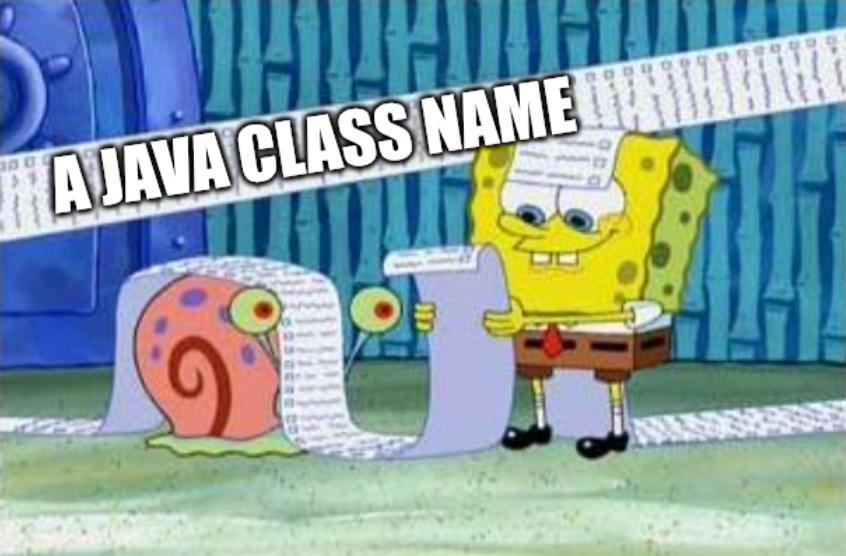
Enterprise Java developers looked upon the inheritance hierarchy and saw that it was deeply nested, and they said "it is good." Just like those biblically accurate angels with their infinite eyes and spinning wheels of fire, this Spring Boot controller class comes with an inheritance chain so long it could trace its ancestry back to the Big Bang. Seven layers of abstraction deep, implementing approximately 47 interfaces (give or take a dimension), because why have a simple REST controller when you can have ControllerEndpointHandlerMapping that inherits from classes with names longer than a CVS receipt? The "Aware" interfaces at the bottom are the cherry on top—your class needs to be aware of literally everything in the Spring ecosystem. ServletContextAware? Check. EmbeddedValueResolverAware? Obviously. At this point, the class is more aware than a meditation guru. This is what happens when you let enterprise architects cook without supervision.

Teaching Python

Teaching Python
Guy's literally teaching Python to pythons. The students are attentive, coiled up on the floor, probably taking notes in their own way. Meanwhile the instructor is standing on a bucket because even he knows better than to get too close to his audience during office hours. The laptop's there for remote learning support, naturally. Props to whoever decided the best way to teach a programming language named after Monty Python was to use actual reptiles. The commitment to the bit is chef's kiss.

Optimization Pain

Optimization Pain
You've already achieved logarithmic time complexity—literally one of the best performance tiers you can get for most algorithms. You're sitting pretty with your binary search or balanced tree traversal. And then the interviewer, with the audacity of someone who's never shipped production code, asks if you can "optimize it further." Brother, what do you want? O(1)? Do I look like I can predict the future? Should I just hardcode the answer? The only thing left to optimize is my patience and your expectations. Fun fact: O(log n) is already considered optimal for many search and divide-and-conquer problems. Going from O(log n) to O(1) usually requires either massive space trade-offs or a complete rethinking of the problem. But sure, let me just casually break the laws of computational complexity real quick.

Journalists Having Bad Ideas About Software Development

Journalists Having Bad Ideas About Software Development
So a tech journalist just suggested that open source should "ban itself" in certain countries based on geopolitics. That's like suggesting gravity should stop working in specific time zones because of trade disputes. The entire point of open source is that the code is, well, open . It's publicly available. You can't "ban" something that's already distributed across millions of repositories, forks, and local machines worldwide. Even if you deleted every GitHub repo tomorrow, the code would still exist on countless hard drives, mirrors, and archive sites. Trying to geofence open source is like trying to un-ring a bell or put toothpaste back in the tube. The MIT license doesn't come with geographical restrictions for a reason. That's literally the opposite of how information distribution works on the internet. But hey, at least we got a solid Boromir meme out of someone's fundamental misunderstanding of software licensing and distribution.

Passed The Phishing Test

Passed The Phishing Test
The ultimate security strategy: if you don't read any emails, you can't fall for phishing. Your boss thinks you're a cybersecurity genius with impeccable threat detection skills, meanwhile your Outlook has been frozen since the Bush administration and you've been communicating exclusively through Slack DMs and hallway ambushes. Zero-click vulnerability? More like zero-open policy. Can't get compromised if you've mentally checked out of corporate email entirely. The IT security team would be horrified if they knew, but hey, technically you passed their test. Task failed successfully.

Confusion Of Da Highest Orda

Confusion Of Da Highest Orda
Congratulations, you've created a monster. What started as innocent sarcasm has now spiraled into a beautiful nightmare where your friend is writing code that looks like let numeroDeUsuarios = 42; while reading JavaScript documentation in English. The cognitive dissonance must be LEGENDARY. Imagine debugging sessions where half the codebase is in Spanish and the other half is whatever language autocomplete decided to vomit out that day. Stack Overflow answers? Useless. Error messages? In English. Variable names? ¡En español, amigo! Your friend has accidentally invented the most chaotic bilingual programming experience known to humanity. The real tragedy? He probably thinks he's doing it RIGHT because Duolingo gave him a little green owl of approval. Someone stop him before he starts naming functions obtenerDatosDelServidor() and wonders why his team wants to quit.

Modern Devs Be Like

Modern Devs Be Like
The accuracy is devastating. Modern developers have basically turned into professional copy-paste artists who panic the moment their WiFi drops. "Vibe coding" and "jr dev" are having the time of their lives in the shallow end, while "reading doc" is drowning in the background because nobody actually reads documentation anymore—why would you when Stack Overflow exists? But the real kicker? "Debugging without internet" is literally at the bottom of the ocean, dead and forgotten. Because let's be honest, trying to fix bugs without Google is like trying to perform surgery blindfolded. No Stack Overflow? No ChatGPT? No frantically searching "why is my code broken"? You might as well be coding in the Stone Age. The evolution is complete: we went from reading manuals to Googling everything to now just asking AI to write our code. Documentation? That's boomer energy. Debugging offline? That's a skill your ancestors had.

Timeframe Is Whack

Timeframe Is Whack
Project manager asks for an estimate. You know it'll take 3 months minimum, but you also know they want to hear "next week." So you do what any rational developer does: give them a range so absurdly wide it's basically useless. An hour to 11 months? Sure. Could be done by lunch, could be done when your kid graduates middle school. Both equally plausible depending on how many "quick changes" they throw in after you start. The PM will hear "an hour" and put it in the sprint. You'll be there in 11 months explaining why authentication "took longer than expected."

Replace Github

Replace Github
Someone just declared war on GitHub and the official GitHub account swooped in with the most passive-aggressive "please share the repo link bestie 👀" energy imaginable. It's giving "I dare you to actually build something better" vibes. The sheer confidence of GitHub basically saying "go ahead, we'll wait" while sitting on their throne of 100+ million repositories is CHEF'S KISS. They know nobody's replacing them anytime soon, and they're not even trying to hide it. The ratio of engagement on their reply? *Devastating*. GitHub really said "talk is cheap, show me the code" and the internet collectively lost it.

Looks Good To Me

Looks Good To Me
The inverse relationship between thoroughness and effort. Someone submits a 2-line bugfix? You'll scrutinize every character, suggest refactoring the entire module, and debate variable naming for 20 minutes. Someone drops a 47-file PR that touches half the codebase? "LGTM" and you're back to scrolling Reddit. It's not laziness—it's self-preservation. Nobody has the mental bandwidth to review a small country's worth of code changes, so we just trust that someone else will catch the bug that inevitably ships to production next Tuesday.

Is Anyone Surprised

Is Anyone Surprised
So you've got 18 years of experience, you're a senior dev, you've seen things, you've debugged nightmares, you've survived legacy codebases... and then someone has the AUDACITY to ask what your actual skill level is. The answer? "No idea." Because honestly, after nearly two decades of coding, you've reached that enlightened state where imposter syndrome and god complex somehow coexist in perfect harmony. You can architect entire systems in your sleep but also Google "how to center a div" every other Tuesday. The duality of senior devs is truly magnificent. The real skill level? Somewhere between "I can build anything" and "I have no clue what I'm doing" depending on which hour of the day you ask.

The Lore Of A Vibe Coder

The Lore Of A Vibe Coder
The AI hype cycle speedrun, perfectly captured in four stages of clown makeup. Started with the promise that AI would revolutionize everything, got seduced into thinking you could skip fundamentals and just prompt your way to a senior dev salary. Then reality hit: those "free" AI tools either got paywalled harder than Adobe Creative Cloud or started running slower than a nested loop in Python. Now you're sitting there with zero transferable skills, a LinkedIn full of AI buzzwords, and the crushing realization that "prompt engineer" isn't actually a career path. The kicker? While you were vibing, the devs who actually learned their craft are still employed. Turns out you can't Ctrl+Z your way out of not knowing how a for-loop works.