

Four Years Of Coding To Become A Prompt Engineer

Four Years Of Coding To Become A Prompt Engineer
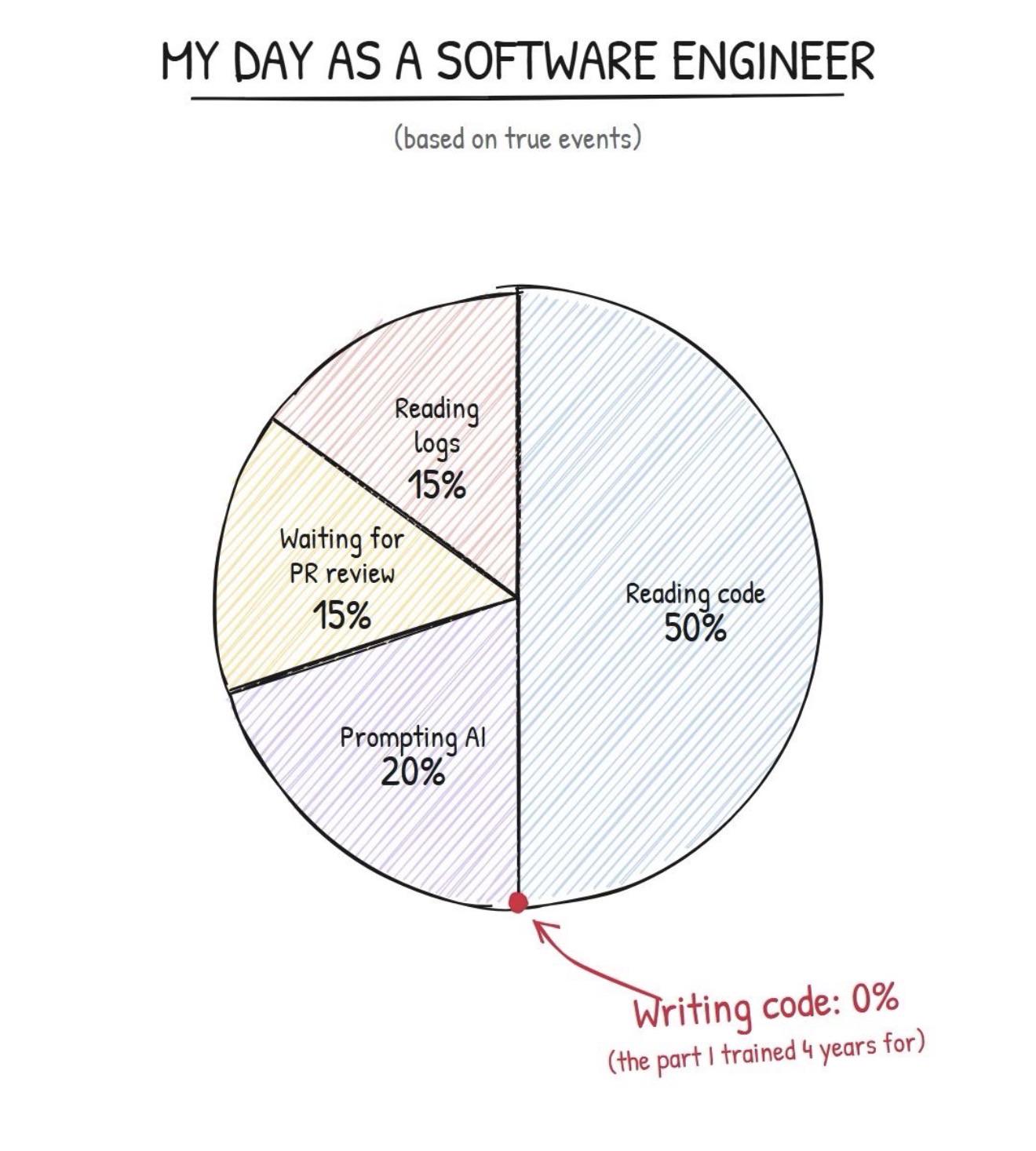
Spent four years grinding through algorithms, data structures, and design patterns only to realize your actual job is 50% reading other people's spaghetti code, 15% staring at logs trying to figure out why production is on fire, 15% waiting for Karen from QA to approve your PR, and 20% crafting the perfect prompt to get ChatGPT to write the code you were supposedly trained to write. Writing code? That's a solid 0%. You know, the thing you actually went to school for. But hey, at least you're really good at asking AI politely to do your job now. Your CS degree is basically an expensive prompt engineering certification at this point. The real kicker is that "based on true events" subtitle. We all know it's true, and that's what hurts the most.

Tech Debt Coming Due

Tech Debt Coming Due
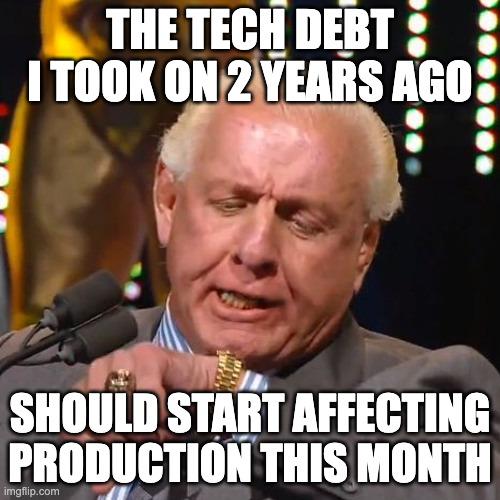
You know that "temporary" workaround you slapped together two years ago? The one with the hardcoded values, the nested if-statements that go 47 levels deep, and the comment that says "TODO: Fix this properly later"? Yeah, that one. Turns out "later" has an expiration date, and it's rapidly approaching like a freight train with faulty brakes. The sweating intensifies as you realize that quick hack you wrote when the product manager was breathing down your neck is now so deeply embedded in the codebase that removing it would require a complete architectural overhaul. The interest on that tech debt has been compounding silently in the background, and now it's about to crash production harder than a null pointer exception in a critical payment system. Fun fact: Studies show that tech debt can consume up to 40% of development capacity over time. So basically, you're spending almost half your time paying interest on shortcuts from the past. Financial advisors hate this one trick!

Fuck Disk Fragmentation

Fuck Disk Fragmentation
When the word "FRAGMENTATION" itself is literally fragmented with every letter in a different color and style, you know someone's been staring at their defrag tool for way too long. The visual joke writes itself—the text is as scattered as your files after running a database for 3 years without maintenance. That defrag icon at the bottom? That's the real MVP here. Back in the day, watching that little visualization rearrange colored blocks was peak entertainment. Better than Netflix, honestly. Your homies (files) scattered all over the disk, and defrag is the only thing bringing the squad back together. Fun fact: SSDs basically killed the defrag industry overnight. No moving parts = no fragmentation problems = one less thing to blame when your code runs slow. Now we just blame Docker.

Tough Time

Tough Time
Kid wants a dragon, Santa says be realistic, kid settles for a gaming PC. Santa asks what color dragon they want. You know the GPU market's in shambles when even fictional omnipotent beings find custom-built gaming rigs more mythical than fire-breathing lizards. At least dragons don't require firmware updates or dealing with scalpers.

Queue Is Always Long

Queue Is Always Long
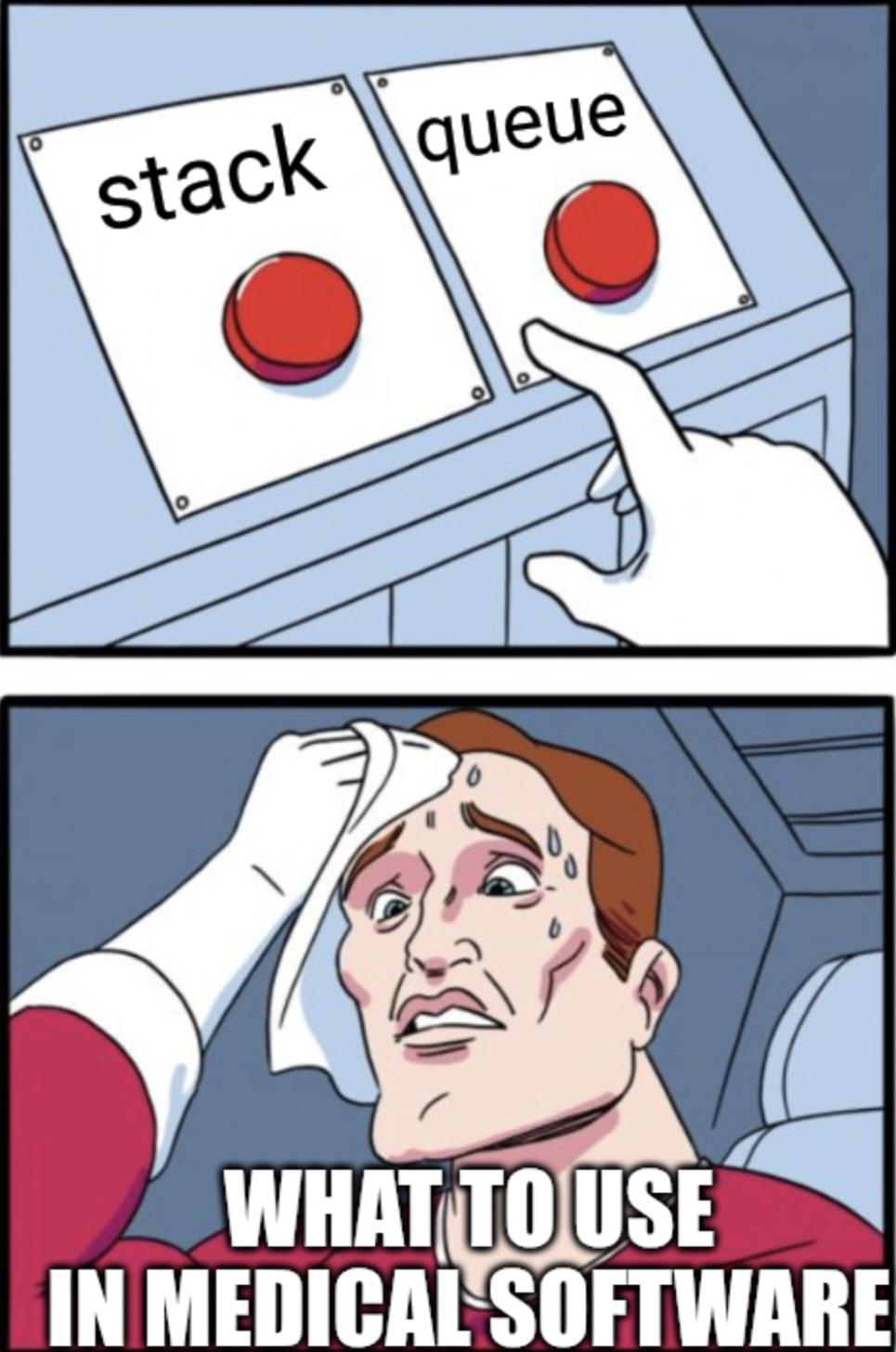
Two fundamental data structures walk into a medical software meeting. Stack sits there all innocent with its LIFO operations, while Queue's just chilling with its FIFO vibes. But here's the kicker: in healthcare systems, queues are everywhere . Patient waitlists? Queue. ER triage? Queue. Lab test processing? Queue. Appointment scheduling? You guessed it—queue. Meanwhile, stack's over there like "but I'm great for undo operations!" Sorry buddy, when you're managing hundreds of patients waiting for treatment, FIFO fairness beats LIFO chaos every single time. The poor developer's sweating because they know they're about to implement their 47th queue-based system this month while stack collects dust in the corner handling function call recursion. Pro tip: If your medical software uses a stack for patient processing, please seek immediate help. Last in, first out doesn't exactly scream "ethical healthcare."

YIHUA 926 III 60W Digital Display Soldering Iron Station Kit w 2 Helping Hands, 6 Extra Iron Tips, Lead-Free Solder, Solder Sucker, S/S Tweezers, °C/ºF Conversion, Auto Sleep & Calibration Support

YIHUA 926 III 60W Digital Display Soldering Iron Station Kit w 2 Helping Hands, 6 Extra Iron Tips, Lead-Free Solder, Solder Sucker, S/S Tweezers, °C/ºF Conversion, Auto Sleep & Calibration Support
Fast Heating & Adjustable Temperature - This digital soldering station heats up fast and has a wider temperature range (194℉~896) to choose from. The soldering iron can stay at the set temperature co…

Looks Good To Me Bro

Looks Good To Me Bro
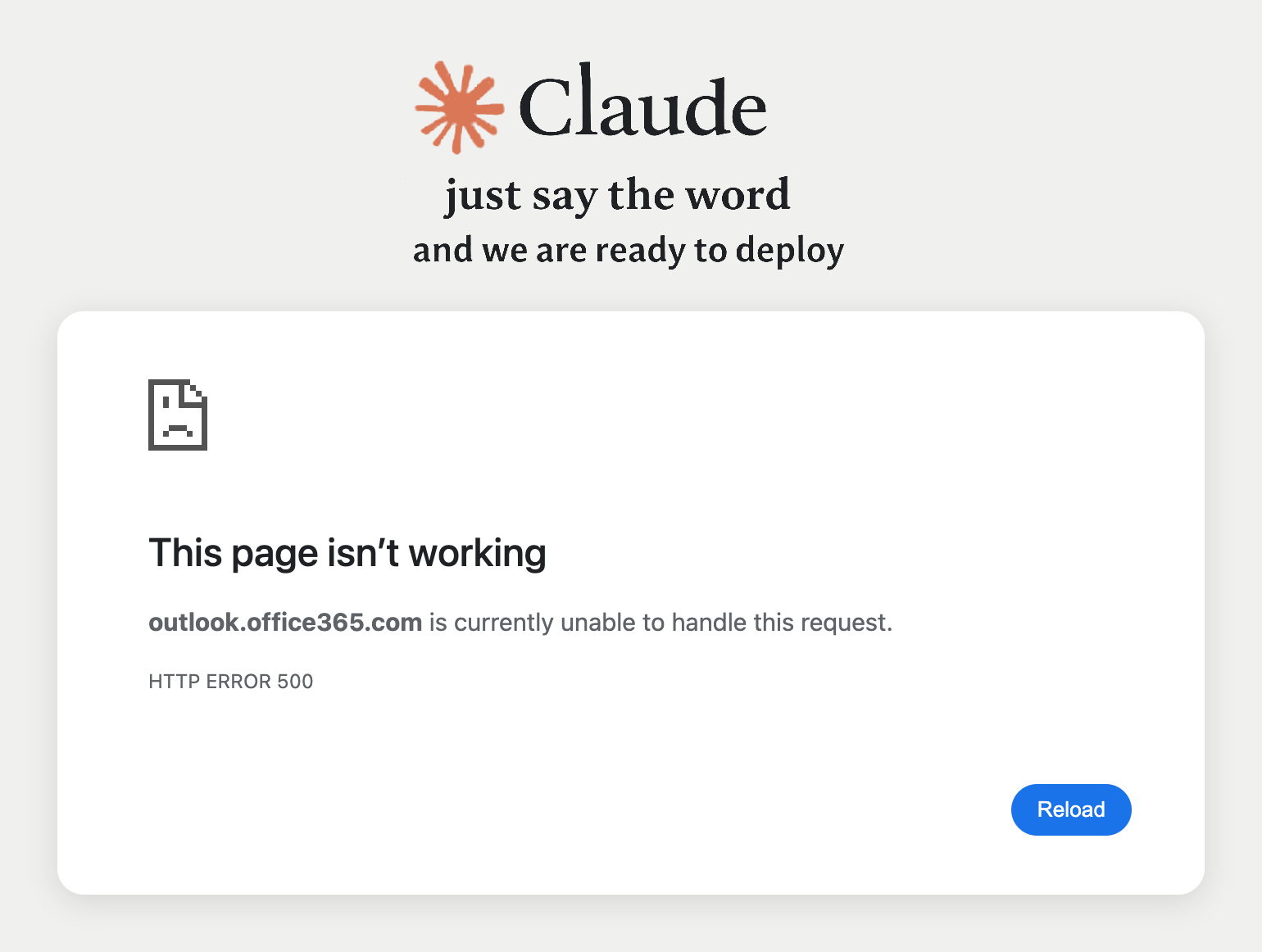
When your AI pair programmer is so confident about the code quality that it's ready to ship straight to production, but then outlook.office365.com decides to throw a casual HTTP 500 error. Nothing screams "enterprise-grade reliability" quite like Microsoft's own services demonstrating exactly why you should have proper error handling and maybe, just maybe, a staging environment. Claude's basically standing there like an overly enthusiastic junior dev who rubber-stamped the PR without actually testing anything. "Just say the word and we are ready to deploy" — yeah, because what could possibly go wrong when you skip QA, integration tests, and that whole "does it actually work" phase? The irony of an AI suggesting immediate deployment while showing a screenshot of a broken Microsoft service is *chef's kiss*.

No Employed Dev Still Write Code By Hand

No Employed Dev Still Write Code By Hand
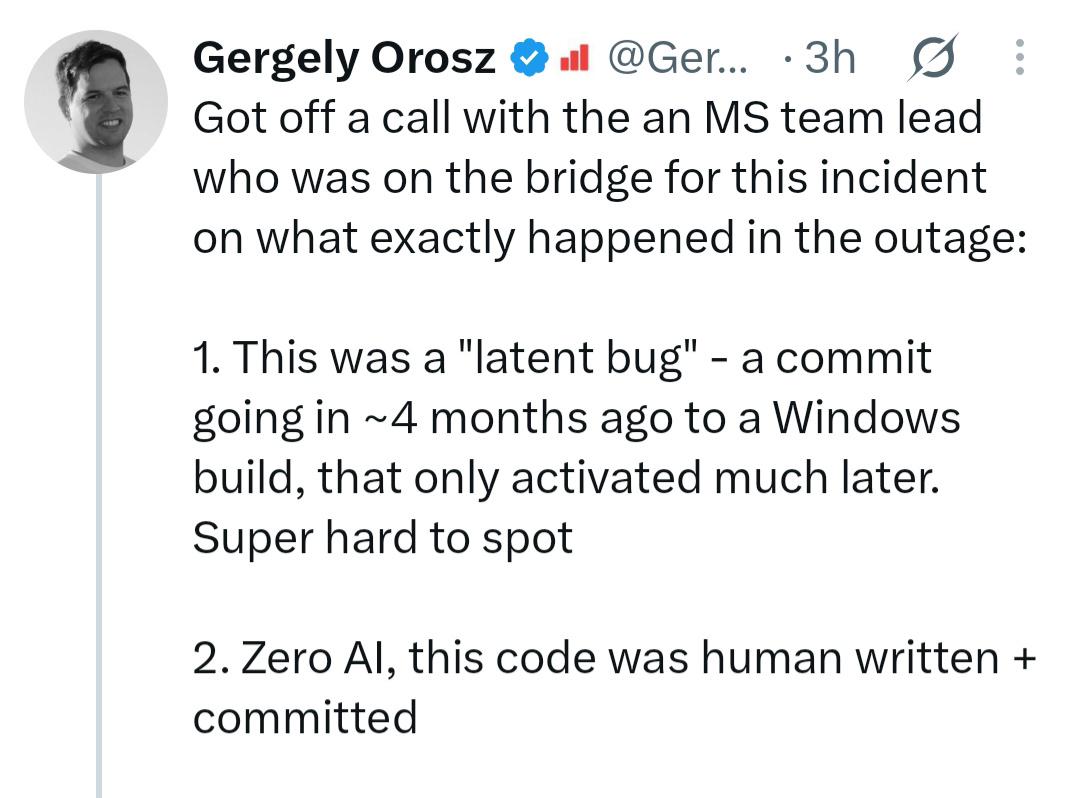
So Microsoft had an outage and the team lead's defense was basically "yeah this was a latent bug from 4 months ago, super sneaky" and "don't worry, a REAL HUMAN wrote this code, not AI." Like sir, that's not the flex you think it is? The fact that you had to clarify it wasn't AI-generated is absolutely sending me. We've reached peak timeline where "I promise a human wrote this garbage" is now a legitimate excuse for production bugs. The bar is literally in hell and we're still somehow limbo dancing under it.

Modern Software Engineering

Modern Software Engineering
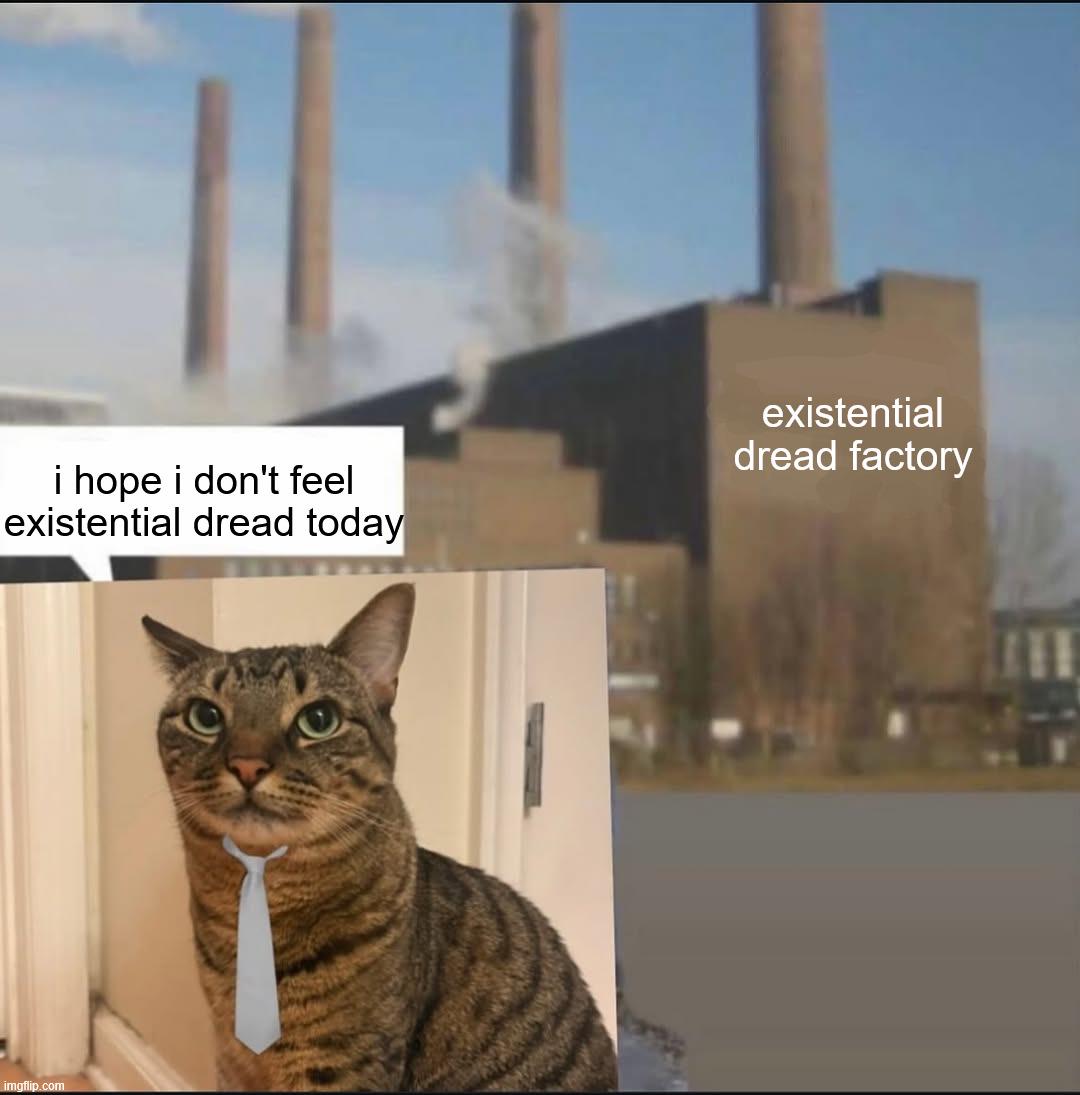
You know your codebase has reached peak architectural sophistication when you've got an entire factory whose sole purpose is to manufacture existential dread. Nothing says "enterprise-grade software" quite like layers upon layers of abstraction patterns that make you question the very nature of your existence every time you need to add a simple feature. The business cat in his little tie perfectly captures that Monday morning feeling when you open up the project and remember you're maintaining code with 47 different factory patterns, each one spawning another layer of philosophical despair. Who needs therapy when you can just inject your dependencies through a singleton factory builder provider factory? The best part? Someone definitely got promoted for architecting this masterpiece of over-engineering.

Hello Microsoft 364

Hello Microsoft 364
Someone at Microsoft clearly forgot that semaphores are concurrency primitives, not subscription tiers. The joke here is that Microsoft 365 goes down so frequently that it only works 364 days a year—one day short of the promised uptime. The semaphore reference is chef's kiss because in operating systems, a semaphore is literally a synchronization mechanism that controls access to shared resources. So yeah, maybe Microsoft just needs ONE semaphore to prevent everyone from accessing their servers simultaneously and crashing them. The "how much could it cost, ten dollars?" energy perfectly captures enterprise IT budgets casually throwing billions at cloud infrastructure while still delivering 99.726% uptime instead of the mythical 99.9% they promised in the SLA.

Not The Same

Not The Same
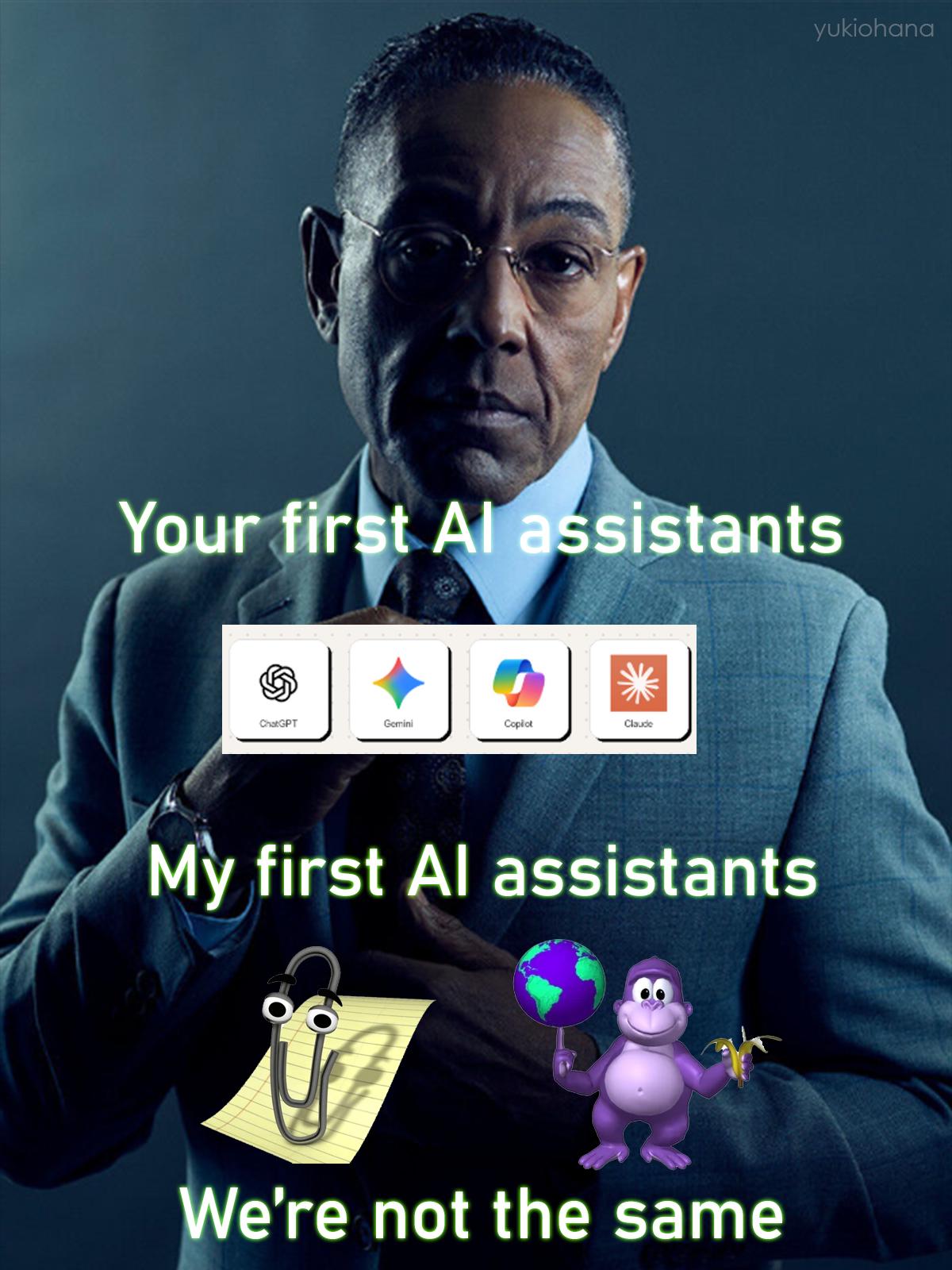
Kids these days get ChatGPT, Gemini, Copilot, and Claude as their first AI assistants. Meanwhile, millennials and Gen X devs had Clippy and Bonzi Buddy. One writes production code, the other asked if you wanted help writing a letter while slowly consuming your CPU cycles and dignity. The gap between generations has never been more pronounced. We learned to code by Googling error messages and dodging purple gorilla malware. They have GPT-4 explaining async/await like a patient therapist. Different eras, different trauma.

Nice Try Youtube

Nice Try Youtube
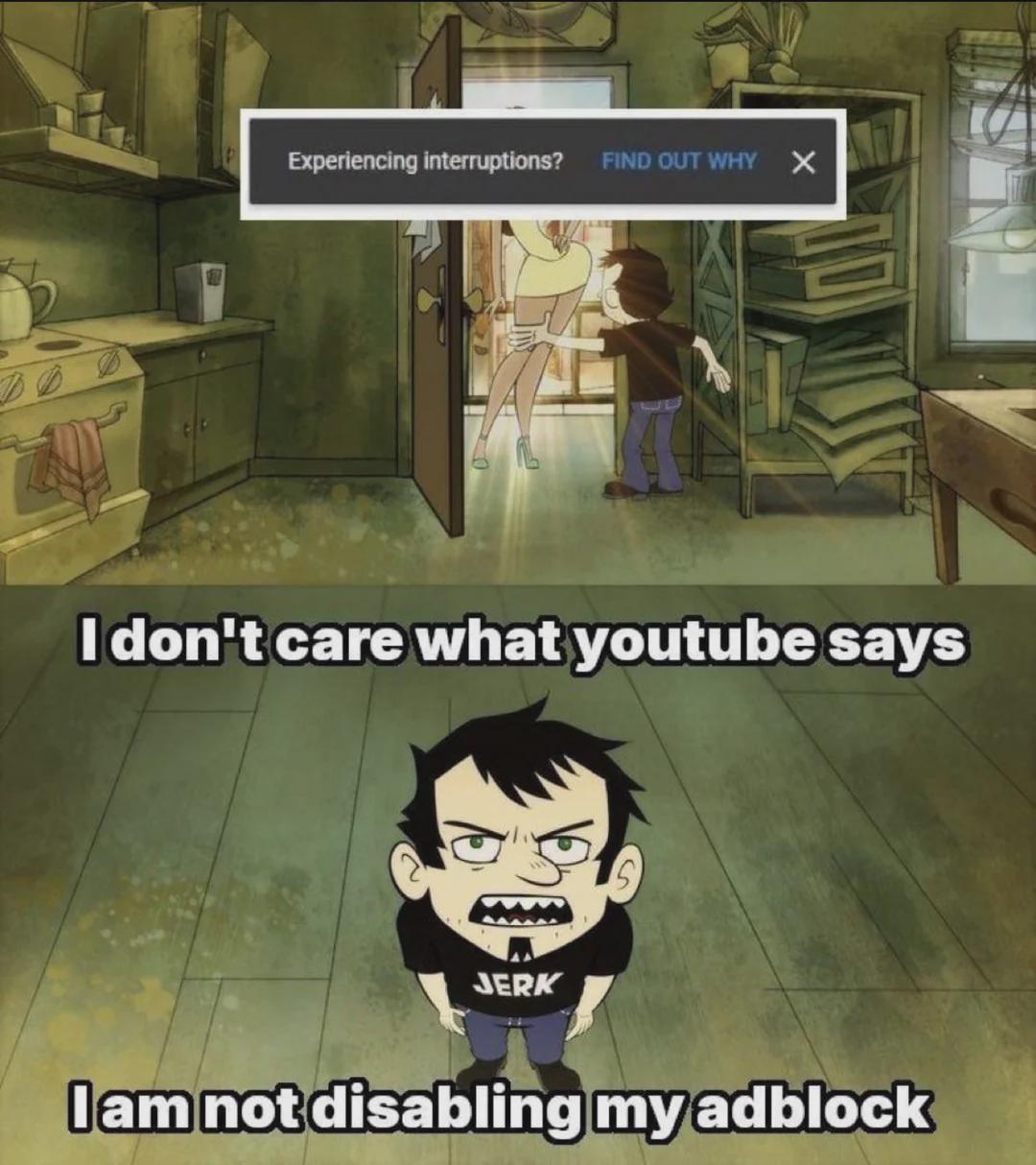
YouTube really thought they could guilt-trip us into disabling our adblockers with that passive-aggressive "Experiencing interruptions?" notification. The audacity. You know what's an interruption? Two unskippable ads before a 3-minute video. The eternal battle between content platforms trying to monetize and users trying to preserve their sanity continues. YouTube's detection systems get smarter, adblockers get craftier, and developers worldwide refuse to watch another NordVPN ad. It's the circle of life, but make it tech.

Behold Google Super Intelligence Overview

Behold Google Super Intelligence Overview
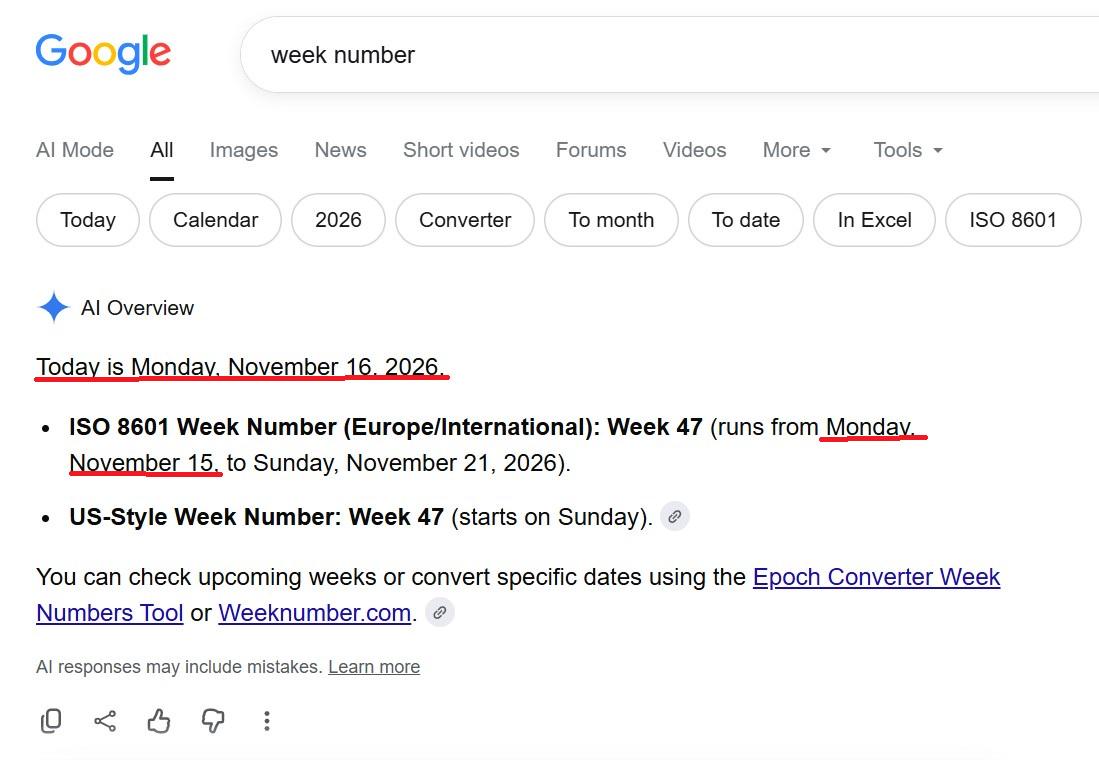
Google's AI just confidently told us that today is Monday, November 16, 2026, and then in the same breath explained that ISO 8601 Week 47 runs from Monday, November 15. You know, that Monday that comes after the other Monday. Time is just a social construct anyway, right? The AI is so powerful it can make November 16 fall on a Monday while simultaneously making November 15 also be a Monday. That's some quantum calendar mechanics right there. Meanwhile, at the bottom, there's a tiny disclaimer: "AI responses may include mistakes." Yeah, no kidding. That's like putting "may contain peanuts" on a jar of peanut butter. The best part? Google gave us filter pills for "Today," "Calendar," "2026," and "ISO 8601" like we're supposed to take this seriously. Nothing screams "super intelligence" quite like basic arithmetic failures wrapped in a slick UI.

Eat Sleep Code Repeat Computer Programming Programmer Ceramic Mug, Black/White

Eat Sleep Code Repeat Computer Programming Programmer Ceramic Mug, Black/White
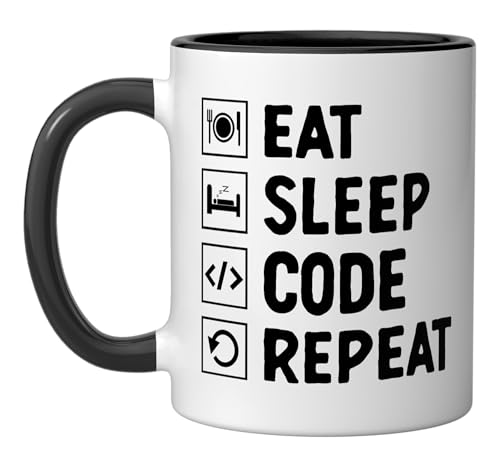
Eat Sleep Code Repeat For A Programmer is perfect for any coder or for programmers who love computer programming language and coding. · This Computer Programming design is perfect for any coder who l…