

Javascript Memes

Ah, JavaScript – the language we all love to hate but can't escape. One minute you're happily coding, the next you're googling 'why is undefined not a function' for the fifth time today. Remember when JS was just for making cute buttons? Now it's running everything from Netflix to your smart fridge. The best part? Explaining to non-coders why '0 == []' is true but '0 == {}' is false without having an existential crisis. If you've ever stared blankly at a screen after npm installed 3,000 packages for a simple tooltip, these memes are your therapy session.

Coding With Eslint

Coding With Eslint
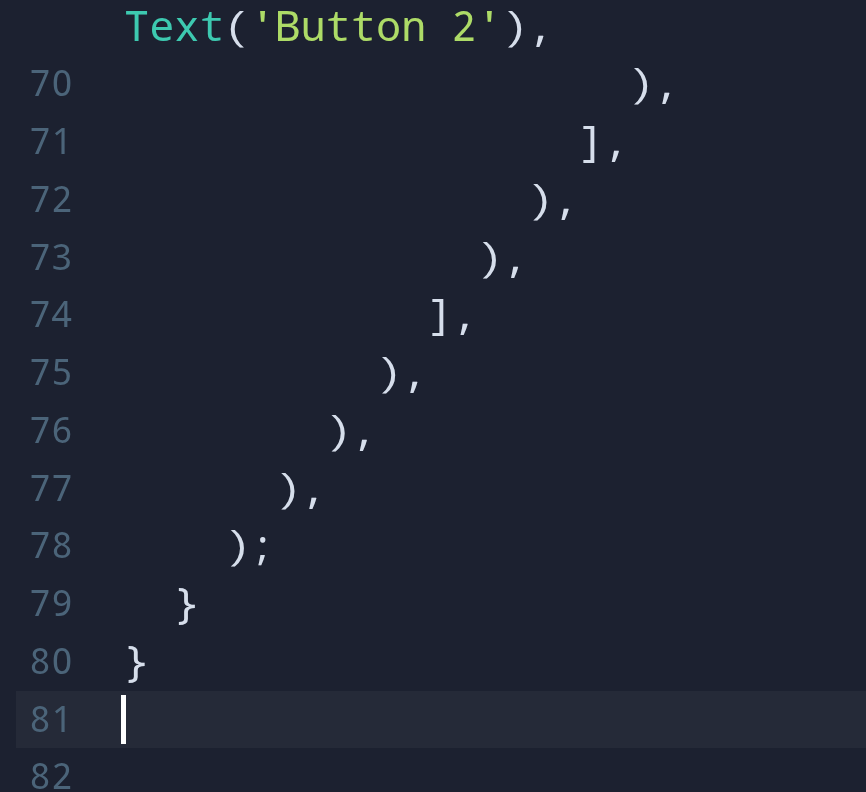
You declare one class for the first time in your life, feeling proud of yourself, and ESLint immediately comes at you with the fury of a thousand linters. "Declared but never used" it screams, as if you weren't planning to use it in literally the next line. But no, ESLint has already judged you, found you wanting, and sentenced you to squiggly red underlines. It's like having a backseat driver who starts yelling before you even put the car in drive.

Dr Blame The Dev

Dr Blame The Dev
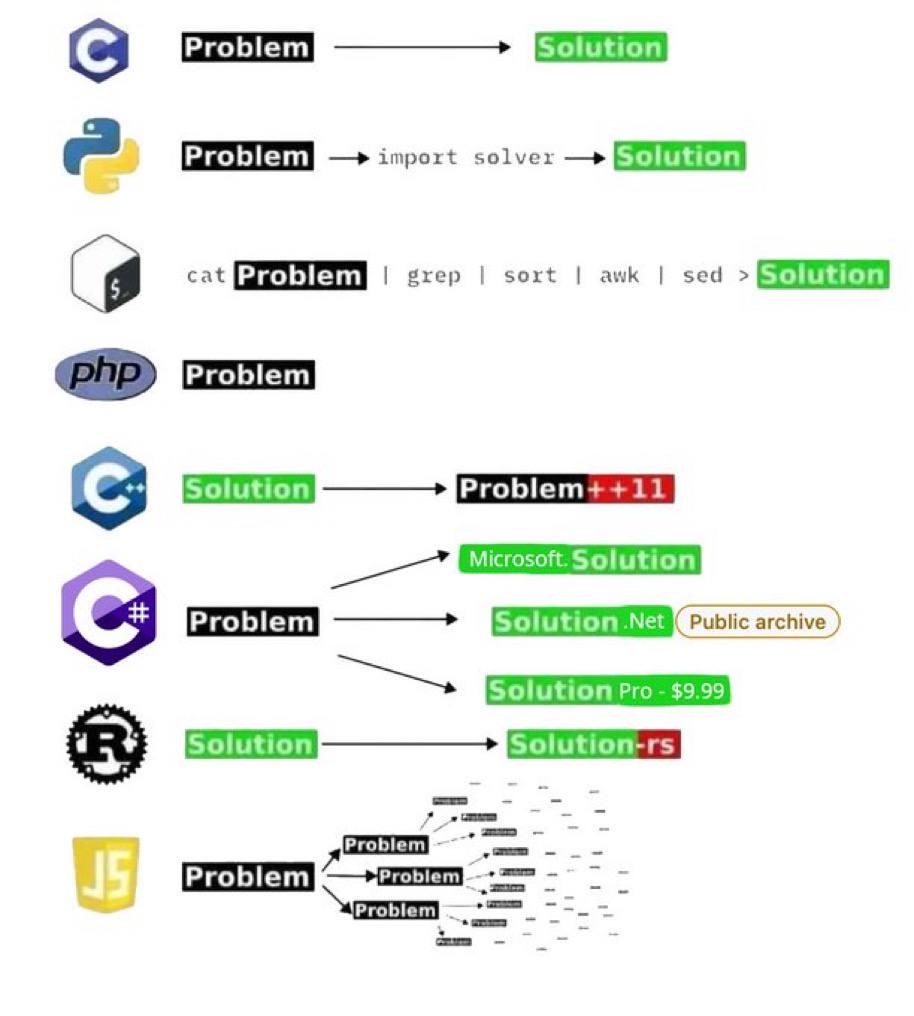
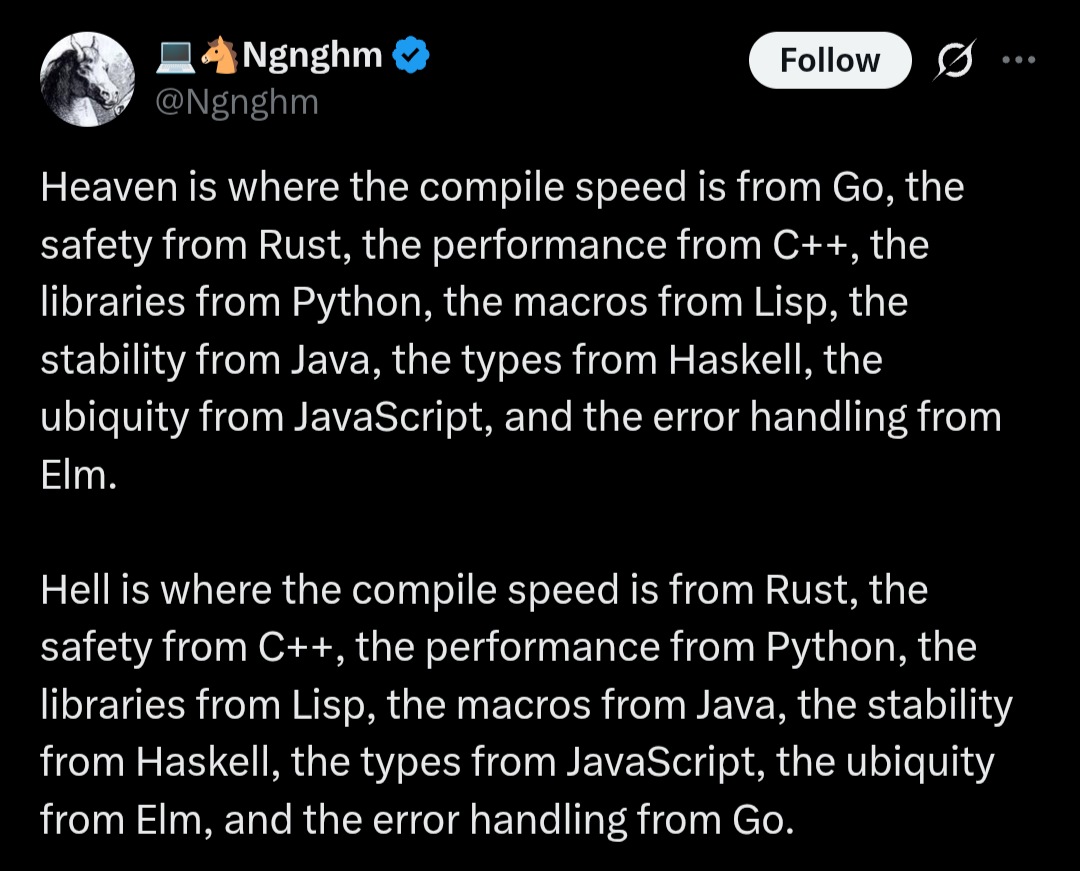
Someone wrote a manifesto about how using C, C++, Python, or vanilla JavaScript in production is basically corporate negligence, advocating for Rust, Go, and TypeScript instead. The reply? "Nonsense. If your code has reached the point of unmaintainable complexity, then blame the author, not the language." Classic developer blame game. The first person is basically saying "your tools are bad and you should feel bad," while the second person fires back with "skill issue, not language issue." Both are technically correct, which makes this argument eternal. The reality? Yeah, modern languages with better type systems and memory safety do prevent entire classes of bugs. But also yeah, a terrible developer can write unmaintainable garbage in any language, including Rust. You can't memory-safety your way out of 10,000-line functions and zero documentation. The real takeaway: if you're shipping production code in 2025 without considering memory safety and type guarantees, you're making a choice. Just make sure it's an informed one, not a "we've always done it this way" one.

Programmers Problems

Programmers Problems
The eternal struggle between American and British English strikes again. You're knee-deep in code, everything's working perfectly, then you spend 2 hours debugging why your CSS isn't applying... only to realize you used "color" in your JavaScript but "colour" in your stylesheet. Or vice versa. The best part? Both spellings look equally correct to your tired brain, so you just sit there questioning your entire existence and career choices. Some say the real enemy isn't semicolons or merge conflicts—it's the Atlantic Ocean and its spelling conventions.

How Explicit Are You

How Explicit Are You
When someone asks how explicit you are with your variable declarations and you respond by declaring a constant integer named FIVE with the value 5... *chef's kiss* 💋 The sheer redundancy! The beautiful, unnecessary verbosity! Why use implicit typing when you can spell out EVERY. SINGLE. DETAIL? It's like writing a novel when a tweet would do, but honestly? The contemplative dog staring into the sunset really captures the existential weight of this life choice. Some people write `const FIVE = 5`, others write `let x = 5`, but you? You're out here declaring `const int FIVE = 5` like you're documenting the laws of mathematics itself. Absolute legend behavior.

Waiting For Zero Days

Waiting For Zero Days
Picture this: It's Christmas Eve, you're cozy by the fireplace, and suddenly you remember you need to install that one npm package for tomorrow's deployment. What could possibly go wrong? Everything. EVERYTHING could go wrong. Because that innocent little package you're installing has decided to bring its entire extended family reunion of dependencies—we're talking hundreds, maybe THOUSANDS of packages flooding into your node_modules like they're storming the Bastille. Your terminal is scrolling faster than a slot machine, and you're just sitting there watching package after package install, each one a potential security vulnerability waiting to ruin your holiday. Meanwhile, Santa's up there on Christmas night, probably also running npm install to manage his naughty/nice list database, experiencing the exact same existential dread. Two forces of nature, united in their shared trauma of dependency hell. The perfect Christmas alliance nobody asked for but everyone in JavaScript land deserves. Fun fact: The average npm package has about 80 dependencies. Merry Christmas, your simple "hello world" app now depends on more code than the Space Shuttle.

Tree Shaking Maybe Works

Tree Shaking Maybe Works
You install one tiny date formatting library and suddenly your node_modules folder is the size of a 747. Then you build your "tiny React app" and somehow it's still pulling in half the internet despite tree shaking supposedly removing unused code. Tree shaking is that magical build optimization that's supposed to eliminate dead code from your bundle. In theory, it only includes what you actually import. In practice? Well, your final bundle is still mysteriously 2MB because some dependency deep in the chain decided to import the entire lodash library for one function. The ratio here is painfully accurate. You start with a massive airplane hangar of dependencies, shake the tree real hard, and end up with... a slightly smaller airplane hangar. But hey, at least webpack says it's optimized.

I Hate How Accurate This Is

I Hate How Accurate This Is
You know you've reached peak programmer when a missing semicolon causes more emotional damage than a breakup. While normal people lose sleep over relationships, we're here at 3 AM staring at our screen like a detective, hunting down that one tiny punctuation mark that's been sabotaging our entire application. The worst part? Your IDE probably highlighted it 47 times, but your brain was too busy being a genius to notice. Four days of debugging, Stack Overflow deep dives, rubber duck conversations, and questioning your career choices... all because of a character that's literally smaller than an ant. Pro tip: The bug is always in the last place you look, which coincidentally is always the first line you wrote.

Junior Dev Job Market In 2025

Junior Dev Job Market In 2025
When you finally finish that coding bootcamp and realize the "entry-level" positions require 5 years of experience with a framework that came out 2 years ago. Dude's literally offering to code HTML for sustenance—not even asking for money, just *food*. The job market has gotten so brutal that junior devs are out here trading their skills for basic survival needs like they're living in a post-apocalyptic barter economy. "Will implement your landing page for a sandwich" is the new LinkedIn headline. The sad part? Someone's probably gonna lowball him and ask if he knows React too.

Just A Simple Boolean Question

Just A Simple Boolean Question
You ask for a simple true or false , and suddenly you're parsing "Yes", "yeah", "Y", "true", "1", "ok", or my personal favorite: "success". The contract was clear—return a boolean. Instead, you get back a string that requires a whole new layer of validation logic. Now you're sitting there writing if (response.toLowerCase() === "true" || response === "1") like some kind of type-system archaeologist. Strong typing exists for a reason, people! The smugness on that kid's face? That's the exact energy of someone who just returned "False" with a capital F from an API endpoint.

Everything Is An Object

Everything Is An Object
JavaScript devs discovering that literally everything inherits from Object.prototype: strings, numbers, booleans, arrays, functions, even null and undefined (well, almost). You think you're working with primitives? Nope, they get auto-boxed into objects the moment you call a method on them. That innocent "hello".toUpperCase() ? Your string just became a String object behind the scenes. JavaScript's prototype chain is like that friend who insists everyone at the party is related somehow. Try typeof null returning "object" and watch the existential crisis unfold. The language took "everything is an object" from Python and Ruby, then cranked it up to eleven with some delightfully weird type coercion sprinkled on top.

Thanks Fellow Devs

Thanks Fellow Devs
Imagine being so financially challenged that your entire tech stack runs on the generosity of strangers who decided to code libraries in their free time. And what's your contribution to these digital saints? A measly GitHub star. Not a donation. Not even a coffee. Just a virtual gold sticker that costs absolutely nothing. Open-source maintainers out here debugging at 3 AM, dealing with entitled issue reports like "it doesn't work pls fix," and getting compensated with... *checks notes* ...internet points. Meanwhile you're building a million-dollar startup on their free labor. The audacity! The shamelessness! The... reality of modern software development! But hey, at least you clicked that star button. That's basically the same as paying rent, right? 🌟

Or Or Oror

Or Or Oror
When you're trying to explain the logical OR operator to someone but they keep saying it wrong, so you just give up and embrace the chaos. Left side: developers losing their minds trying to correct pronunciation. Right side: the zen master who's transcended caring and just calls it "oror" like it's a Pokémon evolution. The beauty here is that no matter how you pronounce it—whether it's "or operator or or," "double pipe," "logical or," or just mashing your keyboard—the compiler doesn't care about your feelings. It evaluates to true either way. The real operator overload is the emotional baggage we carry trying to verbalize symbolic logic. Fun fact: Some languages have both || (logical OR) and | (bitwise OR), which makes this pronunciation nightmare even worse. Good luck explaining "pipe pipe" vs "pipe" in a code review without sounding unhinged.