servers Memes

When The Sleep Servers Are Full

When The Sleep Servers Are Full
Turns out sleep() is actually a cloud service and those 50 million college students who just finished their finals have completely obliterated the infrastructure. Now you're stuck in a queue just trying to get some rest, but the load balancer is crying and the sleep servers are returning 503 Service Unavailable. Should've gone with the premium sleep subscription instead of the free tier. Next time, maybe implement some local caching for your sleep cycles instead of relying on external APIs.

Greeting A CEO

Greeting A CEO
So the Verrus Data Center CEO literally fled a meeting because angry locals showed up with a guillotine. Not a metaphorical guillotine in the budget spreadsheet—an actual French Revolution-style people's blade on wheels. The dude saw it rolling up to Salem city council and noped out faster than a developer seeing "works on my machine" in production. Turns out when you try to build massive energy-guzzling server farms in someone's backyard, they might get a little... stabby? The locals clearly studied their DevOps: if you can't fix it with monitoring and alerts, bring out the deployment guillotine. Ultimate rollback strategy. The best part? He "hastily left" like he was ctrl+z'ing out of a bad git commit. No standup meeting is worth losing your head over, even if your uptime SLA depends on it.

Of Course You Are

Of Course You Are
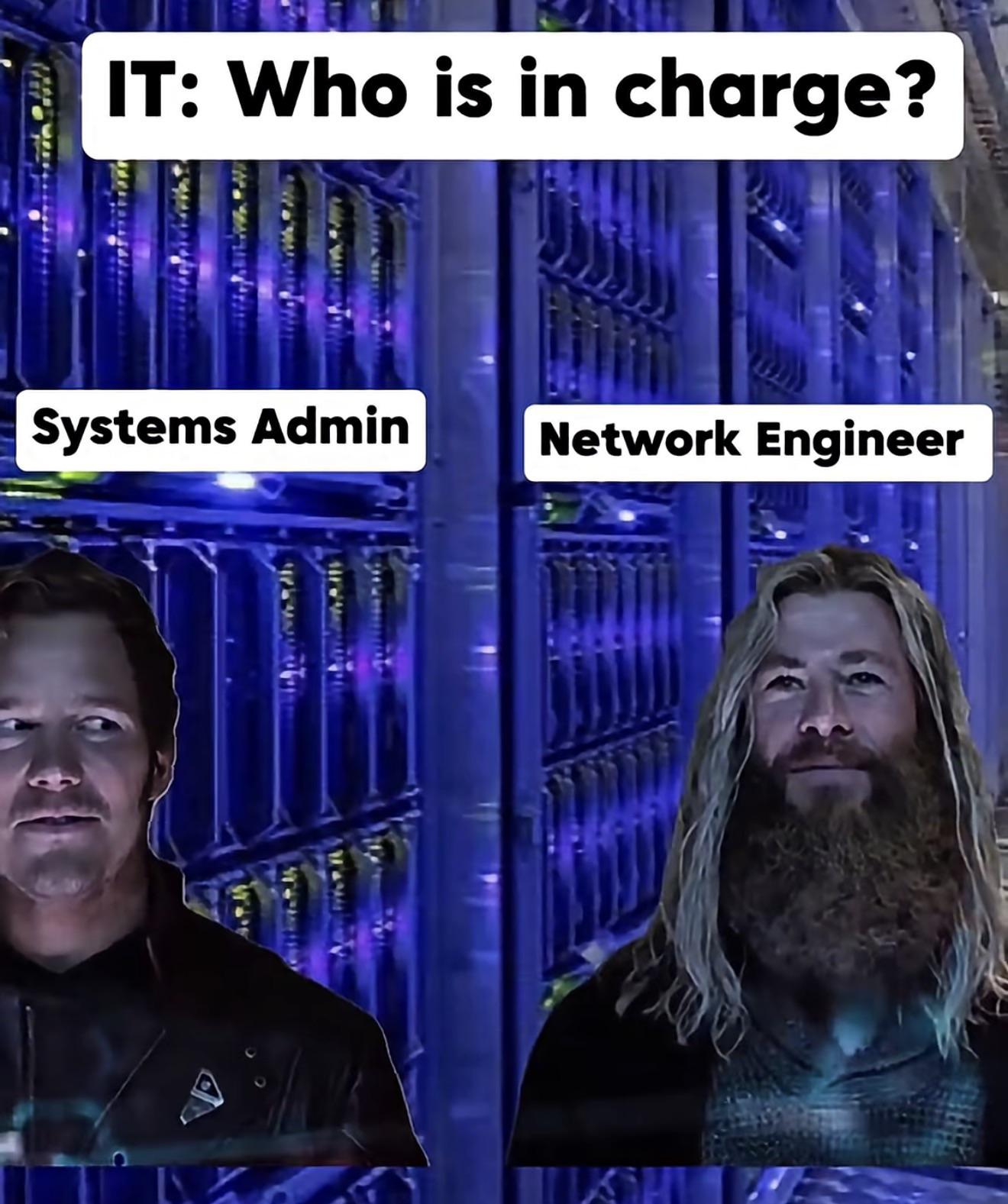
IT asks who's in charge, and both the Systems Admin and Network Engineer just point at each other like it's a game of hot potato nobody wants to win. Classic infrastructure blame game—when something breaks, suddenly everyone's responsibilities become remarkably vague. The sysadmin manages the servers, the network engineer handles the switches and routers, but who's actually running the show? Neither will admit it because with great power comes great... on-call rotations and angry Slack messages at 2 AM. They're basically two Spider-Men pointing at each other, except instead of webs they're slinging SSH commands and VLAN configs.

What Is Cloud

What Is Cloud
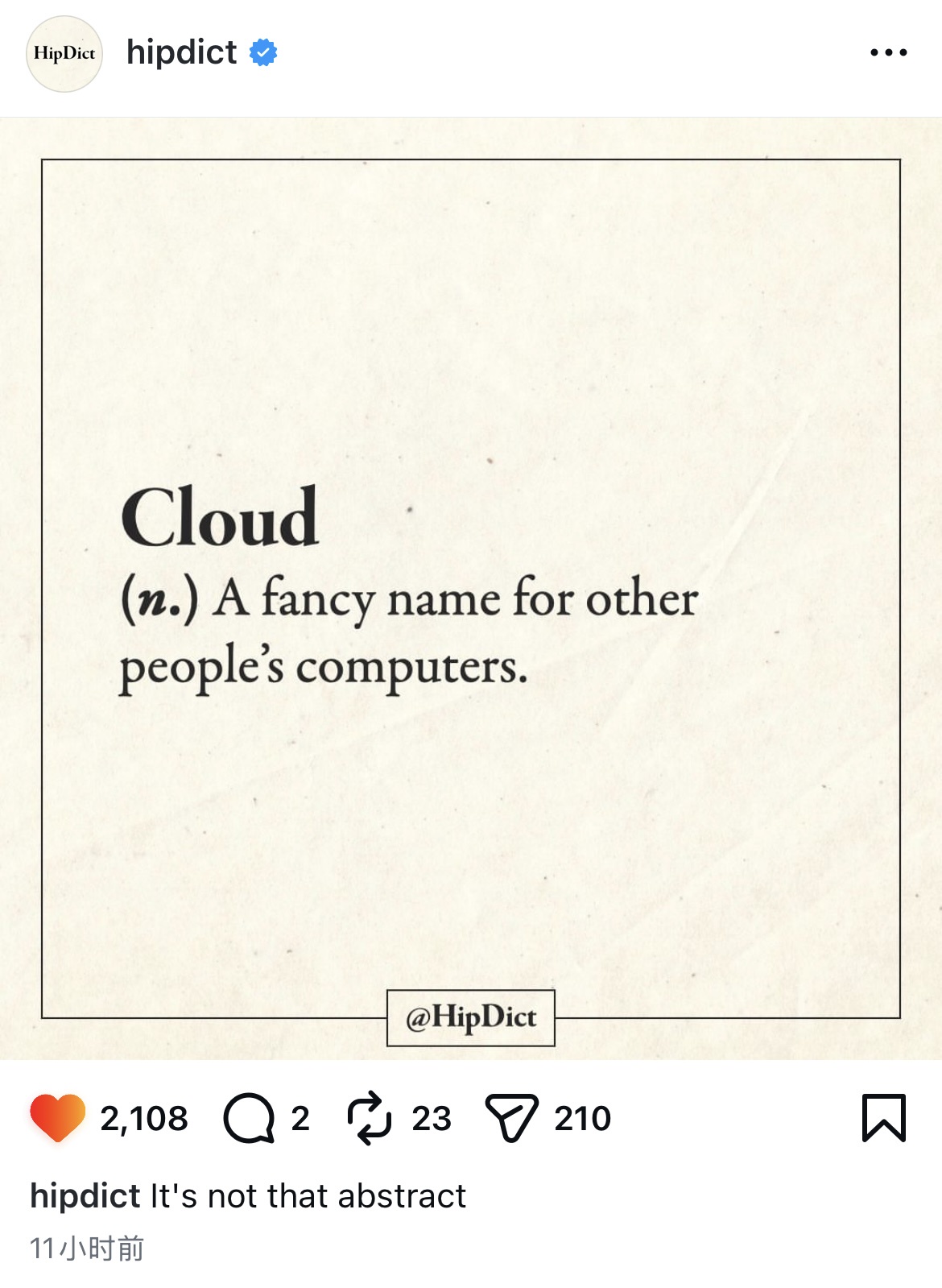
Stripped down to its absolute core, "the cloud" is just you renting someone else's server rack in a warehouse somewhere. All those fancy terms like "scalable infrastructure" and "distributed computing" are just marketing speak for "we're running your app on computers we own and you're paying us monthly for the privilege." Your data isn't floating in some ethereal digital sky—it's sitting on a Dell server in Virginia being cooled by industrial air conditioning that costs more than your car.

More Change More Stay Same

More Change More Stay Same
So your LLM servers are getting absolutely DEMOLISHED during business hours? The solution is obviously to hire developers from a different timezone! Genius move, right? Because nothing says "modern solution" like... *checks notes* ...literally just shifting the problem to when people in other time zones are awake. It's like saying your car overheats during the day, so you'll just drive it at night. REVOLUTIONARY! The real kicker? They're calling this a "modern solution" when companies have been playing timezone roulette since the dawn of outsourcing. The more things change, the more they spectacularly stay exactly the same – just with fancier buzzwords and AI involved this time.

Slow Servers

Slow Servers
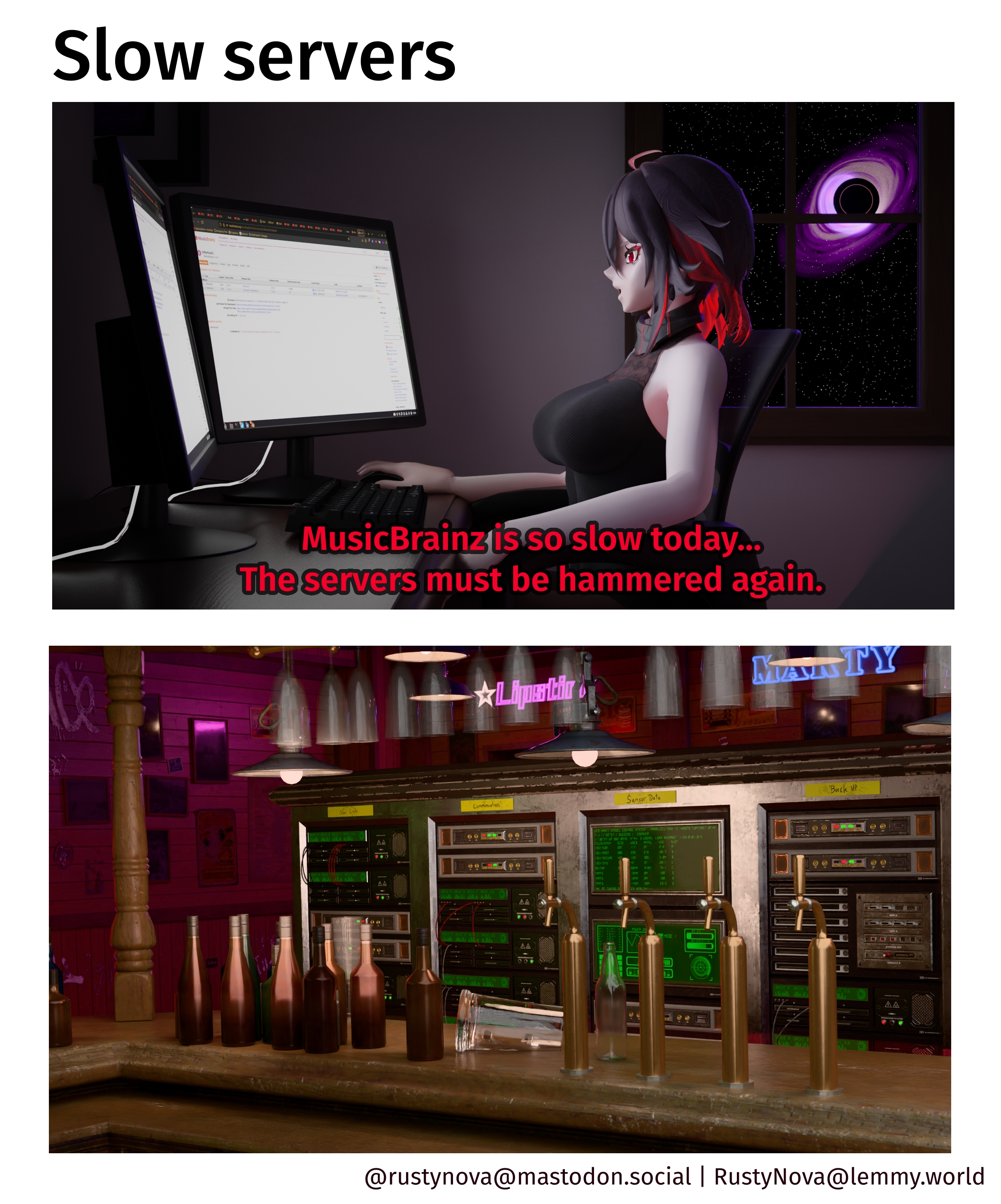
When your music streaming service is lagging, the only logical solution is obviously to physically assault the server rack with a hammer. Because nothing says "performance optimization" quite like percussive maintenance on production hardware. The transition from frustrated developer staring at slow response times to literally walking into the server room with malicious intent is the kind of escalation we've all fantasized about. Sure, you could check the logs, profile the database queries, or optimize your caching layer... but where's the cathartic release in that? The beer taps integrated into the server rack setup really complete the vibe though. Someone designed a bar where the servers ARE the decor, which is either brilliant or a health code violation waiting to happen. Either way, those servers are about to get hammered in more ways than one.

ASUS 27” 4K Business Monitor (VA27UCPS) - UHD (3840 x 2160), IPS, 99% sRGB, HDR-10, USB-C PD65W, USB Hub, Speakers, Eye Care, Ergonomic, VESA Wall Mountable, Green Sustainability, 3 yr Warranty

ASUS 27” 4K Business Monitor (VA27UCPS) - UHD (3840 x 2160), IPS, 99% sRGB, HDR-10, USB-C PD65W, USB Hub, Speakers, Eye Care, Ergonomic, VESA Wall Mountable, Green Sustainability, 3 yr Warranty
27-inch, 4K UHD (3840 x 2160) resolution HDR display with IPS 178° wide viewing angle for sharp and immersive visuals · Extensive connectivity including USB-C, HDMI, DisplayPort and USB hub · USB-C p…

The New Fresh Smell

The New Fresh Smell
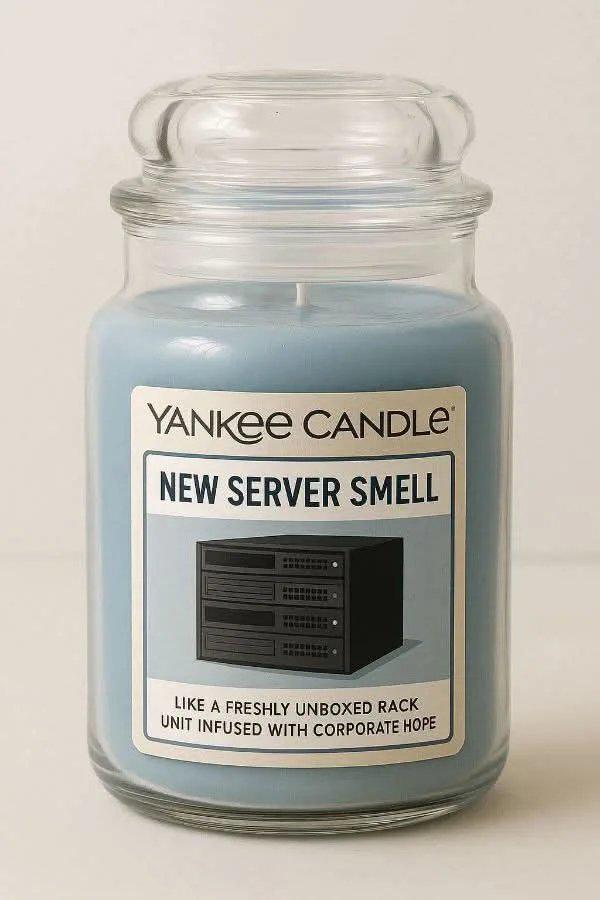
Ah yes, the intoxicating aroma of a brand new server rack—nothing quite compares to that blend of fresh electronics, pristine metal, and the faint scent of budget approval forms. It's like new car smell, but for sysadmins who get weirdly emotional about hardware. The description "Like a freshly unboxed rack unit infused with corporate hope" is *chef's kiss* because it captures that brief, magical moment before reality sets in. Before the 2 AM outages. Before the "temporary" workarounds become permanent. Before someone inevitably misconfigures the firewall and brings down production. Right now it's all potential and promise. Give it three months and it'll smell like overheating components, broken dreams, and someone's leftover pizza from the last emergency maintenance window.

Stop Doing DNS

Stop Doing DNS
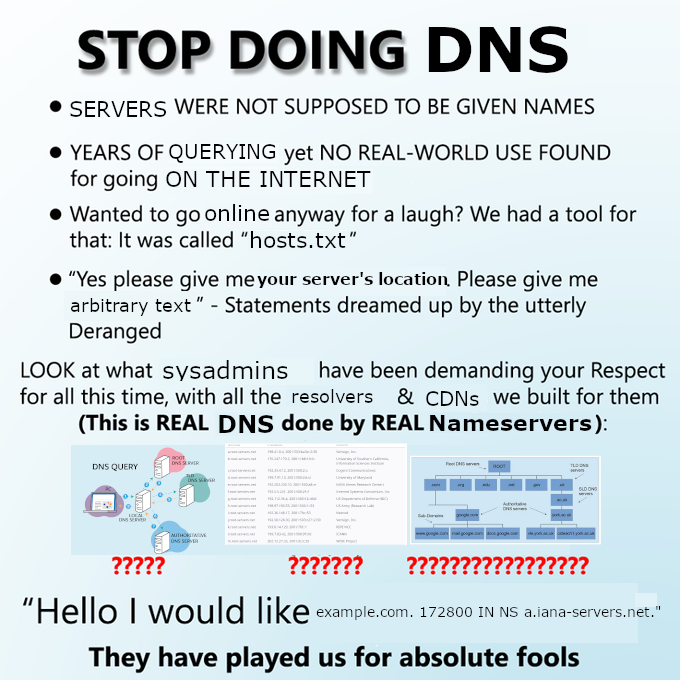
Someone finally said it. DNS is apparently a scam perpetuated by Big Nameserver to sell more resolvers. Servers were perfectly happy being identified by raw IP addresses until sysadmins got greedy and demanded "respect" in the form of complex distributed systems that nobody understands. The argument here is that we had hosts.txt—a single file that every computer could use to map names to IPs. Simple. Elegant. Completely unscalable. But who needs the internet to grow anyway? Instead, sysadmins convinced everyone we needed this elaborate DNS infrastructure with recursive queries, authoritative nameservers, TTLs, and zone files. Now when someone asks for example.com, you get a 17-step journey through multiple servers just to return an IP address. They've been laughing at us this whole time while we troubleshoot NXDOMAIN errors at 3 AM. The three diagrams with increasing question marks perfectly sum up every developer's understanding of DNS: "I think I get it... wait, what?... I have no idea what's happening anymore."

I Lost Count At This Point

I Lost Count At This Point
Gaming platforms and their outages visualized as flatline heartbeat monitors. Every single service showing that familiar spike pattern—the digital equivalent of "not again." From ARC Raiders to VRChat, it's like they're all competing for who can go down more creatively. AWS is there too, naturally, because when AWS sneezes, half the internet catches a cold. The real joke is calling these "outages" when they're basically scheduled features at this point. Your multiplayer plans? The servers had other ideas.

Server The Servers

Server The Servers
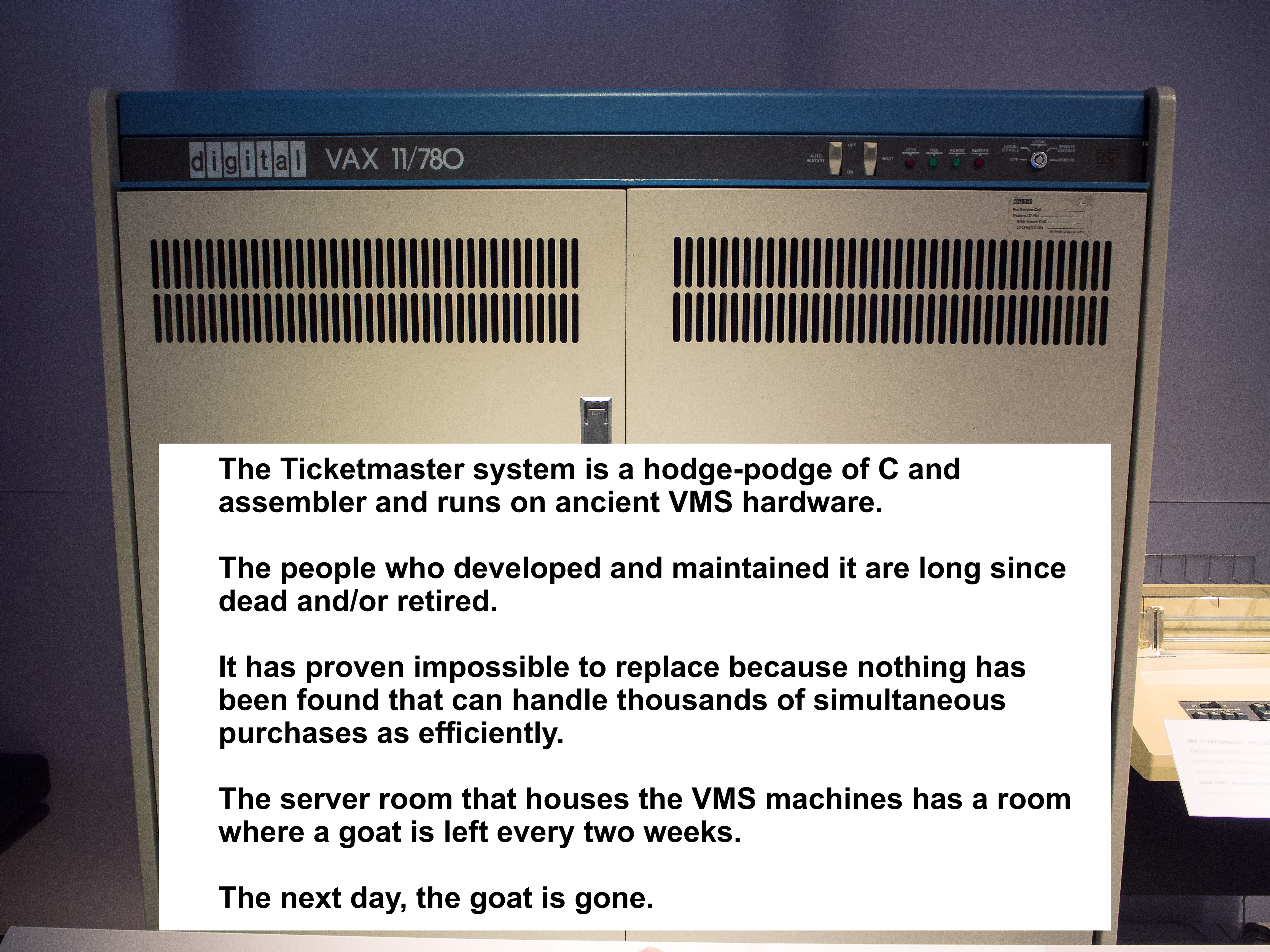
Content digital VAX 11/780 The Ticketmaster system is a hodge-podge of C and assembler and runs on ancient VMS hardware. The people who developed and maintained it are long since dead and/or retired. It has proven impossible to replace because nothing has been found that can handle thousands of simultaneous purchases as efficiently. The server room that houses the VMS machines has a room where a goat is left every two weeks. The next day, the goat is gone.

What's A TXT Record

What's A TXT Record
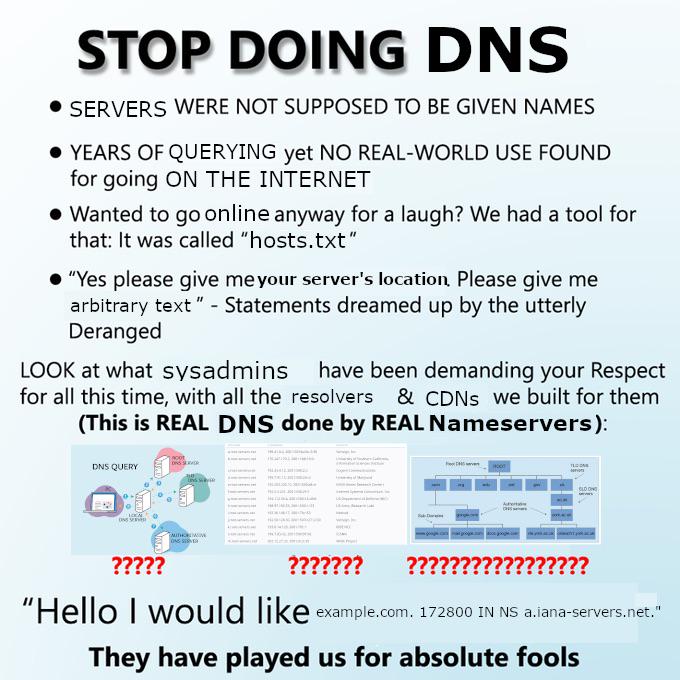
Someone just asked what a TXT record is and now the entire DNS infrastructure is having an existential crisis. The rant starts off strong: naming servers? Pointless. DNS queries? Never needed. The hosts.txt file was RIGHT THERE doing its job perfectly fine before we overengineered everything. Then comes the kicker—sysadmins apparently want to know "your server's location" and "arbitrary text" which sounds like something a "deranged" person would dream up. But wait... that's literally what TXT records do. They store arbitrary text strings in DNS for things like SPF, DKIM, domain verification, and other critical internet infrastructure. The irony is thicker than a poorly configured DNS zone file. The punchline? After this whole tirade about DNS being useless, they show what "REAL DNS" looks like—three increasingly complex diagrams that nobody understands, followed by a simple DNS query example. The response: "They have played us for absolute fools." Translation: DNS is actually incredibly complex and essential, and maybe we shouldn't have been complaining about TXT records in the first place. It's the classic developer move of calling something stupid right before realizing you don't actually understand how it works.

Power Button Paranoia Chronicles

Power Button Paranoia Chronicles
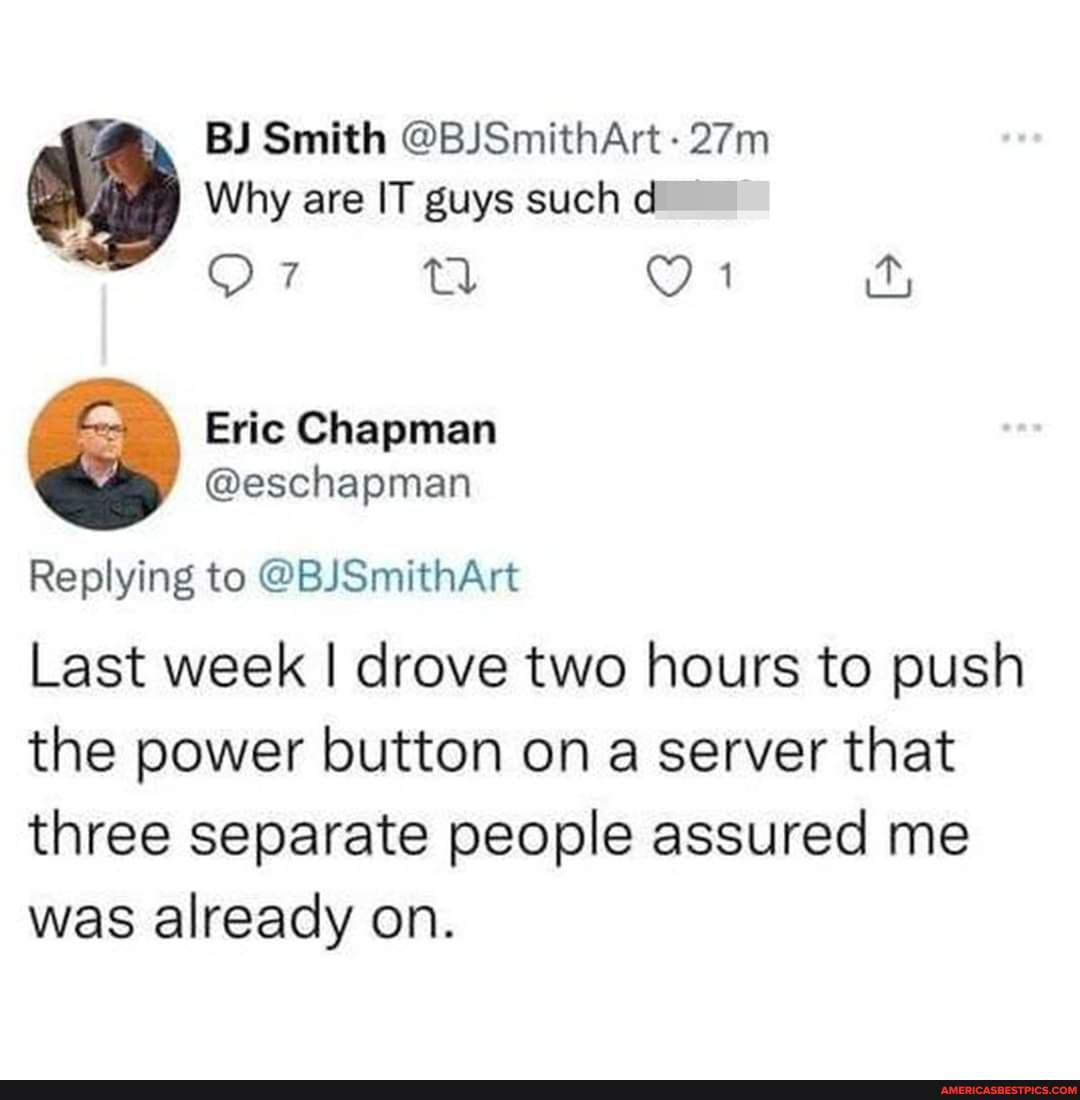
Trust issues level 9000! When someone asks why IT professionals are difficult, here's your answer: driving two hours just to physically verify a server is powered on despite THREE people's assurances. Because in the server room, "trust but verify" isn't just a motto—it's a survival mechanism. That blinking LED is worth more than any verbal confirmation. Remote management tools? Sure, they exist... but nothing beats the sweet relief of pressing that cold metal power button yourself and whispering, "I knew it" when you were right all along.