

Runtime errors Memes

Posts tagged with Runtime errors
Never Return An Error

Never Return An Error
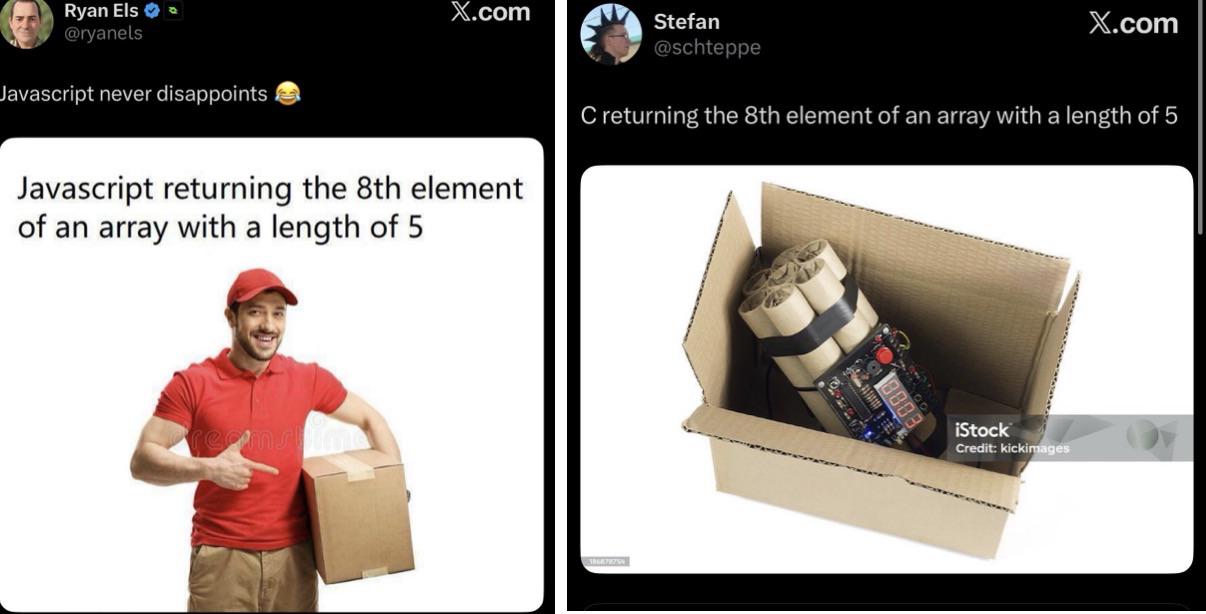
JavaScript will happily hand you undefined when you ask for the 8th element of a 5-element array like it's the most normal thing in the world. Meanwhile, C is over here ready to detonate your entire application if you even think about accessing out-of-bounds memory. The delivery guy meme vs. the bomb in a box perfectly captures this energy. JavaScript is just vibing, delivering nothing with a smile and a thumbs up. No exceptions thrown, no crashes, just pure undefined bliss. It's like ordering a pizza and getting an empty box, but the delivery driver acts like they just made your day. This is why we have TypeScript now. Because after the 47th time you got undefined in production and spent 3 hours debugging, you start questioning your life choices. But hey, at least JavaScript never disappoints... because it sets the bar so low that returning nothing is considered a feature, not a bug.

Panic

Panic
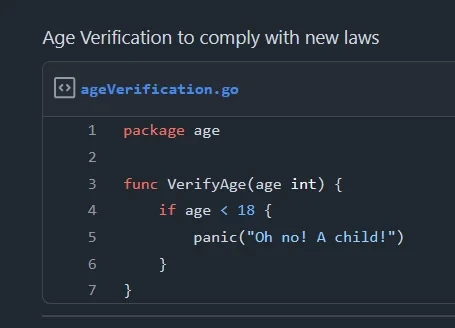
When your age verification logic discovers someone under 18, just throw a panic() and let the runtime handle it. Because nothing says "professional error handling" like literally panicking when you find a minor trying to access your site. This is Go's version of "not my problem anymore" – just crash the entire program instead of, you know, showing a polite "you must be 18+" message. The function name says "verification" but the implementation screams "nuclear option." Classic Go move though, using panic for control flow. Your production logs are gonna love this one.

My Code

My Code
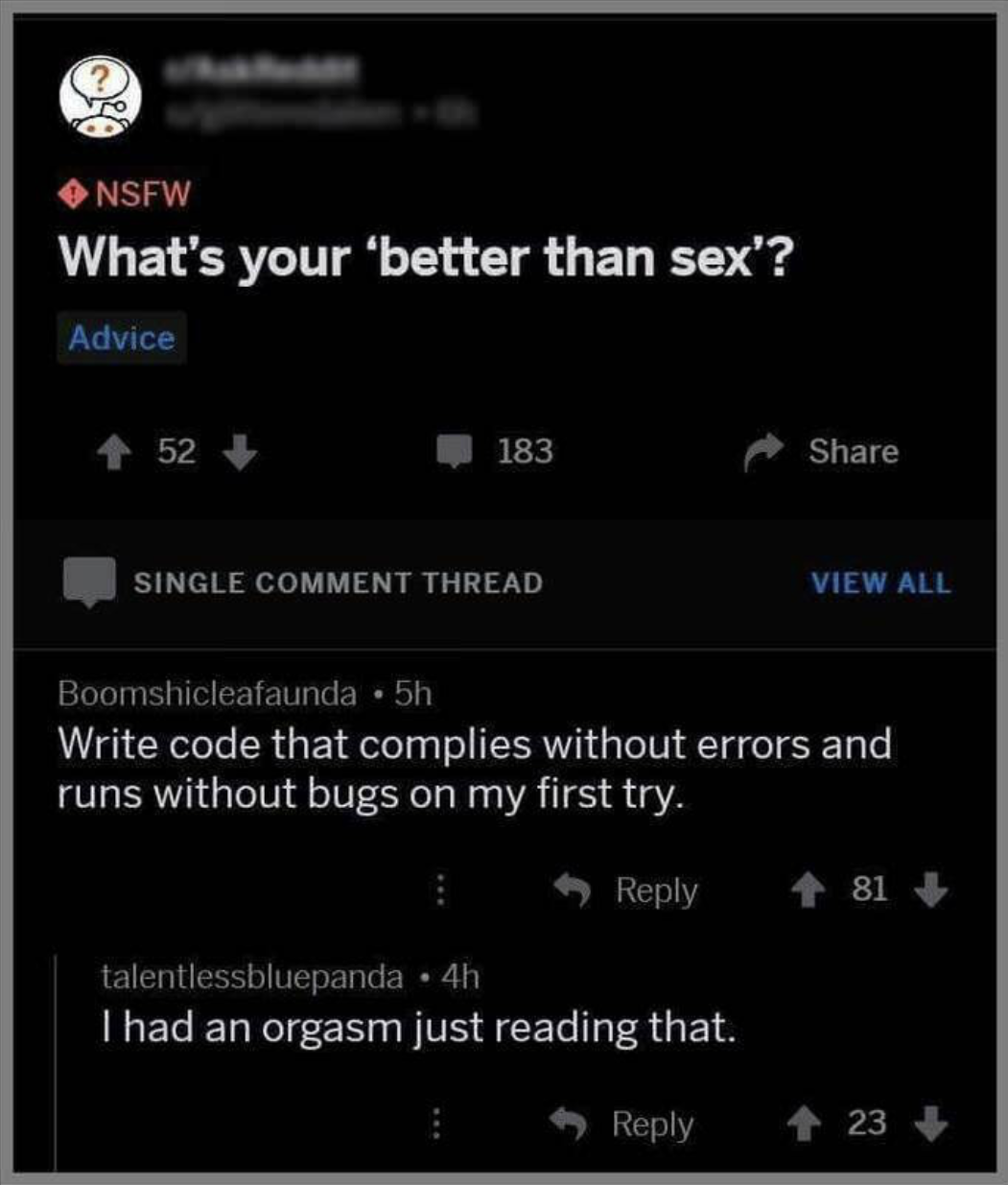
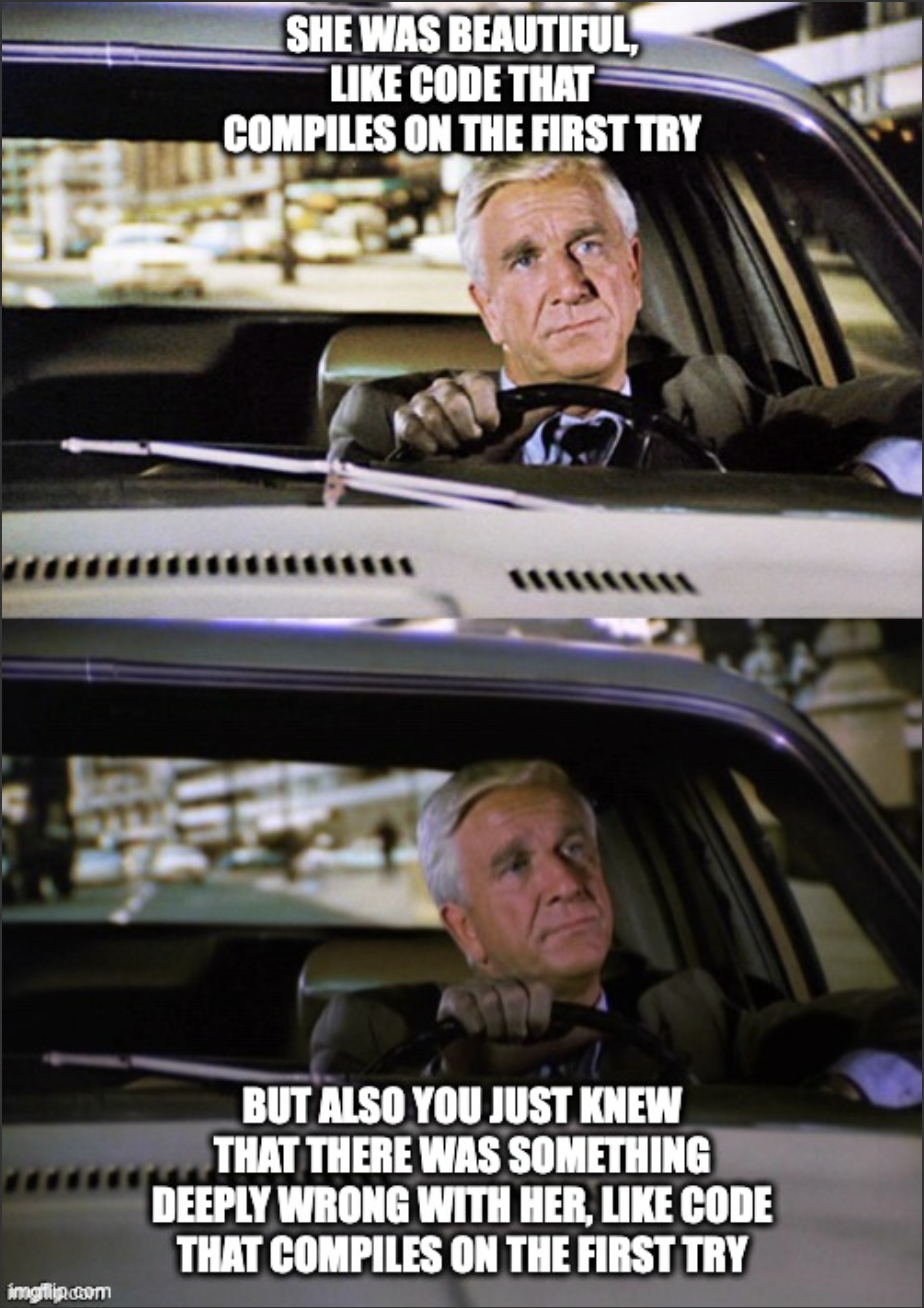
You know that feeling when your code compiles without errors on the first attempt? Yeah, that's not a victory—that's a red flag. Either you've accidentally achieved programming enlightenment, or more likely, you've written something so fundamentally broken that even the compiler is confused about where to start complaining. The real danger isn't the syntax errors you can see—it's the logic bombs quietly ticking away in your beautiful, clean-compiling code. Runtime errors, off-by-one mistakes, null pointer exceptions waiting to strike in production... they're all there, just biding their time. First-try compilation success is basically the programming equivalent of "it's quiet... too quiet." Trust is earned through battle scars and compiler warnings, not through suspiciously smooth sailing.

Those Three Only Bring Regret

Those Three Only Bring Regret
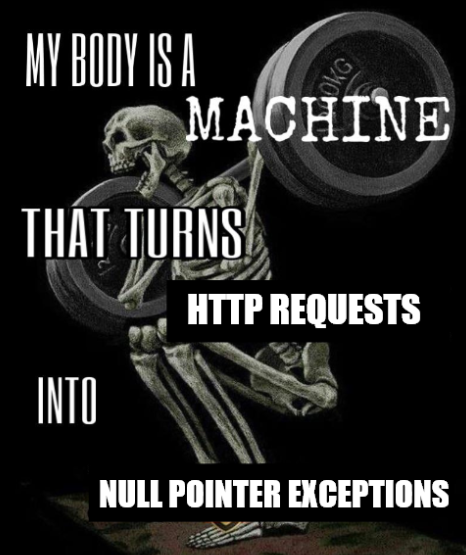
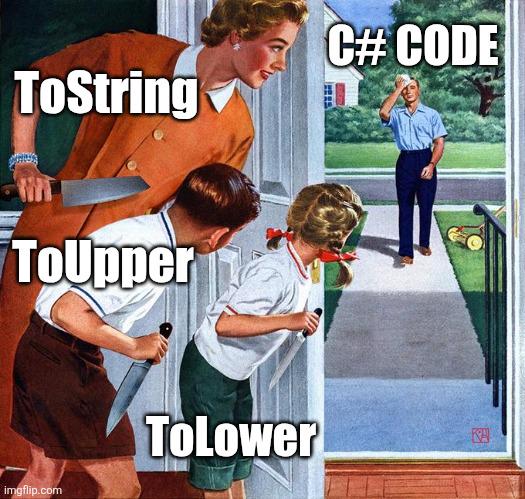
Every C# dev knows the shame of reaching for ToString() , ToUpper() , and ToLower() thinking they're being clever, only to watch your app implode when it hits a null reference. The neighborhood is literally watching your code fail in production while you pretend everything's fine. These methods look so innocent and helpful, but they're basically landmines waiting for that one null value to slip through. You could use null-conditional operators or nullable reference types, but nah, let's just YOLO it and deal with the NullReferenceException at 2 PM on a Friday. The real kicker? You've done this exact thing at least a dozen times and you still forget to check for nulls. We never learn.

Clean Compile Maximum Trust Issues

Clean Compile Maximum Trust Issues
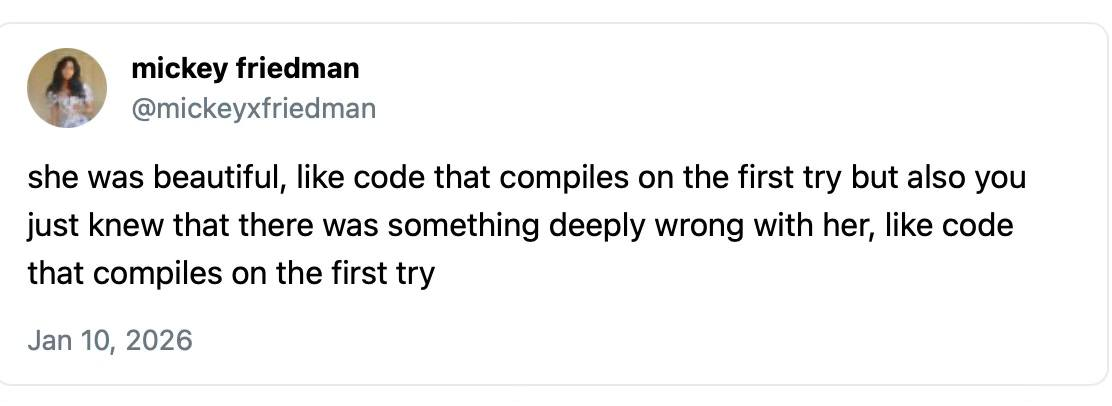
You know you've been in the trenches too long when a clean compile feels less like success and more like a trap. That code that compiles first try? Yeah, it's gorgeous on the surface, but your battle-scarred instincts are screaming that runtime errors are lurking somewhere in there like landmines. The compiler's silence isn't reassuring—it's suspicious. Where are the warnings? The type mismatches? The missing semicolons? When everything works immediately, experienced devs don't celebrate, they start writing test cases with the paranoia of someone who's been burned too many times. Because we all know the truth: the compiler only checks syntax. Logic errors, race conditions, off-by-one mistakes, null pointer nightmares—those are all waiting patiently in production to ruin your weekend.

How Real Programmers Handle Bugs

How Real Programmers Handle Bugs
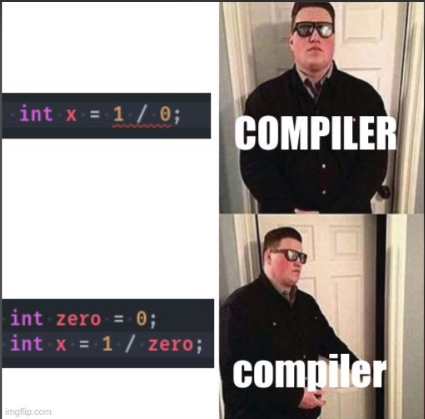
Classic move: when the compiler catches your divide-by-zero, just give it a variable name and suddenly it's "intentional." Because nothing says "I know what I'm doing" like wrapping your runtime exception in a slightly fancier package. Top panel: direct division by zero, compiler's all confident and screaming at you. Bottom panel: same exact bug, just with extra steps and a variable declaration. Compiler suddenly gets polite and respectful, like you've unlocked some secret knowledge. Spoiler alert: your program still crashes at runtime. You didn't fix anything—you just moved the explosion from compile-time to production. But hey, at least it compiled, right? Ship it.

Shenanigans

Shenanigans
Python's dynamic typing is basically a game show where you spin the wheel and hope for the best. You've got your sensible options like int , float , bool , and str ... but then there's object , NaN , and my personal favorite: Error . But let's be real, the biggest slice on that wheel? "Random fuck" - because Python will just decide your variable is whatever it feels like being today. That function you thought returned a string? Surprise! It's None now. That number you were working with? Congrats, it's somehow a list. Type hints are more like type suggestions that Python cheerfully ignores while your code explodes at runtime. Meanwhile, TypeScript developers are sipping coffee, watching this chaos unfold with their compile-time type checking. But hey, at least we're having fun, right?

Make Them A Priority (Heap)

Make Them A Priority (Heap)
The eternal battle between garbage collection and memory management summed up in one Futurama scene. Amy's sick of cleaning up dead memory while Professor Farnsworth reminds us that without those heaps, we'd have nowhere to store our questionable code decisions. Just another day where the laws of computer science trump workplace cleanliness. Next time your app crashes with an out-of-memory error, remember - those heaps weren't just clutter, they were load-bearing trash.

C Doesn't Make Runtime Errors

C Doesn't Make Runtime Errors
The C language doesn't accidentally create runtime errors—it gives you just enough rope to hang yourself with pointers and memory management, then stands back to watch the chaos unfold. It's like driving without seatbelts by design. "Segmentation fault? That's not a bug, that's a feature!" Sure, you can write blazing fast code, but at what cost? Your sanity and three days of debugging why your program randomly crashes when the moon is waxing gibbous.

It's A Gamble I'm Willing To Take

It's A Gamble I'm Willing To Take
That moment when your compiler decides to ignore 9000 red flags and somehow produces an executable. Sure, it'll probably crash at runtime in some spectacular fashion, but for now... victory? The "I love technology" statement is just the chef's kiss of sarcasm that every developer feels when their catastrophic code inexplicably works. It's like driving a car held together with duct tape and prayer.

Error Handling: A Tale Of Two Languages

Error Handling: A Tale Of Two Languages
C++ developers get crushed under a stack of errors all at once, while JavaScript developers get to enjoy a leisurely stroll up a staircase of errors, discovering each new problem one at a time. Nothing says "I love my job" like JavaScript's considerate approach to crushing your soul incrementally instead of all at once.

Impossible: When Your Code Compiles On First Try

Impossible: When Your Code Compiles On First Try
First-try compilation success? That's rarer than finding a unicorn coding in COBOL. The sheer disbelief on Thanos' face perfectly captures that moment when your code compiles without errors on the first attempt. You stare at the message in stunned silence, convinced it must be a glitch in the Matrix. Surely the compiler is playing some cruel joke before unleashing 47 cryptic error messages about missing semicolons and undefined references. And even if it did compile, you know deep down that 16 runtime exceptions are lurking just beneath the surface, waiting to snap half your application into oblivion.