

Deadlines Memes

Posts tagged with Deadlines
Late Backend Development Horror Story

Late Backend Development Horror Story
Oh, you thought you were DONE? You sweet summer child. Nothing—and I mean NOTHING—strikes more fear into a developer's heart than hearing "we're changing the database schema" when the project is supposedly "almost done." Because guess what? That innocent little sentence means your entire backend is about to get demolished and rebuilt from scratch. All those carefully crafted migrations? GONE. Your perfectly optimized queries? TRASH. That API you spent weeks building? Time to rewrite half of it, bestie. It's like being told your house is finished except they're just gonna swap out the foundation real quick. No biggie! Just a casual architectural apocalypse at the eleventh hour. Totally normal. Totally fine. Everything is fine. 🔥

Just Cook The Chicken At 600°C For 10 Min

Just Cook The Chicken At 600°C For 10 Min
Setting a wedding date before proposing is the software equivalent of deploying to production before writing a single line of code. Bold? Absolutely. Insane? Without question. A recipe for disaster? Chef's kiss! 💋 Product managers out here planning release dates six months in advance while the dev team is still arguing about whether to use tabs or spaces. The audacity! The sheer HUBRIS of scheduling the victory parade before the battle has even begun! It's giving "we've allocated 2 weeks for this feature" energy while conveniently ignoring that nobody's even looked at the requirements doc yet. But sure, tell the stakeholders it'll be ready by Tuesday. What could possibly go wrong? 🔥

We'll Be Launching Soon

We'll Be Launching Soon
You know that project manager who keeps promising stakeholders a launch date while the dev team hasn't even agreed on the tech stack? That's basically this guy planning a wedding reception before securing a date. The beautiful chaos of setting deadlines before prerequisites is a tale as old as software itself. Management announces the release party while developers are still arguing about whether to use tabs or spaces. At least in dating you can blame commitment issues—in project management, it's called "aggressive roadmapping" and somehow gets approved in meetings.

Too Basic But Not Fortran

Too Basic But Not Fortran
Project manager dragging the entire team up the mountain while devs and designers are literally tied to them doing absolutely nothing. Then the PM looks back, sees how far they've climbed, and realizes they did all the work themselves. Classic case of "I'll just do it myself" syndrome after the 47th Slack message goes unanswered and the sprint is due tomorrow. The devs are just vibing in their sleeping bags while PM is out here soloing the Everest of deliverables.

We Will Be Launching Soon

We Will Be Launching Soon
Setting a launch date before you've even started the project? Bold strategy. It's like booking the venue before you've even figured out if you want to get married. Or to whom. Or if marriage is even legal in your jurisdiction. Product managers love announcing release dates with the same confidence a fortune teller predicts your future. Meanwhile, the dev team is still arguing about whether to use tabs or spaces. The database schema doesn't exist. Half the requirements are written on napkins. But sure, tell the investors we're launching in two weeks. This is why every software roadmap should come with a disclaimer: "All dates are fictional and any resemblance to actual timelines is purely coincidental."

Accurate Estimates

Accurate Estimates
The classic tale of AI-powered estimation tools versus developer hubris. An AI tool analyzes the feature and conservatively estimates 4-6 weeks. The developer, filled with caffeine-fueled confidence, scoffs and declares they'll knock it out in an afternoon. Fast forward 6 weeks, and surprise—it's finally working. Plot twist: both the overconfident dev AND the AI were wrong, because the real timeline was exactly 6 weeks regardless of who predicted what. The meme brilliantly captures how whether you're using fancy AI estimation tools or just winging it with blind optimism, software projects have a mysterious way of taking exactly as long as they're going to take. Edge cases, scope creep, and that one bug that makes you question your entire career don't care about your predictions.

Believe Them

Believe Them
When a dev says they'll fix a bug in 1 hour, they genuinely believe it. They've already mentally solved it, refactored the entire module, and written the unit tests. What they haven't accounted for is: the bug being in legacy code written by someone who's now unreachable, three dependency conflicts, a missing environment variable that only exists in production, and the realization that fixing this one thing breaks two other things. So yeah, believe them. They'll fix it in 1 hour. Just don't ask which hour, or on which day, or in what timezone. The optimism is real, the timeline is... negotiable.

I Answered Before Thinking

I Answered Before Thinking
That moment when your eagerness to please overrides your survival instincts. Junior dev just committed to a 6-month timeline without consulting the team, and now the entire corporate hierarchy is staring at them like they just volunteered to rebuild the monolith from scratch using only Notepad. The Harry Potter trial scene format is chef's kiss here—because that's exactly what it feels like when you realize your manager, mentor, Chief Architect, CTO, and CEO are all silently calculating how many overtime hours you just promised. Your mentor's disappointed face hits different when you know they've been trying to teach you the ancient art of "let me check with the team first." Pro tip: The correct answer is always "Let me review the requirements and get back to you with a realistic estimate." But we all learn this lesson the hard way, usually while debugging at 2 AM during month five of that six-month sprint.

Interesting Problems Bring Management Headaches

Interesting Problems Bring Management Headaches
The moment you utter the word "interesting" about a bug or technical challenge, your manager's fight-or-flight response kicks in. To you, it means you found something intellectually stimulating that might require some creative problem-solving. To them, it translates to: delayed timelines, scope creep, potential system meltdowns, and having to explain to stakeholders why the "simple feature" is now a three-week research project. Developers live for these moments—the weird edge cases, the bizarre race conditions, the "wait, that shouldn't even be possible" scenarios. Management lives in fear of them. It's the eternal conflict between curiosity and deadlines, between engineering elegance and shipping code that just works™.

Timeframe Is Whack

Timeframe Is Whack
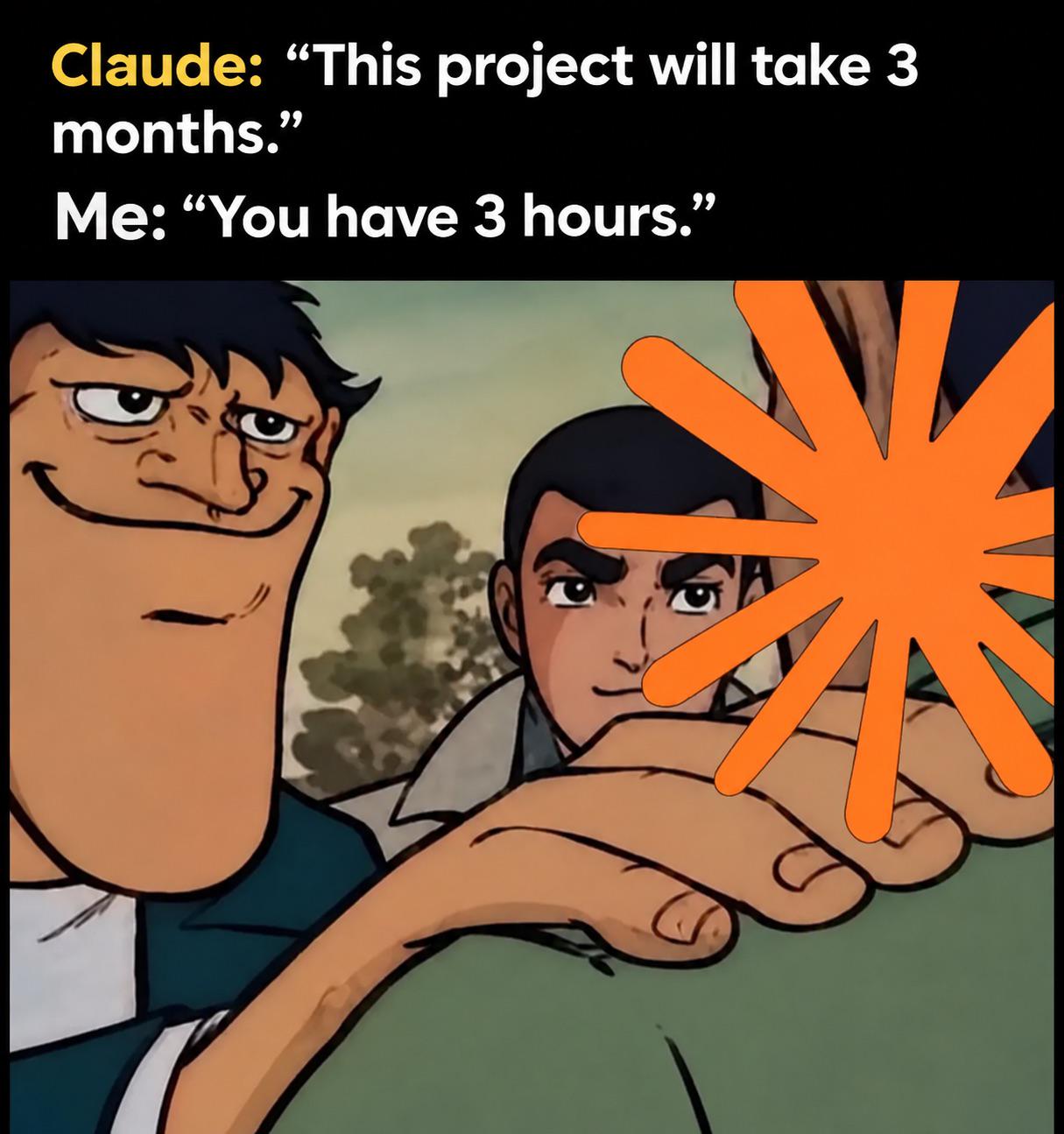
Project manager asks for an estimate. You know it'll take 3 months minimum, but you also know they want to hear "next week." So you do what any rational developer does: give them a range so absurdly wide it's basically useless. An hour to 11 months? Sure. Could be done by lunch, could be done when your kid graduates middle school. Both equally plausible depending on how many "quick changes" they throw in after you start. The PM will hear "an hour" and put it in the sprint. You'll be there in 11 months explaining why authentication "took longer than expected."

Very Attentive Listeners

Very Attentive Listeners
You know that feeling when you're explaining why the deadline is physically impossible because the API integration alone needs two weeks of testing, and the business team is nodding along with headphones that aren't even plugged into their ears? Yeah, that's basically every sprint planning meeting ever. They'll sit there looking all engaged and professional, but the moment you finish explaining technical debt and refactoring needs, they hit you with "So can we launch tomorrow?" It's like they're running a simulation of listening without actually processing any of the input data. Classic case of while(meeting.isActive()) { pretendToListen(); } but the function body is just return; The best part? They'll reference something you "agreed to" in that meeting, and you're left wondering if you accidentally said yes while explaining why it was a no. Communication: 0, Misunderstanding: 1.

Very Attentive Listeners

Very Attentive Listeners
You spend three hours explaining why the feature will take two weeks to implement, complete with technical debt analysis, database migration concerns, and API limitations. The business team nods enthusiastically. Then they ask if you can have it done by Friday. The headphones aren't even plugged in. They never were. That "good point" they mentioned? They have no idea what you said. They're just waiting for their turn to say "but it's just a button" again. Pro tip: Next time, just say "no" and watch them suddenly develop the ability to hear.