

Compiler errors Memes

Posts tagged with Compiler errors
What Is Wrong With My Code

What Is Wrong With My Code
So you wrote a function that returns void, then proceeded to return null, and wrapped a println statement in a let binding that does absolutely nothing. This is what happens when you copy-paste code from three different languages and hope the compiler just figures it out. The function signature screams Rust or Kotlin, the println looks like Rust, but that return null? That's your brain on Java. Pick a lane, my friend. The compiler is not a therapist—it won't help you work through your identity crisis.

Who's Gonna Tell Him

Who's Gonna Tell Him
Someone wants to "vibe code C++", and the universe responded with the most devastating reality check: vibe coders are web developers. The Oppenheimer stare says it all—the man just realized he's about to wrestle with memory management, segmentation faults, and template errors that look like they were written by an angry elder god. Meanwhile, his web dev friends are out there vibing with hot reload, npm packages, and stack traces that actually make sense. C++ doesn't do vibes, my friend. C++ does pain, suffering, and occasionally a working binary after 47 compiler warnings.

My Code

My Code
You know that feeling when your code compiles without errors on the first attempt? Yeah, that's not a victory—that's a red flag. Either you've accidentally achieved programming enlightenment, or more likely, you've written something so fundamentally broken that even the compiler is confused about where to start complaining. The real danger isn't the syntax errors you can see—it's the logic bombs quietly ticking away in your beautiful, clean-compiling code. Runtime errors, off-by-one mistakes, null pointer exceptions waiting to strike in production... they're all there, just biding their time. First-try compilation success is basically the programming equivalent of "it's quiet... too quiet." Trust is earned through battle scars and compiler warnings, not through suspiciously smooth sailing.

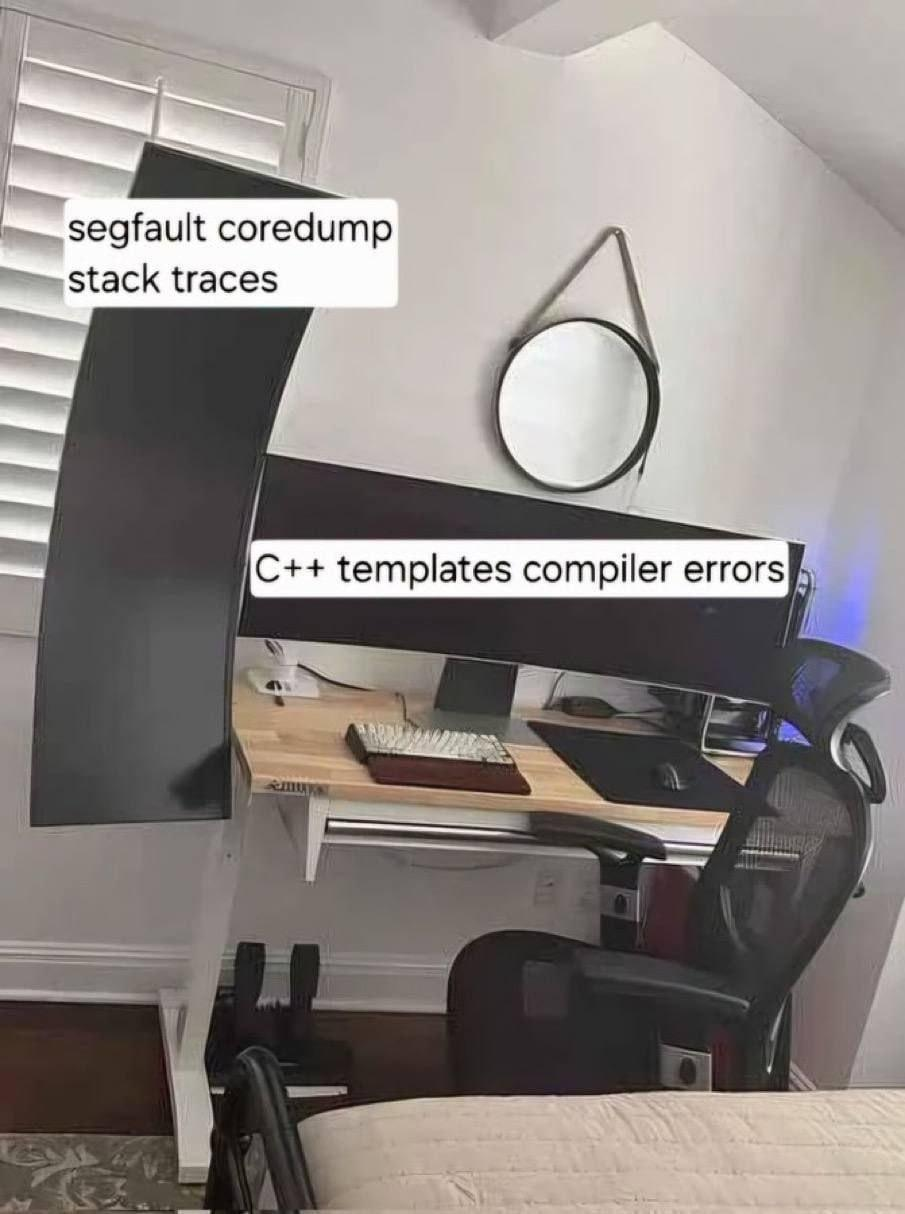
Assume T Pose For Dominance

Assume T Pose For Dominance
Someone's desk setup has achieved sentience and decided to assert dominance through structural engineering. The monitor's standing there in perfect T-pose formation, supported by what appears to be a combination of hope, prayer, and questionable physics. The labels are chef's kiss. Segfault coredumps and stack traces holding up one side, C++ template compiler errors doing the heavy lifting on the other. Both are known for their ability to produce walls of incomprehensible text that could physically support a monitor, so the physics checks out. Nothing says "I'm a senior developer" quite like using your most painful debugging experiences as literal load-bearing pillars. At least when this setup inevitably collapses, you'll get a fresh segfault to add to the collection.

Me, After Carefully Reading Rust's Ownership And Borrow Checker Rules

Me, After Carefully Reading Rust's Ownership And Borrow Checker Rules
You spend three hours reading the Rust book, watching tutorials, and finally understanding ownership rules. Then you open your IDE and suddenly you're Oprah giving out & references like they're free cars. Everything gets a reference! That variable? Reference. That struct field? Reference. That function parameter you'll use once? Believe it or not, also a reference. The borrow checker still yells at you anyway because apparently you can't have 47 mutable references to the same thing at once. Who knew? (Literally everyone who read the docs, but your brain chose violence instead of comprehension.)

There Can Only Be One

There Can Only Be One
Rust's ownership system is basically a jealous ex that refuses to let anyone else touch your data. When two variables try to share a string without proper borrowing, the borrow checker transforms into a Liberty Prime-sized robot ready to obliterate your code with compiler errors. You either clone that string, use references with explicit lifetimes, or watch the compiler go full "Communist detected on American soil" mode on your second variable. No shared ownership without explicit consent—that's the Rust way. Memory safety through intimidation, baby.

Wait What...

Wait What...
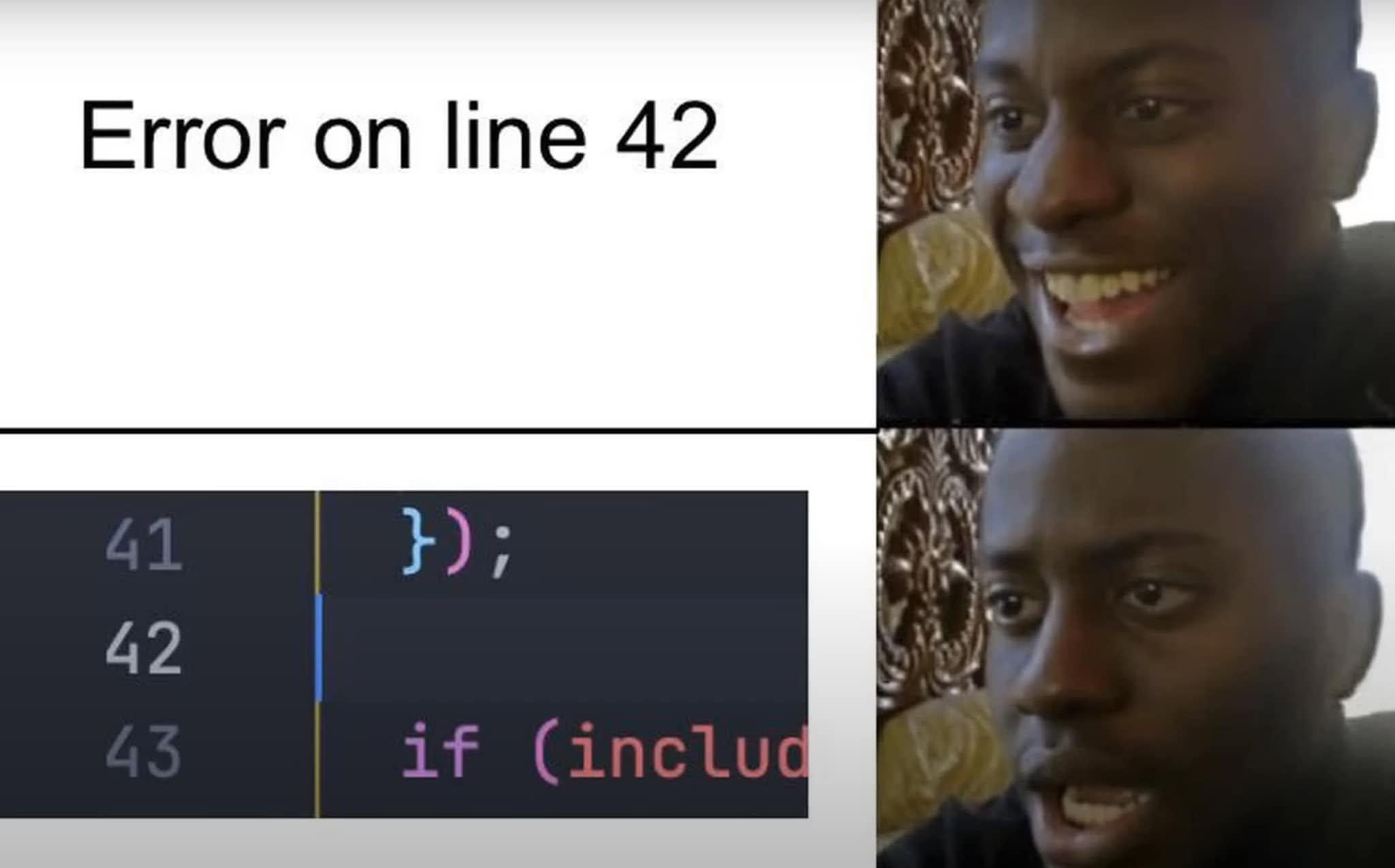
You know that mini heart attack when the compiler says "Error on line 42" and you frantically scroll to line 42, only to find it's a completely innocent closing brace? Then you look at line 43 and see the actual problem starting there. The error message is technically correct but also absolutely useless because the real issue is never where it claims to be. Compilers have this delightful habit of detecting errors at the point where they finally give up trying to make sense of your code, not where you actually messed up. That missing semicolon on line 38? The compiler won't notice until line 42 when it's like "wait, what is happening here?" It's the developer equivalent of your GPS saying "you missed your turn" three blocks after you actually missed it. Thanks, I hate it.

When Fixing One Bug Creates Six More

When Fixing One Bug Creates Six More
You know that special moment when you're feeling productive and decide to fix that one pesky error? Yeah, congrats on your new collection of 6 errors and 12 warnings. It's like debugging whack-a-mole, except the moles multiply exponentially and mock you with compiler messages. The confidence in that middle panel is what gets me. "I fixed it!" Sure you did, buddy. The codebase just decided to throw a tantrum and spawn an entire error family tree. Sometimes the best debugging strategy is ctrl+z and pretending you never touched anything.

The C Compiler's Diabolical Indifference

The C Compiler's Diabolical Indifference
Oh. My. GOD. The AUDACITY of C compilers!!! 😱 While normal compilers will SCREAM at you with 47 error messages for a missing semicolon, C compiler sees you dereferencing a NULL pointer and just goes "*(int*)0 = 0; GOOD LUCK" with a smug little wink. It's like handing a toddler scissors and saying "have fun storming the castle!" Pure CHAOS ENERGY. Your program is about to crash so spectacularly that NASA will detect the explosion from space, but C compiler's just like "not my problem, sweetie! 💅" This is why C programmers wake up with cold sweats at 2am wondering if they've accidentally created a time bomb.

Roses Are Red, Errors Are True

Roses Are Red, Errors Are True
Nothing says "I love you" like a syntax error in your code. This cross-stitch masterpiece transforms the classic romantic poem into the programmer's nightmare we all know too well. That semicolon sitting alone on line 32 is the digital equivalent of stepping on a LEGO at 3 AM while trying to fix a production bug. The compiler doesn't care about your feelings—it just wants proper syntax. Somewhere, a developer is framing this and hanging it directly above their monitor as a permanent reminder that love is temporary, but debugging is forever.

German C: The Language Of Nightmares

German C: The Language Of Nightmares
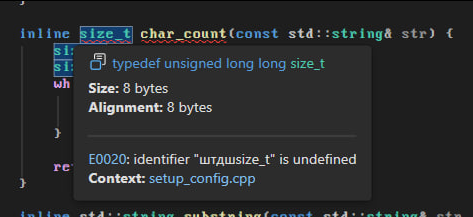
Ah, the mythical German C language – where function names sound like commands from an angry drill sergeant. The code shows the classic "Hello World" program, but with Germanic syntax that would make any normal C programmer wake up in cold sweats. Instead of the civilized int main() and printf() , we've got Ganz Haupt() and druckef() – because apparently regular C wasn't intimidating enough. And let's not forget zurück 0 instead of return 0 because why use English when you can sound like you're summoning a demon? The therapist clearly hasn't seen what happens when your compiler encounters this monstrosity. Trust me, the error messages would be in German too, and twice as long.

Compiler Error In The Twilight Zone

Compiler Error In The Twilight Zone
Oh. My. GOD! That moment of sheer PANIC when the compiler is screaming about line 20, and you're sitting there counting your pathetic 12 lines of code like a MANIAC! Is it counting my comments? My whitespace? MY WILL TO LIVE?! The emotional rollercoaster from abject horror to hysterical laughter is just *chef's kiss*. Nothing says "I've lost control of my life" quite like debugging phantom code that doesn't even EXIST! It's like being told there's a spider on your back when you're LITERALLY NAKED. The audacity of these compilers, I swear!