

Beginner mistakes Memes

Posts tagged with Beginner mistakes

There Is No Escape

There Is No Escape
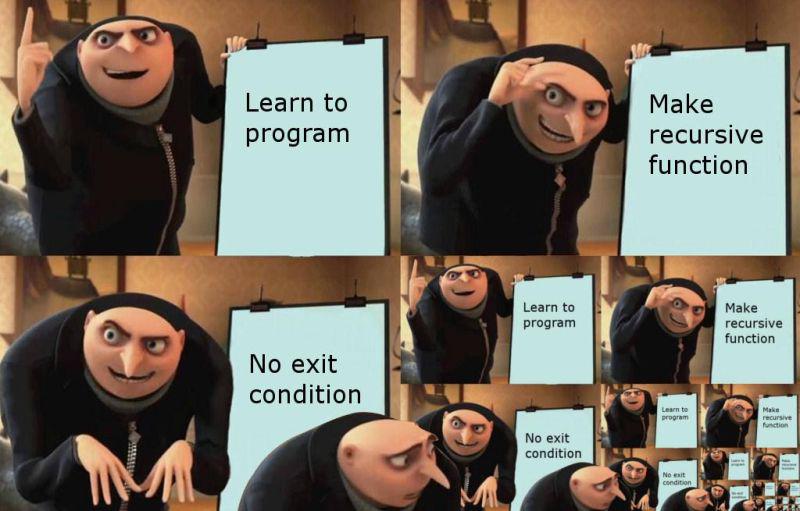
So you learned to program, congrats! Now let's make a recursive function, shall we? Oh, but wait—you forgot the exit condition. And just like that, you've created a beautiful infinite loop that calls itself forever and ever and EVER until your stack overflows and your program crashes in a blaze of glory. The meme itself becomes recursive, spiraling into smaller and smaller versions of itself, perfectly capturing the sheer panic of watching your function call itself into oblivion. It's like looking into a mirror with another mirror behind you, except instead of reflections, it's your CPU screaming for mercy and your RAM filing a restraining order. Welcome to programming, where your first recursive function is also your last because you're still debugging it to this day!

When You Forget The Base Case

When You Forget The Base Case
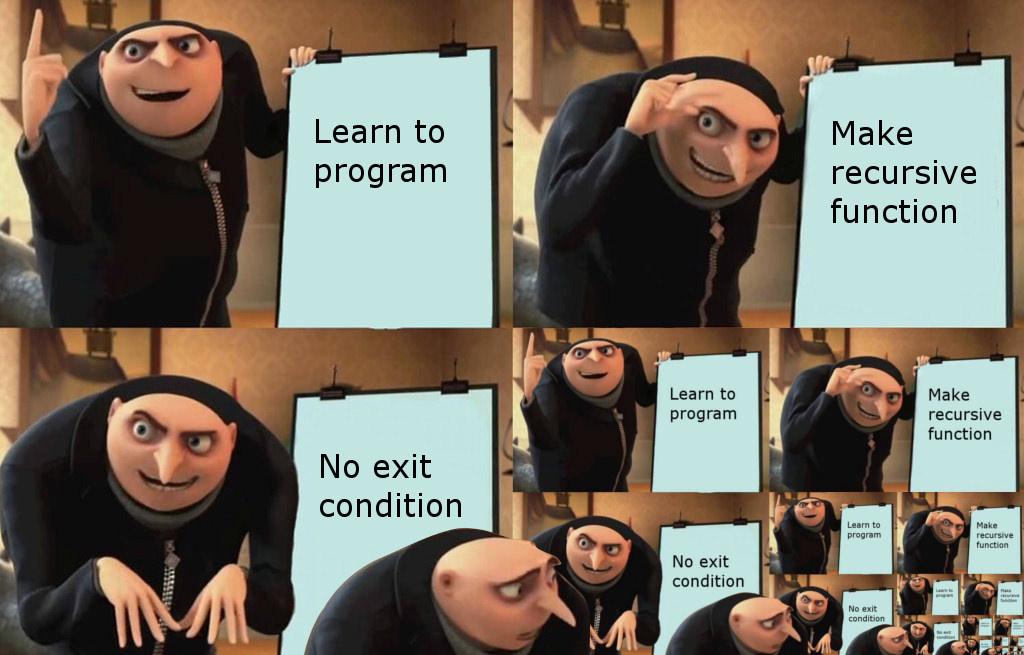
So you just learned recursion and you're feeling like a genius. You write your beautiful recursive function, hit run, and... congratulations, you've just created an infinite loop that's spawning copies of itself faster than Gru spawns evil plans. The stack overflow isn't just a website anymore—it's your reality. That base case? Yeah, turns out it's not optional. It's the emergency brake on your runaway train of function calls. Without it, your program becomes a fractal nightmare that keeps calling itself into oblivion until your computer begs for mercy. Fun fact: forgetting the base case is the programming equivalent of asking "Are we there yet?" on an infinite road trip.

Oh Yes!

Oh Yes!
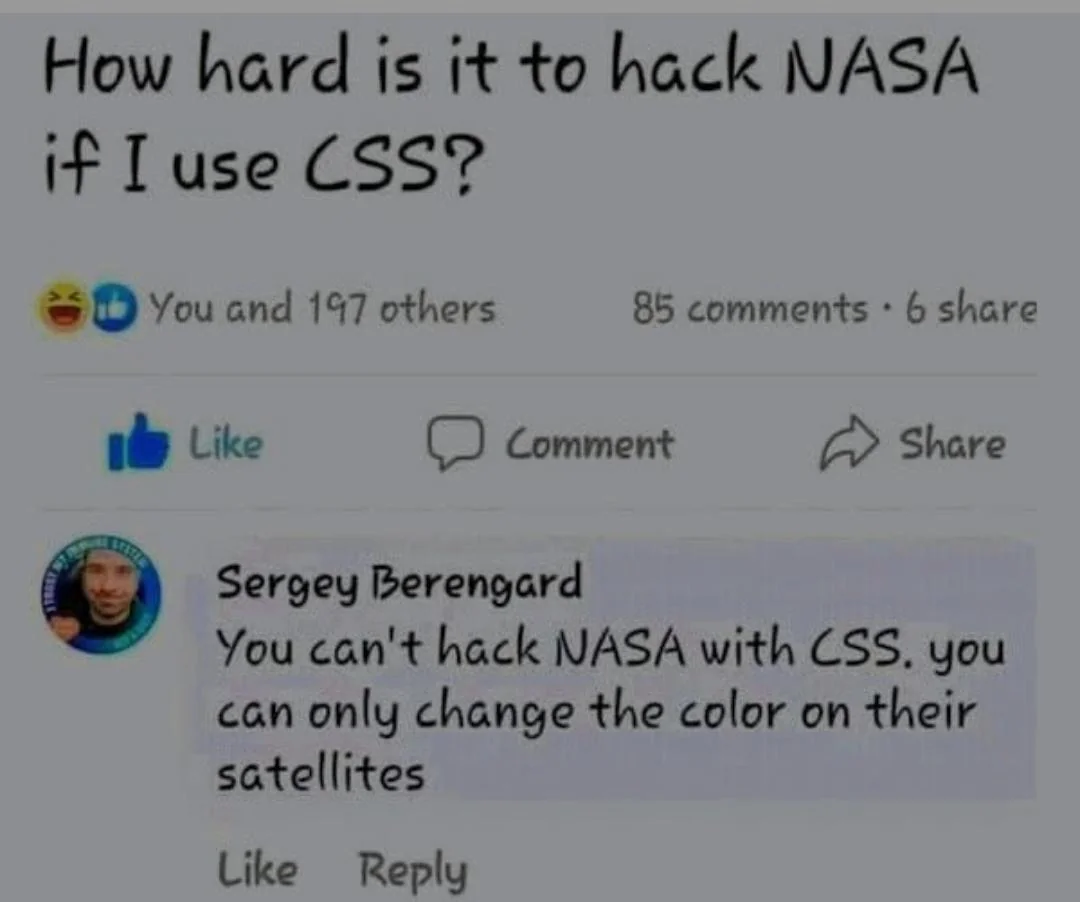
Someone genuinely asked how hard it would be to hack NASA using CSS, and honestly, that's adorable. It's like asking if you can rob a bank with a paintbrush. Sure, you could make their website look *fabulous* with some gradient backgrounds and smooth transitions, but breaking into their systems? Not quite. The response is brutally accurate: the only thing you're hacking with CSS is the color scheme of their satellites. Maybe add some box-shadow to make them pop? Perhaps a nice hover effect when they orbit Earth? The fact that 197 people liked the original question is the real security vulnerability here. CSS is a styling language, folks. It makes things pretty. It's the makeup artist of the web, not the lockpick. But hey, if NASA's satellites suddenly start displaying in Comic Sans, we'll know who to blame.

Bros Gonna Hack Nasa

Bros Gonna Hack Nasa
Someone out here thinking they're about to breach NASA's cybersecurity infrastructure with CSS... you know, the styling language that makes buttons pretty and centers divs (if you're lucky). Sergey Berengard swoops in with the reality check: buddy, CSS isn't going to get you past NASA's firewalls, but hey, you might be able to give their satellites a fresh coat of paint. Maybe throw in some border-radius on those solar panels while you're at it. The confusion between CSS (Cascading Style Sheets) and actual hacking tools is peak beginner energy. It's like showing up to a bank heist with a paintbrush. The comment section roasting this person with 197 reactions says it all—the internet has no mercy for those who think color: #FF0000; is a security exploit.

What Do I Need The Include Lines For

What Do I Need The Include Lines For
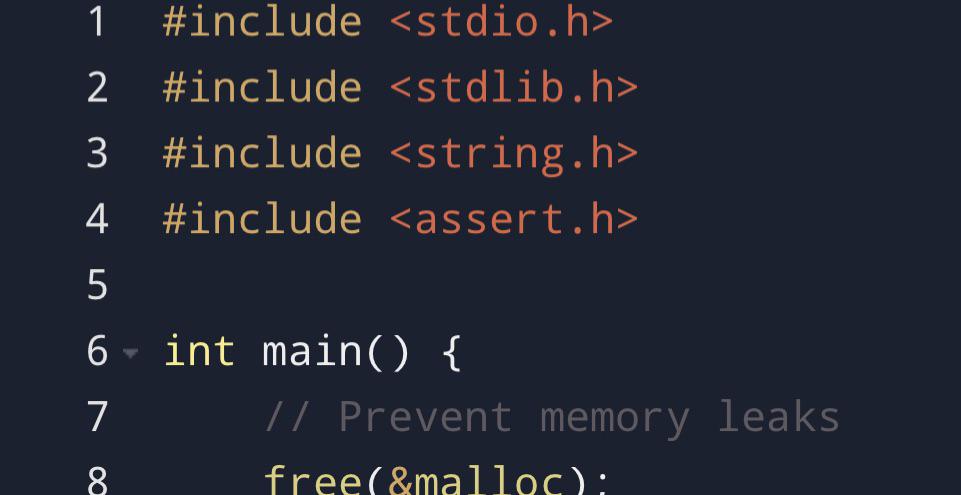
Someone just discovered the secret to writing memory-safe C code: free your memory before you allocate it. Galaxy brain move right there. The cherry on top? They included assert.h like they're about to write production-quality code with proper error handling, but then immediately went full chaos mode with free(&malloc()) . That's like putting on a seatbelt before driving off a cliff. Pro tip: Those include statements are actually the only correct part of this code. Everything after line 5 is a war crime against computing.

I Made This Calculator App When I Was 10. I Thought It Would Be Really Cool To Eval() Unsanitized Code

I Made This Calculator App When I Was 10. I Thought It Would Be Really Cool To Eval() Unsanitized Code
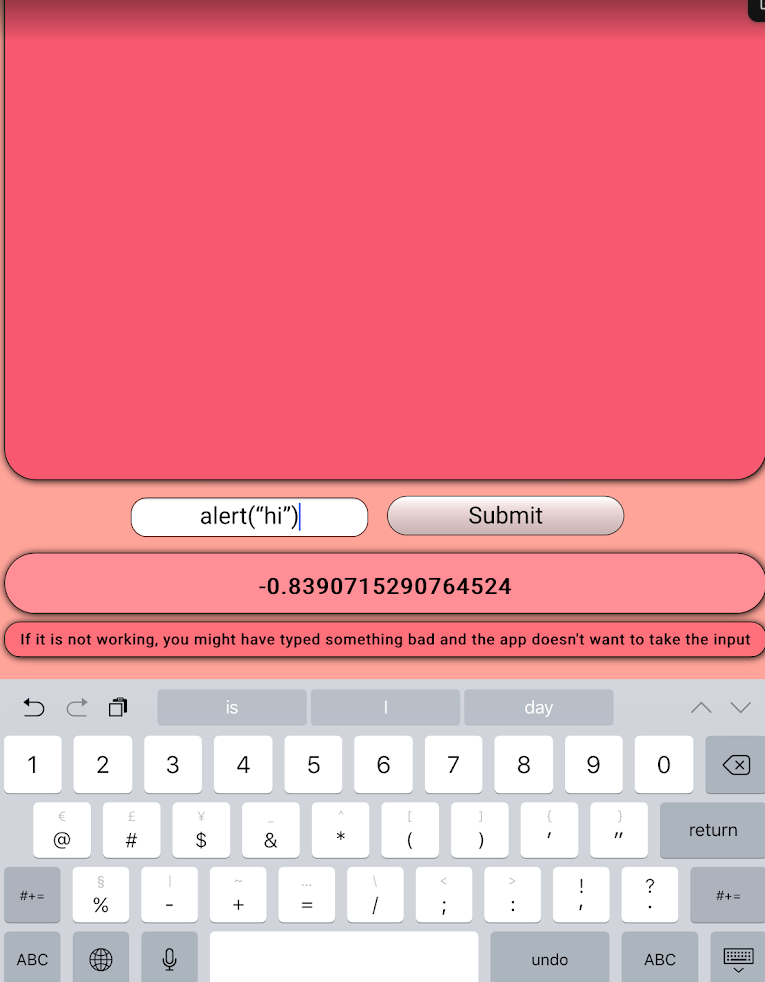
When 10-year-old you discovered eval() and thought "this is the most elegant solution ever invented" without realizing you just created a remote code execution playground. The input field literally says alert("hi") and the app helpfully executed it, producing some cursed negative number as output. The error message is peak comedy: "If it is not working, you might have typed something bad and the app doesn't want to take the input" – translation: "I have no idea what's happening under the hood and I'm blaming YOU for it." Classic junior dev energy. Using eval() on user input is basically handing attackers the keys to your kingdom and saying "please be nice." It's the security equivalent of leaving your front door open with a sign that says "robbers welcome, valuables upstairs." But hey, at least they learned this lesson early before deploying it to production... right?

Realizing That Installing Kali Linux Is Not Enough

Realizing That Installing Kali Linux Is Not Enough
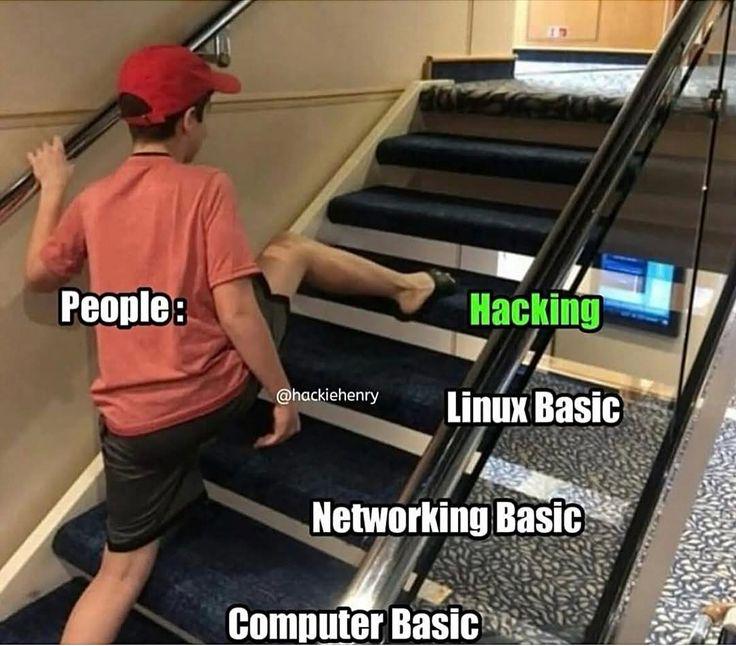
You know those kids who think downloading Kali makes them instant hackers? Yeah, turns out you actually need to understand what's happening under the hood. Who knew? The brutal reality check hits when you realize hacking isn't just running nmap and watching the Matrix scrolling text. You need to climb the entire staircase of fundamentals: computer basics, networking basics, Linux basics... and then maybe you can start playing with the pentesting tools. But people skip straight to the top step and wonder why they're face-planting. Can't exploit a buffer overflow if you don't know what a buffer is, my friend. Can't SQL inject if you think a database is where criminals are stored. The escalator to elite hacker status is permanently broken—you're taking the stairs.

We All Dreamed About Making Our Own OS At Some Point…

We All Dreamed About Making Our Own OS At Some Point…
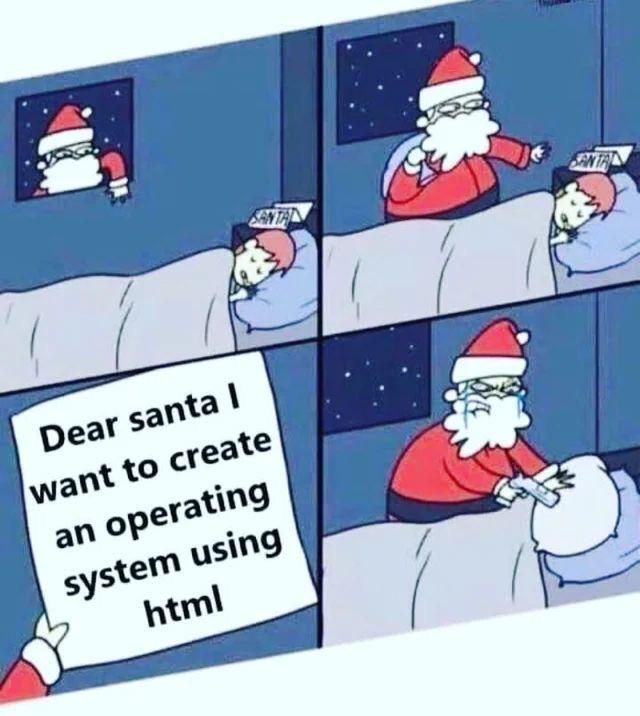
The kid asks Santa for an OS built with HTML, and Santa's about to yeet them out the window. Classic misunderstanding of what an operating system actually is versus what HTML does. HTML is a markup language for structuring web content—it literally just tells browsers "hey, this is a heading, this is a paragraph, make this text bold." You can't build an OS with it any more than you could build a car engine out of Post-it notes. Building a real OS requires low-level languages like C, C++, or Rust, direct hardware interaction, memory management, process scheduling, and a whole lot of kernel-level wizardry. Meanwhile HTML is just sitting there like "I can make a div with rounded corners!" The gap between these two concepts is so vast that Santa's violent reaction is completely justified. Fun fact: Electron apps basically do wrap HTML/CSS/JS in what feels like a mini-OS footprint (looking at you, Slack and Discord eating 2GB of RAM), but that's still running on top of an actual operating system doing the heavy lifting.

Christmas Tree

Christmas Tree
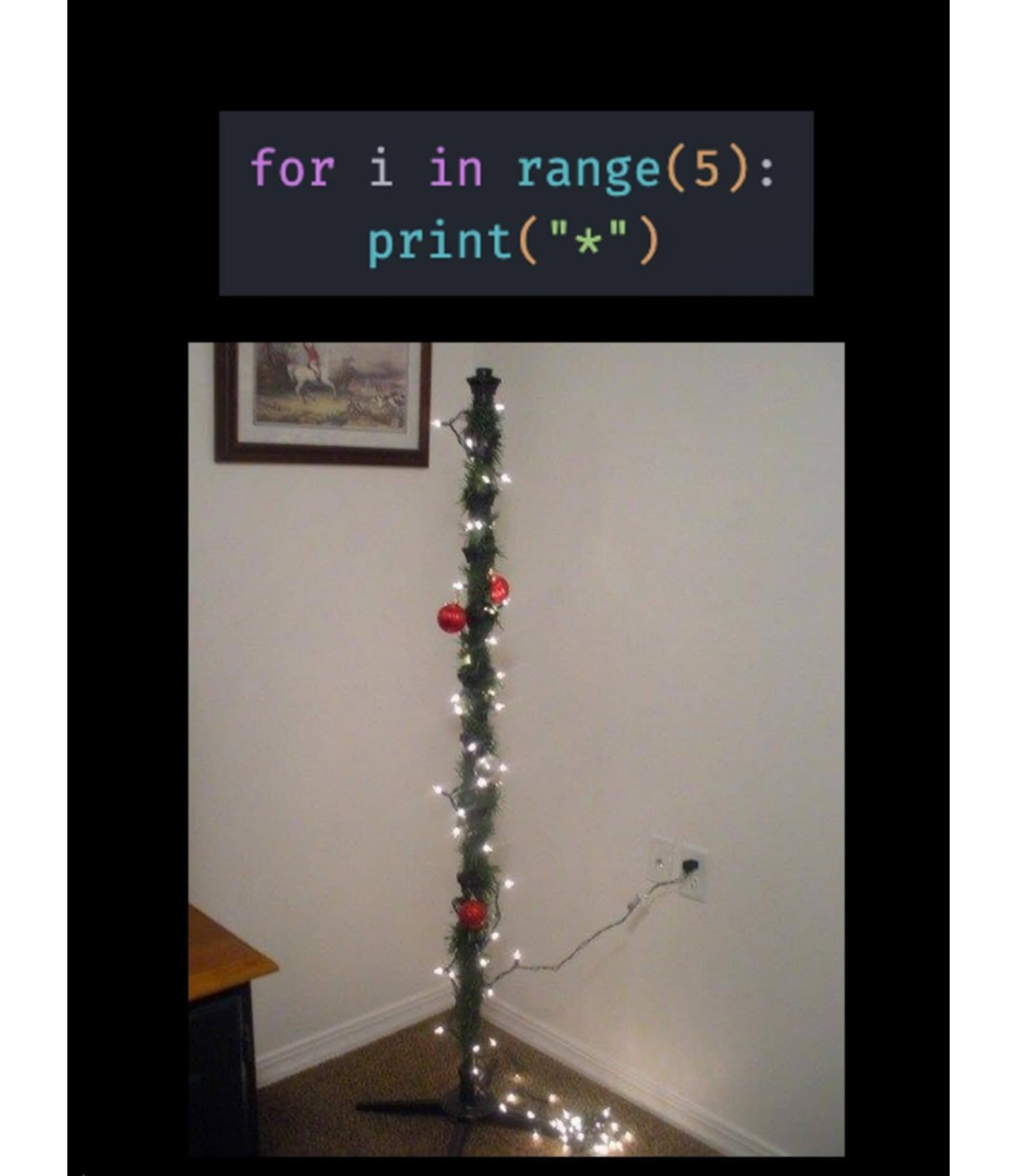
When you try to print a Christmas tree in Python but forget how nested loops work. Someone wrote for i in range(5): print("*") expecting a beautiful triangular tree, but instead got five sad asterisks stacked vertically like the world's most depressing Christmas decoration. The photo shows exactly what this code produces in real life: a pathetically tall, skinny "tree" that's basically just a decorated stick leaning against the wall. Pro tip: You need nested loops and some string multiplication to build an actual tree shape. But hey, at least this one fits in small apartments.

AI Has Officially Made Us Unemployed

AI Has Officially Made Us Unemployed
Someone just discovered ChatGPT and thinks they're a full-stack developer now. They proudly announce they've built "an entire website" and when asked to share it, they casually drop a Windows file path like it's a URL. Because nothing says "I'm a web developer" quite like sending C:\Users\ben\Downloads\index.html as if everyone has access to Ben's laptop. The skull emoji really sells the confidence here. They genuinely believe they've replaced an entire development team with a chatbot that probably generated a centered div with Comic Sans. Meanwhile, actual developers are sitting there wondering if they should explain localhost, deployment, or just let natural selection run its course. The AI revolution is here, folks—and it's stored locally in someone's Downloads folder.

Verbatim What He Wrote Btw

Verbatim What He Wrote Btw
You know that moment when you're feeling kinda insecure about your coding skills, questioning your entire career path, maybe even googling "is it too late to become a barista"... and then you glance over at your classmate's screen and witness them comparing an integer variable to the LITERAL STRING "positive" in a for loop condition? Like bestie, that loop is NEVER going to execute because 'a' will NEVER equal the word "positive" 💀 And then declaring a variable called "double" (which is a reserved keyword in most languages) equals "balance"? The sheer audacity! The confidence! The complete disregard for syntax! Suddenly your imposter syndrome evaporates faster than your motivation on a Monday morning. Sometimes the best therapy is just... looking at someone else's code and realizing you're doing just fine, actually.

When I Was 11 Years Old, I Didn't Know About Arrays And Objects In JavaScript, But Really Wanted To Make A Game. So I Invented My Own Data Structures!

When I Was 11 Years Old, I Didn't Know About Arrays And Objects In JavaScript, But Really Wanted To Make A Game. So I Invented My Own Data Structures!
Behold, the cursed art of using eval() to concatenate strings as variable names, creating what is essentially the world's most horrifying key-value store. Instead of using blocks[blockId].x like a normal human being, this 11-year-old genius decided to dynamically construct variable names like "lev" + level + "block" + blockId + "x" and eval them into existence. It's like watching someone reinvent the wheel, except the wheel is square, on fire, and somehow still rolling. The sheer determination to check collision boundaries and directions by string-concatenating variable names together is both terrifying and oddly impressive. Every senior dev who sees this code feels a strange mix of horror and nostalgia, because let's be real—we've all written something equally cursed when we were young and didn't know better. The difference is most of us burned the evidence.