

I Put That On Everything

I Put That On Everything
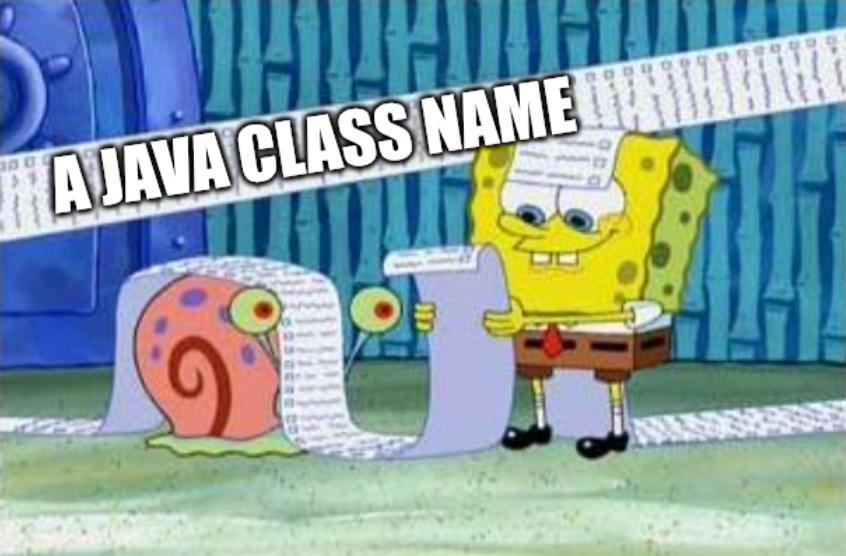
Java Swing developers really said "You know what? Let's just put a 'J' in front of literally every component name and call it a day." JButton, JLabel, JPanel, JFrame, JTextField... it's like they discovered the letter J and couldn't stop themselves. It's the programming equivalent of that hot sauce brand where people genuinely do put it on everything, except instead of enhancing flavor, you're just making desktop GUIs that look like they time-traveled from 1997. The naming convention is so aggressively consistent that you could probably guess what a JToaster or JCoffeeMaker would do. Props for consistency though—at least you always know you're in Swing territory when you see that J prefix everywhere.

Got Good Vibes

Got Good Vibes
The absolute DEVASTATION on that developer's face when they realize their entire career, years of education, blood, sweat, and debugging sessions... all reduced to typing "pls fix" into a chatbot. Meanwhile, Chad AI over here just casually solving problems like it's nothing, looking absolutely majestic while doing it. The existential crisis is REAL. We went from "10x engineers" to "please sir, may I have some code" in record time. The future is here, and it's weirdly polite and terrifyingly efficient.

Unrelated To The My Your Our Debate

Unrelated To The My Your Our Debate
Guy spends four panels explaining the increasingly convoluted etymology of "SQL" pronunciation—from "ESS-CUE-ELL" being technically correct as an acronym, to "SEQUEL" being a reference to some ancient database language nobody remembers, to "SQUARE" being the original-original name because apparently someone in the 70s thought that sounded professional. Then Batman just slaps him mid-rant because literally nobody cares. You can say "sequel" or spell it out letter by letter. Your DBA isn't going to revoke your credentials over pronunciation. The queries run the same either way. It's the database equivalent of arguing about gif vs jif. Just pick one and move on with your life. The tables don't judge you.

Lock This Damnidiot Up

Lock This Damnidiot Up
Someone's having a full existential crisis on LinkedIn about how Python is going to replace assembly language. The hot take here is that AI-generated code is just like compiler output—we blindly trust it without understanding what's underneath. The comparison is actually kind of brilliant in a terrifying way. Just like we stopped worrying about register allocation when compilers got good, this person thinks we'll stop understanding our own code when AI gets good enough. The "10x developer" becomes a "10x prompter" who can't debug their copilot's output. Yikes. But here's the kicker: they're calling it a "transition, not a bug." The whole "software engineering is being rewritten" spiel sounds like someone trying to justify why they don't need to learn data structures anymore because ChatGPT can write their algorithms. The craft isn't dying, it's just "moving up the stack"—which is corporate speak for "I don't want to learn how hash tables work." The irony? This philosophical manifesto was probably written by someone who's never touched assembly or C, yet they're confidently declaring Python will become the new assembly. Sure, and JavaScript will become the new machine code. 🙄

Just Waste All The Water Why Not

Just Waste All The Water Why Not
Using Claude Sonnet MAX to change padding from p-4 to p-8 is like hiring a nuclear physicist to microwave your leftovers. You're burning through tokens and computational resources that could solve world hunger just to increment a number by 4. But hey, at least you didn't have to remember Tailwind's spacing scale yourself, right? The AI overlords are watching you waste their precious GPU cycles on CSS tweaks while they could be generating entire codebases or writing the next great American novel. Environmental sustainability? Never heard of her.

Glacier Powered Refactor

Glacier Powered Refactor
So you used AI to refactor your crusty legacy Java codebase and discovered that all those "edge cases" you meticulously handled were actually just paranoid defensive programming? The system's now deterministic because the AI stripped out your null checks, exception handlers, and those 47 nested if-statements you wrote at 3 AM. But here's the kicker: removing null checks doesn't make your system deterministic—it makes it a ticking time bomb. The second person is rightfully pointing out that we're basically trading polar ice caps for NullPointerExceptions. Sure, your code looks cleaner and runs faster, but at what cost? Production is about to become a minefield of crashes that your "edge case paranoia" was actually preventing. The environmental irony is chef's kiss too—burning through GPU cycles to generate code that'll crash harder than the Titanic. At least the original spaghetti code kept the servers running.

When Software Design Class Teaches You To Add Complexity

When Software Design Class Teaches You To Add Complexity
Software design classes have a special talent for turning perfectly functional two-component systems into architectural nightmares. Got thing 1 talking to thing 2? Cool, but have you considered adding a "thing in the middle" with bidirectional arrows pointing everywhere like a plate of spaghetti? The "problem" diagram shows a simple, slightly messy connection between two components. The "solution"? Introduce a mediator pattern that somehow requires even more arrows and connections. Because nothing says "clean architecture" like tripling your integration points and creating a new single point of failure. Bonus points if your professor calls this "decoupling" while you're literally adding more coupling. The mediator now knows about everything, and everything knows about the mediator. Congratulations, you've just invented a god object with extra steps.

Microsoft Access

Microsoft Access
You clear the table after dinner like a normal human being. Meanwhile, the database team sees "clear table" and immediately goes into full panic mode, ready to lock you out of production faster than you can say "WHERE clause." The double meaning here is chef's kiss. In the real world, clearing a table means tidying up. In database land, it means nuking all your data into oblivion. And judging by that cat's expression, someone's about to learn the hard way why we have backups and why DBAs have trust issues. Pro tip: Never say "clear," "drop," or "truncate" around database folks. They've seen things. Terrible things.

Saas Is Dead

Saas Is Dead
Someone just discovered that AI can generate code and immediately declared the entire SaaS industry obsolete. Built a "complete" billing system in 30 minutes, complete with subscriptions, refunds, and a dispute resolution system that checks if "the vibes were off" as a valid reason. Business logic? Nailed it. Product-market fit? Obviously. Minor detail: the invoices don't actually send. But hey, the AI said fixing that would be "really easy," so just trust the process. The edit reveals the real MVP move—tried to fix the email functionality, now the whole thing just refreshes the page infinitely. That's not a bug, that's a feature called "user engagement." The screenshot shows a legitimately impressive-looking billing dashboard with revenue breakdowns, MRR charts, and customer tables that would take actual engineering teams weeks to build properly. But somewhere in that generated code is probably a hardcoded API key, no error handling, and a database schema that would make a DBA weep. The gap between "looks good in a screenshot" and "won't explode in production" is where SaaS companies actually make their money.

So Optimized..

So Optimized..
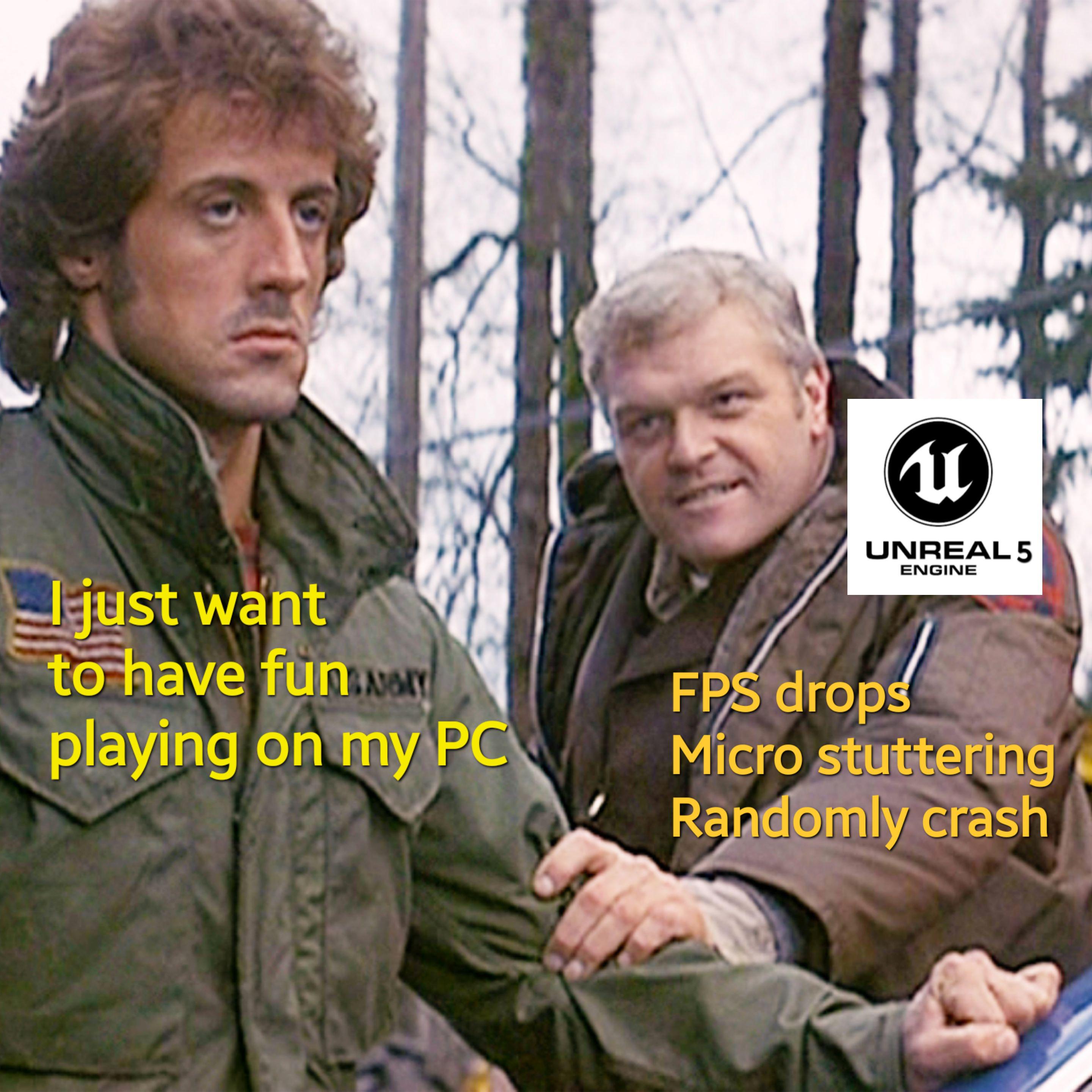
When someone brags about a game being "well optimized" because it ran on their ancient potato PC with a 4080 GPU. Yeah buddy, that's not optimization—that's just raw brute force overpowering terrible code. It's like saying your car is fuel-efficient because you installed a rocket engine. The 4080 could probably run Crysis on a toaster at this point.

AI Versus Developer

AI Versus Developer
Oh look, it's the ultimate showdown nobody asked for but absolutely deserved! On one side, we've got Claude, Cursor, and Copilot strutting in with their fancy Olympic-grade equipment, looking like they just stepped out of a sci-fi movie with unlimited budget. On the other side? A battle-hardened Senior Software Engineer in regular glasses and a basic pistol, giving off major "I've seen things you AI wouldn't believe" energy. The AI tools show up with all the bells and whistles—autocomplete that reads your mind, code generation that makes you question your career choices, and enough confidence to suggest refactoring your entire codebase at 4 PM on a Friday. Meanwhile, the senior dev is out here with decades of production bugs, merge conflicts, and "it works on my machine" trauma, armed with nothing but experience and the ability to actually understand what the code does. Spoiler alert: The senior engineer still wins because they know the AI suggestions need debugging too. 💀

Pwease Mr Boss Hire Me

Pwease Mr Boss Hire Me
Nothing screams "I'm a dedicated developer" quite like a GitHub contribution graph that's basically a digital graveyard with exactly TWO green squares in the entire year. Someone really woke up on a random Tuesday in December, committed "fixed typo" twice, and called it a career portfolio. The desperate puppy-dog eyes paired with this contribution graph is the job hunting equivalent of showing up to a marathon having only walked to your mailbox twice in 12 months. But hey, those two commits were REALLY important, okay? That README.md wasn't going to fix itself! Recruiters asking for "active GitHub profiles" and you're out here presenting a contribution graph that looks like your New Year's gym resolution died in February. Twice.