

When Your Phone Has A Menu That No User In The Universe Would Ever Have Any Reason To Touch But Then You Get To 🥵

When Your Phone Has A Menu That No User In The Universe Would Ever Have Any Reason To Touch But Then You Get To 🥵
You know you're a true developer when you find yourself six layers deep in your phone's settings, casually browsing through security certificates like it's your Netflix queue. Normal people see "View security certificates" and their brain immediately goes into sleep mode. But developers? We're out here toggling root CAs like we're adjusting the thermostat. There's something deeply satisfying about having the power to enable or disable trust for entire certificate authorities. It's like being handed the keys to the internet's trust system. "Oh, you want me to trust eMudhra Inc? Let me think about it..." *casually flips toggle* Pure power trip energy. The best part? You'll probably never need to touch these settings in your entire life, but knowing they exist and understanding what they do gives you that warm fuzzy feeling of technical superiority. Plus, it's great party material when you want to clear a room real quick.

Do You Have A Pair Of Ints

Do You Have A Pair Of Ints
Someone finally visualized the data type hierarchy using fashion choices. Shorts for short , longs for long , and those weird capri pants that nobody asked for representing int . The real genius here is that just like capris, ints are the awkward middle ground that somehow became the default everyone uses. You don't really need them to be that specific length, but here we are, declaring them everywhere out of habit. Also yes, you technically have a "pair of ints" when you're wearing those capris. The pun game is strong with this one.

The Chosen One

The Chosen One
Behold, the prophecy has been fulfilled! While mere mortals struggle with arrays starting at zero, there exists ONE who transcends the boundaries of conventional indexing. The legendary developer who doesn't need to mentally subtract one every single time they access an element. The warrior who looks at array[4] and actually gets the fourth item instead of the fifth. This mystical being has achieved what the rest of us can only dream about—natural fluency in zero-based indexing without the constant existential crisis. They are Number Four, but they're actually in position three, and somehow their brain doesn't implode from the paradox. Truly the chosen one of our generation.

Four

Four
Someone just committed their EC private key to the repo with the BEGIN and END delimiters still attached, and honestly? That's the least of their problems. The real crime here is that our feline friend is showing us exactly four fingers—because nothing says "I understand elliptic curve cryptography" quite like accidentally exposing your private key in version control. The joke plays on the title "Four" and the visual of four fingers, but the actual security nightmare is that EC private keys should NEVER see the light of day, let alone get pushed to a public repository. Time to rotate those keys, revoke all certificates, and maybe add *.pem to your .gitignore before the security team finds out. Pro tip: If your private key has ever touched a commit history, it's not private anymore—it's just a very embarrassing public string.

When Claude Runs Out Of Credits Midway

When Claude Runs Out Of Credits Midway
You know you've reached peak dependency when your AI coding assistant is basically holding your codebase hostage. Claude's out here acting like the mob boss of your development workflow, and you're just desperately swiping that credit card faster than you can say "refactor my legacy code." The beautiful irony? You started using AI to save time and money, but now you're in a committed financial relationship with an LLM that knows exactly when you need it most. Right in the middle of debugging that nightmare function at 2 AM? Pay to continue. Halfway through generating that API documentation you've been procrastinating for months? Card declined, buddy. And that codebase looking all cozy with Claude? Yeah, she's not going anywhere. You two are a package deal now. Welcome to 2024, where your relationship status is "It's complicated" with an AI chatbot, and your wallet is crying in the corner.

It's Just A Quick Code Change

It's Just A Quick Code Change
Oh, you want me to "just quickly" add a button? Sure, let me just casually derail my entire sprint, abandon all my carefully planned tasks, and throw my Jira board into absolute chaos because someone thinks code works like a light switch. The sheer AUDACITY of non-technical people thinking they can just waltz in with their "quick changes" while you're knee-deep in refactoring a legacy codebase that's held together by duct tape and prayer. That face? That's the face of someone calculating exactly how many hours of debugging, testing, code review, and deployment this "quick task" will actually take. Spoiler alert: it's never quick.

Anon Died On The "Clang Format Bad" Hill

Anon Died On The "Clang Format Bad" Hill
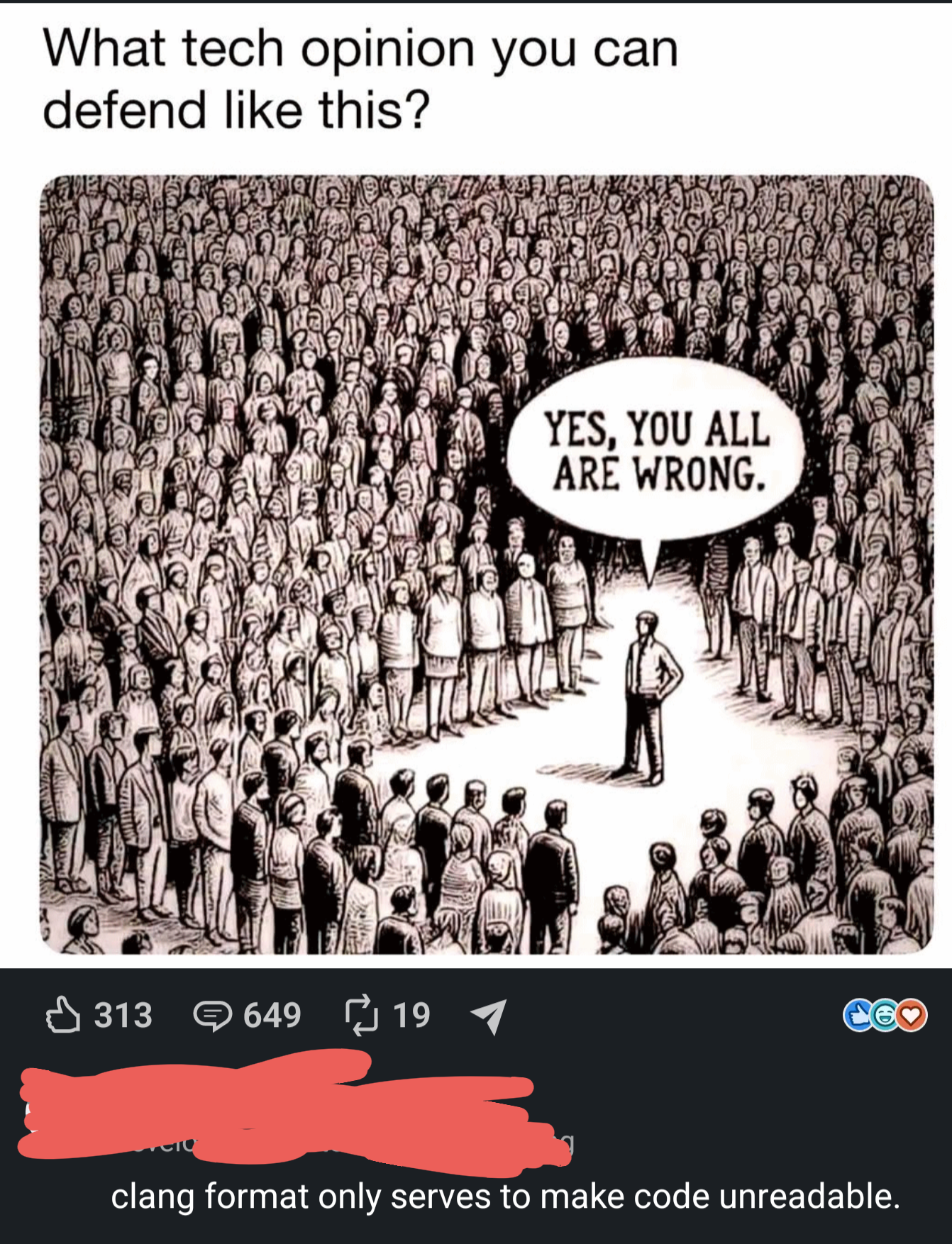
Oh honey, imagine having the AUDACITY to stand before the entire developer universe and declare that clang-format makes code unreadable. The sheer confidence! The unshakeable conviction! One brave soul decided that today was the day to martyr themselves on the altar of code formatting opinions, facing down literally everyone with that iconic "YES, YOU ALL ARE WRONG" energy. Clang-format is an automatic code formatter for C/C++/Java/JavaScript that enforces consistent styling across your codebase. Most devs treat it like a blessing from the coding gods because it ends the eternal holy wars about brace placement and indentation. But not our hero here—they chose VIOLENCE and decided this hill was worth dying on. Spoiler alert: they died alone on that hill while everyone else enjoyed their beautifully formatted, consistent code. The commitment to being contrarian? Absolutely chef's kiss. The survival rate of this opinion? Zero percent.

UGREEN 40Gbps M.2 NVMe Enclosure (SSD Not Included)

UGREEN 40Gbps M.2 NVMe Enclosure (SSD Not Included)
Transmission files in seconds: This product is equipped with the ASM2464PD chip, and the maximum speed can reach 3600MB/s; compatible with USB4/3.2/3.1/3.0/2.0 & Thunderbolt 3/4.NOTE: Thunderbolt 4 c…

PC Gang

PC Gang
The console wars are cute and all, but PC gamers are sitting there like Tony Stark with unlimited resources while console players debate which locked-down ecosystem to pledge allegiance to. Why choose between 30fps and 60fps when you can have 144Hz, ray tracing, mod support, and the ability to actually compile your own game engine? Plus, that RGB lighting isn't going to install itself. Console exclusives are temporary, but Steam libraries with 500 unplayed games are forever.

Junior Setting Up Their First Website

Junior Setting Up Their First Website
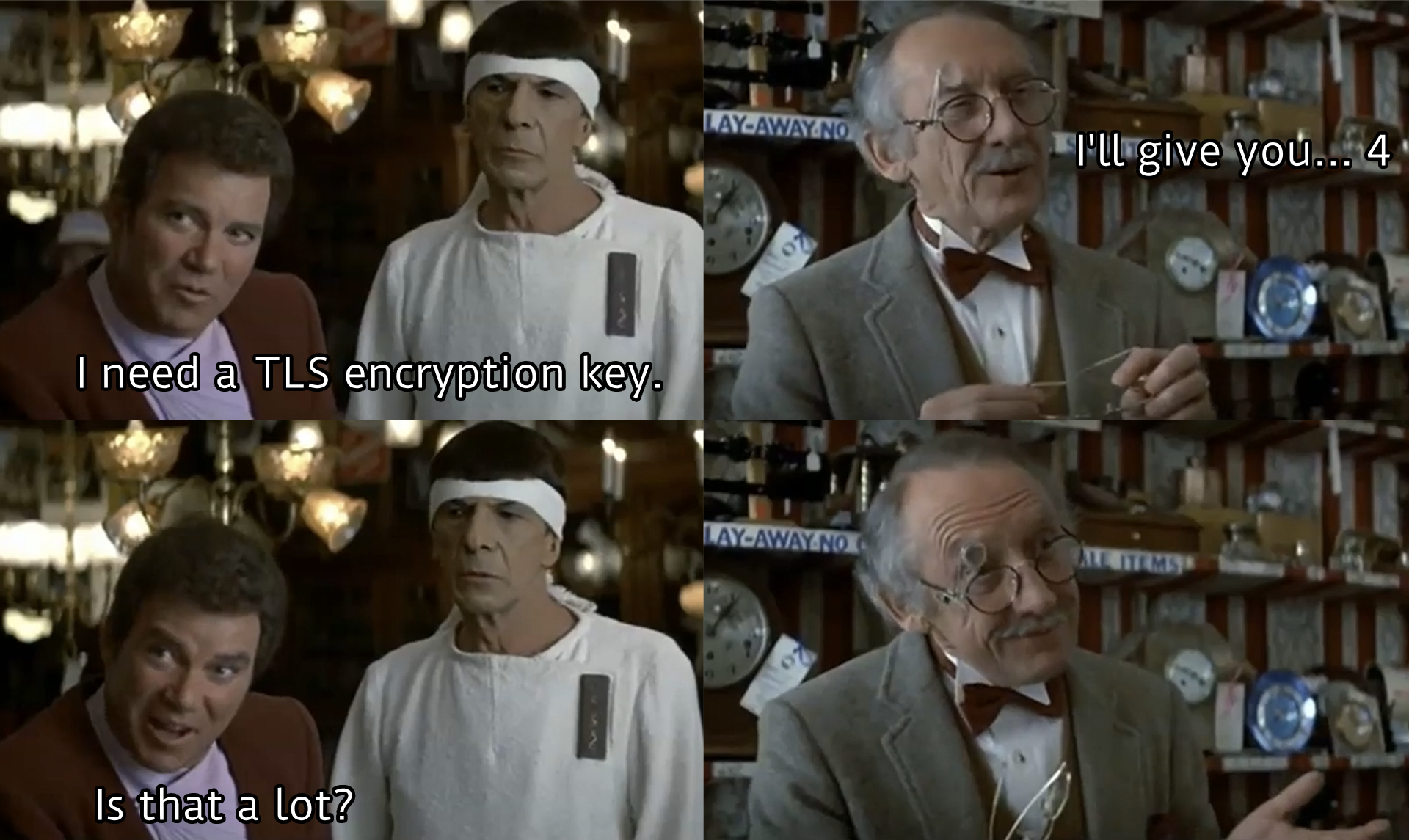
Junior dev asks for a TLS encryption key and gets offered 4. Their innocent "is that a lot?" response is pure gold. In reality, you typically need just one key pair for TLS/SSL certificates (a private key and a public key). Getting offered 4 is like asking for a screwdriver and someone handing you a whole toolbox. The junior has no idea if that's normal, excessive, or if they're about to configure a Pentagon-level security setup for their "Hello World" landing page. The beauty here is the complete lack of context that defines junior dev life—they're just trying to get HTTPS working so Chrome stops throwing that "Not Secure" warning, and now they're drowning in cryptographic key management. Tomorrow they'll be Googling "how many TLS keys is too many" at 2 AM.

It Was Fun While It Lasted

It Was Fun While It Lasted
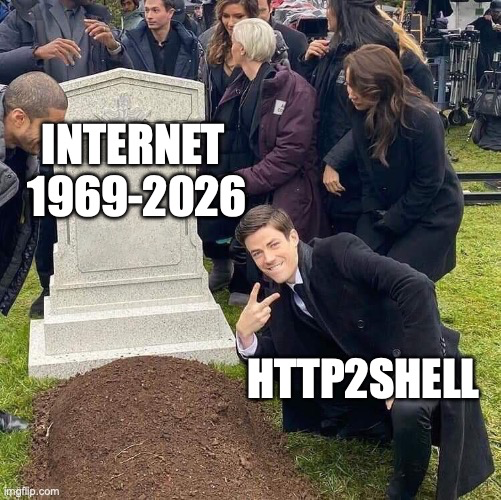
So the internet is getting buried in 2026, and HTTP/2 is just there smiling for the camera like it's about to inherit the kingdom. The joke here is that while everyone mourns the death of the modern web as we know it, HTTP/2 will survive and thrive—probably because it'll be the only protocol left that can handle the post-apocalyptic wasteland of shell scripts and terminal commands. HTTP/2 Shell (http2shell) is basically a tool that lets you execute shell commands over HTTP/2, which sounds cool until you realize it's essentially turning your fancy web protocol into a glorified remote terminal. So when the internet dies and we all go back to command-line interfaces like cavemen, HTTP/2 Shell will be sitting pretty while the rest of us are crying over our lost React apps and CSS frameworks. The real kicker? That guy's enthusiasm is spot-on. While everyone else is in mourning, the backend devs who never trusted frontend frameworks anyway are just vibing.

The Original Source Of Top Secure Number

The Original Source Of Top Secure Number
Ah yes, the legendary number "4" - chosen by fair dice roll, guaranteed to be random. Developers everywhere are still using this battle-tested random number generation technique for their cryptographic keys, session tokens, and password salts. Why bother with complex RNG algorithms when you can just hardcode the winning lotto number? Security through obscurity at its finest. The fact that this number keeps winning the lottery just proves how truly random it is, right? Fun fact: This is actually a reference to the classic XKCD comic where someone generates a random number by rolling a dice and getting 4. The joke being that hardcoding a "random" value defeats the entire purpose of randomness - yet we've all seen production code with const RANDOM_NUMBER = 4; somewhere in the codebase.

Isn't This Week Awesome

Isn't This Week Awesome
The internet visualized as a pile of precariously stacked Lego bricks held together by hopes, dreams, and duct tape. This is basically what happens when you realize the entire digital infrastructure we rely on daily is just layers upon layers of legacy code, deprecated protocols, and frameworks built on top of frameworks built on top of more frameworks. That one critical brick at the bottom? Probably a Perl script from 1997 that nobody dares to touch because the original developer retired and took all the documentation with them. The foundation looks stable until you remember that TCP/IP, DNS, and half the security certificates are basically held together by gentleman's agreements and the collective anxiety of sysadmins worldwide. One wrong pull request and the whole thing collapses faster than your production server on Black Friday.

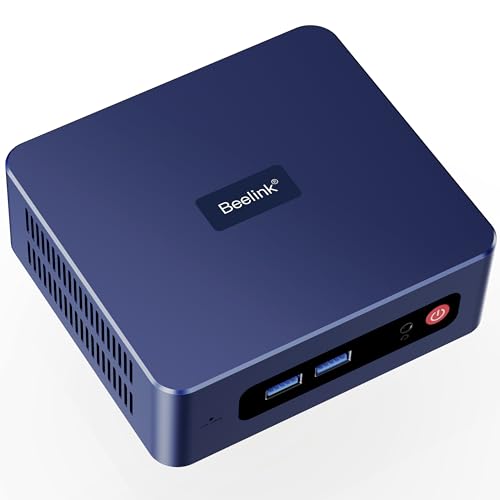
Beelink SER3 Mini PC AMD Ryzen 3 3200U (up to 3.5GHz), 8GB DDR4 480GB PCIE3.0 SSD Mini Computer, Radeon Vega 3 Graphics,1000Mbps LAN, Dual HDMI 4K Display Home-Office PC

Beelink SER3 Mini PC AMD Ryzen 3 3200U (up to 3.5GHz), 8GB DDR4 480GB PCIE3.0 SSD Mini Computer, Radeon Vega 3 Graphics,1000Mbps LAN, Dual HDMI 4K Display Home-Office PC
【SER3 Next-Gen Light Office Mini PC】Beelink Mini pc New SER3 AMD Ryzen 3 3200U Processor (2.6-3.5GHz 2C/4T),with Radeon Vega 3 Graphics 3core 1200 MHz, Light office, 4K multimedia playback, virtual m…