

Single point of failure Memes

Posts tagged with Single point of failure
Down The Drain We Go

Down The Drain We Go
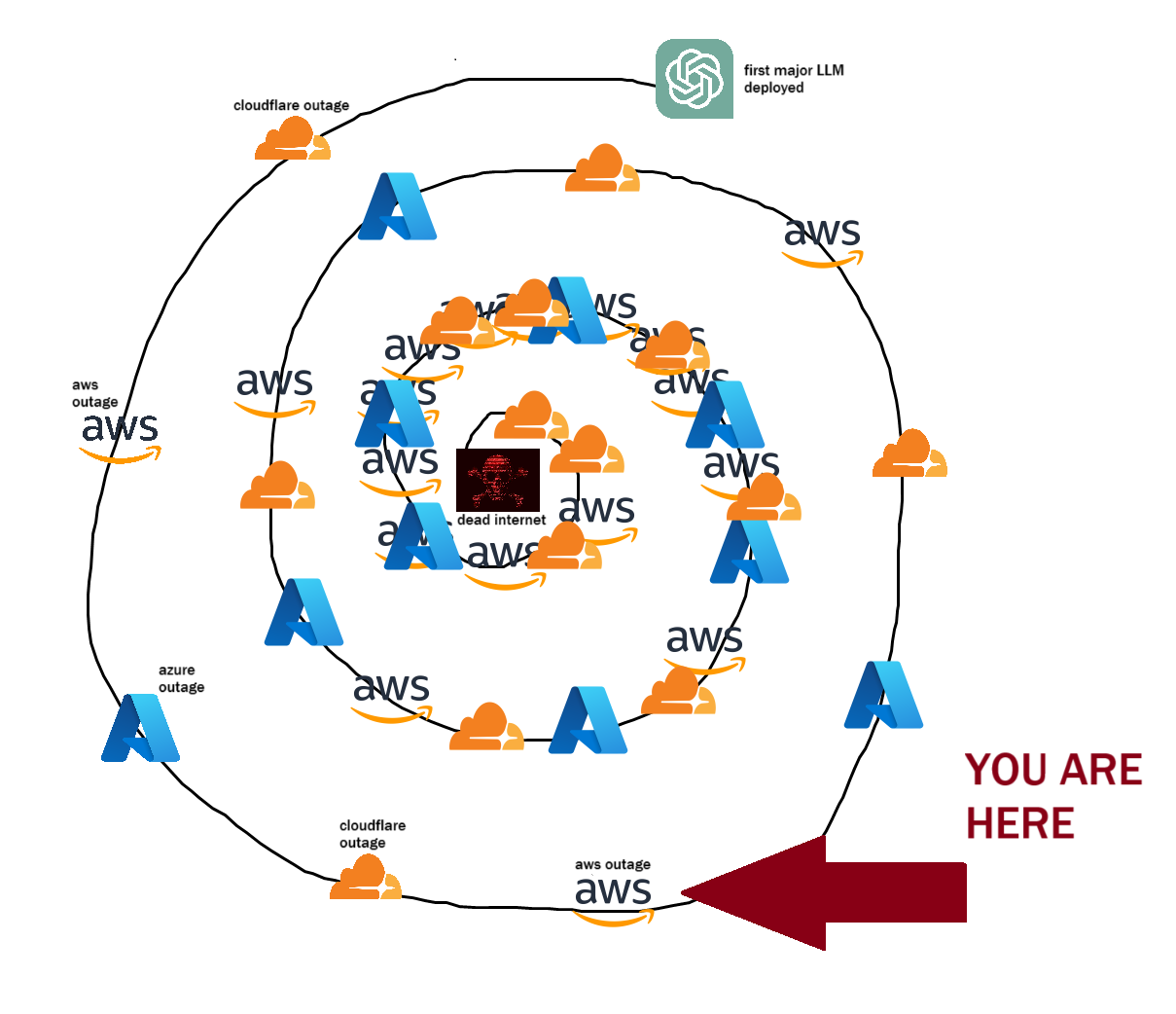
Picture the internet as a beautiful, fragile ecosystem held together by duct tape and prayer. Now watch it spiral down the drain because literally EVERYTHING depends on AWS, Azure, and Cloudflare. One Cloudflare outage? Half the internet goes dark. AWS decides to take a nap? Your startup, your bank, your streaming service, and probably your smart toaster all scream in unison. The center of this glorious death spiral? "Dead internet" – because when these cloud giants sneeze, the entire digital world catches pneumonia. The cherry on top? That little "first major LLM deployed" at the start of the spiral, suggesting AI might've kicked off this beautiful cascade of chaos. And there you are, helplessly watching your carefully architected microservices get flushed along with everyone else's infrastructure. Single point of failure? Never heard of her! Welcome to modern cloud architecture where "distributed systems" somehow all route through the same three companies. Redundancy is just a fancy word we use in meetings to feel better about ourselves.

The Internet's Precarious Foundation

The Internet's Precarious Foundation
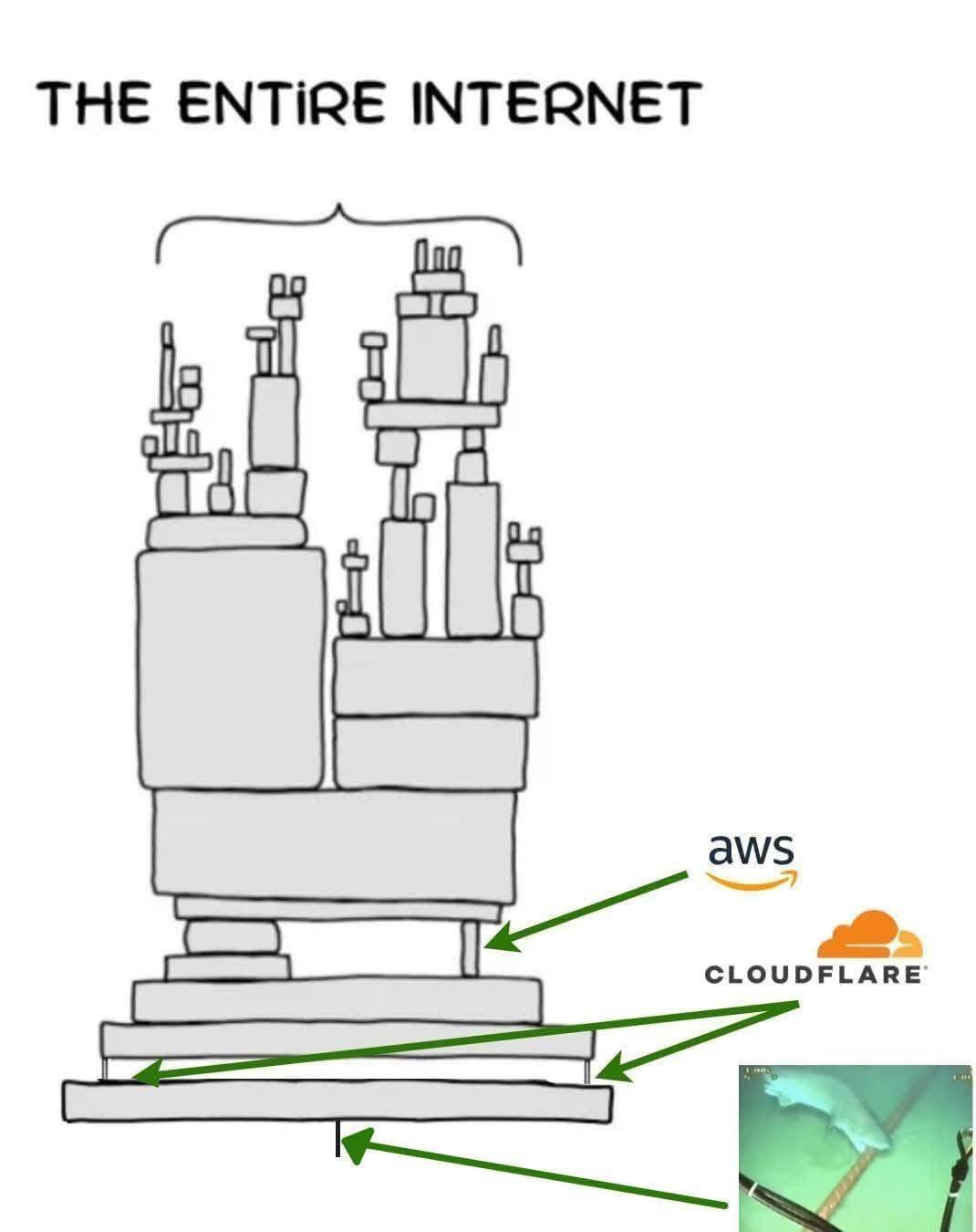
The internet isn't some magical cloud floating in the ether—it's a rickety tower of services precariously balanced on AWS and Cloudflare. And what's holding it all together? A single underwater cable that looks like it could be severed by a curious fish with an existential crisis. One hungry shark away from global digital apocalypse. The next time your boss asks "why is the website down?" just point to this image and say "a tuna had indigestion near Singapore."

The Internet's Precarious Foundation

The Internet's Precarious Foundation
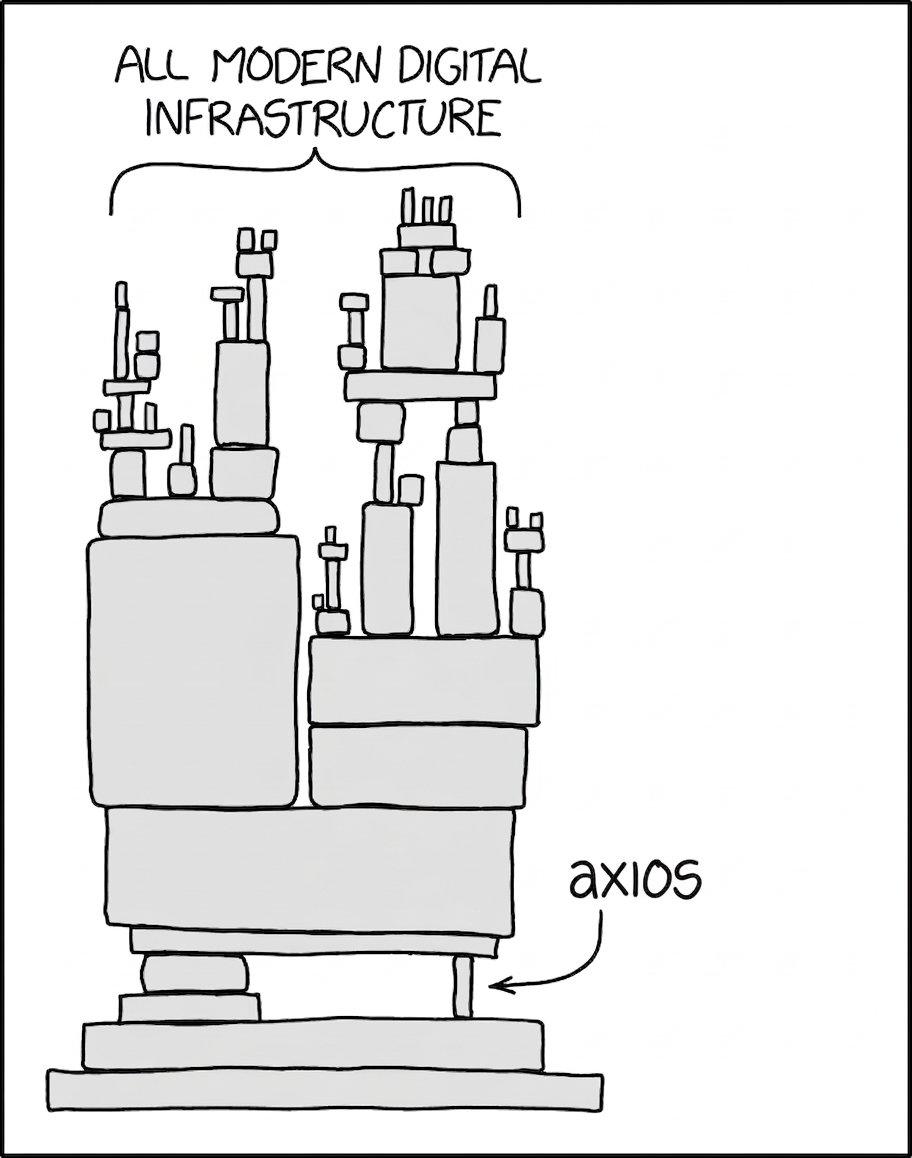
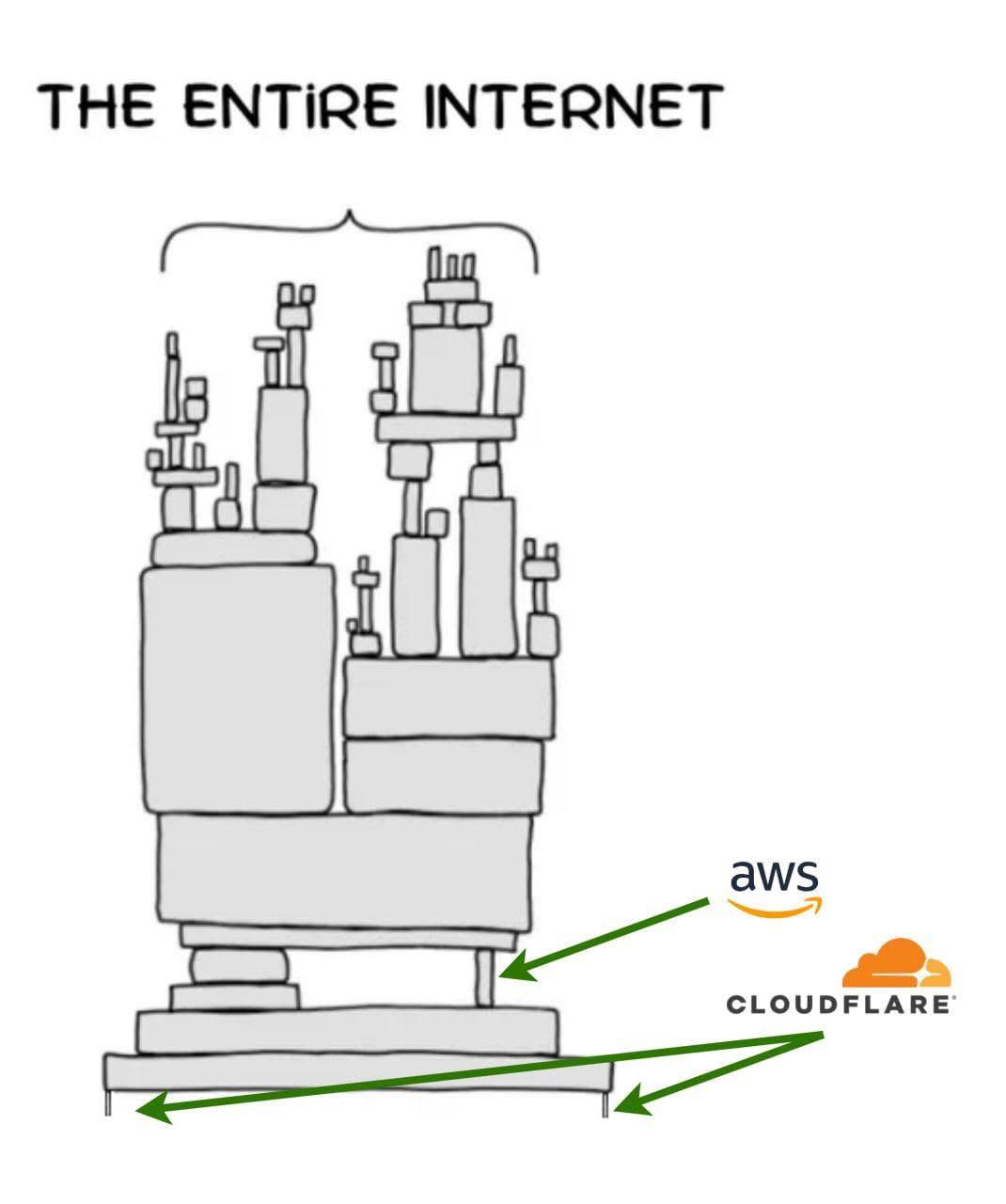
The entire internet is depicted as a massive, precarious tower of servers and infrastructure, but the whole thing is being held up by a single Cloudflare support beam. One tiny service outage and civilization collapses! This is basically what happened during the July 2020 Cloudflare outage when half the web went dark for 30 minutes because someone tripped over a cable (or something equally trivial). Every DevOps engineer just felt a cold shiver down their spine remembering that day. Single point of failure? More like single point of "we're all doomed."

The Entire Internet Depending On Cloudflare

The Entire Internet Depending On Cloudflare
The digital equivalent of building a skyscraper on toothpicks. When Cloudflare sneezes, half the internet calls in sick. Remember that 2022 outage when we all suddenly discovered how many services were secretly running on their CDN? Nothing like watching DevOps teams worldwide simultaneously open Slack to type "It's not just us, right?" while frantically checking status pages that are—plot twist—also hosted on Cloudflare. And AWS is just chilling there as the middle support, pretending they've never caused a similar panic. The internet's not distributed—it's just a very elaborate game of Jenga being played by a handful of cloud providers.

When The Cloud Has Actual Clouds

When The Cloud Has Actual Clouds
The fog isn't just atmospheric—it's a metaphor for your infrastructure choices. When AWS sneezes, apparently even 900-year-old castles disappear from existence. This is why your boss keeps mumbling about "multi-cloud strategy" while staring vacantly into the distance during meetings. The castle didn't crash; it's just waiting for us to refresh the page 47 times and restart our browsers.

AWS Outage Matters

AWS Outage Matters
When Amazon Web Services snaps its fingers, half the internet vanishes into digital dust. The meme perfectly captures the terrifying reality of modern tech infrastructure—we've built our entire digital civilization on a handful of cloud providers, and when one goes down, chaos reigns. Remember that time you couldn't watch Netflix, check Reddit, and order food all at once? That wasn't a coincidence, that was AWS having a bad day. Single point of failure? More like single point of "guess I'll go touch grass today."

The Internet's Single Point Of Failure

The Internet's Single Point Of Failure
Ah, the classic "it's all held together by one tiny thing" situation. The image shows the entire internet balanced precariously on a single AWS US-East-1 region. For the uninitiated, US-East-1 is Amazon's oldest and largest data center region - and when it goes down, half the internet seemingly vanishes with it. Your boss: "Why is our site down? What did you break?" You: "Well, technically, I didn't break anything. The entire digital economy just happens to be balanced on a single point of failure in Virginia." Nothing says "robust architecture" quite like having Netflix, Reddit, Disney+, and your company's mission-critical app all competing for the attention of the same overworked server farm. It's basically the digital equivalent of putting all your eggs in one basket, then putting that basket on a unicycle.

In A Galaxy Far Far Away But Still In Us-East-1

In A Galaxy Far Far Away But Still In Us-East-1
Ah, the classic cloud architect's lament. AWS promised us the holy grail of scalability, yet somehow became our new single point of failure. Nothing says "I've made a terrible mistake" quite like watching your entire infrastructure collapse because us-east-1 decided to take a coffee break. The irony burns hotter than Mustafar's lava. We migrated to the cloud to avoid downtime, only to discover we've just outsourced our problems to Jeff Bezos. Multi-region deployment? That was apparently on the roadmap right after "figure out how to decipher our own AWS bill."

Who Would Have Guessed A Single Point Of Failure Was A Bad Idea

Who Would Have Guessed A Single Point Of Failure Was A Bad Idea
Scooby-Doo taught us more about system architecture than any computer science degree. The top panel shows our hero proudly unveiling "decentralized computing" - a robust, distributed system that can withstand partial failures. But plot twist! In the bottom panel, he dramatically reveals that your company's "decentralized" solution was actually centralized computing all along - a single server disguised as a distributed system, ready to collapse when that one critical node fails at 3 AM on a holiday weekend. And you would've gotten away with it too, if it weren't for those meddling SREs!

The Entire Internet Runs On AWS US-East-1

The Entire Internet Runs On AWS US-East-1
The truth hits harder than a 503 Service Unavailable error! This stick figure drawing perfectly captures how a shocking amount of the internet's infrastructure runs through a single AWS data center. When US-East-1 sneezes, half the web catches a cold. Remember that 2021 outage that took down Netflix, Disney+, and even Amazon's own ability to deploy fixes? Good times. It's like having your entire startup's fate depend on one overworked server rack in Virginia that's held together with zip ties and prayers.

Daddy What Did You Do In The Great AWS Outage Of 2025

Daddy What Did You Do In The Great AWS Outage Of 2025
Future bedtime stories will feature tales of the mythical AWS outage of 2025. Dad sits there, thousand-yard stare, remembering how he just watched the status page turn red while half the internet collapsed because someone decided DynamoDB should be the single point of failure for... everything. The real heroes were the on-call engineers who had to explain to executives why their million-dollar systems were defeated by a database hiccup. Meanwhile, the rest of us just refreshed Twitter until that went down too.

Always My On-Call Shift

Always My On-Call Shift
Oh look, it's the famous "house of cards" we call modern infrastructure! The meme brilliantly shows how the entire digital world apparently balances on a single AWS US-East-1 region. Nothing quite like getting paged at 3 AM because Jeff Bezos's hamsters stopped running in Virginia, and suddenly half the internet is down. And of course, it's always during your on-call shift. The best part? Your CEO asking "why don't we have redundancy?" while simultaneously rejecting your multi-region architecture proposal because it was "too expensive." Ah, the sweet smell of technical debt in the morning.