

Senior dev Memes

Posts tagged with Senior dev
A Real Dev Knows It

A Real Dev Knows It
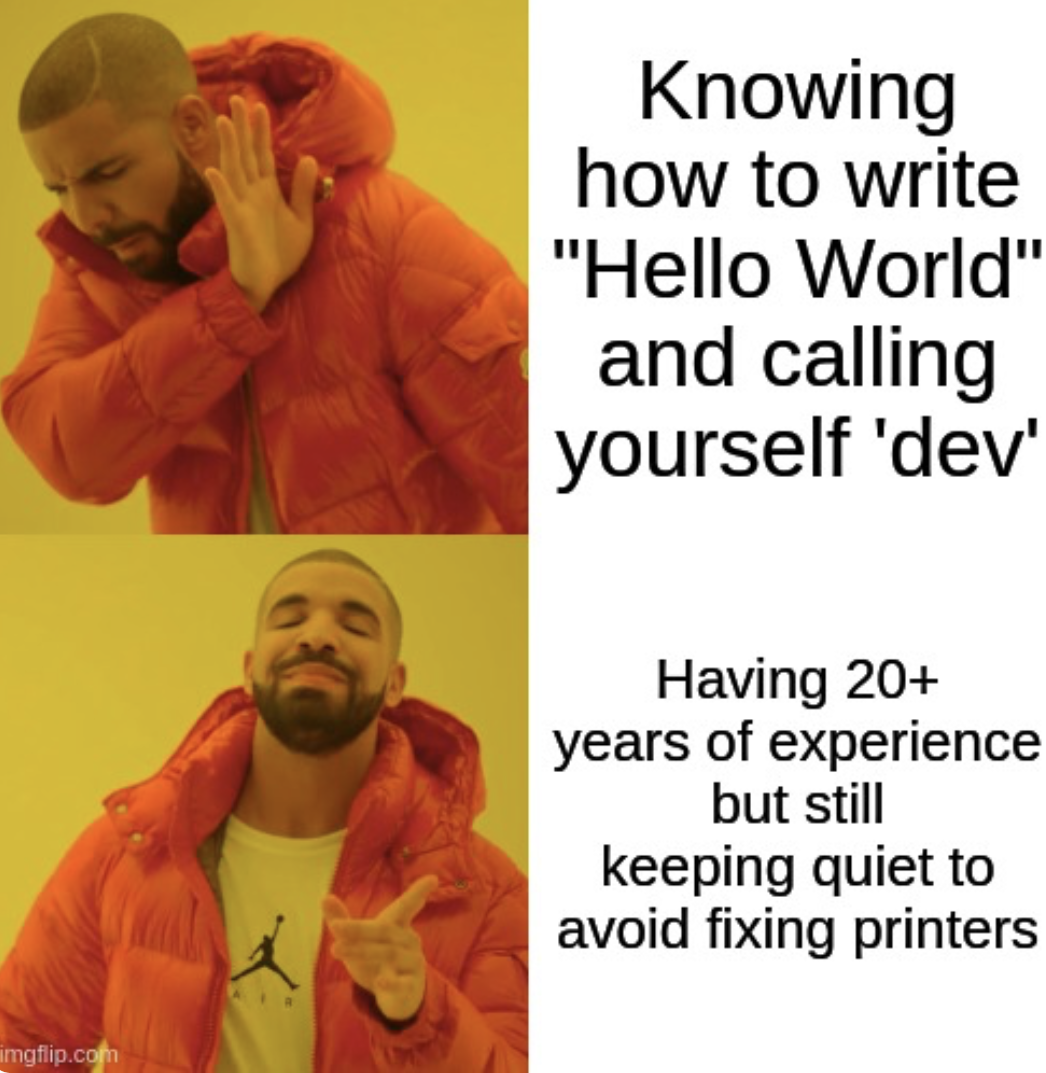
You can master distributed systems, optimize algorithms to O(log n), and architect microservices that scale to millions of users. But the moment someone asks you to troubleshoot why the office printer won't connect? Suddenly you're "busy with critical production issues." Every senior dev has learned the hard way: fix ONE printer issue and you become the designated printer whisperer for life. Next thing you know, you're explaining to Karen from accounting that no, you can't magically make the toner cartridge appear, and yes, she does need to turn it off and on again. The survival strategy is simple: maintain plausible deniability. "Sorry, I'm a software engineer, not hardware" becomes your mantra. Meanwhile, you're literally debugging kernel drivers and optimizing GPU compute shaders. But printers? Those demons run on black magic and spite, and no amount of experience can save you from that rabbit hole.

Glad To Be Out Of The Equation At Least

Glad To Be Out Of The Equation At Least
Junior dev in 2016: "Hey senior, can you build this feature?" Senior dev: "Sure, let me architect a beautiful solution." Junior dev in 2026 after years of tech debt accumulation, framework migrations, and questionable architectural decisions: "I built it myself." Senior dev pulls gun: "Wait... the idea was the problem?" Plot twist: The thing that was built is probably held together with duct tape, prayer, and seventeen deprecated npm packages. But hey, at least it ships. The senior dev has seen enough production fires to know that sometimes the real horror isn't that something can't be built—it's that it will be built, and they'll be the ones maintaining it at 2 AM when it inevitably breaks. The astronaut watching from the sidelines represents every tech lead who's learned to stay out of these conversations entirely.

Interviewing A Vibe Coder

Interviewing A Vibe Coder
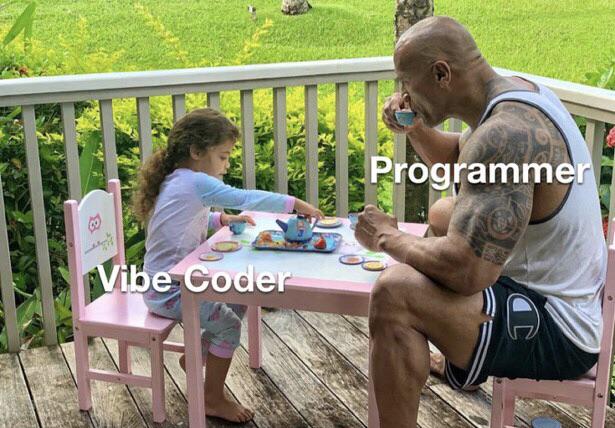
You know those developers who somehow got hired because they "vibe" with the team? Yeah, interviewing them is like having a tea party with a toddler. They're confidently serving you imaginary code solutions while you're sitting there, a battle-hardened programmer, trying to figure out if they actually know what a for-loop is or if they just watched a 10-minute YouTube tutorial on "coding aesthetics." The size difference is chef's kiss—you've got years of debugging nightmares, production incidents, and Stack Overflow addiction under your belt, while they're out here thinking CSS is a programming language and that "full-stack" means they can center a div AND make a console.log statement. But hey, you gotta play along professionally, sipping your metaphorical tea, nodding politely as they explain their "revolutionary" approach to solving FizzBuzz with nested ternary operators. The real question is: who's interviewing who here?

Vibe Coders Don't Know Shit!

Vibe Coders Don't Know Shit!
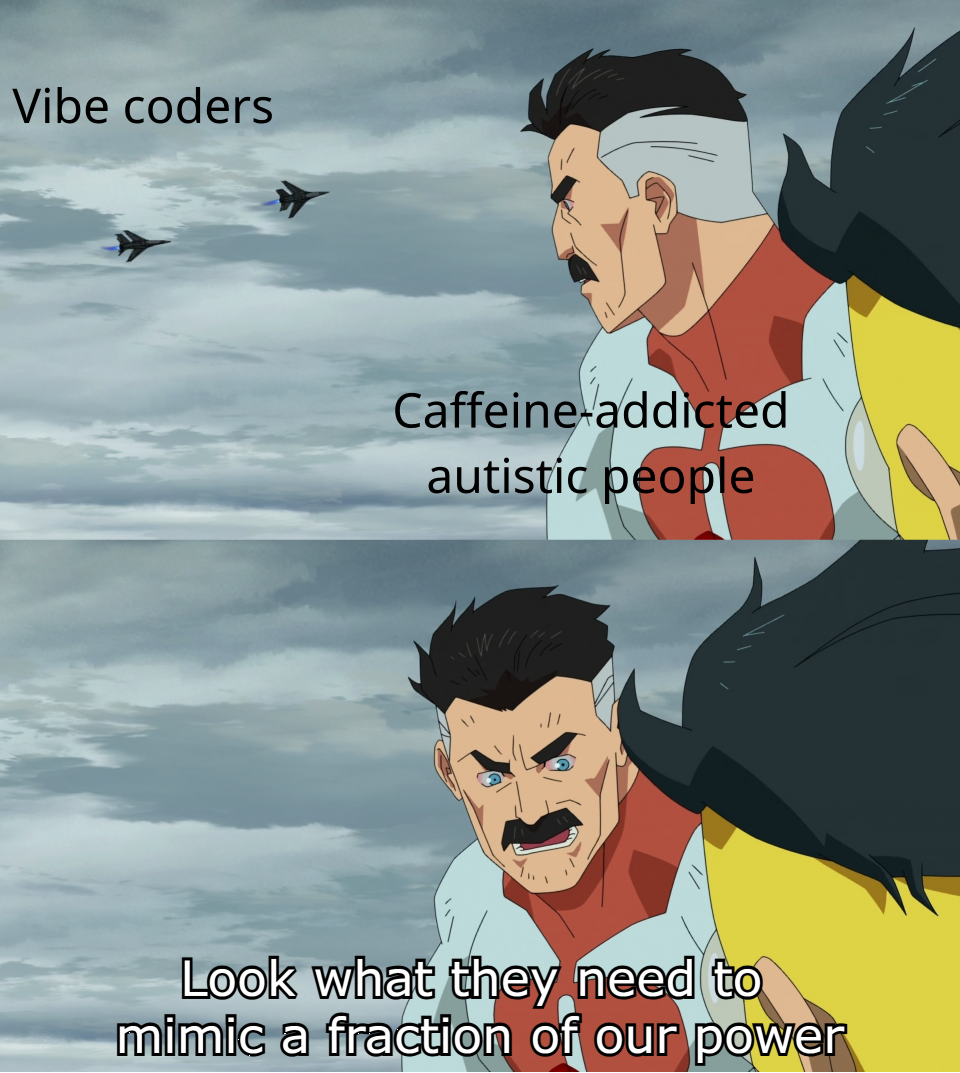
The gatekeeping energy is strong with this one. "Vibe coders" are out here building functional apps with ChatGPT and vibes alone, while the caffeine-addicted autistic devs who've memorized the entire C++ standard library are having an existential crisis. The superiority complex is real—like watching someone who spent 10 years mastering assembly language realize a bootcamp grad just shipped the same feature in a weekend using no-code tools and Stack Overflow. Sure, you can manually allocate memory and understand pointer arithmetic, but do you really need that to center a div? Plot twist: both groups are equally confused when production breaks at 2 PM on a Friday. The difference is one group has imposter syndrome about it, and the other doesn't even know what imposter syndrome is.

Commit And Pray

Commit And Pray
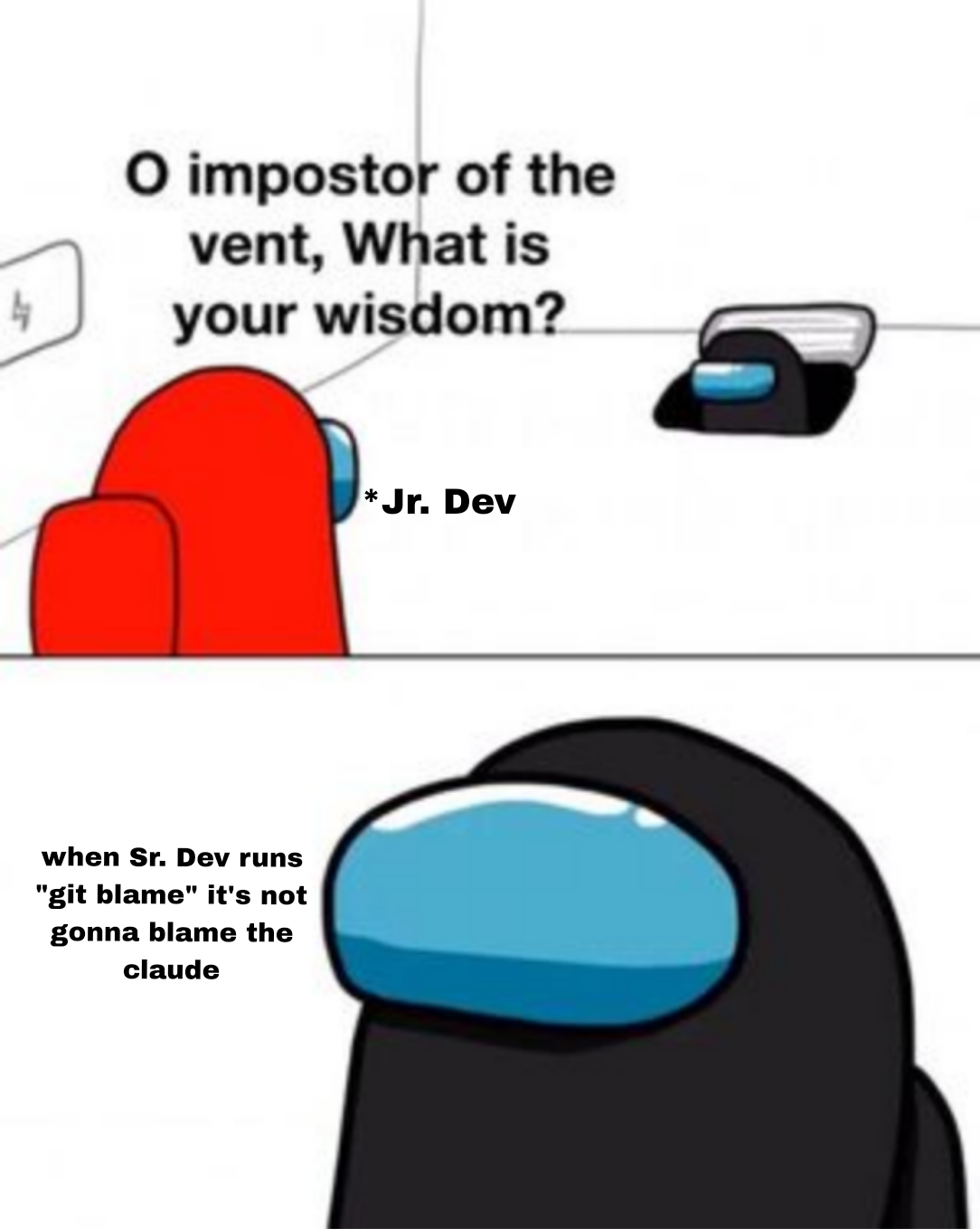
Junior dev wisdom: push code to production, hope for the best. Senior dev wisdom: when things inevitably break, run git blame and let Claude (or whatever AI assistant) take the fall for the buggy code it suggested. The impostor syndrome is real, but the blame deflection game is even realer. Fun fact: git blame shows who last modified each line of code, making it the perfect tool for finding scapegoats in your commit history—or in this case, your AI pair programmer. "Sorry boss, the AI told me to do it" is the new "it works on my machine."

Layoffs At Work B Like

Layoffs At Work B Like
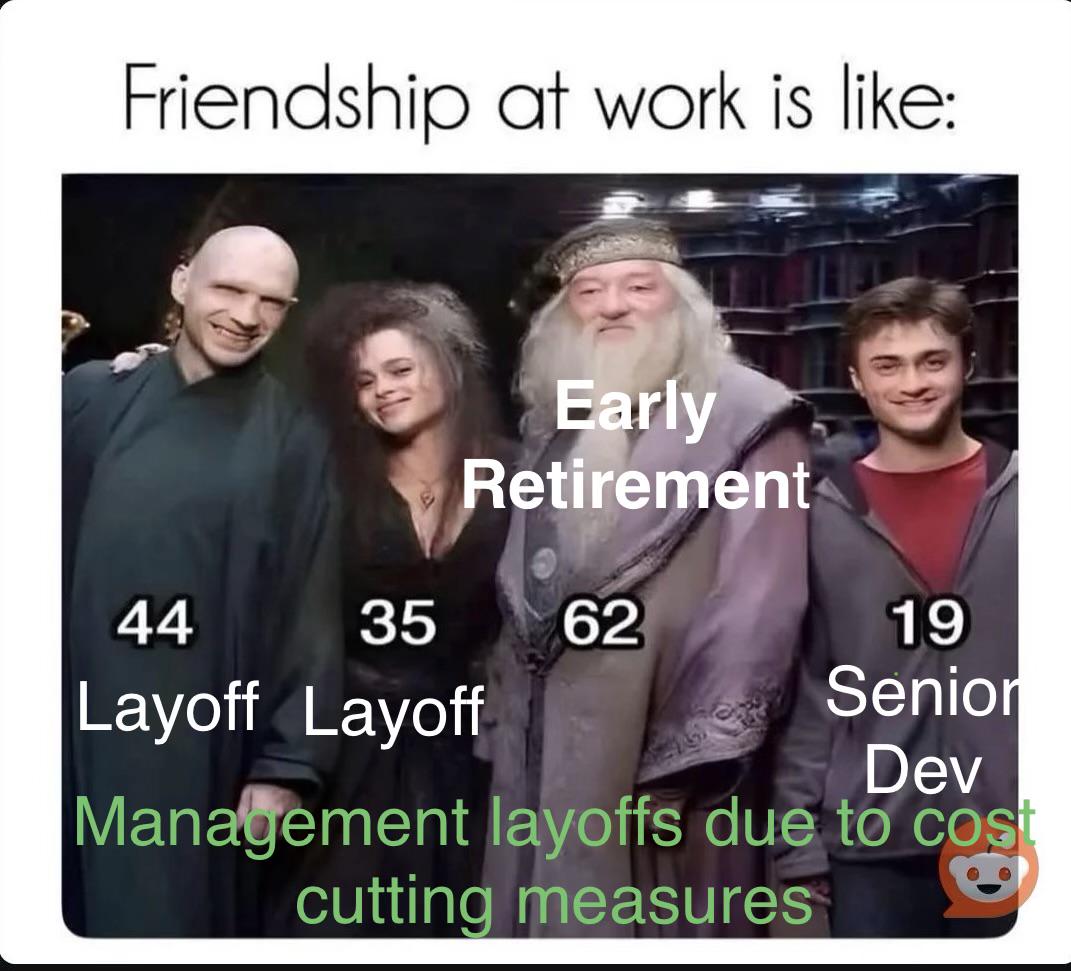
Corporate cost-cutting logic: fire two mid-level engineers at 44 and 35, keep the guy who's one meeting away from a pension, and let the 19-year-old senior dev (who definitely lied on his resume) carry the entire codebase. Nothing says "strategic restructuring" like keeping the person who writes code in production and the one who still thinks Git is a British insult, while eliminating everyone who actually knows where the documentation is. Spoiler: there is no documentation. The "early retirement" label on the 62-year-old is doing some heavy lifting here. Pretty sure that's just called "getting laid off with extra steps and a severance package that expires before his 401k does."

It Hurts But I'll Keep Trying

It Hurts But I'll Keep Trying
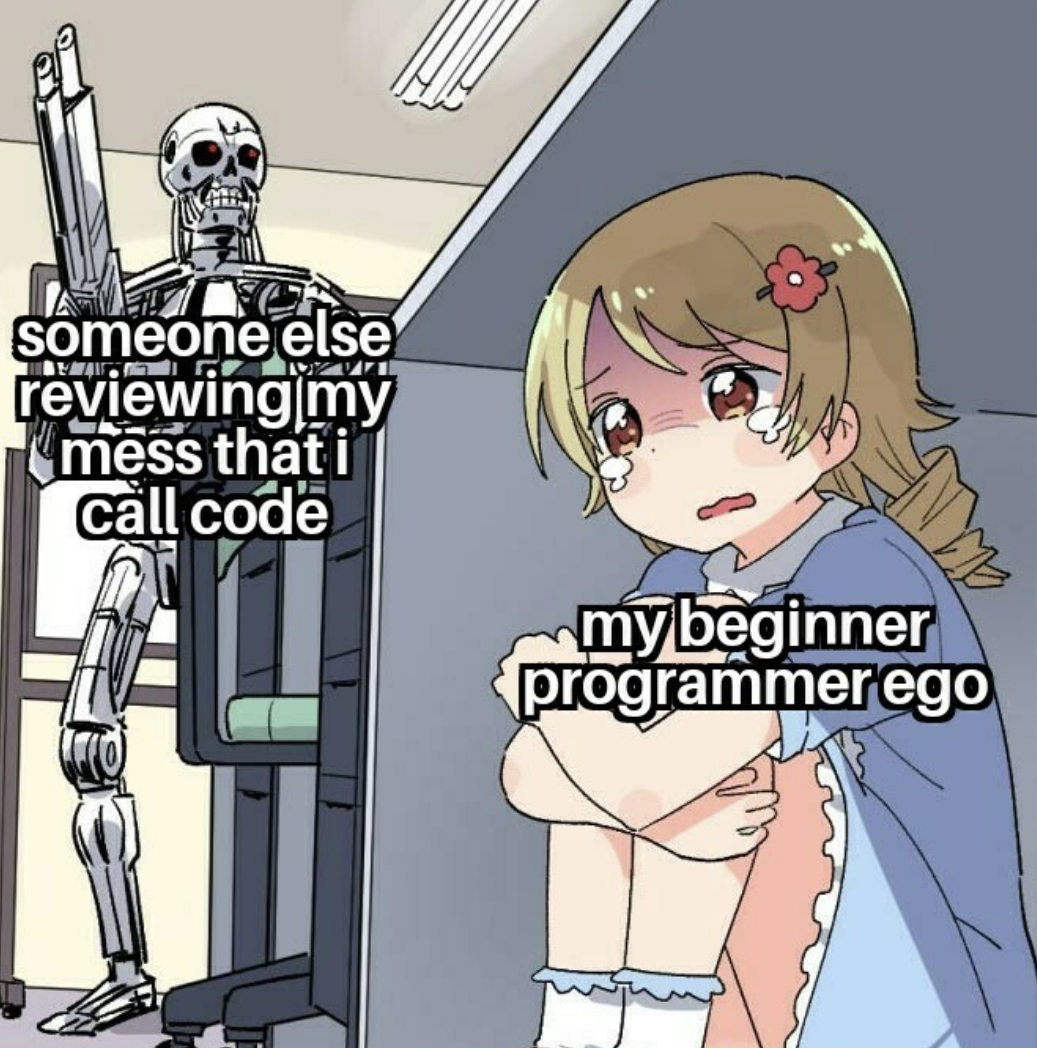
Code reviews are basically public executions for your self-esteem. You think you wrote something decent, maybe even clever, and then someone with 10 years of experience casually dismantles your entire architectural philosophy in 3 comments. The worst part? They're usually right. But here's the thing—that beginner ego getting shredded is actually the best thing that can happen to you. You'll cringe at your old code in 6 months anyway, might as well speed up the process with some professional humiliation. The skeleton of harsh reality might be terrifying, but it's also your best teacher. Pro tip: The day you stop feeling this way during code reviews is the day you've either become a senior dev or you've completely lost touch with reality. Both are equally likely.

World's Okayest Software Developer Mug Software Developer Mugs, 15-Ounce White

World's Okayest Software Developer Mug Software Developer Mugs, 15-Ounce White
Printed On Both Sides · High Quality

The Bug Is Gone If The Code Is Gone

The Bug Is Gone If The Code Is Gone
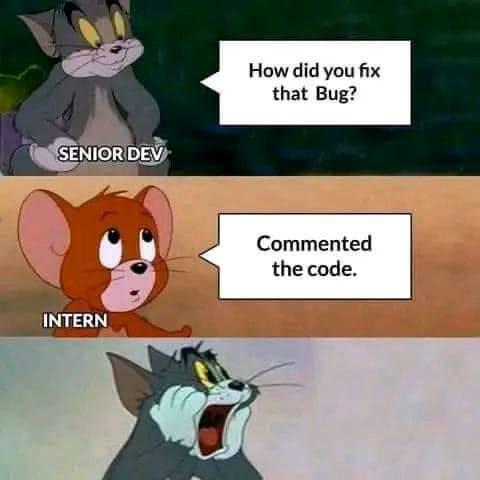
Senior dev asks how the intern fixed a bug. Intern casually drops "commented the code." Cue senior dev's mental breakdown. Can't have a bug if the feature doesn't exist, right? It's technically a solution—just not the one anyone wanted. Production code is now a graveyard of commented-out dreams and "temporary" fixes that became permanent. The intern learned from the best: when debugging gets hard, just delete the problem. Ship it!

Then Please Provide Linter Config With Common Sense

Then Please Provide Linter Config With Common Sense
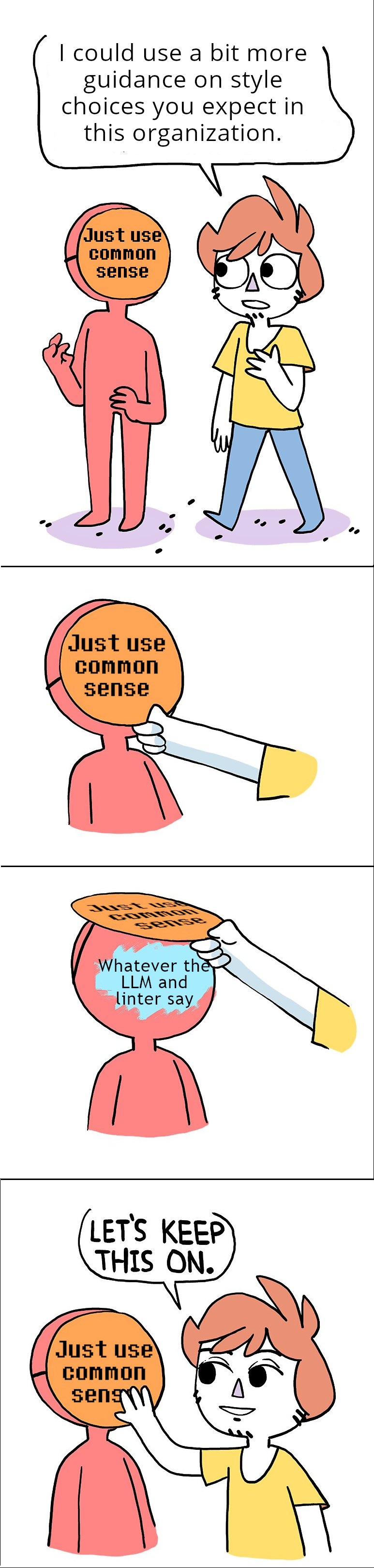
Junior dev asks for style guidance. Senior dev smugly says "just use common sense." Junior dev politely asks for actual linter config. Senior dev proceeds to forcefully inject "common sense" directly into their brain, which apparently translates to "whatever the LLM and linter say." Because nothing screams "common sense" like blindly following ESLint's 47 warnings about semicolons while your production server is literally on fire. The real kicker? Everyone's "common sense" is wildly different. One person's common sense is 2-space indentation, another's is tabs, and a third person's involves sacrificing a rubber duck to the code gods before every commit. Just give them the .eslintrc file, Karen. It takes 30 seconds and saves everyone from the philosophical debate about whether trailing commas are a war crime or a gift from the heavens.

Less Is More

Less Is More
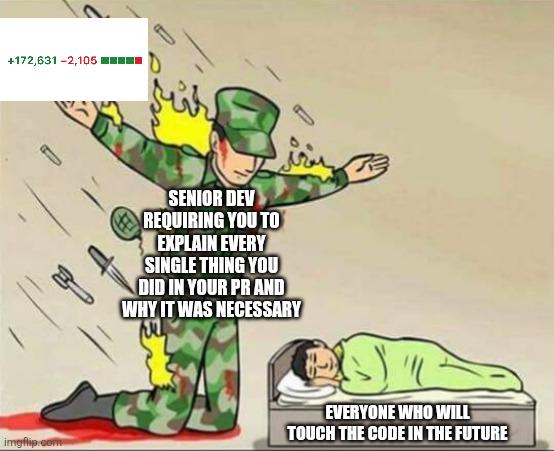
Senior devs really out here demanding you document every semicolon like you're writing a dissertation, then proceed to leave zero comments in their own 500-line function that somehow calculates the meaning of life using bitwise operators. The irony? They're absolutely right. That PR with +172k additions and -2k deletions is a war crime waiting to happen, and future maintainers (including yourself in 3 months) will be cursing your name at 2 AM trying to figure out why you nested seven ternary operators. The real kicker is that everyone sleeping peacefully now will wake up screaming when they have to refactor your "clever" solution that seemed so elegant at the time. Documentation isn't for the senior dev's entertainment—it's a love letter to your future self and a restraining order against technical debt.

All PRs Are Equal But Some Are More Equal Than Others

All PRs Are Equal But Some Are More Equal Than Others
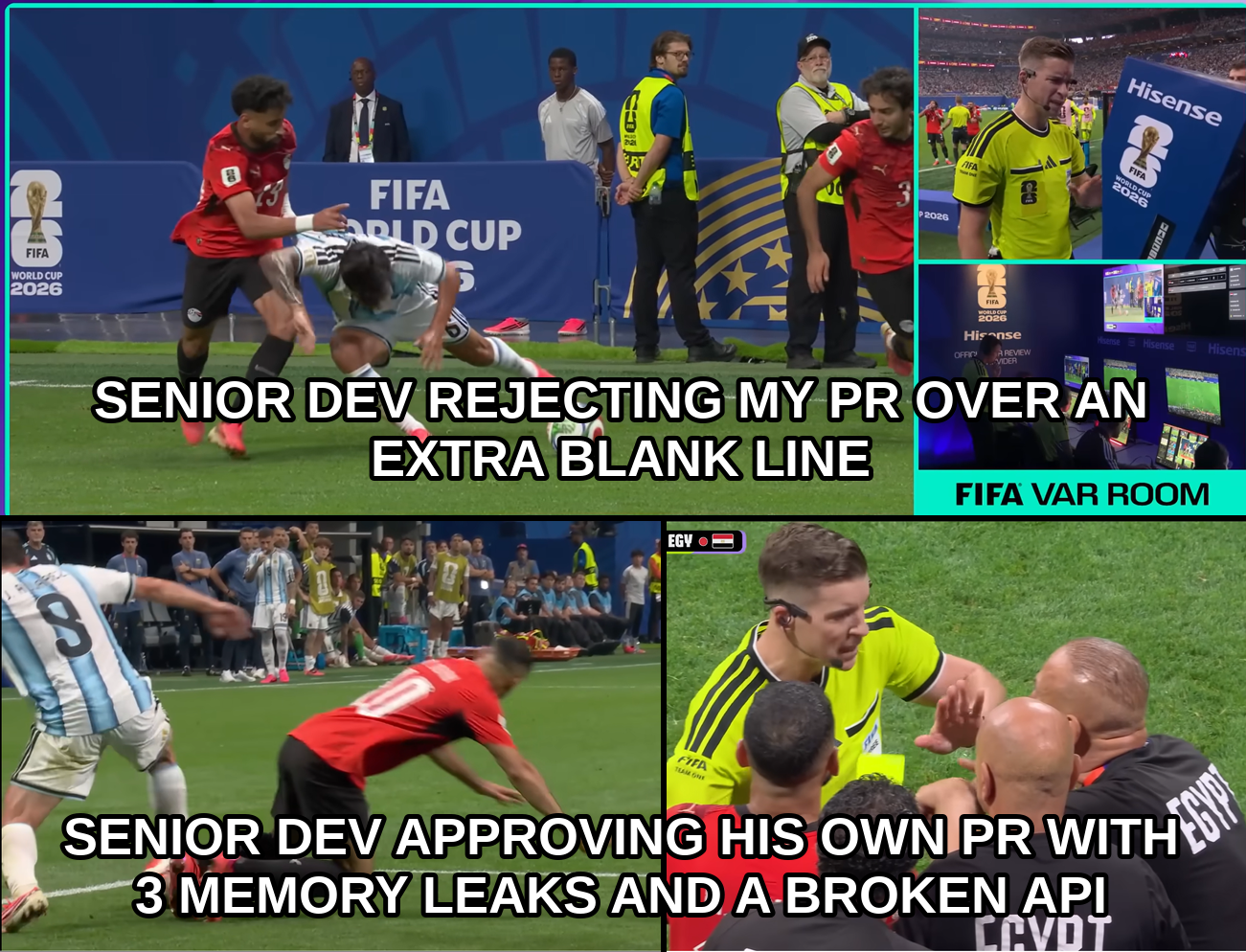
Code review standards have a funny way of evaporating when the senior dev's name shows up in the PR queue. Your PR with one extra blank line? Rejected faster than a malformed JSON request. Senior dev's PR that somehow introduces three memory leaks and breaks the entire API? Approved with a "LGTM 🚀" before the CI pipeline even finishes running. The VAR room detail is chef's kiss—because just like in football, there's supposedly an objective review process happening. Spoiler: there isn't. The rules mysteriously change depending on who's playing. George Orwell would be proud of this Animal Farm reference applied to pull requests. Four legs good, two legs better. Junior dev's code bad, senior dev's code... well, it ships.

The Forbidden Knowledge

The Forbidden Knowledge
You know that cursed moment when you're stuck on a bug for weeks, the codebase is a nightmare, and management is breathing down your neck? Then someone whispers the ancient secret: "Just lower the difficulty settings." Change that O(n²) to O(n log n)? Nah, just reduce the dataset size. Can't fix the race condition? Limit concurrent users. Memory leaks? Restart the server every hour and call it "scheduled maintenance." It's the dark art every senior dev knows but nobody admits in code reviews. We've all been there—staring at production metrics, quietly adjusting that config file, and pretending we "optimized" the system. The scroll of truth speaks, and it hurts because it's real. Sometimes the best solution isn't elegant code—it's just turning down the volume on the problem until it becomes someone else's issue.

NordVPN

NordVPN
Encrypt your traffic on public Wi-Fi, stream from anywhere, and cover up to ten devices with one plan. 30-day money-back guarantee.