runtime Memes

Global Hate

Global Hate
Someone asks what they hate, expecting maybe a city or a person. The answer? Tokio. But not Tokyo the city—turns out they meant the asynchronous runtime library for Rust. Because nothing says "passionate developer opinions" quite like having beef with a runtime library that's literally designed to make your life easier. The punchline lands harder when you realize how universal this is. Every language has that one library everyone loves to hate while simultaneously using it in every project. It's like complaining about your coworker who's actually carrying the entire team—you can't live with them, can't ship without them.

Let Me Just Rewrite It

Let Me Just Rewrite It
Oh, the absolute AUDACITY of listing "Rewrites Bun in Rust" as a casual bullet point like it's just another Tuesday feature update! You fix 2,900 GitHub issues, add 1,500+ tests, make everything faster and more efficient, reduce memory by 35%, and THEN casually mention you rewrote your entire JavaScript runtime in a different language. No big deal, right? Just a little side quest! It's giving "I'll just refactor this one function" energy that somehow escalates into rewriting the entire codebase in a completely different language because why not? The Rust evangelists are probably framing this tweet on their walls as we speak. Meanwhile, the rest of us are still trying to fix that one CSS alignment issue from last week.

Bun Is Safe Now

Bun Is Safe Now
So the JavaScript runtime that promised to dethrone Node.js is getting a complete rewrite in Rust because, surprise, writing a high-performance runtime in Zig wasn't quite cutting it for memory safety. The devs are celebrating "memory safety" like they just discovered fire, while completely ignoring that they're literally wheeling in a Trojan horse full of Rust evangelists ready to "rewrite it in Rust" everything they touch. Claude (the AI) is apparently doing the heavy lifting here, which means we've reached peak 2024: using AI to rewrite your JavaScript runtime in Rust because manual memory management is hard. Give it six months and someone will propose rewriting the Rust parts in Zig for "performance reasons" and the cycle continues. Meanwhile, Node.js is just sitting there, battle-tested and stable, watching this whole circus unfold.

Garbage Is Garbage

Garbage Is Garbage
You can write the most elegant, artisanal, hand-crafted code with perfect variable names and comments that read like poetry. You can spend hours refactoring, optimizing, and making everything *just right*. But when the garbage collector shows up, it doesn't care about your feelings or your code aesthetics. It sees memory that needs freeing, and it's taking out the trash—whether that's your beautifully architected object or some janky temp variable you forgot about. Democracy in action: all unused memory is equal in the eyes of the GC.

Garbage Is Garbage

Garbage Is Garbage
The garbage collector doesn't discriminate—whether your code is written by someone who names variables "x1" and "x2" or a developer who thinks they're writing poetry with their function names, it all gets cleaned up the same way. Memory leaks don't care about your vibes. This hits different because "vibe coders" are out here writing code based on aesthetics and feelings, probably spending 20 minutes deciding between map vs forEach based on which one "feels right." Meanwhile, the garbage collector is just doing its job, treating their beautifully crafted objects the same as any other unreferenced heap allocation. No bonus points for code that sparks joy. At the end of the day, once that reference count hits zero or the mark-and-sweep algorithm runs, your elegant singleton pattern and someone's nested ternary nightmare get the same treatment: straight to the memory dump.

Beelink SER5 Mini PC, Ryzen 5 5500U (6C/12T, Up to 4.0GHz), 16GB DDR4 RAM, 480GB NVMe SSD, Radeon Graphics 7 CUs, 4K Triple Display via HDMI/DP/Type-C, WiFi 6/BT 5.2, 2.5G LAN, Compact Office Desktop

Beelink SER5 Mini PC, Ryzen 5 5500U (6C/12T, Up to 4.0GHz), 16GB DDR4 RAM, 480GB NVMe SSD, Radeon Graphics 7 CUs, 4K Triple Display via HDMI/DP/Type-C, WiFi 6/BT 5.2, 2.5G LAN, Compact Office Desktop
Powerful AMD Ryzen 5 5500U Processor: Beelink SER5 Mini PC is powered by AMD Ryzen 5 5500U (2.1GHz-4.0GHz, 6C/12T, 8MB L3 cache), built by the latest breakthrough 7nm architecture, processing perform…

Cursed Csharp

Cursed Csharp

C++ In One Video

C++ In One Video
The initial excitement of "LEARN C++ IN ONE VIDEO" quickly dissolves into horror when you notice the video length: 2:52 / 35040:04 . That's right—nearly four years of continuous playback! The facial expressions perfectly capture that moment when you realize mastering pointers, memory management, and template metaprogramming isn't quite the quick weekend project you'd hoped for. The background text listing concepts like "Constructors Destructors" and "Static Encapsulation" is just the compiler rubbing salt in your segmentation fault.

The Accidental Programming Royalty

The Accidental Programming Royalty
That feeling when your code compiles on the first try and you momentarily transform from sleep-deprived keyboard masher to royalty. Sure, it'll probably explode during runtime, but for these brief 3 seconds, you're basically a programming deity. The universe has made a clerical error in your favor. Enjoy it before the inevitable stack trace arrives to dethrone you.

The Eternal Error Cycle

The Eternal Error Cycle
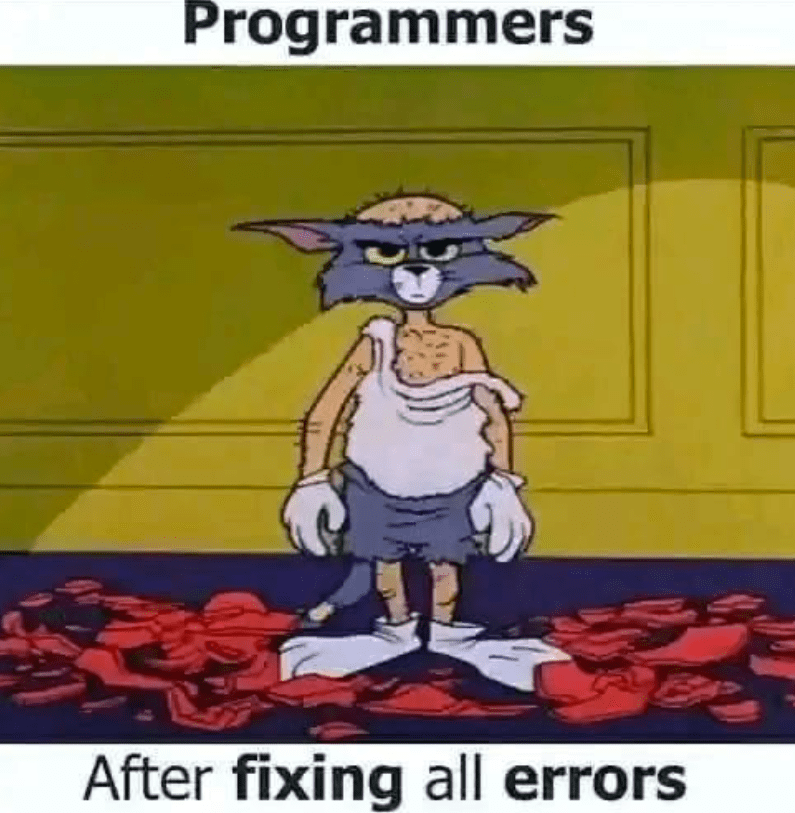
The battle-worn cartoon cat standing amid a sea of error messages is basically all of us at 4AM. You've fixed every single compiler error only to be greeted by 500 new runtime exceptions. The cat's dead-inside expression perfectly captures that special moment when you realize your "fix" just transformed explicit errors into more insidious ones. It's not debugging at this point—it's just playing whack-a-mole with a broken hammer.

NordVPN

NordVPN
Encrypt your traffic on public Wi-Fi, stream from anywhere, and cover up to ten devices with one plan. 30-day money-back guarantee.

The Great Language Trade-Off

The Great Language Trade-Off
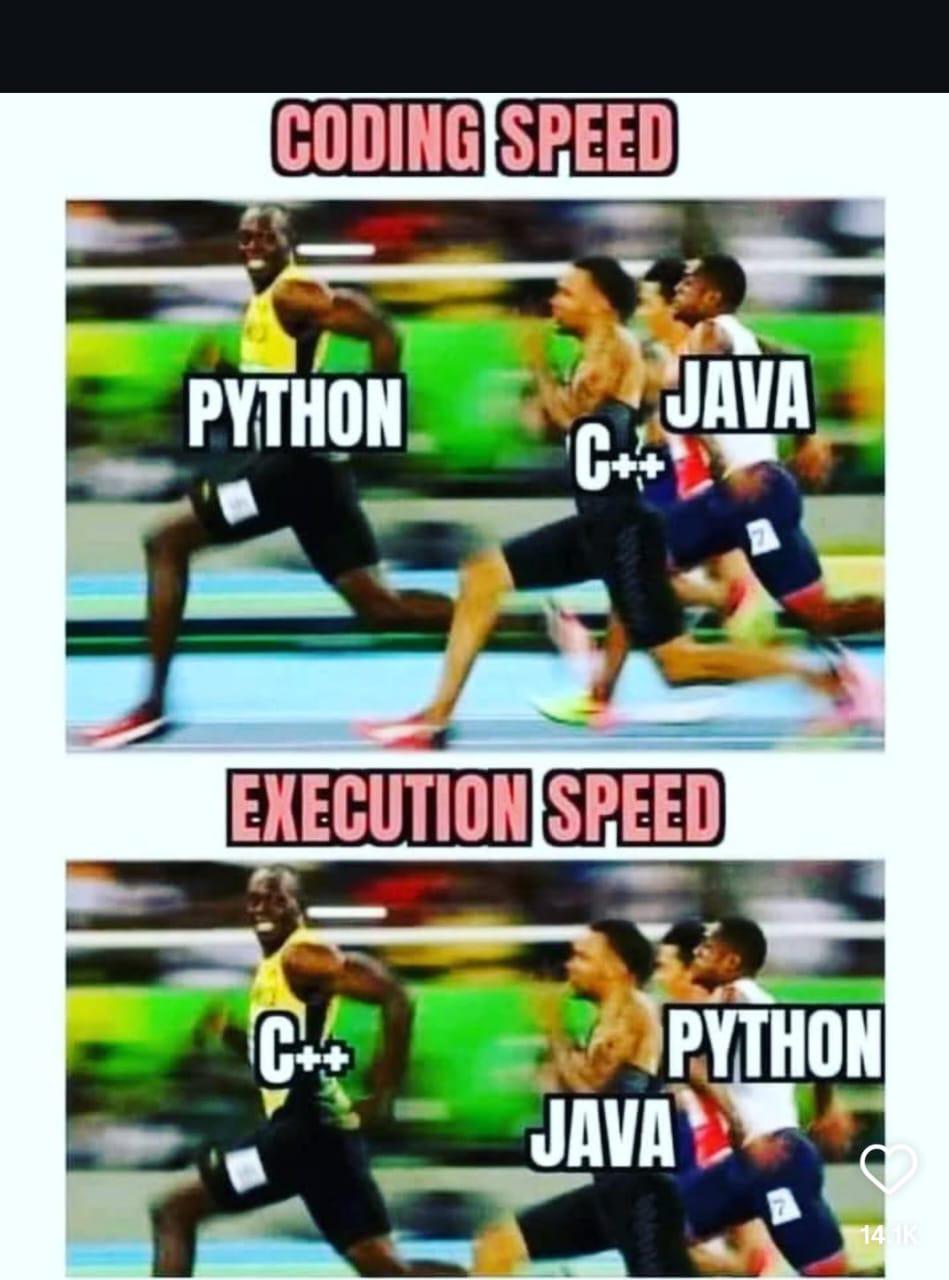
The classic programming language race where nobody wins. Python lets you write code at lightning speed, but then runs like it's wearing concrete shoes. Meanwhile, C++ requires you to manually manage memory and fight the compiler for hours, but once it compiles? That thing flies . Java sits awkwardly in the middle, making you type 47 characters to create a string while promising "write once, run anywhere" (as long as "anywhere" has 8GB of RAM to spare for the JVM).

Useless Loop: Four Hours Of My Life Gone Forever

Useless Loop: Four Hours Of My Life Gone Forever
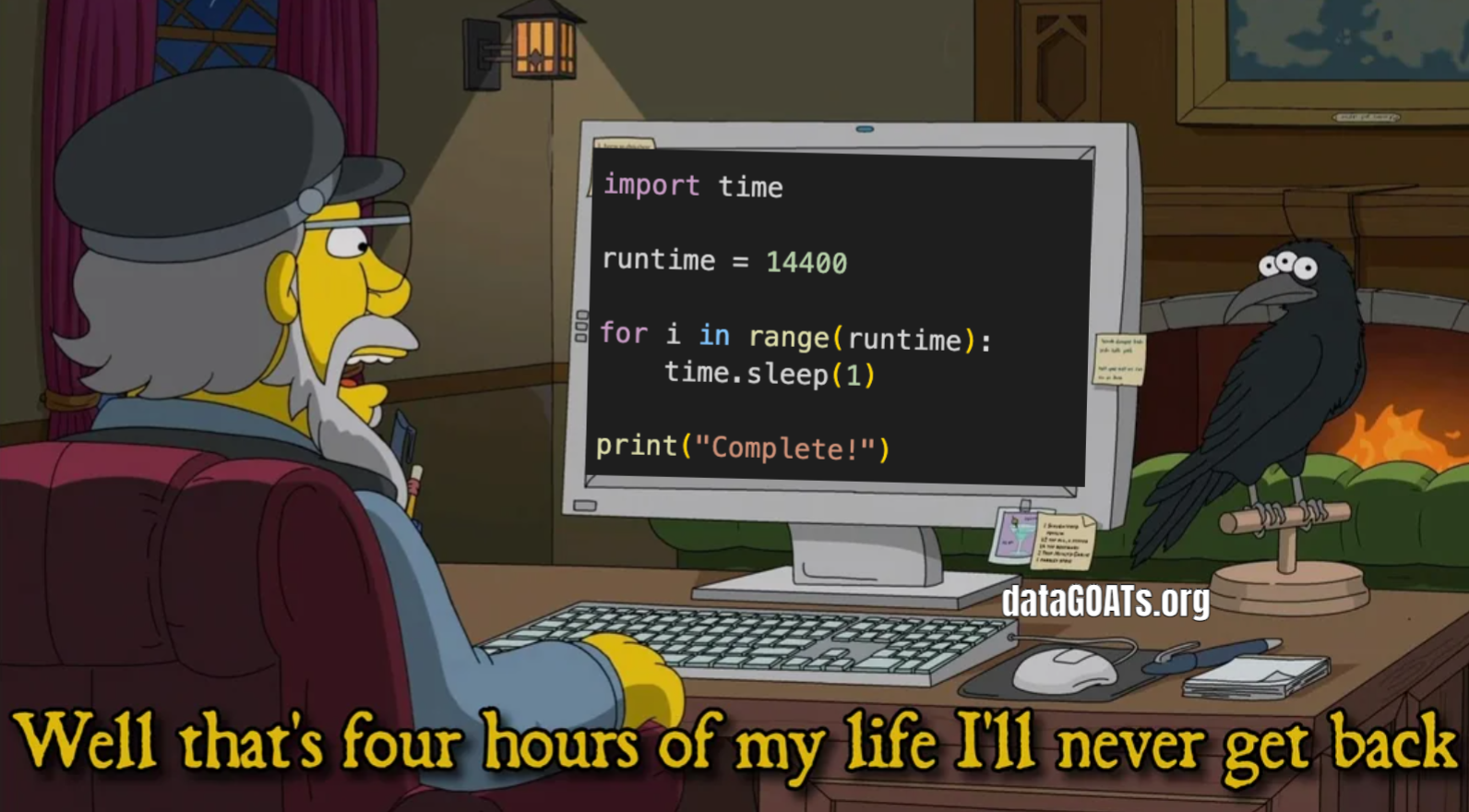
Ah, the classic "let me wait for this to finish" trap. The code imports the time module, sets runtime to 14400 (exactly 4 hours in seconds), then runs a loop that sleeps for 1 second... 14,400 times. The kicker? This could've been done with a single time.sleep(14400) . But no, some sadistic soul decided to make the computer wake up 14,400 separate times just to check if we're done yet. We've all been there - watching a progress bar, waiting for a build, or running some unnecessary loop because "that's how the senior dev did it." Four hours later, you're questioning your career choices and wondering if becoming a goat farmer might've been the better path.

It's All In The Nanoseconds

It's All In The Nanoseconds
The aristocratic superiority complex of C++ developers in their natural habitat. Shaving 100 nanoseconds off a program's runtime and suddenly they're strutting around like royalty from the 18th century. Meanwhile, the rest of us are just trying to make code that actually works without segfaulting. But hey, if you've ever hand-optimized a hot loop by unrolling it just right, you've probably made that exact same face.