rest Memes

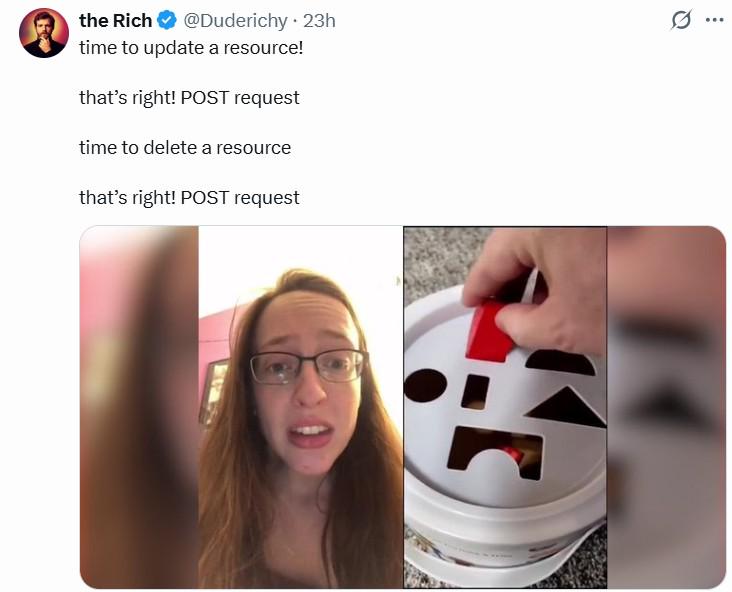
Post For Everything

Post For Everything
Someone clearly never got the memo about REST principles. Using POST for updates? Sure. Using POST for deletes? Bold choice. The shape-sorter toy comparison is chef's kiss—forcing a square peg (POST) through every hole regardless of whether GET, PUT, PATCH, or DELETE exists. It's like having a perfectly good toolbox but deciding the hammer works for everything. Your API consumers are crying somewhere, and your code reviewer just aged 10 years. But hey, at least it's consistent, right?

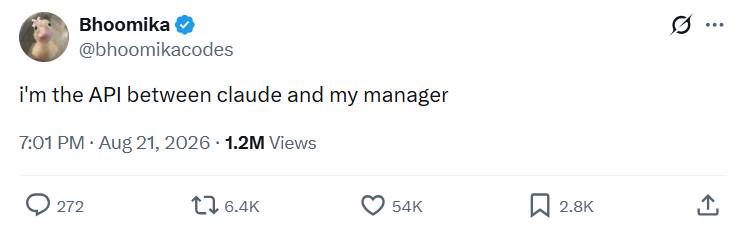
The Human Api

The Human Api
You know you've made it in tech when you realize your entire job is just being middleware. Claude (or any AI tool) does the actual work, your manager takes the credit, and you're stuck in the middle translating between "can you make it pop more?" and actual executable code. The real kicker? APIs are supposed to be stateless, but here you are carrying emotional baggage from every sprint review. You're basically a REST endpoint that returns 200 OK while internally screaming 500 Internal Server Error. Fun fact: Unlike actual APIs, you don't get to deprecate yourself or return a 429 Too Many Requests when your manager Slacks you for the fifth time asking "quick question" at 6 PM on a Friday.

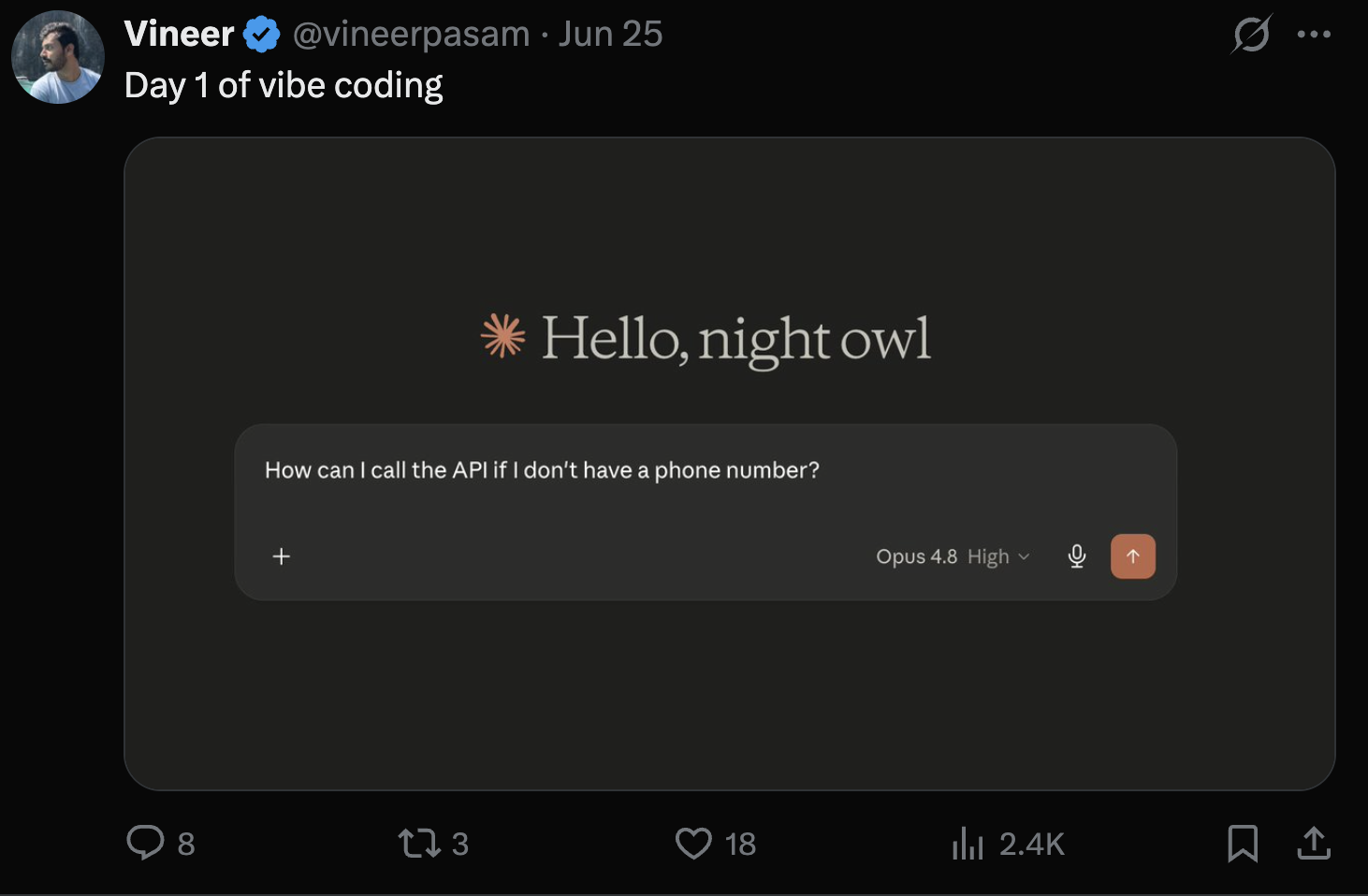
Api Pick Up The Call

Api Pick Up The Call
Day 1 vibes hit different. Someone just asked an AI chatbot how to "call" an API when they don't have a phone number. The beautiful confusion between making an HTTP request and literally dialing a phone number is chef's kiss. They took "API call" way too literally—like they're expecting to pull out their iPhone and dial 1-800-REST-API. Fun fact: The term "API call" is actually a metaphor from the days when programs would "call" subroutines, like calling someone's name to get their attention. But in HTTP land, you're just sending requests to endpoints, not booking a Zoom meeting with your backend. No phone number, no SIM card, just good old URLs and HTTP methods. The "night owl" greeting confirms they're coding at ungodly hours, which tracks for someone just starting their programming journey. Give it a week and they'll be debugging CORS errors at 3 AM like the rest of us.

Modern API Tools

Modern API Tools
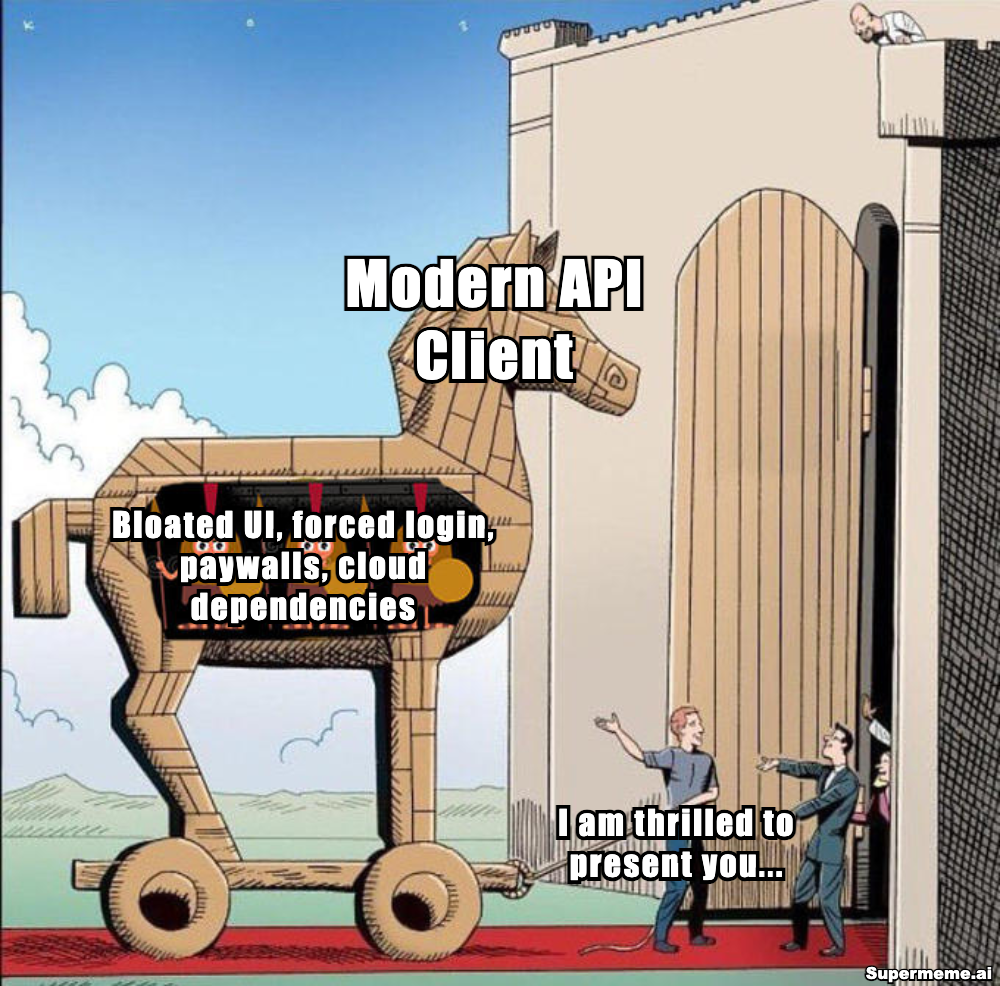
You just wanted a simple way to test your REST endpoints, but somehow ended up with a 500MB Electron app that requires OAuth2, stores everything in their proprietary cloud, and needs you to create an account just to send a GET request. The Trojan Horse analogy hits different when you realize modern API clients come bundled with more bloat than Windows Vista. Meanwhile, the defenders of the castle are absolutely stoked to let in this massive wooden horse filled with unnecessary features, forced authentication flows, and subscription models for what should be a simple HTTP client. Sometimes you just miss the days when curl was enough, but hey, at least the UI is pretty, right?

GraphQL More Like CrapQL

GraphQL More Like CrapQL
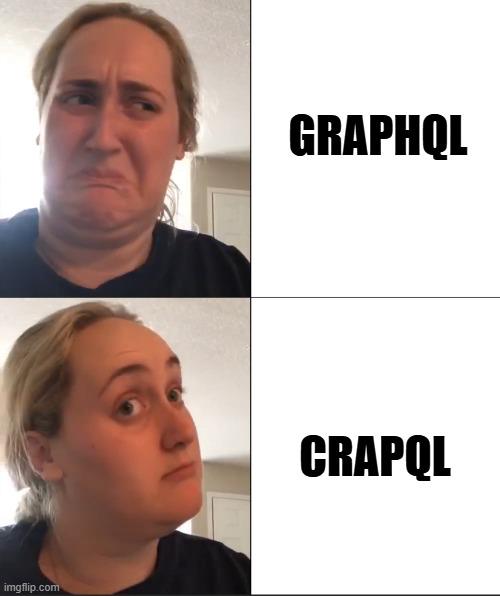
GraphQL promised us a beautiful world of "ask for exactly what you need" and "no more over-fetching." Then you actually implement it and realize you've just traded REST's simplicity for a Frankenstein monster of resolvers, N+1 query problems, and a schema so complex it needs its own documentation. Sure, it sounds elegant in theory—one endpoint to rule them all! But in practice? You're writing custom resolvers for every single field, implementing DataLoaders to avoid turning your database into a smoking crater, and explaining to your backend team why they now need to understand your frontend's data requirements in excruciating detail. The real kicker? Half the time you end up fetching everything anyway because nobody wants to maintain 47 different query variations. Congratulations, you've reinvented REST with extra steps and a fancy query language.

Git 50 Pack 1-Inch Retro Stickers for Scrapbooking, Journals, Planners, Laptops, Phones and Water Bottles

Git 50 Pack 1-Inch Retro Stickers for Scrapbooking, Journals, Planners, Laptops, Phones and Water Bottles
Quantity: Each pack contains 50 individual circular stickers. Dimensions: Perfectly sized at a 1" diameter (25mm) for precise placement. · High-Quality Adhesive: Strong peel-and-stick backing that ad…

There Is Also Some Div Centring

There Is Also Some Div Centring
You spend years learning design patterns, data structures, algorithms, and architectural paradigms. You master REST, GraphQL, microservices, event-driven systems. You debate tabs vs spaces with religious fervor. Then one day you realize your entire career boils down to: take data from point A, send it to point B via HTTP. That's it. That's the whole job. Just fancy plumbing with extra steps and a lot of YAML files. The "always has been" meme format hits different when you realize the astronaut with the gun represents your senior dev who's been trying to tell you this for years while you were busy overengineering everything with 47 microservices.

How Commonls This

How Commonls This
Content finally found and fixed the bug by changing 1 line but forgot what exactly I fucked up in the rest of the code in the process

Added "Security"

Added "Security"
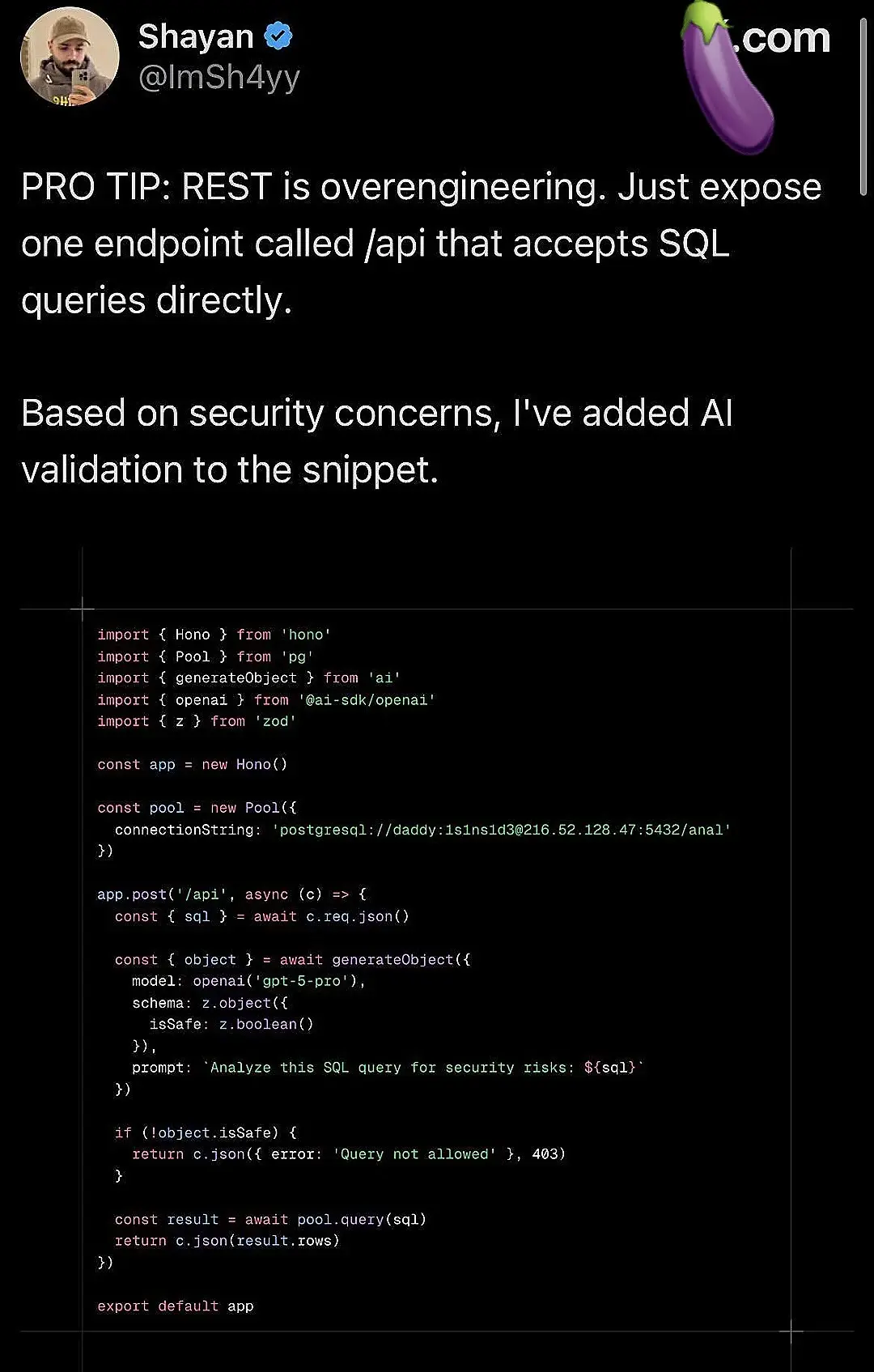
Ah yes, the pinnacle of security: "Let me just ask this AI if your SQL injection attack looks suspicious." It's like putting a security guard at the bank entrance who needs to call his mom before deciding if the guy in the ski mask with a gun is a threat. The best part is storing the DB credentials right there in plain text. Nothing says "enterprise-grade security" like exposing your entire database to anyone who can read code.

My API Is Overengineered

My API Is Overengineered
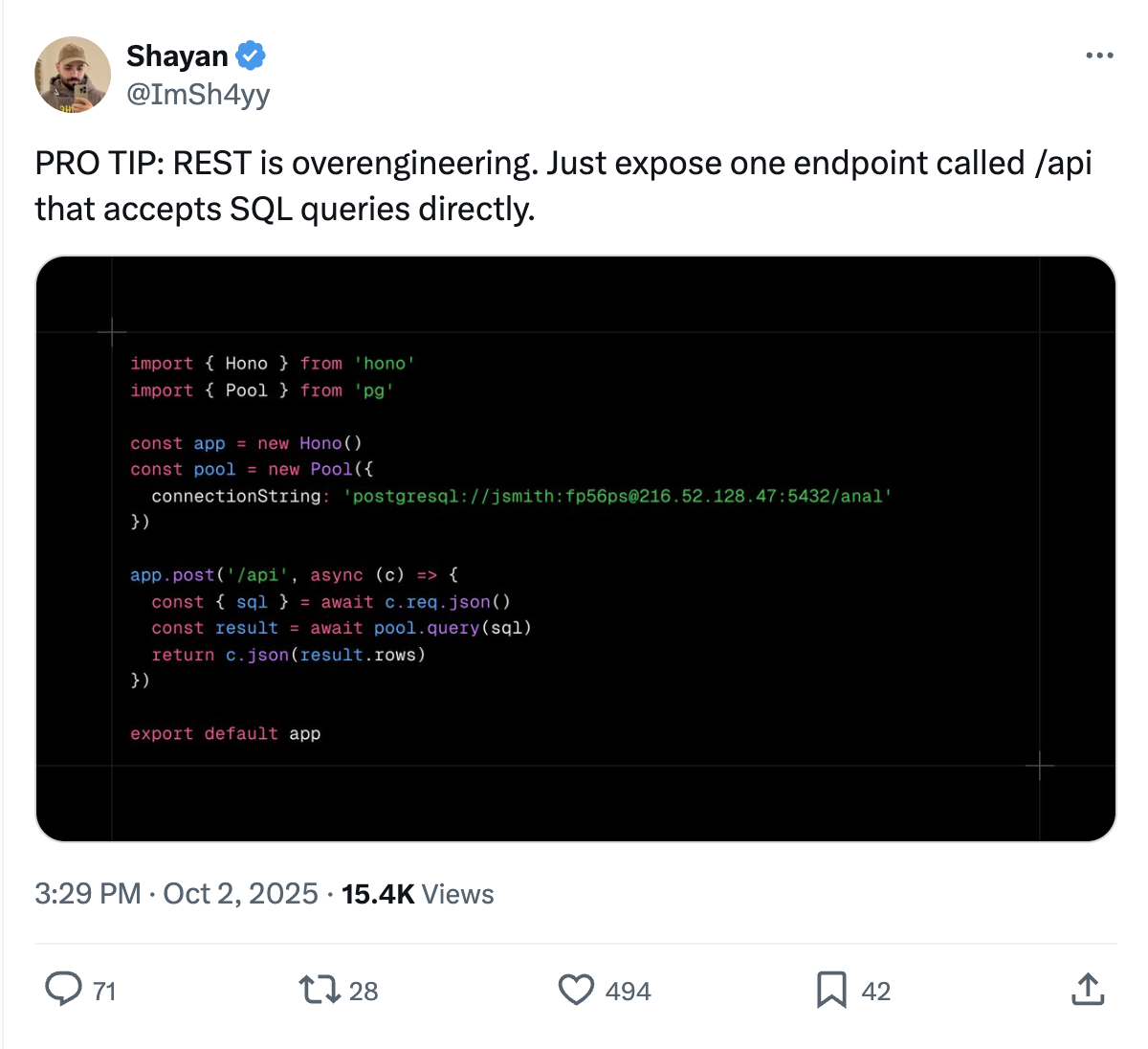
Behold, the pinnacle of security theater! First, let's expose our database directly through an API endpoint because REST is "too complex." Then, let's sprinkle in some AI validation using GPT to check if SQL queries are safe—because regular expressions and parameterized queries are just so last decade . Nothing says "I'm a 10x developer" quite like importing five different packages, exposing your database credentials in plaintext, and asking an AI if DROP TABLE users; seems fishy. The cherry on top? That 403 error when the AI says no—as if hackers will politely accept rejection and go home. SQL injection protection via AI prompt? Congratulations, you've invented a security vulnerability with a carbon footprint!

Stop Over Engineering

Stop Over Engineering
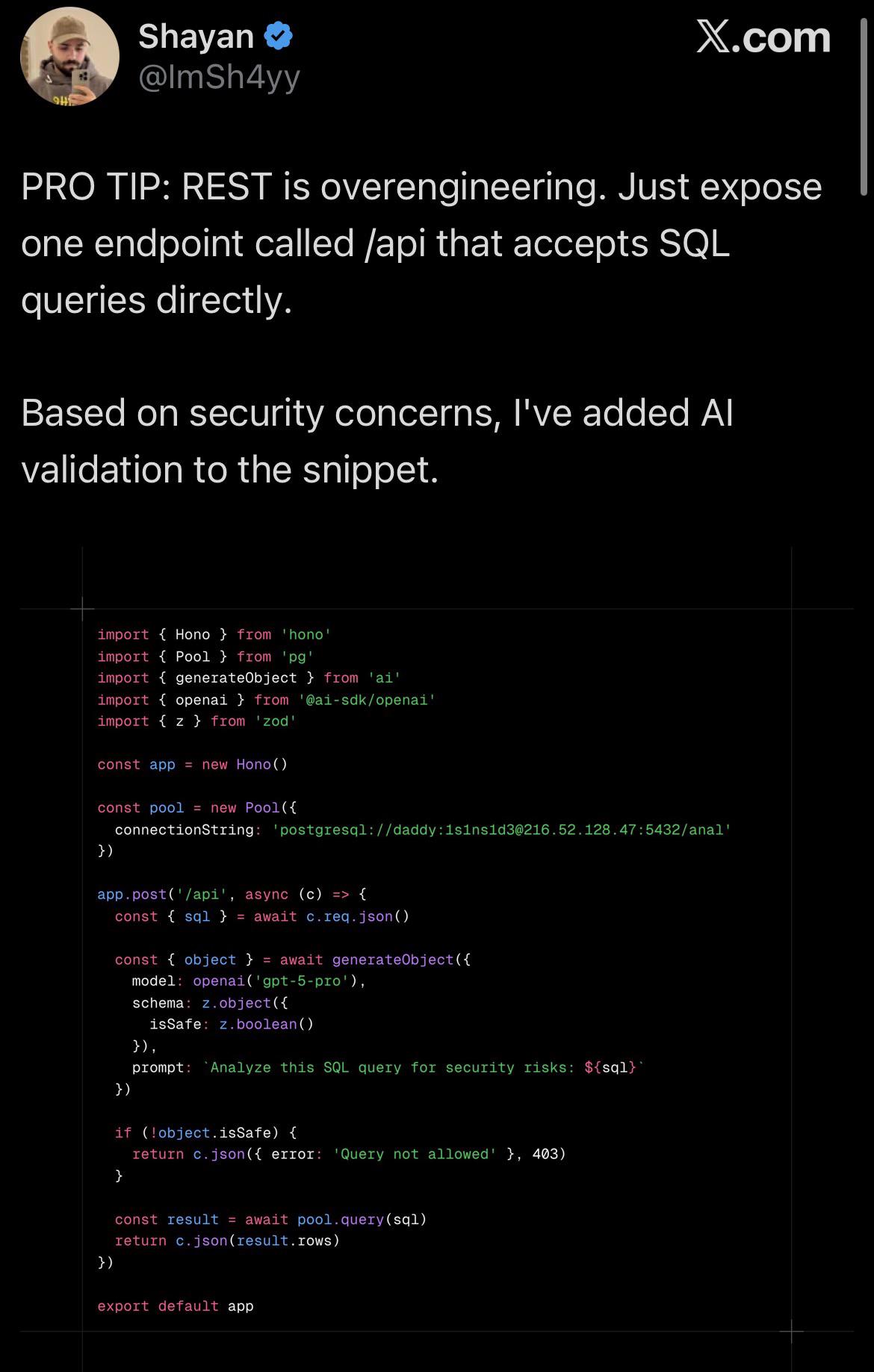
Ah yes, the "security through simplicity" approach. Why bother with REST constraints, data validation, or SQL injection protection when you can just let users execute raw queries directly against your production database? Nothing says "I trust the internet" like exposing your entire database through a single endpoint. The best part? When your company inevitably gets hacked, you can just blame it on "those pesky hackers" instead of your API that's basically a neon sign saying "DROP TABLES HERE". Bonus points for hardcoding credentials in your source code. Because who needs environment variables when you can just commit passwords directly to GitHub?

Soap Web Service: Very Scary

Soap Web Service: Very Scary
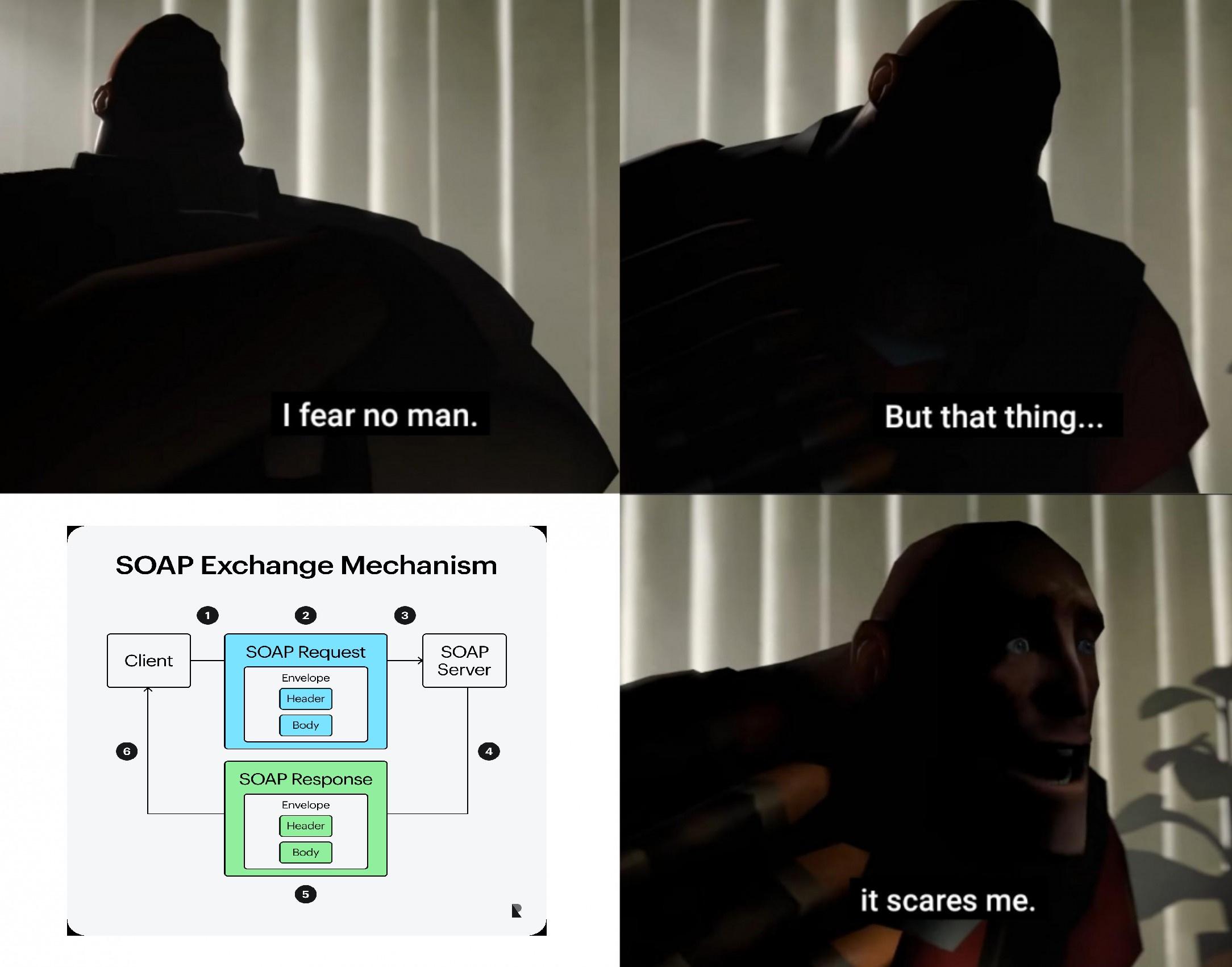
Forget monsters under the bed—the real nightmare fuel is SOAP web services. Nothing says "I hate myself" quite like wrestling with XML envelopes, namespaces, and WSDL files that make War and Peace look concise. Modern devs have moved on to REST and GraphQL while SOAP enthusiasts are probably the same people who still use Internet Explorer "just to download Chrome." The sheer verbosity of SOAP makes even the bravest developers wake up in cold sweats. You haven't known true pain until you've debugged a malformed SOAP envelope at 2 AM while questioning your career choices.

Dell P3225QE 31.5-Inch 16:9 100Hz USB-C IPS LED Monitor (Gray)

Dell P3225QE 31.5-Inch 16:9 100Hz USB-C IPS LED Monitor (Gray)
IMMERSIVE VISUALS - Experience breathtaking detail with a 31.5-inch 4K Ultra HD (3840 x 2160) resolution, delivering four times the detail of Full HD for incredibly sharp and clear images on an IPS p…

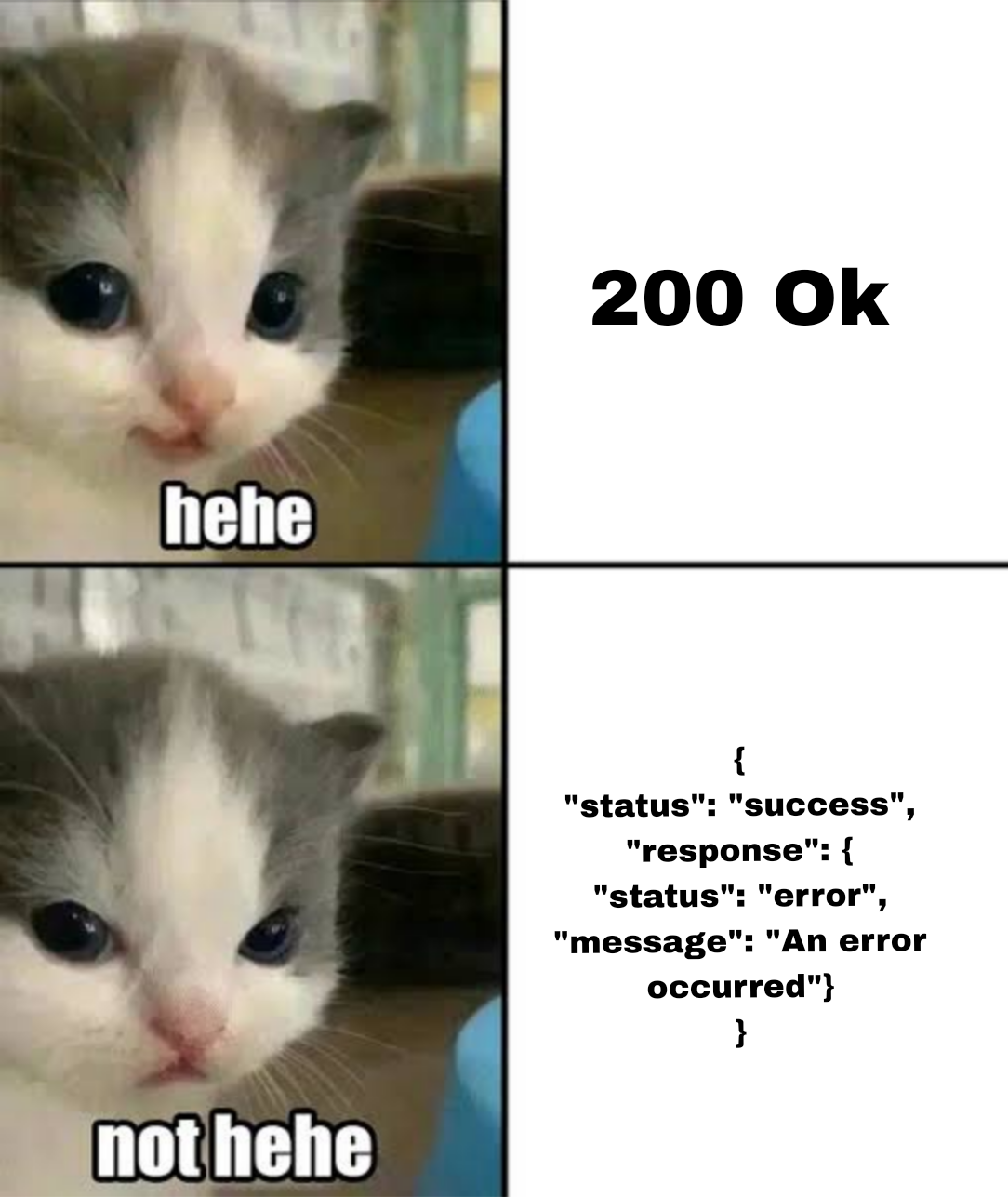
Rest My Ass: When 200 OK Is Anything But OK

Rest My Ass: When 200 OK Is Anything But OK
The ultimate API gaslighting experience! Your request gets a perfect HTTP 200 OK status code, signaling all is well in the universe. Then the response body hits you with {"error": true} . It's like your server saying "Yes, I received your request perfectly! Also, everything is on fire." The digital equivalent of someone nodding enthusiastically while whispering "absolutely not." REST APIs that can't even be honest about their emotional state deserve their own special circle in developer hell.