Project management Memes

Posts tagged with Project management
Full Drama

Full Drama
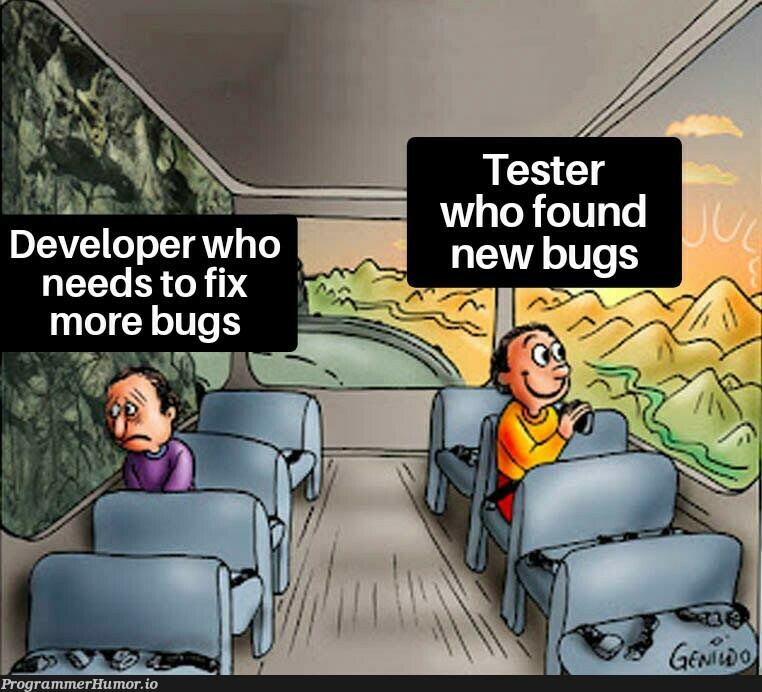
Nothing quite like the adrenaline rush of a critical bug discovered at 4:57 PM on the last day of the testing phase. Your QA engineer suddenly transforms into a theatrical villain, orchestrating chaos with surgical precision. The project manager is already mentally drafting the delay email. The developers are experiencing the five stages of grief simultaneously. And somewhere, a product owner is blissfully unaware that their launch date just became a suggestion rather than a reality. The timing is always immaculate—never day one, never mid-sprint. Always when everyone's already mentally checked out and the deployment scripts are warming up.

Gotta Break This Habit

Gotta Break This Habit
You know that feeling when you're excited about the shiny new project, completely ignoring the one from last week that's barely treading water, while your GitHub is basically an underwater graveyard of abandoned repos? Yeah, that's the developer life cycle in three panels. The real kicker is we all swear "this time will be different" with each new project, but somehow last week's "revolutionary idea" is already drowning in the pool of forgotten commits. Meanwhile, your GitHub profile is a museum of skeletons - each repo a testament to that initial burst of motivation followed by... crickets. The worst part? You'll scroll past those dead projects every time you push to the new one, feel a tiny pang of guilt, and then immediately forget about it. Rinse and repeat until your GitHub looks like a post-apocalyptic wasteland of "TODO: Add README" commits.

Why All My Jira Tickets Are 83 Points

Why All My Jira Tickets Are 83 Points
The ancient art of story point negotiation: where developers give honest estimates and managers treat them like opening bids at an auction. Developer says 200 hours? "Too much." Manager counters with 20. Developer meets in the middle at 150. Manager scoffs and says "You just said 20!" So naturally, the developer lands on 83—because nothing screams "I've done rigorous analysis" like a prime number that's suspiciously close to the Fibonacci sequence. The real genius here is that 83 sounds oddly specific and scientific, like you've actually calculated something. It's the perfect middle finger wrapped in compliance—too weird to argue with, too confident to question. Manager thinks they won the negotiation, developer gets to say "I told you so" when the ticket takes 200 hours anyway, and everyone's happy until the retrospective. Fun fact: Story points were supposed to abstract away time estimates to focus on complexity, but here we are, still converting them back to hours and haggling like it's a used car dealership.

How To Proceed

How To Proceed
You just speedran a six-month project in four hours and now you're having an existential crisis about whether to expose yourself as a productivity god or coast on easy mode for half a year. The NPC meme face says it all—your brain has officially blue-screened trying to calculate the optimal strategy. Here's the thing: if you tell your boss, you'll get a pat on the back and three more "urgent" projects dumped on your desk by tomorrow. If you stay quiet, you've basically just secured a six-month vacation where you can pretend to be busy while actually learning that new framework you've been eyeing. The real dilemma is whether your conscience can handle the guilt of getting paid to occasionally move your mouse so Teams shows you as "Active." Spoiler alert: Most devs would choose the latter and spend those six months refactoring code nobody asked them to touch, writing documentation that nobody will read, or finally figuring out what those weird Docker configs actually do.

When You Ask Viewers For Products/Features Ideas

When You Ask Viewers For Products/Features Ideas
So you thought crowdsourcing feature requests would be a great idea. You opened the floodgates, asked your community what they wanted, and now you're staring at "just add real-time multiplayer with blockchain integration and AI-powered NPCs that learn from player behavior." Meanwhile, your actual game is a 2D platformer you built in two weeks. The scope creep boss has entered the chat, and it's wielding a sword made of unrealistic expectations and zero understanding of development time. Your poor little game never stood a chance against the eldritch horror of feature requests that would require a AAA studio budget and three years of crunch.

Scrum Is Vibe Coding

Scrum Is Vibe Coding
Someone finally had the courage to say what we've all been thinking. This guy set up a whole "Change My Mind" booth just to drop the truth bomb that Scrum is basically vibe coding with extra steps and a fancy name. The sign reads like a manifesto: "SCRUM is vibe coding with natural intelligence. And the product owner is the prompt engineer." Honestly? Not wrong. You're essentially feeding requirements to developers like prompts to an AI, hoping they interpret your vague user stories correctly, and then acting surprised when sprint planning turns into a philosophical debate about what "done" actually means. The product owner really IS just prompt engineering humans instead of LLMs. "As a user, I want to be able to..." is just a fancier version of "Write me a function that..." The daily standups? That's just checking if the model is still training or if it's stuck in an infinite loop. And retrospectives? Error logs with feelings.

Don't Be Sad, This Is Just How It Works Out Sometimes

Don't Be Sad, This Is Just How It Works Out Sometimes
You spend weeks meticulously planning your project architecture. You document everything. You set up your environment. You write your first function. Then the bugs start appearing like medieval catapult ammunition and your entire codebase explodes into a cloud of segfaults and null pointer exceptions. The "Expedition 33" at the end really sells it. Because just like in Kingdom Come: Deliverance, you're not on your first rodeo anymore. You've been through this 32 times before. You know the drill. You accept your fate. You git reset --hard and start over. Again. Some call it debugging. Veterans call it Tuesday.

Stress Driven Development

Stress Driven Development
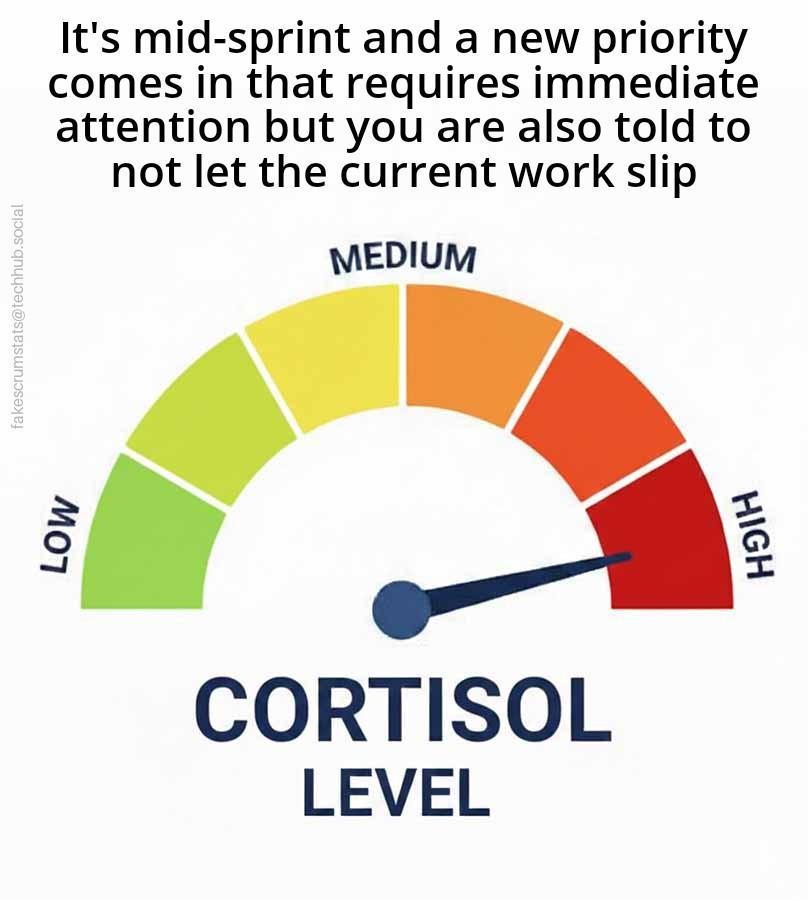
Managers when developers mention TDD (Test-Driven Development): visible discomfort, sweating, existential dread. But mention SDD (Stress-Driven Development)? Suddenly they're grinning ear to ear like they just discovered the secret to infinite productivity. Because why would you want your team writing tests before code when you could just add impossible deadlines, constantly shifting requirements, and a sprinkle of panic? Who needs code quality when you have cortisol? TDD requires planning, time, and understanding that quality matters. SDD just requires a calendar and the ability to say "we need this yesterday." Guess which one fits better in a quarterly earnings report?

True Senior Engineers Answer

True Senior Engineers Answer
Oh, the DIVINE WISDOM of senior engineers! When you dare ask them for a simple deadline, they transform into mystical fortune tellers who speak only in riddles and philosophical paradoxes. "The answer will reveal itself" – translation: "Bold of you to assume time is linear, junior." They've reached such an enlightened state of engineering consciousness that they no longer operate on mortal concepts like "dates" or "commitments." Instead, they've ascended to a realm where deadlines exist in a quantum superposition of "maybe Tuesday" and "when the stars align." The best part? They're not even wrong! After years of watching "two-week projects" turn into six-month odysseys, they've learned that giving ANY specific date is basically signing a blood oath with the demo gods. So they just... don't. Truly, this is the wisdom that comes with surviving a thousand production incidents.

Once You Complete Ahead Of Time

Once You Complete Ahead Of Time
You know that brief, beautiful moment when you actually finish your sprint tasks early and think you might get some breathing room? Yeah, that's cute. The moment a project manager catches wind that you're "free," they materialize like a genie from a lamp with a whole backlog of "quick wins" and "small tweaks" that definitely won't take 5 minutes despite what they claim. The smirk says it all—it's that knowing look of someone who's about to ruin your peaceful afternoon with three new tickets, a "minor" refactor, and maybe helping debug Steve's environment issues. Pro tip: never, EVER announce you're done early in standup. Just quietly work on that side project or refactor some code. Your future self will thank you.

When You Have To Give Demo And Your Project Is Not Ready

When You Have To Give Demo And Your Project Is Not Ready
Picture this: the client wants a demo in 30 minutes, your code is held together by prayer and duct tape, and half your features are still returning "undefined" like it's their job. So what do you do? You grab whatever functional pieces you have and FRANTICALLY try to make them look connected and impressive, even though behind the scenes it's absolute chaos. That excavator desperately trying to lift itself? That's you trying to present a polished product while simultaneously being the broken mess that needs fixing. The sheer audacity of attempting the impossible while gravity (and reality) screams "NO!" is every developer's Thursday afternoon. Bonus points if you're live-coding fixes during the actual demo while maintaining eye contact and a confident smile.

When Project Is Not Ready But The Client Wants A Demo

When Project Is Not Ready But The Client Wants A Demo
When your client schedules a demo for tomorrow and your project is basically held together with console.log statements and prayers. You're out here doing the software equivalent of an excavator trying to high-five itself—technically impressive, wildly unnecessary, and definitely not what anyone asked for. But hey, if you present it with enough confidence and jazz hands, maybe they won't notice that half the features are just placeholder text and the backend is literally just you manually updating a JSON file. The art of the demo isn't showing what works; it's creatively avoiding what doesn't.