Programmer life Memes

Posts tagged with Programmer life
Printers Are Why Programmers Believe In Superstitions

Printers Are Why Programmers Believe In Superstitions
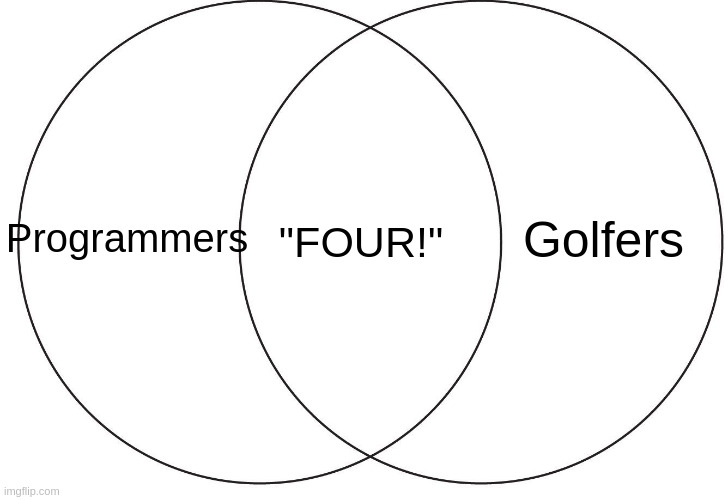
You know you've mastered distributed systems, can debug race conditions in your sleep, and understand the intricacies of memory management... but then someone's printer stops working and suddenly you're performing ancient rituals like unplugging it, waiting exactly 30 seconds, plugging it back in, and sacrificing a USB cable to the tech gods. The beautiful irony here is that fixing printers has absolutely nothing to do with programming logic. It's pure chaos theory mixed with hardware gremlins. Printers operate on a different plane of existence where drivers are perpetually outdated, paper jams defy physics, and "PC LOAD LETTER" is apparently a valid error message. Yet somehow, you will fix it. Not because you understand printer protocols or have any formal training in hardware troubleshooting, but because you've developed a sixth sense for turning things off and on again in the right sequence. You'll clear the print queue, reinstall drivers you don't understand, and somehow it'll work. Then when they ask what you did, you'll have no idea. That's when the superstitions begin.

My Wife Gets Me

My Wife Gets Me
When your wife instantly diagnoses the REAL problem like a senior developer reviewing your pull request. Meimei (the kid) couldn't lock the door, and instead of assuming the door is broken like a normal person would, wife immediately goes full root-cause-analysis mode: "....is something wrong with the door?" But our programmer hero? Nah, straight to the REAL issue: "User error on the 12 year old." Because let's be honest, 99% of bug reports are just PEBKAC (Problem Exists Between Keyboard And Chair). The door works FINE, the API is FLAWLESS, the code is PERFECT—it's always the user who doesn't know how to lock a door properly. This is the energy of every developer who's ever had to explain to someone that turning it off and on again actually DOES solve the problem. She gets it. She truly gets it. Relationship goals, honestly.

I Hate How Accurate This Is

I Hate How Accurate This Is
You know you've reached peak programmer when a missing semicolon causes more emotional damage than a breakup. While normal people lose sleep over relationships, we're here at 3 AM staring at our screen like a detective, hunting down that one tiny punctuation mark that's been sabotaging our entire application. The worst part? Your IDE probably highlighted it 47 times, but your brain was too busy being a genius to notice. Four days of debugging, Stack Overflow deep dives, rubber duck conversations, and questioning your career choices... all because of a character that's literally smaller than an ant. Pro tip: The bug is always in the last place you look, which coincidentally is always the first line you wrote.

Based On Personal Experience

Based On Personal Experience
The eternal curse of knowing how to code: suddenly everyone thinks you're also a walking Best Buy Geek Squad. Family gatherings become tech support sessions, and "I work with software" translates to "I can resurrect your decade-old HP printer that's possessed by demons." The logic loop here is beautiful. You start with the rational take—programming and printer troubleshooting are completely different skill sets. One involves elegant algorithms and clean code; the other involves sacrificing goats to appease the printer gods. But then muscle memory kicks in. You've already googled the error code. You're already checking if it's plugged in. You're in too deep. The real kicker? You WILL fix it. Not because you know anything about printers, but because you know how to read error messages and have the patience to actually restart the spooler service. Which somehow makes you more qualified than 90% of the population.

Partying Is Tough For Me

Partying Is Tough For Me
Standing awkwardly at a party while everyone's dancing and having fun, but your brain is stuck thinking about pointer-to-pointer concepts from your C++ project. You know, the classic double pointer (**ptr) that points to another pointer that points to the actual data? Yeah, try explaining THAT to someone who thinks "debugging" means removing actual insects. The real tragedy here is that you're genuinely excited about this topic and nobody at the party cares that you just figured out how to dynamically allocate a 2D array. They're out here living their best lives while you're mentally drawing memory diagrams. This is what happens when you spend too much time in low-level languages—you become fluent in memory addresses but lose the ability to small talk. Fun fact: Pointer-to-pointer is actually useful for things like modifying pointer values in functions or creating dynamic multidimensional arrays. But that conversation starter has a 100% success rate at clearing the room.

Vitally

Vitally...
You know that feeling when you write some absolutely cursed code that somehow works, and you're riding high on that divine knowledge of what every line does? Fast forward six months—or let's be real, six days—and you're staring at your own creation like it's an ancient hieroglyph. The cat's smug expression perfectly captures that initial confidence: "Yeah, I'm a genius, I know exactly what's happening here." Then reality hits when you need to modify it and suddenly you're praying to the code gods for enlightenment because even you can't figure out what past-you was thinking. No comments, no documentation, just pure chaos. The transition from "only god & I understood" to "only god knows" is the programmer's journey from hubris to humility, speedrun edition.

It's That Time Of The Year Again...

It's That Time Of The Year Again...
The annual ritual where your wallet screams in terror while Steam dangles those sweet 90% off deals in front of you. You're excitedly grabbing every discounted game like it's Christmas morning, completely ignoring the 247 unplayed games from last year's sale still gathering digital dust in your library. Meanwhile, Epic Games is sitting at the bottom of the ocean like a forgotten skeleton, having given you so many free games that you've become completely numb to their existence. They literally gave away GTA V and you still haven't installed it. The hierarchy of attention is clear: Steam Winter Sale is the golden child, last year's backlog is the neglected middle child desperately trying to get noticed, and Epic's freebies are the family skeleton we don't talk about anymore. Your backlog isn't just drowning—it's achieving new depths of abandonment.

Rate My Setup

Rate My Setup
Someone really looked at their Apple Watch and thought "You know what? This 1.5-inch screen is PERFECT for my 8-hour coding sessions." Because nothing says peak productivity like squinting at VS Code on a display smaller than a postage stamp, frantically trying to debug with your pinky finger while your IDE crashes from sheer confusion. The watch is literally begging you to open a folder—ANY folder—just to justify its existence as a development machine. Next up: deploying to production from a smart fridge. The future is now, and it's absolutely ridiculous.

How Many Unplayed Games Do You Guys Have?

How Many Unplayed Games Do You Guys Have?
Steam Winter Sale hits different when you're a developer. You already spend 12 hours a day staring at code, debugging someone else's spaghetti, and arguing with CI/CD pipelines. The last thing you want to do is boot up a game that requires... more thinking. So instead, you buy 47 games at 80% off because "it's a good deal" and "I'll definitely play this when I have time." Spoiler: you won't. That backlog just keeps growing while you convince yourself that buying more games is somehow different from hoarding. It's not. The real game is watching your library percentage drop from 15% to 4% played and pretending that's fine. That's the endgame content right there.

My Friend Have An Impeccable Timing...

My Friend Have An Impeccable Timing...
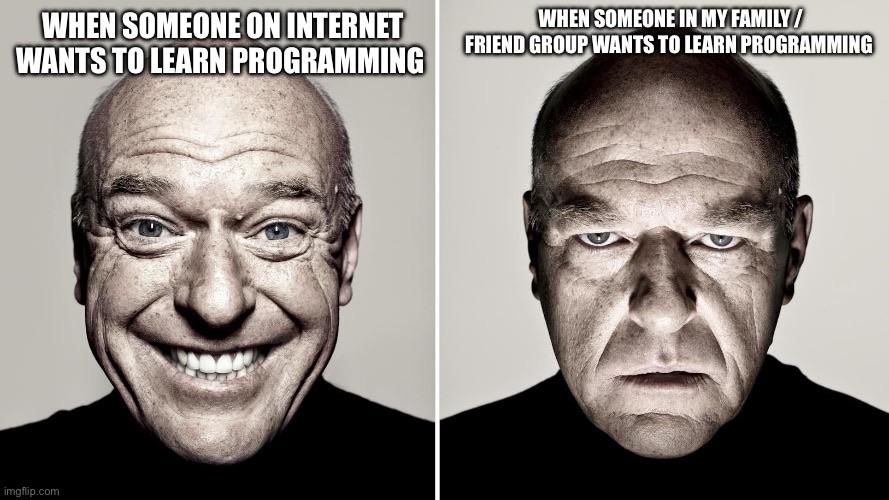
You spend years being the designated "tech person" in your friend group, fielding questions about why their printer won't work and explaining that no, you can't hack their ex's Instagram. Radio silence for months. Then suddenly, out of nowhere, they emerge from the shadows with actual tech curiosity! Your heart swells with pride. Maybe they want to learn programming? Build a website? Understand how databases work? Nope. Gaming PC. Because of course they do. The one thing that has absolutely nothing to do with your software engineering expertise but somehow you're still expected to know the difference between a 4070 Ti and a 4080 Super. Welcome to being the "computer friend" – where your CS degree qualifies you to be an unpaid hardware consultant apparently. At least it's not another "can you fix my phone" request, right? Right?

IT Guys Listening To Non IT People Talk About Computers

IT Guys Listening To Non IT People Talk About Computers
You know that special kind of pain when someone tells you they "deleted the internet" or that their computer has a virus because it's running slow? That's the face right there. It's the internal screaming mixed with the professional obligation to nod politely while someone explains how they fixed their printer by "downloading more RAM." The best part is trying to maintain composure when they're absolutely confident in their completely wrong explanation. "Yeah, I'm pretty tech-savvy myself" they say, right before asking if you can hack their ex's Facebook. The restraint it takes not to correct every single misconception is truly an underappreciated skill in the tech industry.

Typical Child In The Life Of A Programmer

Typical Child In The Life Of A Programmer
When you inherit from both parents but implement the interface as a Python class. The onesie is basically a programmer's birth certificate written in code. Love how the live() method is just an infinite loop of sleeping, yielding to Bardak (probably a parenting framework for diaper changes), and calling be_awesome() . The implementation of be_awesome() ? Just pass . Already awesome by default—no logic needed. That's some solid object-oriented parenting right there. The imports are chef's kiss: import ibtiSam as mom and import boaz as dad . Aliasing your parents like they're npm packages. The class constructor takes both parents' genes as parameters—multiple inheritance done right. And that __init__ printing "hello world!" is probably the most accurate representation of birth ever coded. Baby's first deployment was clearly a success. No exceptions raised, all tests passing, and already in production with that "Welcome home" comment. 10/10 would instantiate again.