Libraries Memes

Posts tagged with Libraries

Somehow Less Than I Expected

Somehow Less Than I Expected
Fourteen million repos on GitHub and apparently every single game dev decided to write their own 2D Gizmo library from scratch. Because why use someone else's perfectly functional code when you can spend three weeks reinventing the wheel? The NIH syndrome is strong with this one. To be fair, everyone's 2D Gizmo needs are slightly different, and that 0.3% difference is definitely worth creating repo number 14,000,606. The one library that exists probably has 47 stars, was last updated in 2017, and has a README that just says "work in progress lol."

Global Hate

Global Hate
Someone asks what they hate, expecting maybe a city or a person. The answer? Tokio. But not Tokyo the city—turns out they meant the asynchronous runtime library for Rust. Because nothing says "passionate developer opinions" quite like having beef with a runtime library that's literally designed to make your life easier. The punchline lands harder when you realize how universal this is. Every language has that one library everyone loves to hate while simultaneously using it in every project. It's like complaining about your coworker who's actually carrying the entire team—you can't live with them, can't ship without them.

Pip Install The Real Stuff

Pip Install The Real Stuff
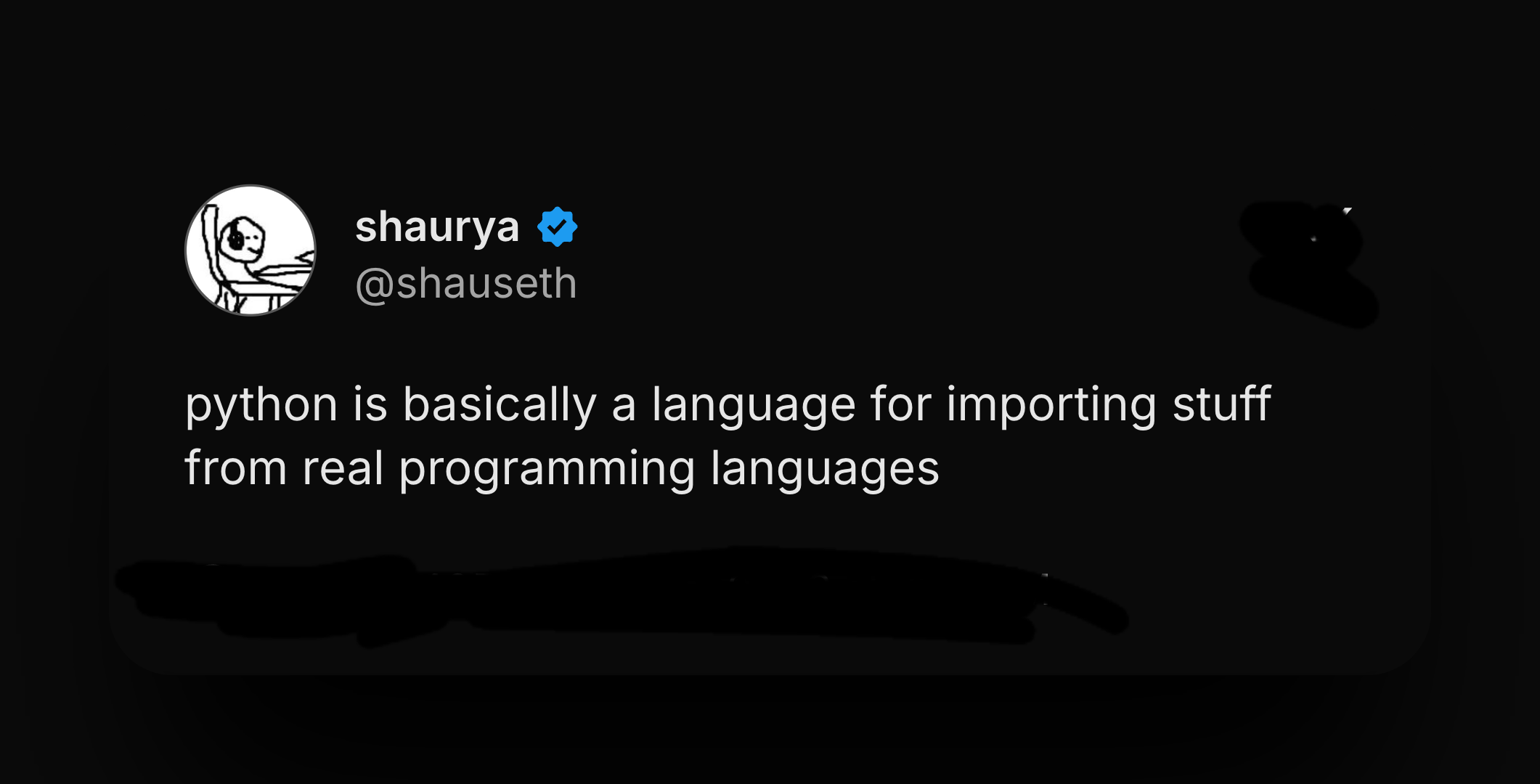
Shots fired at Python! The joke here is that Python's greatest strength is also its biggest roast—most of the heavy lifting in Python libraries is actually done by C, C++, Rust, or Fortran under the hood. NumPy? C. TensorFlow? C++. Pandas? More C. Python is basically just the friendly interface that lets you pretend you're doing the hard work while the "real programming languages" are sweating in the basement. It's like being a DJ who just presses play on other people's music. But hey, at least the syntax is clean and we can actually read our code without crying.

To Understand Why Mods Were Added, You Should Try The Vanilla Game First, Change My Mind

To Understand Why Mods Were Added, You Should Try The Vanilla Game First, Change My Mind
Okay but here's the thing: trying vanilla JavaScript in 2024 is like playing Dark Souls with a wooden spoon. Sure, you'll appreciate why libraries exist, but you'll also lose your sanity in the process. The gaming analogy hits different for developers because we literally do this with frameworks. "Why do we need React?" *proceeds to manually manipulate DOM for 6 hours* "Oh... OH." Same energy as "Why do we need jQuery?" back in 2010 when cross-browser compatibility was a war crime. But let's be real—sometimes vanilla is actually better. You don't need a 500KB framework to toggle a class name. The problem is juniors who've never written a single line without create-react-app and think `document.getElementById` is ancient hieroglyphics. Then they ship 2MB of dependencies for a todo app. The real wisdom? Understand the vanilla mechanics so you know when you're over-engineering. Otherwise you're just cargo-culting npm packages and praying to the node_modules gods.

Software Cheats

Software Cheats
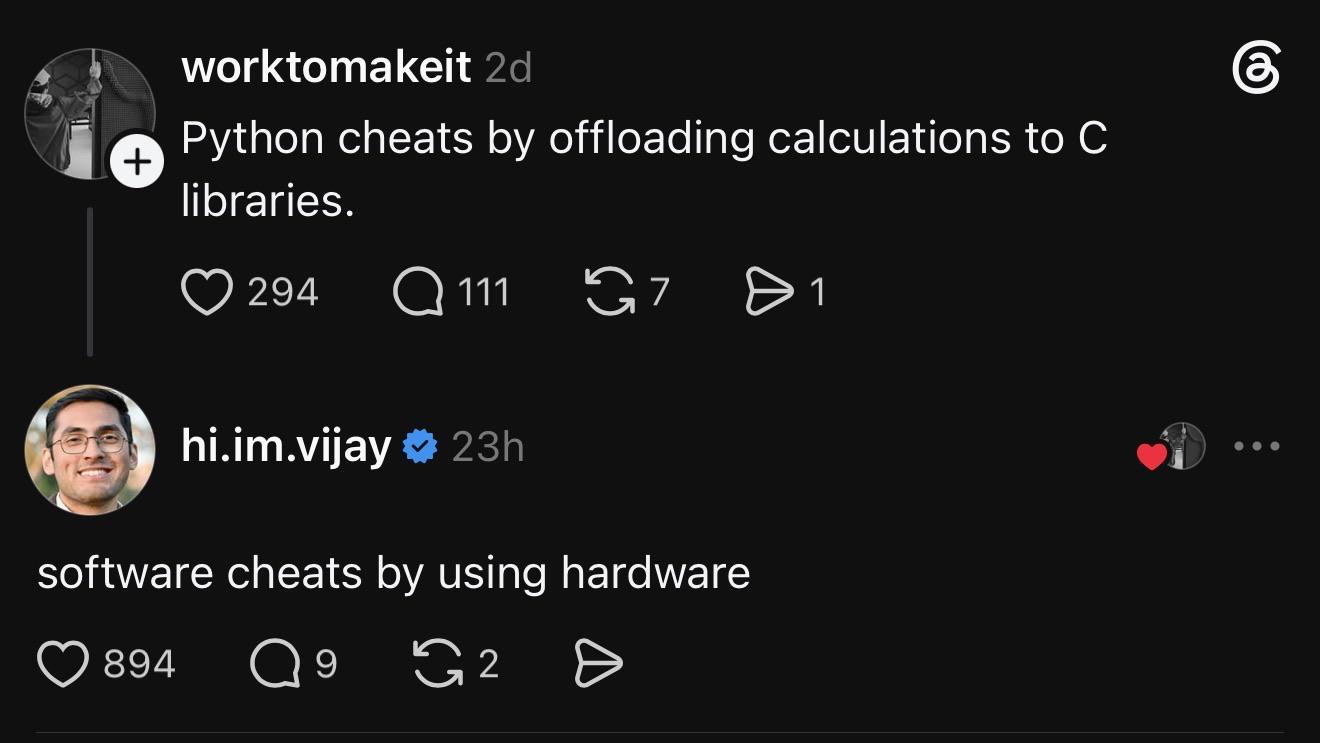
Python gets roasted for being slow, so it does what any reasonable language would do: outsources the heavy lifting to C libraries. NumPy, Pandas, TensorFlow? All running on C under the hood. It's like claiming you're a great chef when you're just really good at ordering takeout. The reply takes it further. Software thinks it's so smart, but it's just instructions running on silicon. Every program is basically cheating by using hardware to do the actual work. Your GPU rendering those graphics? Hardware. Your CPU executing those loops? Also hardware. Software is just middle management taking credit for the workers' output. It's turtles all the way down, except the turtles are all calling each other cheaters.

Look At My New App

Look At My New App
Back in the day, "I coded it all by myself" meant you actually wrote every line of code from scratch, probably in C++ or something equally painful. You built your own physics engine, your own UI framework, and debugged segmentation faults until 3 AM. Now? "I coded it all by myself" means you successfully npm installed 47 packages, copied some Stack Overflow snippets, imported 12 different libraries, and somehow got them to work together without breaking. Your app is basically a Frankenstein's monster of dependencies held together by duct tape and prayer. The "VIBE CODE" shirt really captures the essence of modern development—it's less about understanding algorithms and more about vibing with the ecosystem until something works. Your node_modules folder probably weighs more than the actual code you wrote.

Pip Install The Real Stuff

Pip Install The Real Stuff
Python developers out here acting like they're writing cutting-edge software when 90% of their code is just pip install followed by importing libraries written in C, C++, and Rust. You're not a programmer, you're a package manager with delusions of grandeur. The heavy lifting? That's happening in compiled languages while you're just the middleman calling their functions. It's like being a DJ and claiming you made the music.

Synology DS225+ Private Cloud Media Server - Stream, Back Up Photos & Share Files, Intel CPU for Hardware Transcoding (2-Bay Diskless NAS)

Synology DS225+ Private Cloud Media Server - Stream, Back Up Photos & Share Files, Intel CPU for Hardware Transcoding (2-Bay Diskless NAS)
Your Personal Streaming Server - Build your own Netflix-style media library and stream 4K movies, shows and photos to any device without monthly fees · Create Your Own Cloud - Store your entire photo…

It Is The Same

It Is The Same
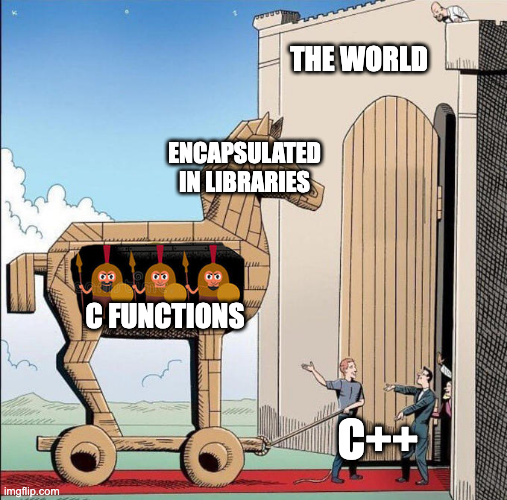
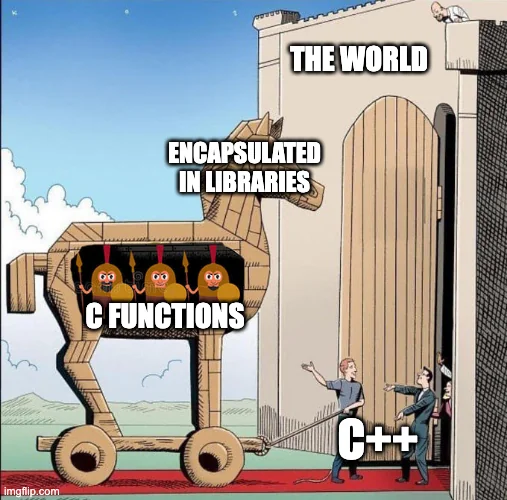
C++ developers really out here thinking they're protecting the world with their carefully crafted libraries while secretly just smuggling in raw C functions like contraband. The abstraction layers? The OOP principles? The modern C++ features? Yeah, underneath it all, it's still just a bunch of C functions doing the heavy lifting. It's like putting a fancy sports car body on a 1970s engine—sure, it looks different from the outside, but pop the hood and you'll find the same old reliable (or terrifying, depending on your perspective) machinery. The Trojan horse metaphor is chef's kiss because nobody suspects what's really inside until it's too late and you're knee-deep in pointer arithmetic.

#Include <C>

#Include <C>
C++ developers thinking they're so sophisticated with their fancy OOP and templates, meanwhile their entire language is just C functions wearing a trench coat and pretending to be three abstractions tall. Every C++ library you've ever loved? Crack it open and surprise! It's C functions all the way down, wrapped in so many layers of abstraction you need a PhD just to figure out what's actually happening. The world runs on C, but C++ gets to feel fancy about it while still desperately clinging to those good old C standard library functions because, let's be honest, why reinvent the wheel when printf already works perfectly?

Just Why

Just Why
You know your project is about to get interesting when you see library names like "Kawakami-no-Mikoto" or "Yamata-no-Orochi" in your package.json. Nothing says "production-ready enterprise software" quite like having to copy-paste dependency names from a mythology textbook. Bonus points when the documentation is sparse and you're left wondering if you're importing a state management library or accidentally summoning something. At least when it inevitably breaks, you can tell your PM that the serpent god of chaos has entered the codebase and there's nothing you can do about it.

I Can Do It Better For Sure

I Can Do It Better For Sure
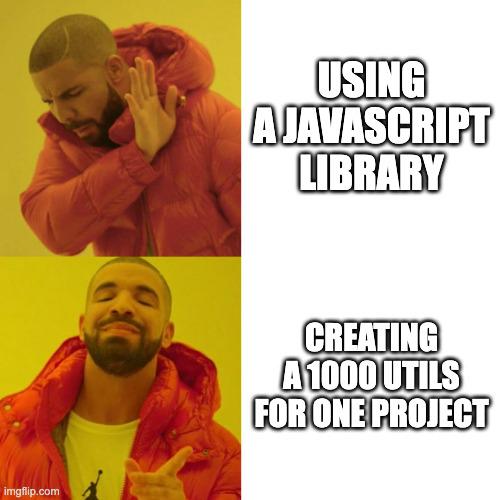
Every junior dev's origin story begins with the sacred words: "I could totally build this from scratch better than [insert literally any established library/framework here]." Then six months later you're debugging your homemade authentication system at 3 AM, crying into your energy drink, wondering why your triangular wheel isn't gaining traction. The universe has blessed us with React, Angular, Vue, and a million battle-tested libraries that have survived the trenches of production environments. But NO—you're gonna write your own state management solution because "it's not that complicated." Spoiler alert: it IS that complicated, and those weird-looking wheels in the picture? That's your custom-built solution that "works perfectly fine" until someone tries to actually use it. Save yourself the existential crisis and just npm install the dang thing. Your future self will thank you when you're not maintaining a Frankenstein monster of spaghetti code that only you understand.

Don't Be A Fool, Use The Proper Tool

Don't Be A Fool, Use The Proper Tool
Your toolbox is a graveyard of frameworks, libraries, and technologies you swore you'd "definitely use for the right project." Docker, Kubernetes, Spring, Hibernate, Next.js, Bash, C, JavaScript, Python, Git, SSH, curl, StackOverflow (naturally), and about 47 other tools you installed during a 2 AM productivity binge. The joke here is the classic developer hoarding mentality. Someone asks where you got all these tools, and you justify it with "every tool has a purpose" and "they're all necessary." But let's be real—half of them haven't been touched since installation, and the other half are just different ways to do the same thing because you couldn't decide between React and Vue three years ago. It's like having 15 different screwdrivers when you only ever use one. Except in programming, each screwdriver has its own package manager, breaking changes every 6 months, and a Discord server where people argue about best practices. The meme perfectly captures how we rationalize our ever-growing tech stack while sitting there with analysis paralysis, surrounded by tools we "might need someday."