

Learning to code Memes

Posts tagged with Learning to code
Has This Happened To Anyone Else

Has This Happened To Anyone Else
You follow a tutorial religiously, triple-check every semicolon, rewrite it from scratch twice, and the app still refuses to work. After hours of debugging your perfectly copied code, you rage-quit and scroll to the next section. That's when the tutorial casually drops: "Oh btw, this won't work yet because we need to add one more thing in the next step." The audacity. The betrayal. The sheer disrespect for your debugging time. Tutorial creators really love watching us suffer through incomplete code, don't they? It's like they get a kick out of making you question your entire programming ability before revealing they deliberately left out a crucial import or configuration file. Pro tip: Always skim the entire tutorial first. Your sanity will thank you later.

Fact

Fact
The real reason most of us learned to code wasn't some noble career ambition or passion for technology. Nope. We just wanted to stop feeling left out when our programmer friends laughed at jokes about null pointers and off-by-one errors. Career prospects? Meh. Understanding why "there are 10 types of people in this world" is funny? Now that's true motivation. The fact that you can now debug production issues at 3 AM is just a happy little accident.

What Language

What Language
Someone asking what language to learn based on their computer specs just unlocked a new level of confusion. The IQ test result of 75 sitting there like a patient diagnosis explains everything. The real kicker? They're in the "top 95.22%" which means bottom 5%, but hey, at least they'd be smarter than 48 people in a room of 1000. That's... not the flex they think it is. The beauty here is the complete misunderstanding of how programming languages work. Computer specs determine what language you should learn the same way your shoe size determines what career you should pursue. But sure, let's recommend Assembly because they have 16GB of RAM.

How It Feels Looking At Other People's WIPs

How It Feels Looking At Other People's WIPs
You know that crushing feeling when someone casually drops their "just started last night" WIP and it's a photorealistic fantasy landscape with volumetric lighting and atmospheric perspective? Meanwhile, you're over here celebrating because you finally figured out how to make a basic capsule object move in the right direction after two months of fighting with transform matrices and quaternions. The contrast here is brutal. They're out here building entire civilizations while you're still in tutorial hell trying to understand the basics of 3D space. But hey, at least your capsule moves now. That's progress, right? Right? Game dev is a humbling experience where everyone else seems to be a digital Michelangelo while you're just happy your primitive shapes aren't clipping through the floor anymore.

How To Become A Software Engineer Without Learning How To Code

How To Become A Software Engineer Without Learning How To Code
So you wanted to be a software engineer but coding seemed too hard? Just let AI write everything for you! Problem solved, right? Wrong. Now you're sitting on a codebase that's slowly morphing into a Lovecraftian nightmare of spaghetti logic, and you have zero idea how to fix it because—plot twist—you never learned to code. The question here is genuinely haunting: how do you prevent your AI-generated code from becoming technical debt incarnate? The answer is simple but painful: you actually need to understand what the AI is writing. Which means... you need to learn to code. Full circle, baby. It's like hiring a chef who's never tasted food to run your restaurant. Sure, they can follow recipes from ChatGPT, but when something tastes off, they're just vibing and hoping for the best. Except in this case, the "food" is production code and the "customers" are your users experiencing mysterious bugs at 2 PM on a Friday.

Dynamic Programming

Dynamic Programming
You spend HOURS psyching yourself up to finally conquer dynamic programming, ready to unlock the secrets of the universe. You click on that tutorial with the determination of a warrior entering battle. And then—BOOM—first sentence: "so we use hash set." That's it? THAT'S the big secret? The confusion hits you like a freight train. The cat's bewildered stare is literally your brain trying to process how something that sounds so intimidating boils down to... data structures you already know. The gap between the mystique of "dynamic programming" and the reality of "just memoize stuff bro" is absolutely sending me. 💀

My First IDE Is Paper IDE

My First IDE Is Paper IDE
Someone's out here writing C++ code on actual lined paper like it's 1972. The handwritten #include <iostream> and using namespace std; followed by a classic "Hello world!" program is giving major "learning to code in a computer science exam" vibes. The beauty here is that paper doesn't have syntax highlighting, autocomplete, or IntelliSense. No red squiggly lines to tell you that you forgot a semicolon. Just you, your pen, and the raw fear of making a mistake that requires an eraser or starting over on a fresh sheet. It's like coding on hard mode with zero compiler feedback until you manually trace through it in your head. Fun fact: Before modern IDEs existed, programmers actually did write code on paper coding sheets that would then be manually transcribed onto punch cards. So technically, this person is experiencing authentic retro development workflow. The OG IDE was literally a pencil and paper combo with a 100% chance of compilation errors when you finally typed it into a machine.

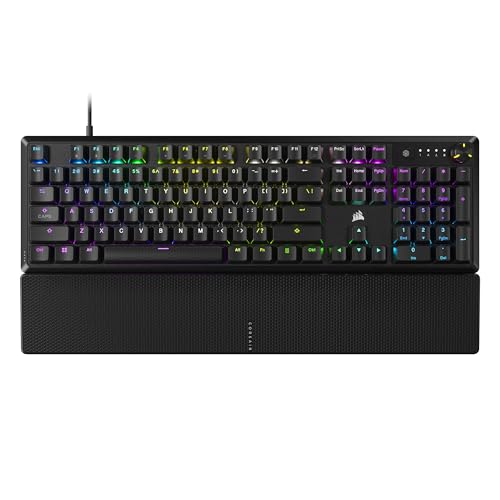
TechOrbits Standing Desk Converter - 32 Inch Adjustable Sit to Stand Up Workstation, Particle Board, Dual Monitor Desktop Riser with Keyboard Tray, for Home Office Laptop, Black 32"

TechOrbits Standing Desk Converter - 32 Inch Adjustable Sit to Stand Up Workstation, Particle Board, Dual Monitor Desktop Riser with Keyboard Tray, for Home Office Laptop, Black 32"
Adjust to Get it Just Right: Ready to stand? Squeeze the handle and use your weight to adjust the height of your workstation. Our TechOrbits stand-up workstation is perfect for dynamic working styles…

Programming Tutorials Then And Now

Programming Tutorials Then And Now
The golden age of programming tutorials had people casually dropping "let's build a game engine from scratch" like it was a weekend project. Now? We're celebrating the monumental achievement of... configuring VS Code with the right color theme and extensions. The devolution is real. Back then, tutorials assumed you had a PhD in computer science and three lifetimes of free time. "Part 1 of 47: Implementing our custom memory allocator" was considered beginner-friendly. Today's tutorials are like "Step 1: Install Node. Step 2: Cry because of dependency conflicts. Step 3: There is no Step 3, you're still on Step 2." The shift reflects how the barrier to entry has lowered (good!) but also how we've become more focused on tooling than fundamentals (questionable!). Though to be fair, getting your IDE setup properly in 2024 with all the linters, formatters, and extensions IS basically rocket science.

Teach Em Young

Teach Em Young
Kid picks up a JavaScript book and immediately has an existential crisis in the shopping cart. Can't blame them—they haven't even learned about undefined vs null yet and they're already experiencing the emotional trauma that comes with it. Starting with JavaScript is like learning to swim by being thrown into the ocean during a storm. Sure, you'll eventually figure out how to float, but you'll question every life decision that led you there. The kid's reaction is honestly the most realistic response to encountering JavaScript for the first time—pure, unfiltered despair. Fun fact: This is actually the recommended age to start learning JavaScript. By the time they're old enough to understand what a callback hell is, they'll already be numb to the pain.

Same Tutorial Different Realities

Same Tutorial Different Realities
You know that feeling when you're watching a tutorial and the instructor is casually building a full-stack application while explaining every line with crystal clarity, but you're sitting there rewinding for the 47th time trying to figure out why your import statement is throwing errors? Yeah, that's the energy here. The "some Indian guy" is the legendary YouTube tutor who somehow explains complex algorithms in 12 minutes with a $3 microphone and saves your entire career. Meanwhile, beginners are the confused cats barely keeping up with crayons, and the "7 years of experience" developer is... also a confused cat with slightly fancier crayons. Because let's be real, no matter how senior you get, you're still pausing tutorials every 30 seconds and questioning your life choices. The brutal truth? Experience just means you're better at pretending you understand before copying the code and hoping it works. We're all just cats at a tiny desk, my friend.

When You Have A Problem And Solve It Using Regex You End Up With Two Problems

When You Have A Problem And Solve It Using Regex You End Up With Two Problems
That brief, shining moment when regex finally clicks in your brain and you feel like you've unlocked forbidden knowledge. You spent three days reading Stack Overflow answers, watched twelve YouTube tutorials, and now you can parse email addresses with a 47-character expression that looks like your cat walked across the keyboard. The enlightenment lasts approximately 6 hours before you realize you can't read your own regex anymore and it breaks on edge cases you didn't even know existed. Fun fact: Jamie Zawinski's famous quote goes "Some people, when confronted with a problem, think 'I know, I'll use regular expressions.' Now they have two problems." Turns out he was being generous with that number.

I Have New Project That Requires JS

I Have New Project That Requires JS
You know how language learners are told to immerse themselves and talk to native speakers? Well, when you're learning JavaScript, the "natives" are a chaotic bunch of framework warriors who've been arguing about semicolons since 2009. Instead of helpful guidance, you get three different opinions on whether to use React, Vue, or Angular, a lecture about why you should've used TypeScript, and someone aggressively suggesting you rewrite everything in Rust. Good luck finding a coherent answer when one dev swears by callbacks, another worships promises, and the third has ascended to async/await enlightenment. Learning JS by talking to JS developers is like asking for directions and getting a philosophical debate about the nature of roads.