java Memes

Java Vs Jython Or Python

Java Vs Jython Or Python
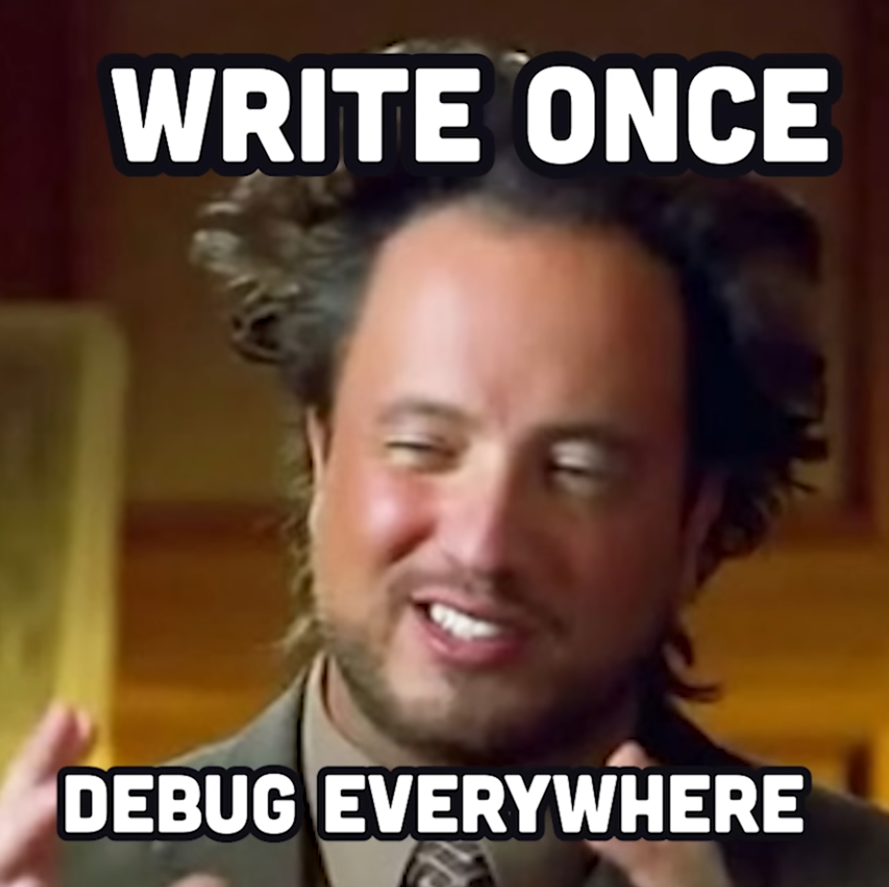
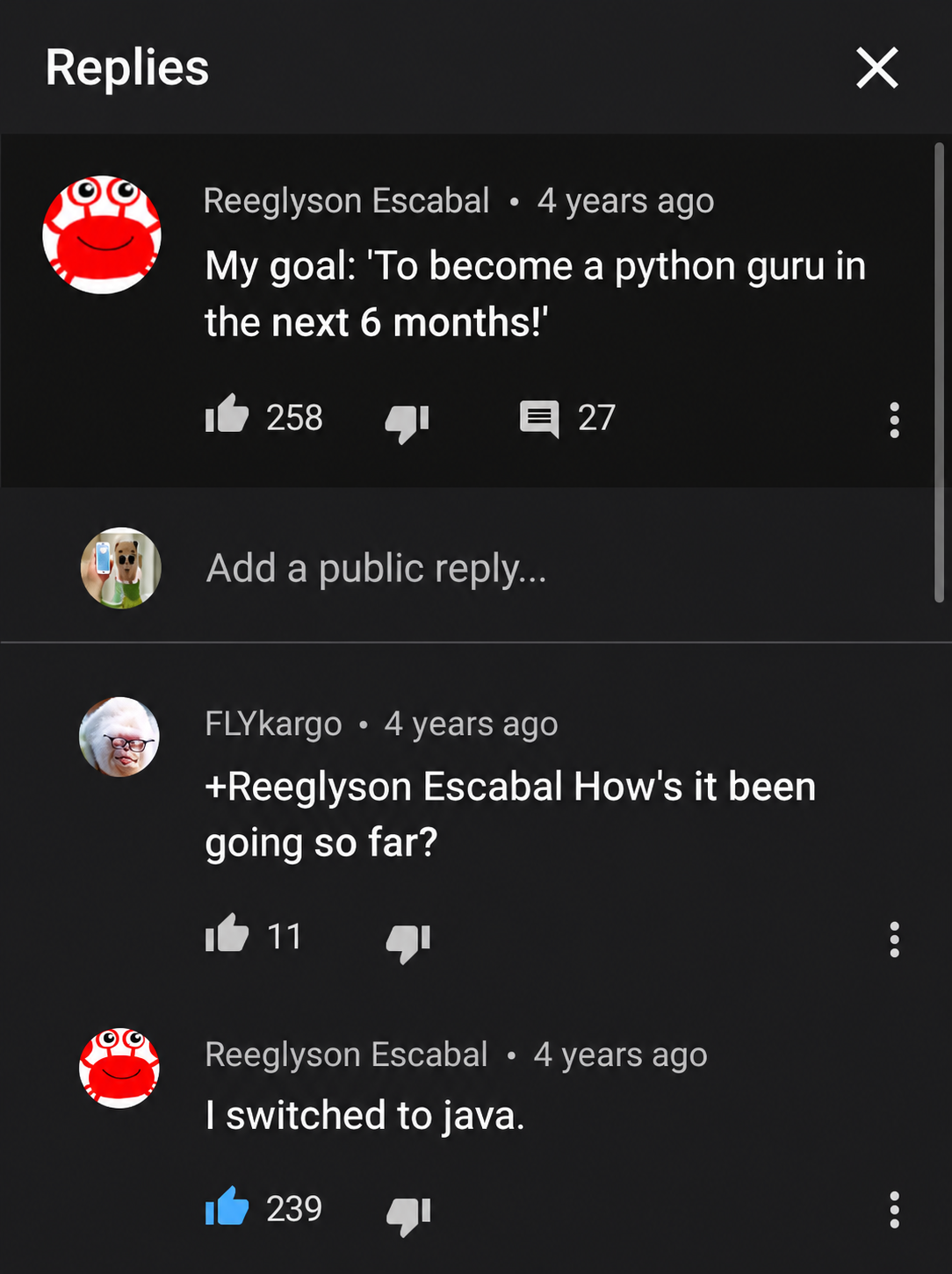
The eternal triangle of programming language drama, except one side is literally just a hybrid nobody asked for. Java and Python are out here living their best lives with massive communities and endless job postings, while Jython is sitting in the corner like "remember me? I let you run Python on the JVM!" Jython is that awkward middle child trying to bridge Java and Python together, combining the "write once, debug everywhere" philosophy of Java with Python's syntax. The problem? It's stuck on Python 2.7 (yes, you read that right), making it about as relevant as a floppy disk drive in 2024. The real kicker is how everyone's fighting over Java vs Python while Jython is desperately waving its hands like "I'm both! Love me!" Spoiler alert: nobody does. When you want Java's performance, you use Java. When you want Python's simplicity, you use Python. When you want both? You probably just use microservices and call it a day.

True Story

True Story
Oracle's been flexing that "3 Billion Devices Run Java" slogan since 2009, and here we are a decade later... still 3 billion devices. Not 3.1 billion, not 4 billion—exactly 3 billion. Either Oracle's marketing team got really comfortable with that number, or Java's been running on the same devices for 10 years straight. Maybe those devices are just immortal? Or perhaps counting is hard when you're too busy suing Google over Android. The real kicker? In those 10 years, we went from flip phones to smartphones that can literally edit 4K video, but apparently Java's market share just... froze in time. It's like they found the perfect marketing tagline and decided "why fix what ain't broke?" Even if it's technically a lie at this point.

Java Devs... Just Admit It.... This Is Way Way Too Far

Java Devs... Just Admit It.... This Is Way Way Too Far
Java developers have this special talent for turning a simple problem into an architectural masterpiece nobody asked for. You need to create an order? Cool. But wait—what if we need an interface for flexibility? And obviously we need a factory to create those orders. But hold on, what if we need to create factories? Better make a factory factory . And naturally, that factory factory needs an interface too. Before you know it, you've got 47 files just to instantiate a single object. The best part? They'll defend this madness by saying it's "maintainable" and "testable" while the rest of us are shipping features. Enterprise Java turned abstraction into a competitive sport, and honestly, they're winning medals nobody wants. Meanwhile, Python devs are over here like: order = Order() and calling it a day.

Accurate

Accurate
The perfect relationship doesn't exi— wait, hold on. That green bar showing all 22307 tests passing with zero errors and zero warnings? That's the programming equivalent of finding true love. The tweet format perfectly captures that rare, beautiful moment when your entire test suite runs clean and your code compiles without a single complaint. No deprecation warnings, no flaky tests, no "this might be a problem later" yellow flags. Just pure, unadulterated success. The juxtaposition of the cynical tweet about relationships with the pristine test output is *chef's kiss* because honestly, getting a clean test run is way more satisfying than most human interactions anyway.

Ignorance Is Bliss

Ignorance Is Bliss
Junior devs just slapping public int x; everywhere and living their best life. Then someone introduces them to encapsulation and suddenly they're writing getters and setters like they just discovered fire. The fancy suit represents that false sense of sophistication you get from following OOP principles—until you realize you've written 20 lines of boilerplate just to access a single integer. You're now "professionally" doing what you used to do in one line, and deep down you're questioning every life choice that led you here. Sometimes the simple solution was fine. But now you're in too deep to go back. Welcome to enterprise development, where we make everything unnecessarily complicated and call it "best practices."

Is He Wrong Though

Is He Wrong Though
The "write once, run anywhere" crowd just got absolutely demolished. Sure, Java's cross-platform compatibility is technically impressive, but that's like being proud your code runs equally mediocre everywhere. The JVM being on Windows, Linux, and macOS doesn't make Java good —it just means everyone gets to suffer equally. Here's the thing: cross-platform compatibility is a feature, not a personality trait. JavaScript runs everywhere too, and we're not exactly throwing parades about it. The analogy here is brutally effective because it exposes the logical fallacy—universal compatibility doesn't equal quality. It just means you've achieved the bare minimum of not being platform-locked. Java developers will defend their language with religious fervor, but deep down they know they're just Stockholm syndrome victims of enterprise codebases written in 2003 that nobody dares to refactor.

Upwards Mobility

Upwards Mobility
The corporate ladder speedrun: destroy a perfectly functioning system, make it objectively worse, get promoted, then bail before the dumpster fire you created becomes your problem. Peak software engineering right here. Dude took a Java service that ran flawlessly for 5 years and convinced management it needed a complete rewrite in Go with microservices because "modernization." The result? Slower performance, double the costs, and a memory leak that strikes at 2 AM like clockwork. But hey, that 20-page design doc had enough buzzwords to secure the L6 promotion. The best part? After getting the promo, they immediately transferred to a "chill Core Infra team" where they won't be on call for the disaster they created. Some poor new grad is now inheriting a $550k total comp nightmare. That's not upward mobility—that's a tactical extraction after carpet bombing production. Pro tip: If your promotion depends on creating "scope" and "complexity" instead of solving actual problems, you're not engineering—you're just resume-driven development with extra steps.

Brilliant Maneuver

Brilliant Maneuver
The corporate ladder climb speedrun any%. Dude took a perfectly functional Java service that ran flawlessly for 5 years and nuked it with an unnecessary microservices rewrite in Go—just to pad the resume with "scope" and "complexity" for that sweet L5 to L6 promotion at Amazon. The result? A system that's slower, costs 2x more, and has memory leaks that wake people up at 2 AM. But hey, the 20-page design doc was strategic enough to fool management. The real galaxy brain move though? Getting promoted, then immediately transferring to a "chill Core Infra team" before the whole thing implodes. Now some poor new grad inherits a ticking time bomb for $550k TC while our protagonist is sipping coffee, off-call, watching the chaos unfold from a safe distance. Truly a masterclass in corporate self-preservation and passing the buck. Fun fact: This is basically the tech industry version of "I'm not stuck in here with you, you're stuck in here with me"—except the villain escapes before the final act.

Suspicious Indentation Among Us

Suspicious Indentation Among Us
Your IDE just caught you red-handed creating an ArrayList right after an if statement, and it's treating this like a code crime scene. The tooltip is basically saying "hold up, why is this line indented like it's part of the if block when it clearly isn't?" It's that beautiful moment when your editor becomes a paranoid detective, questioning your formatting choices like you're about to commit a logic error. And honestly? Sometimes it's right to be suspicious. That innocent-looking indentation could fool a tired developer into thinking the ArrayList creation only happens when the list is empty, when in reality it executes every single time. The "EMERGENCY MEETING" is spot-on because this is exactly the kind of subtle bug that makes you call everyone over to your desk at 2 PM wondering why your code is behaving weird, only to realize you've been bamboozled by your own spacing. Java doesn't care about your indentation lies—only Python would actually fall for that trick.

The Evolution Of Programming Intelligence

The Evolution Of Programming Intelligence
Starting with Python's galaxy brain energy, descending through Java's merely brilliant neural activity, then C++'s dimming consciousness as you realize you're managing memory manually. Scratch brings us to the enlightened toddler phase where you're dragging colorful blocks around. And finally, we reach peak transcendence with command blocks in Minecraft—where you've ascended beyond traditional programming into a realm of redstone logic and block-based sorcery that somehow feels both incredibly powerful and deeply questionable at the same time. The progression from "I write elegant code" to "I literally program inside a video game" is a journey we all respect but don't necessarily understand.

Oracle Sues Navajo Nation

Oracle Sues Navajo Nation
Oracle's legal team just discovered that "Navajo" contains "java" backwards and immediately filed a trademark infringement lawsuit. Because nothing says "protecting intellectual property" quite like suing an entire Native American nation over a linguistic coincidence that's existed for centuries before Java was even a twinkle in Sun Microsystems' eye. The signature from "Toad Ellie Hep-End" (an anagram of "The Entitled People") at Oracle Corp is *chef's kiss*. Someone clearly spent their Friday afternoon crafting the perfect satirical jab at Oracle's notoriously aggressive legal department. Remember when they sued Google over Java APIs? Yeah, Oracle's lawyers have more billable hours than your production server has uptime issues. Fun fact: Oracle acquired Java when they bought Sun Microsystems in 2010, and they've been monetizing and litigating it ever since with the enthusiasm of a developer who just discovered their code works on the first try.

I Feel Betrayed

I Feel Betrayed
Oh, the absolute TREACHERY! You open up Java thinking you're getting some sweet functional programming goodness with lambdas and streams, but SURPRISE—it's still drowning in classes, objects, and inheritance hierarchies like it's 1995. That shocked cat face? That's every developer who thought they could escape OOP hell only to realize that Java's "functional" features are basically just fancy decorations on a very object-oriented cake. You can put lipstick on a pig, but it's still gonna oink in Java bytecode, baby.